
PicksInSix® Feature: Manual Cinema at Studebaker Theater
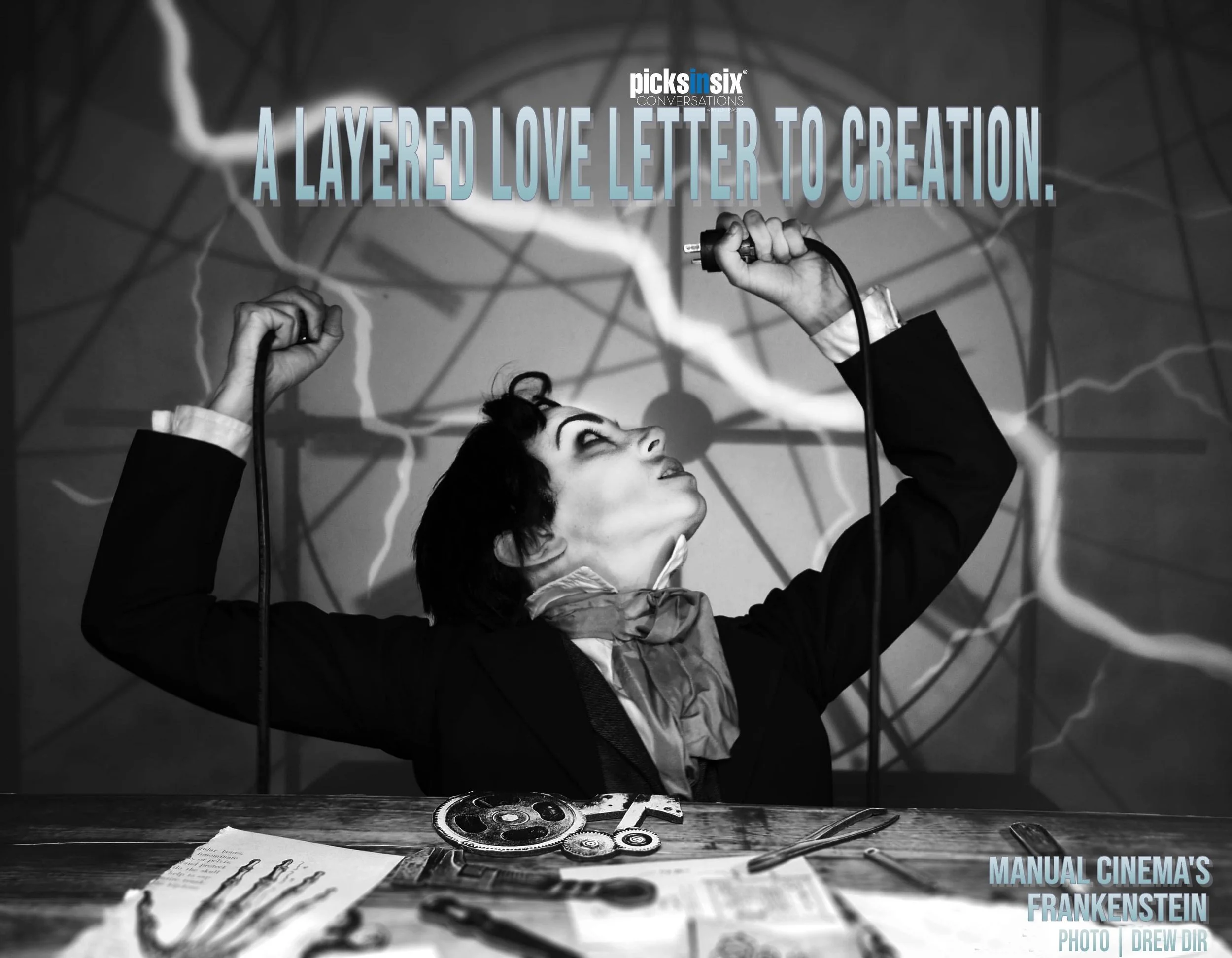
A Layered Love Letter To Creation.
Manual Cinema’s “Frankenstein”
PicksInSix® Feature | Guest Contributor | Perse Grammer
“Manual Cinema” is an impressively succinct way of describing an organization whose medium lives and breathes complexity. It is a theatre company, design studio, and film/video production company all in one. They create devised, live shows, often adaptations of classic works. While they tour their shows internationally, their next Chicago production will be the return of “Manual Cinema’s Christmas Carol” at the Studebaker Theater December. 18 through 27. This show promises hundreds of handmade puppets, immersive sound design, and live music. But my introduction to Manual Cinema was through their production of “Frankenstein,” which originally premiered at Court Theatre in 2018. The recent run was short, but perfect for Halloween season—and an incredible introduction to what feels like a whole new art form.
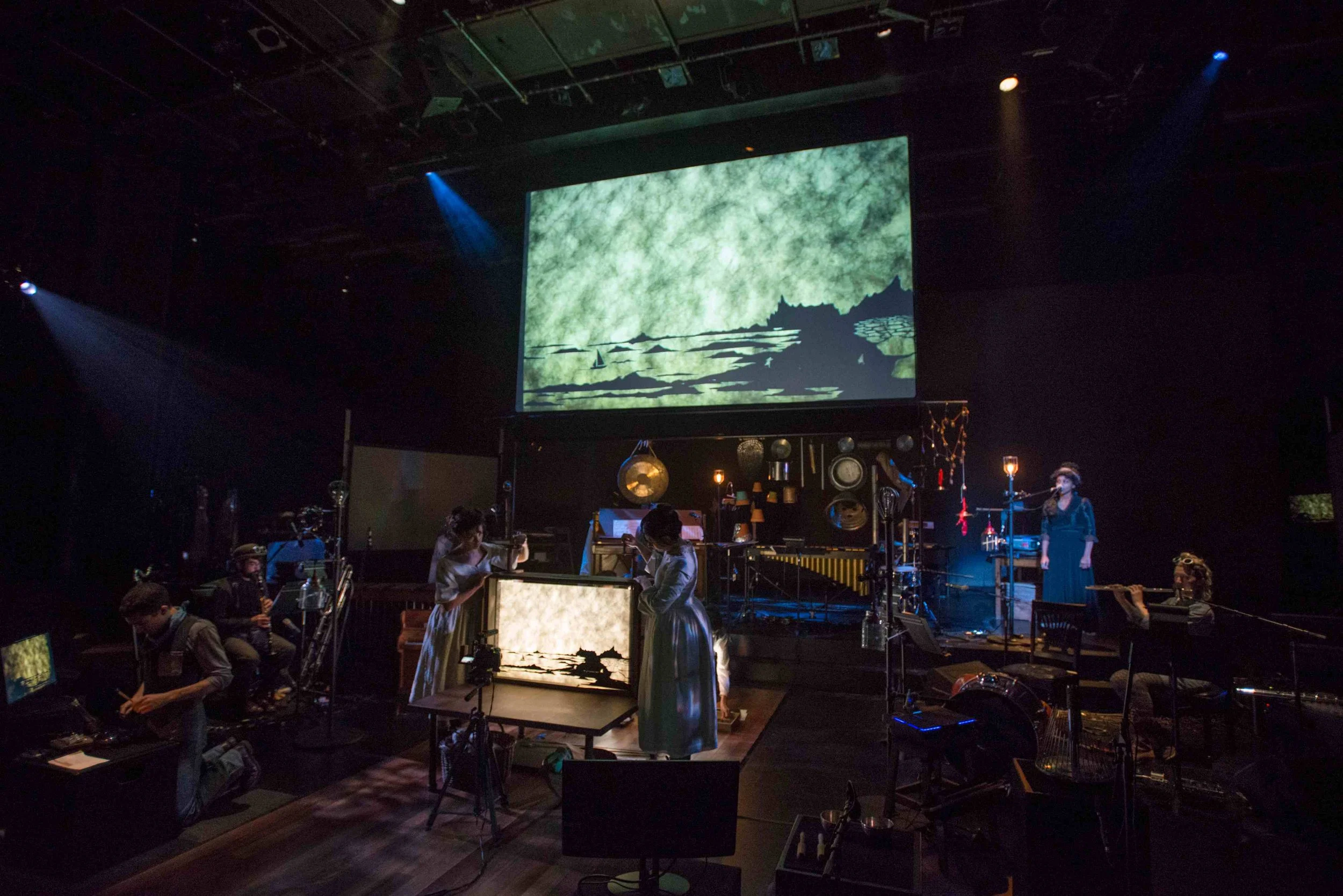
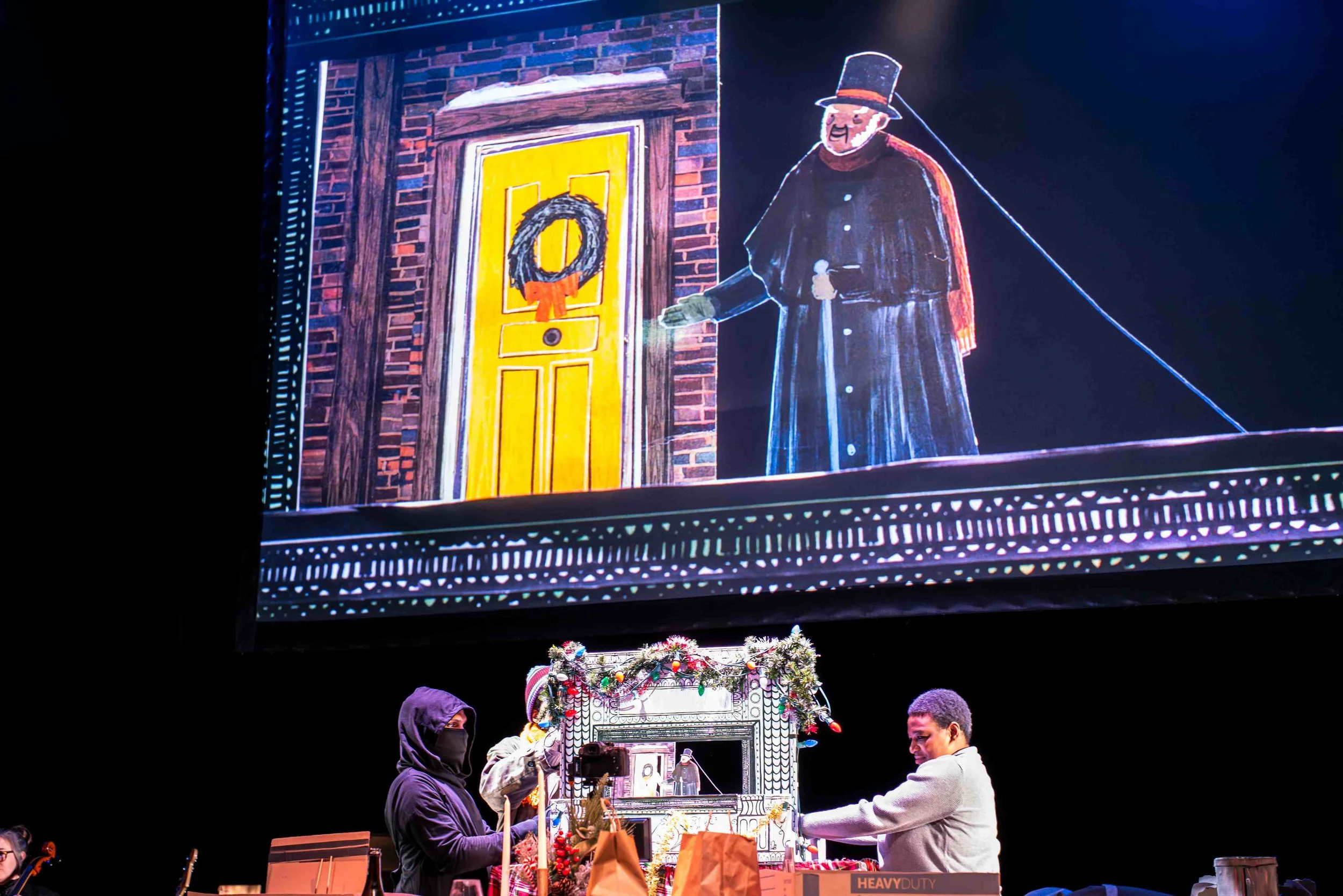
When I entered the Studebaker Theater, I was not met with a set in the traditional sense. Downstage laid a menagerie of instruments, half of which I could not name. Among these instruments are metal pans and flowerpots strung up in the air. The stage was bathed in chilling, cool blue light. Most notably, there was a massive screen hanging upstage. Underneath it stood a smaller, perpendicular screen. Four overhead projectors sat to the left of the screen. Around them laid stacks upon stacks of daintily illustrated backdrops and shadow puppets, none larger than a piece of printer paper. On the right side of the screen stood a camera and more substantial—though almost equally two dimensional—props. And downstage center, in front of the instruments, was the smallest screen. There was really no way to know what I was in for as the lights dimmed. Because referring to “Manual Cinema’s Frankenstein” as “a play” does not even begin to describe the show.







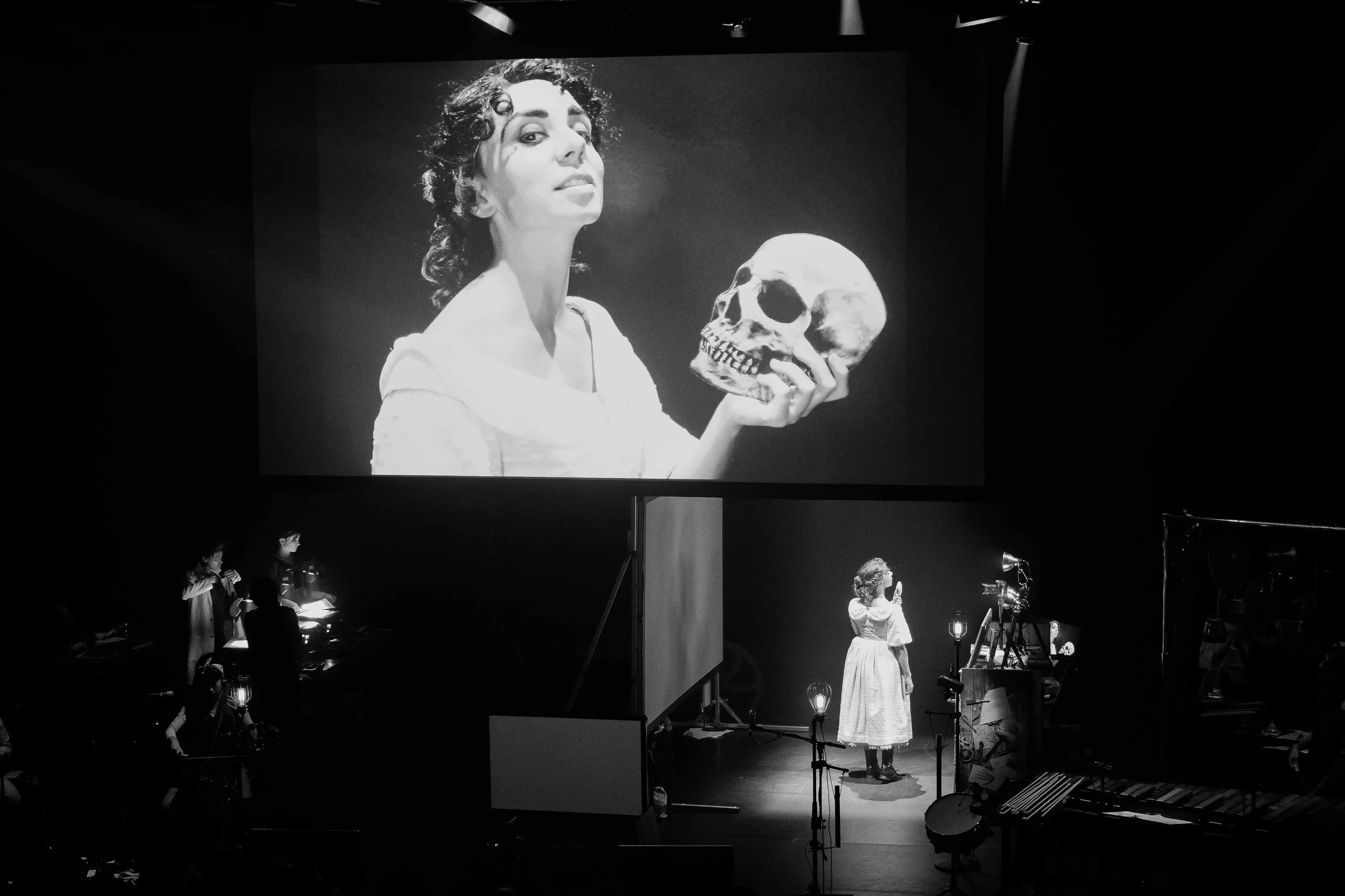
This iteration of Frankenstein doesn’t start with Victor Frankenstein or his Creature, but with Mary Shelley. She struggles to write throughout her pregnancy and the early days of her daughter Clara. After Clara’s premature death, Mary is distraught. Wracked with intense dreams of Clara’s resurrection, Mary finally begins to write Frankenstein. In her story, Victor Frankenstein maniacally attempts to bring his Creature, a collaged corpse, back to life. Horrified by his success, Victor abandons his Creature. Inquisitive and distressed, the Creature wanders the world, its bids for connection ending in death and destruction. Dreaming about the love of its creator, the Creature seeks out Victor, who attempts to kill it. As the two succumb to the howling snow in their final chase, Mary brings a completed copy of Frankenstein to Clara’s grave. The story ends with worlds colliding—Mary sees the Creature, the Creature sees Mary, and the two finally connect as creator and creation.
Mary’s perspective is told through a shadow puppet show. Silhouettes of live actors and two-dimensional models alike move around against illustrated backgrounds. Paper puppets are placed on the projectors, actors stand between the projectors’ light and the perpendicular screen. On the other side of that screen, Victor’s story is told through a black and white silent film. Actors pantomime with props and backdrops in front of a camera, creating a live, old-timey horror movie. At the smallest screen is a physical puppet of the Creature, controlled by one actor while another angles a camera. Through this operation comes the world as seen through the Creature’s eyes. As “Frankenstein” continues, there is an overlap between the mediums of puppetry, the Creature being the only character to travel between all of them. These three worlds are all projected onto the massive screen facing the audience, almost like a movie.
Unlike a movie, or the average play, none of the inner workings of this machine are hidden. Every prop, camera, and wig are placed onstage. This is made abundantly clear at the end of the show, when the audience is invited onstage to explore the moving pieces up close and personal. One might think the operations of “Frankenstein” being so out in the open would detract from the magic of theatre. But seeing actors operate cameras and projectors, ducking on and offscreen during scene transitions—it only adds to the awe. The skills, timing, and teamwork necessary for the show to run smoothly is highly impressive. Manual Cinema does their people right by spotlighting these qualities rather than concealing them. It’s a testament to the true collaborative nature of theatre, and a privilege to watch as an audience member.
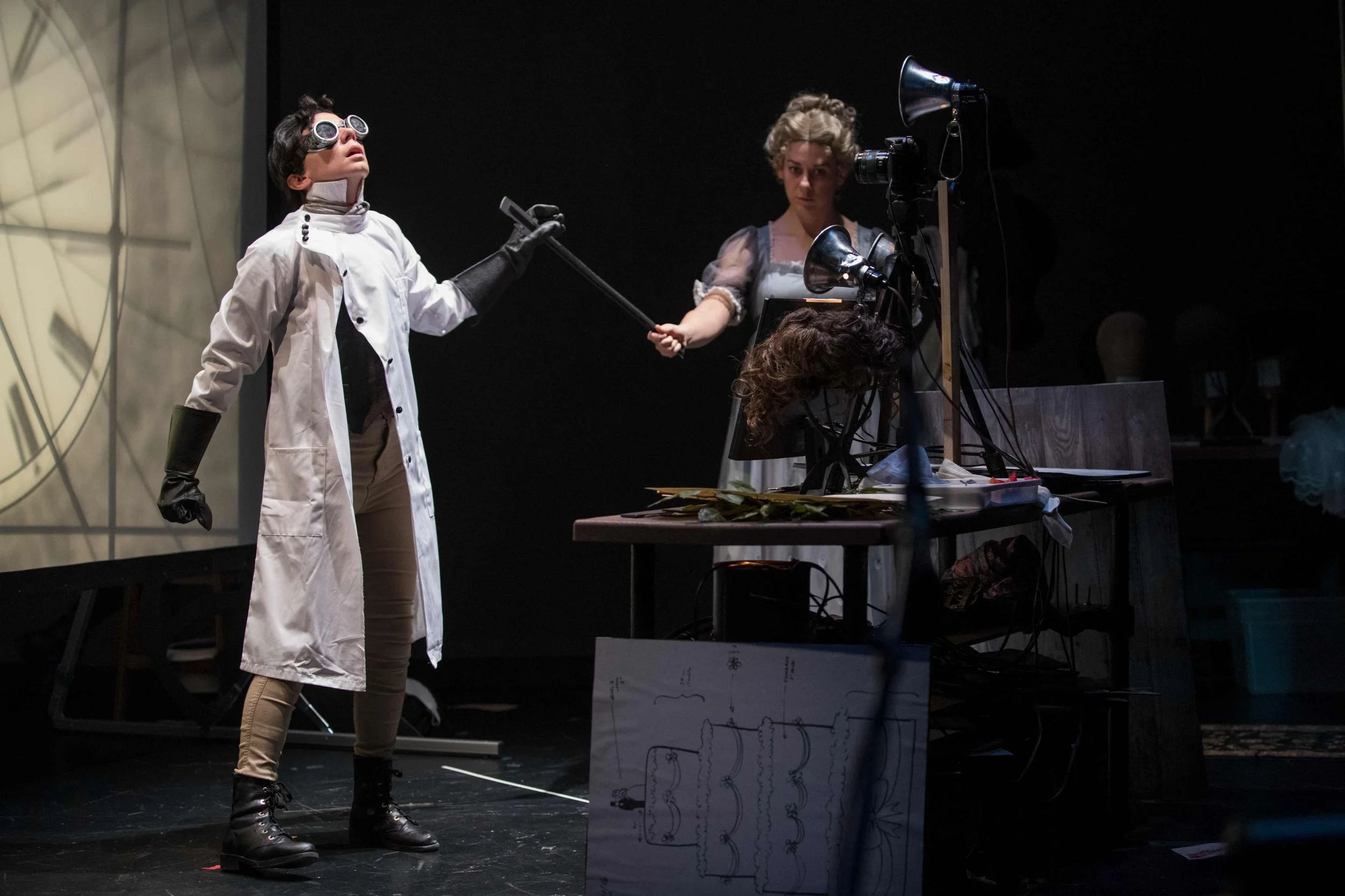

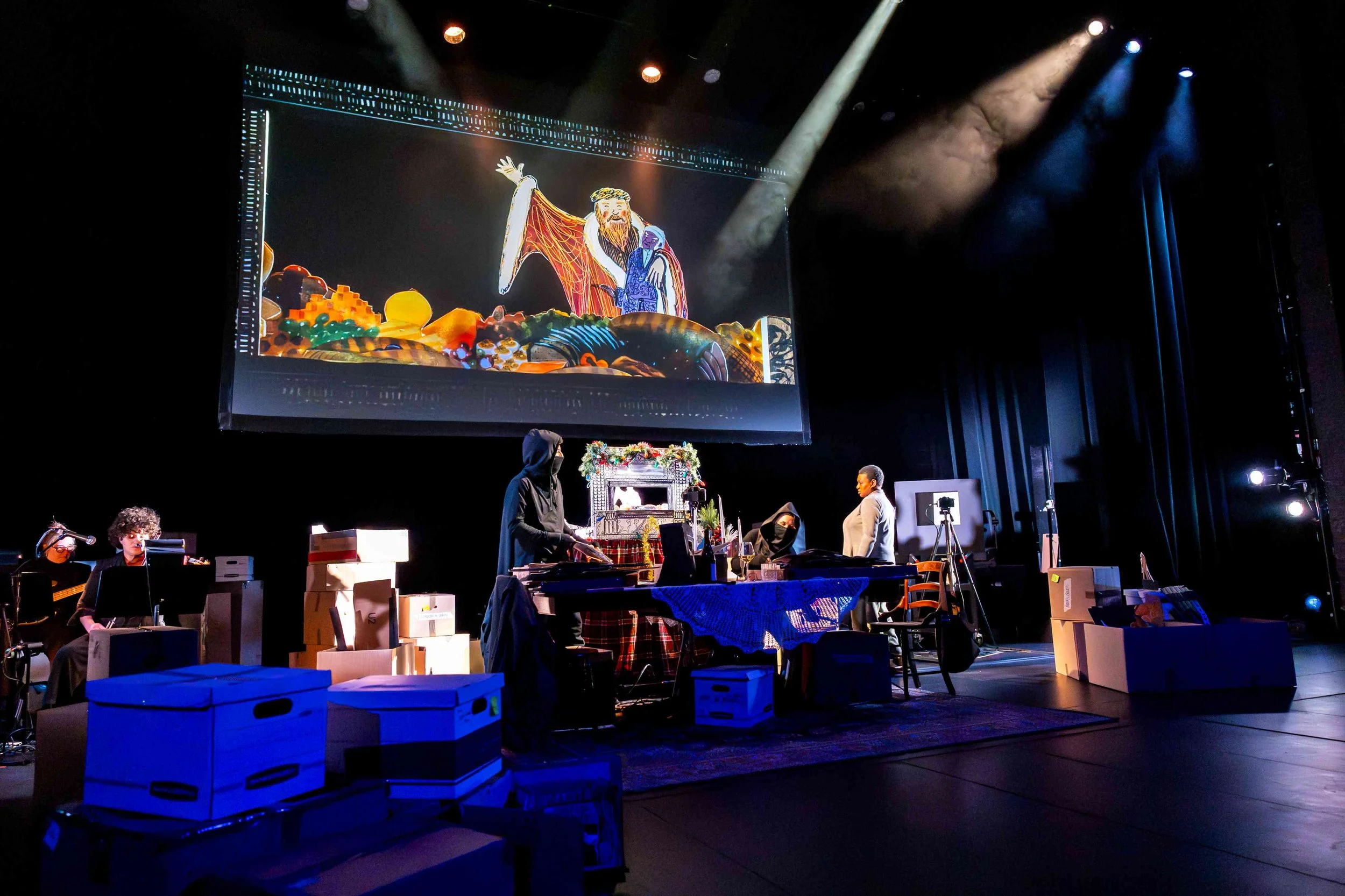
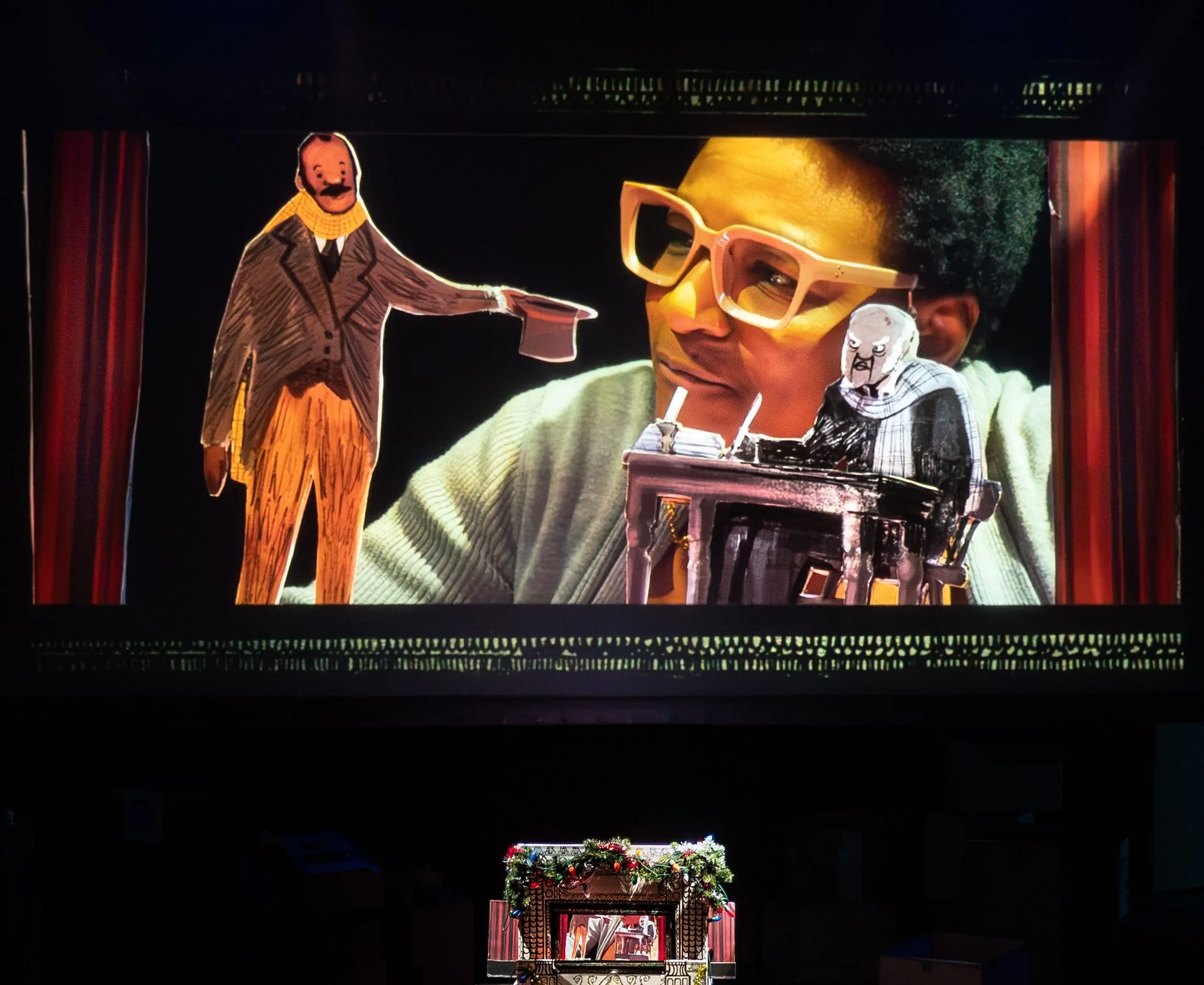
The ensemble nature of “Frankenstein” is brilliant, as actors/puppeteers and musicians blend beautifully into one grand story. One wouldn’t assume that all five of Manual Cinema’s Co-Artistic Directors are involved, and yet they disappear seamlessly into the show. Sarah Fornace has been playing Mary Shelley and Victor Frankenstein since 2018. The effortlessness in which she embodies both parts is abundantly clear. Both director and puppet designer, Drew Dir beautifully states how Mary Shelley’s novel and Manual Cinema’s adaptation utilizes the nature of framing in Gothic literature. The latter is of course aided by Julia Miller’s work as a Co-Deviser on the piece. Keeping the show running—no easy feat considering the amount of technology in use—is Kyle Vegter as the stage manager and board operator. He’s also credited for his original score and sound design. Ben Kauffman has also played a significant role in the auditory aspect of “Frankenstein” as the composer and sound designer. “Frankenstein” would not be possible without their work, or the vitally stunning talents of their fellow actors/puppeteers, musicians, technicians, and designers. Mary Shelley’s Frankenstein may have been written solo, but “Manual Cinema’s Frankenstein” takes a village.
Truly, I have never seen anything like Manual Cinema before. I’m guessing you haven’t either. Anyone who enjoys the arts—whether your enthusiasm lies in theatre, film, puppetry, classic literature, or experimental work—should leap at the chance to see any show of theirs. Up next is the return of “Christmas Carol” at Studebaker Theater, running from December 18th to December 27th. Based purely on my experience watching “Frankenstein,” I can assure you that this adaptation will be strikingly unique.
GUEST CONTRIBUTOR | PERSE GRAMMER is a multidisciplinary writer and theatre artist based in Chicago. Grammer is currently developing their latest play through a mentorship with Sandy Shinner at Shattered Globe Theatre. They hold a BFA in Playwriting from The Theatre School at DePaul University. www.persegrammer.com
PHOTOS: Drew Dir, Michael Brosilow,
Tiffany Bessire, Jen Udoni, Frano Images
Manual Cinema’s
Christmas Carol
Studebaker Theater
410 South Michigan
2026 Holiday Run: December 18-27, 2026
TICKETS
For more reviews, visit: Theatre In Chicago
PicksInSix® is a registered trademark of Roxbury Road Creative, LLC