CONVERSATIONS with Ed Tracy

Inspire. Educate. Entertain.

CONVERSATIONS|PicksInSix®Reviews featuring short form critical reviews and podcasts with authors and influential leaders in the arts, media and business.

Filtering by Category: Solo Show

PicksInSix Review: Black Girl From A White Suburb - American Blues Theater


What’s Changed In Three Decades?
PicksInSix® Review | Guest Contributor |
Perse Grammer

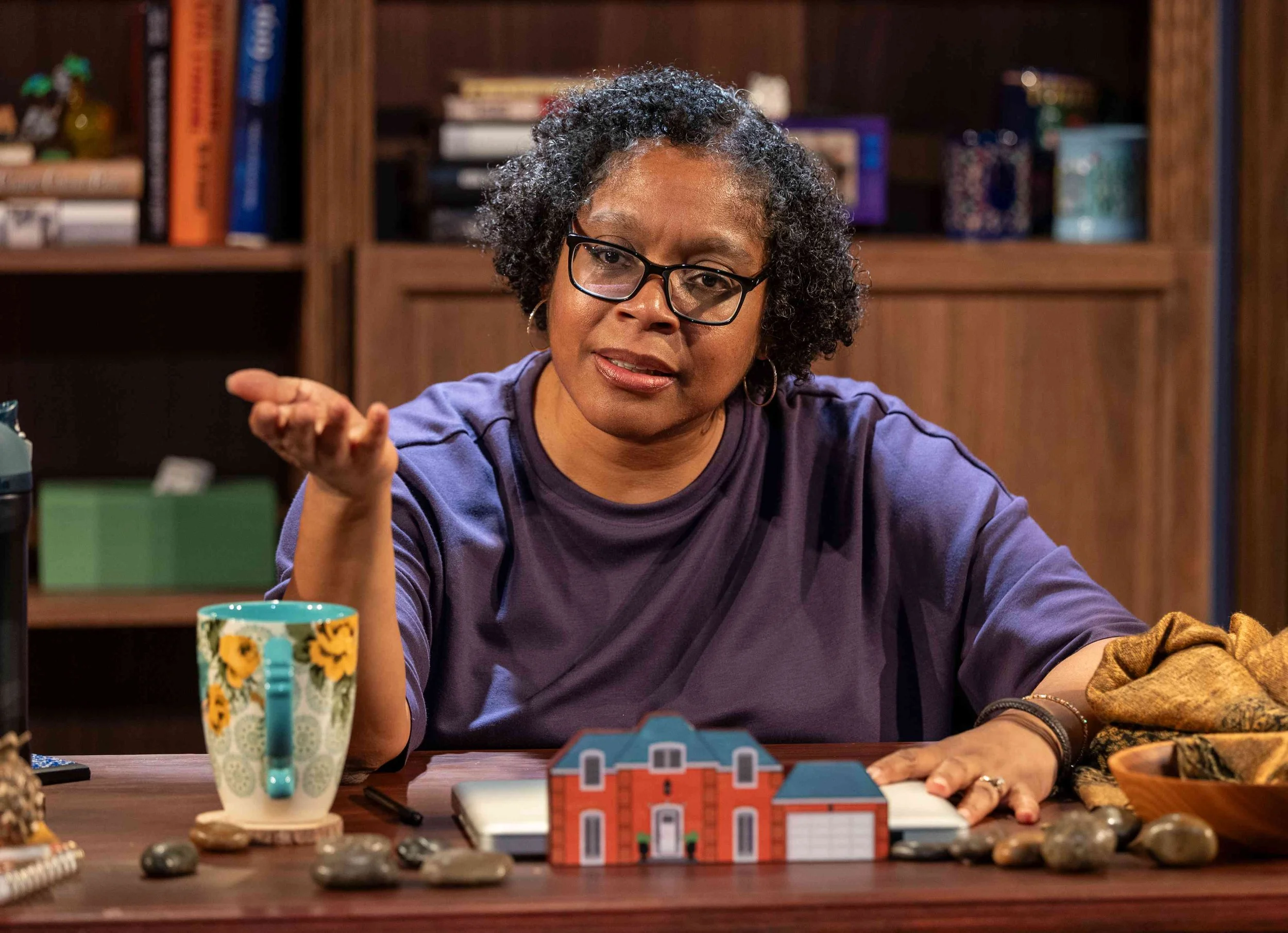
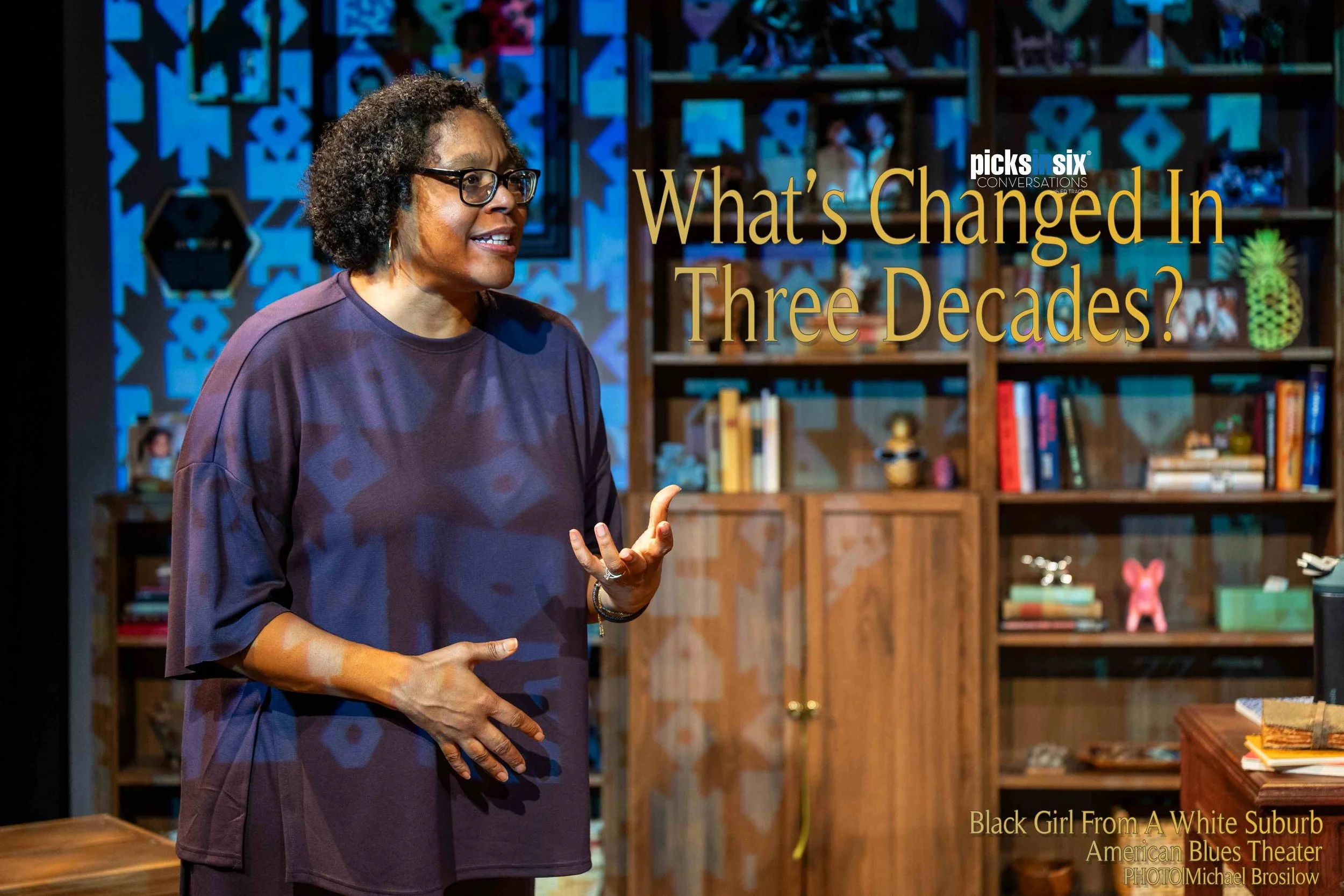
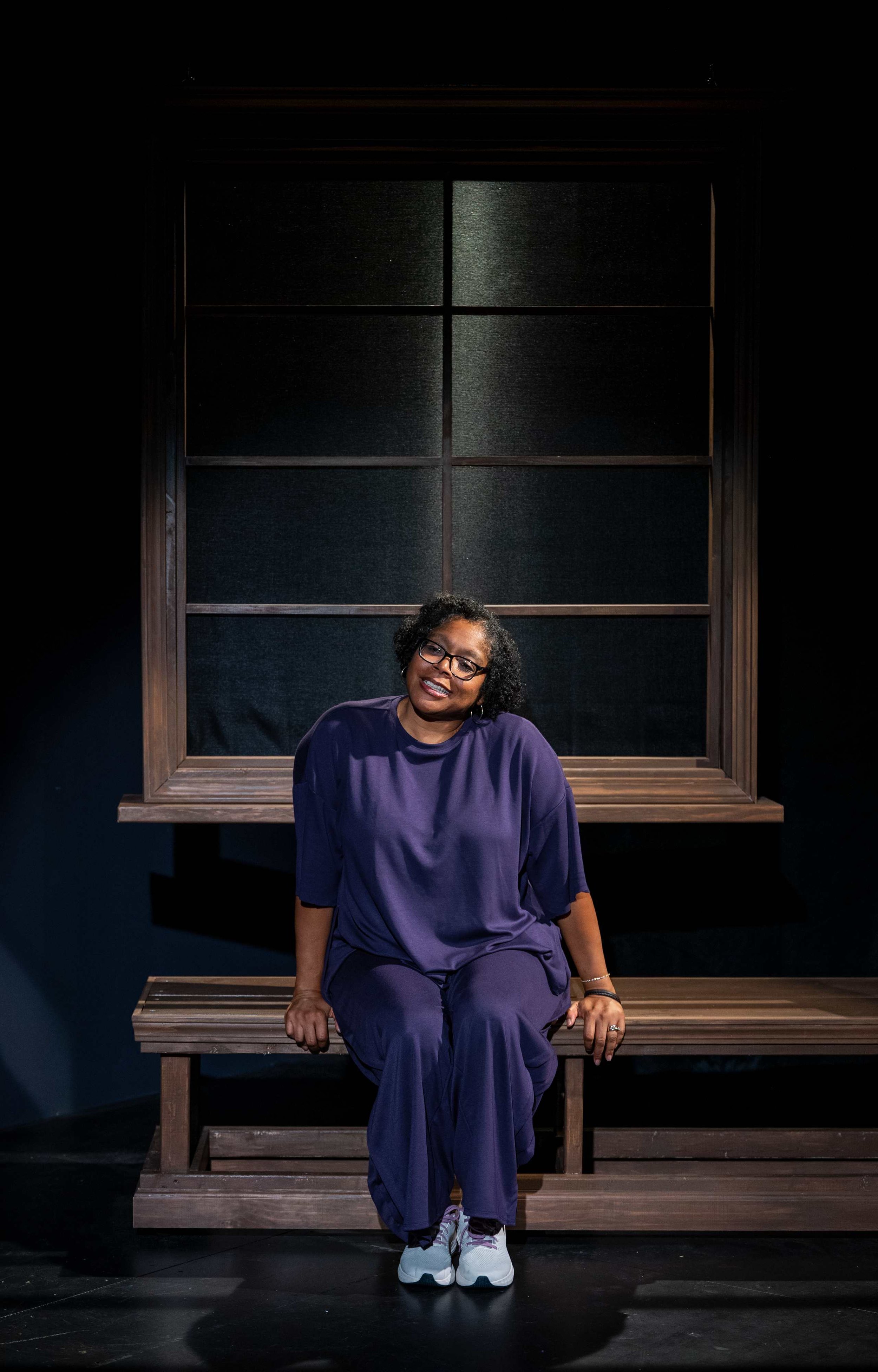
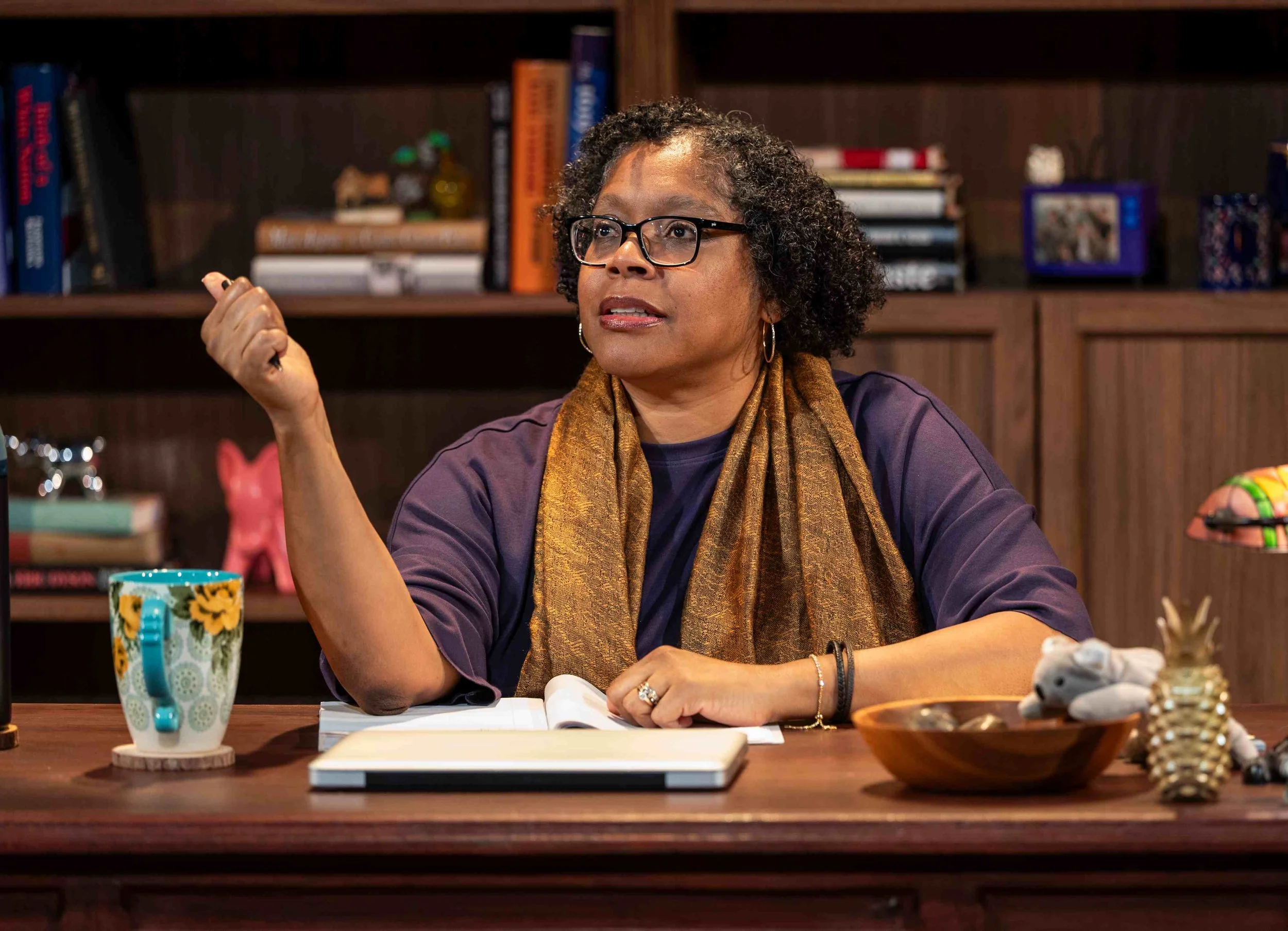
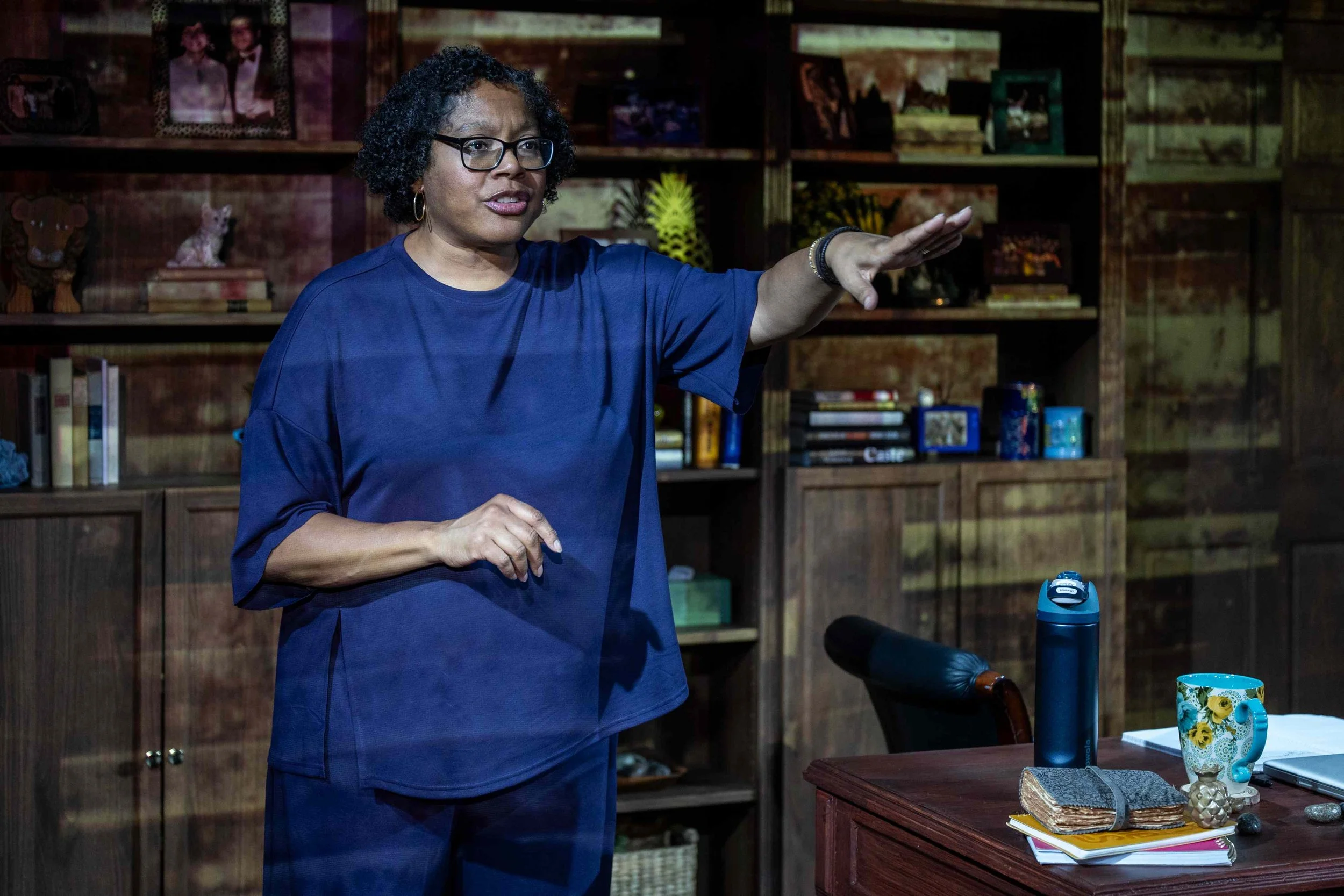
“Black Girl From A White Suburb” immerses us in schools and theaters alike but starts in a living room. This American Blues Theater’s black box space is intimate—ideal for such a personal show that speaks directly to its audience. Wooden shelves span our backdrop with an array of knickknacks and photographs placed upon them. A similarly designed desk sits in the center, framed by two windows. Shokie Tseumah’s overall design is subtle, but stylish, creating a set mutable enough to transform from a grade school to the Steppenwolf Theatre. Each time, this shift is heralded by playwright and actress Tania Richard. She starts off the show by slipping onstage and lying down on the rug, all while the pre-show music keeps playing.
After a brief rant on the broad nature of storytelling, Richard launches into the tale of her upbringing. She describes how her Haitian parents raised her in Western Springs, Illinois, the overwhelming whiteness of which is emphasized via dozens of school photographs being projected across the shelves and windows (courtesy of Paul Deziel). From early childhood, Richard’s love of theatre is strong and endearing, touting the familiar, awkward joy of middle school drama club members. That joy is repeatedly strangled by the pervasive racism sidelining her, punishing her, and in one production of “The Wizard of Oz,” literally erasing her Blackness with green body paint. Her transition from adolescence to adulthood is marked by her self-perception changing from “not white” to “Black”. For the first time, she speaks out against unfair criticism on her college’s production of “A Raisin In The Sun.” As part of the all-Black cast of “The Song of Jacob Zulu,” she finds joy in Zulu vocalizations and grief over the acquittal of police officers who assaulted Rodney King. Richard takes us on an emotional rollercoaster, ending with a call to tell our stories, as she has just told hers.


Whether acting as herself or stepping into someone else’s shoes, Richard is magnetic. Her audience interactions vary, sometimes asking us questions and insisting on an answer, and other times just allowing us to sit with our thoughts. Her humor ranges from soft to sharp, always pointedly in service of the greater story she’s telling. And, whether embodying her mother, a racist history teacher, or that dorky tweenage theatre kid whose enthusiasm was sound even if her logic wasn’t, Richard makes you believe she is who she says she is. She’s warm and personable, inviting you in to hear her stories. Even—and especially—the most harrowing ones.

The strength of “Black Girl From A White Suburb,” as directed by J. Nicole Brooks, is the specific personal experience it contains. When Richard is rattling off buzzwords for the audience to research, I’m not drawn in. But when she’s describing locking eyes with her grade school drama teacher who’s demanding to know whether her tears during an acting exercise are real, I’m enraptured. Richard presents us with many compelling moments, most notably, the ending. During the opening night of “School Girls; Or, The African Mean Girls Play,” after months of suffering through the despair and rage of Breonna Taylor and George Floyd’s murders, of battling lungs damaged by Covid and neglected by medical professionals, Richard finally breathes deeply enough to shout her line, “THAT’S ENOUGH!” It’s because of powerful moments like these that I’m left wanting more. Granted, it’s difficult to adapt a 300-page book into an hourlong one-woman show. But I felt, compared to how in depth Richard delved into her childhood, we didn’t get enough of her adulthood. How did she transition from having a parasocial relationship with the college cast of “A Raisin In The Sun” to having a professional and social relationship with the Steppenwolf cast of “The Song of Jacob Zulu?” What shifted her writing process from fanfiction of white characters to activism, Black joy, and memoir? After describing her first experience being in an all-Black cast, Richard states it would be another 32 years before experiencing her first all-Black women cast. That blunt time skip is effective, and sobering. But we miss so much of her life in this significant gap.
“Disappointed, but not surprised” is a phrase used in “Black Girl From a White Suburb,” and it’s how I felt hearing about Richard’s adolescent theatre experiences. Granted, being cast as the main villain in her high school’s otherwise all-white production of “The Wiz” was particularly egregious. But did the fact that an almost entirely white school decided to put on “The Wiz,” of all shows, shock me? No. Because in the decades since, colorblind casting for race-specific shows hasn’t stopped. In fact, it’s a common enough occurrence within predominantly white drama programs that I’ve heard fellow Gen Z thespians using alternate titles denoting these productions—such as In the Whites (“In the Heights”), White Side Story (“West Side Story”), and Whites On This Island (“Once On This Island”). I haven’t found a name for this one, but I have seen an elementary school production of “Hairspray” where Motormouth Mabel was played by an Asian girl in an Afro wig. And these weren’t the only familiar tales. I’ve heard several writers of color, both in-person peers and online strangers, talk about how they’d only recently realized that every character they wrote about was white. A brilliant Black actress I worked with once mentioned how, for her first decade of professional acting, she never got cast in a leading role in her predominantly white town. Her Chicago debut had her as the leading woman—reassuring her that it wasn't her lack of talent that had been inhibiting her. It had been others’ bias.

So, at the end of “Black Girl From A White Suburb,” when Richard encouraged the audience to tell their stories like she was, a part of me wondered—what would it do? What could it affect, when the racism a woman three decades my senior experienced is the same racism my peers are facing now? When the answer came to me, it was so simple, my prior confusion was laughable. One woman sharing her history isn’t going to change the world. But she can change someone’s mind. Maybe a writer of color in the audience realizes they can write more than just white characters. Maybe a high school teacher decides to push back against the drama department’s insensitive programming. Maybe another Black girl from a white suburb is watching her own experiences play out onstage, and it’s a reprieve from the isolation Richard suffered through for her entire adolescence. Everyone can take a message from “Black Girl from a White Suburb” and spend days mulling it over, questioning it, dissecting it, and learning from it. The thinking doesn’t stop once you exit the theater.

GUEST CONTRIBUTOR | PERSE GRAMMER is a multidisciplinary writer and theatre artist based in Chicago. Grammer is currently developing their latest play through a mentorship with Sandy Shinner at Shattered Globe Theatre. They hold a BFA in Playwriting from The Theatre School at DePaul University.  www.persegrammer.com

PHOTO|Michael Brosilow

American Blues Theater
presents
World Premiere
Black Girl From A White Suburb
5627 N Lincoln
through October 4, 2026

WEBSITE

TICKETS

PROGRAM

BACKSTAGE GUIDE

For more reviews, visit: Theatre In Chicago

ARCHIVE

PicksInSix® is a registered trademark of Roxbury Road Creative, LLC

PicksInSix Review: Dennis Watkins - The Magic Parlour - The Goodman & Petterino's


Come Early. Stay Late. Be Astounded!
PicksInSix® Review |
Ed Tracy

At the center of any fabulous evening at “The Magic Parlour”—celebrating its 16th year in downtown Chicago—Dennis Watkins may be identifying random objects gathered from the audience after duct taping coins to his eye sockets, interlocking wedding rings chosen at random, and floating a handful of playing cards from his left hand to his right pocket. It’s all close-up magic—a mix of prestidigitation, mystifying mind-reading, sophisticated illusions and sleight of hand—with a central numerological theme that is astounding.

For the record, Watkins’s most amazing feat might just be that he has not aged a single day in all those years, despite multiple shows a week and an active corporate and private event enterprise. The secret to his youthful longevity—"The Magic Parlour” is currently the longest-running magic show in Chicago—is his passion for storytelling and an unwavering dedication to the art of making magic accessible, something he freely admits is a series of choices stemming from our commitment as an audience to believe that anything is possible.

Watkins, a third-generation magician and mentalist, is a consummate showman—soft spoken yet wildly energetic, appealing to young and old alike with a devilish, all-knowing grin, quick wit and a keen sense of humor. Over 90 magically-packed minutes, Watkins connects on a personal level with each of up to 60 audience members in the show room on the lower level of Petterino’s. If you spend too much time thinking about what you just saw, you will likely miss the next illusion. Watkins sets a steady, entertaining pace, with lots of audience interaction building from one astounding feat after another.

As we learn from Watkins, there are an uncalculatable number of variations in a standard deck of cards. So, it comes as no surprise that as the cards pass from one unsuspecting volunteer to another on stage in plain view for all to see, any apparent chaos very quickly falls into startling, recognizable order. And on this night, an overhead camera captured the breakneck speed of Watkins’s shuffling skills that help punctuate his storytelling. But it is the numeric theme that rules in nearly every major element of the show, so pay close attention. The payoff will leave you in awe.

The 8:30 pm show on Friday was my fourth experience including a 2016 performance at the Palmer House, the 2023 opening night at Petterino’s location and, during the pandemic, an uplifting virtual show celebrating retired judge and theatre critic Julian Frazin’s birthday. The price of admission in the intimate lounge at Petterino’s includes a drink at the bar and, for a modest upcharge, you can join a dozen or so patrons in “The Encore Room” following the main show and get the ultimate close-up experience.

A special Halloween engagement, “The Spirit Cabinet,” is scheduled for October 25, 26, 29 and 30. Dates fill up early with special holiday season additions in November and December, and the show is perfect for family outings and corporate events. Advance reservations are suggested. Come early. Stay late. Be astounded!

PHOTO|Kyle Flubacker

The Goodman & Petterino’s
present
Dennis Watkins
The Magic Parlour
50 West Randolph

OPEN RUN


WEBSITE

TICKETS

312.443.3800


For more reviews, visit: Theatre In Chicago

ARCHIVE

PicksInSix® is a registered trademark of Roxbury Road Creative, LLC

PicksInSix Review: ROYKO: The Toughest Man in Chicago


ROYKO: “Always, always say it now.”

PicksInSix® Review | Ed Tracy

In his exceptional one-man show “ROYKO: The Toughest Man in Chicago” that opened Friday in a limited run at the Chopin Theater, writer/actor Mitchell Bisschop brings the life and career of Mike Royko into sharp focus. Using Royko’s own words, the show is culled from nearly eight thousand columns spanning four decades that were syndicated nationally at a time when everything was not a click away. It is a remarkable historical archive—epic in nature—on topics ranging from Chicago politics and personalities to Picasso and pizza from the early 50s to his untimely passing in 1997.

Much of what Royko has written is still available thanks to his own foresight to reprint much of his writing in numerous books, the committed nature of his family to preserve his work in print and online, and to the publications themselves who have made them publicly accessible. Ask anyone over fifty living in Chicago about Royko’s work and you will understand the enormous impact that he had on daily readers through the years.

Bisschop and director Steve Scott deliver a compelling, and at times, deeply moving portrait of the man who was by his own account equally beloved and despised but never pulled a punch on a point he believed in. Whether it was the 1960s Daley political machine or recollections of Jackie Robinson’s first day at Wrigley, the stories flow effortlessly.  Scott’s influence can be seen all over this work, in Bisschop’s superbly-paced delivery and the sequential transitions of the storyline aided by the timing, placement and impact of Smooch Medina’s projections and stylized musical underscoring by Christopher Kriz.

In the center of it all is Bisschop weaving together a tapestry of Royko’s early career, not so much in a linear sense, but through the varied topics of his columns—Frank Sinatra’s city sponsored security detail, his mother’s dry cleaning and tailoring store, Chicago’s diverse neighborhoods, RibFest—each punctuated with personal details and wry commentary.  There are frequent trips to the Billy Goat Tavern, which stands as a living testament to Royko’s roots.

For the record, I was a Royko neophyte when I first moved to Chicago in 2002. What I could not gather from many of the references at the time, others helped fill in the gaps. With so much material to choose from, Bisschop wisely concentrated his efforts on a balance between the serious and sublime, equally framed in the brazen insight and searing satire that Royko used to highlight public injustice. The sensitive, emotionally-charged choices are evidence of the appeal that drove readers to his column first whether in the Chicago Daily News, the Chicago Sun Times or the Chicago Tribune.  Royko’s touching tribute following the unexpected passing of his first wife Carol is one of the night’s most powerful moments. There are tributes to Martin Luther King and John Belushi. And Royko’s passionate struggle with the Chicago Cubs plays out here as well.

“Royko: The Toughest Man in Chicago” will serve to introduce a new generation to this remarkable life. There is a helpful historical timeline in the show’s program and a note where Bisschop states that he is trying to “allow people to feel the same magic that I felt when I read Mike for the first time.” Take a look for yourself and you will certainly agree that it is a staggering accomplishment. See this show and you will know that only a gifted actor of Bisschop’s unique skills and rarified commitment to the source material could succeed so well.  

PHOTO|Sarah Larson

Toughest Man Productions
presents
ROYKO: The toughest Man in Chicago
Chopin Theater
through September 29, 2024

WEBSITE

TICKETS

For more reviews, visit: Theatre In Chicago

ARCHIVE

PicksInSix® is a registered trademark of Roxbury Road Creative, LLC

ALL RIGHTS RESERVED

Copyright 2014-2026

Roxbury Road Creative, LLC

Powered by Squarespace