
PicksInSix Review: Black Girl From A White Suburb - American Blues Theater
What’s Changed In Three Decades?
PicksInSix® Review | Guest Contributor | Perse Grammer
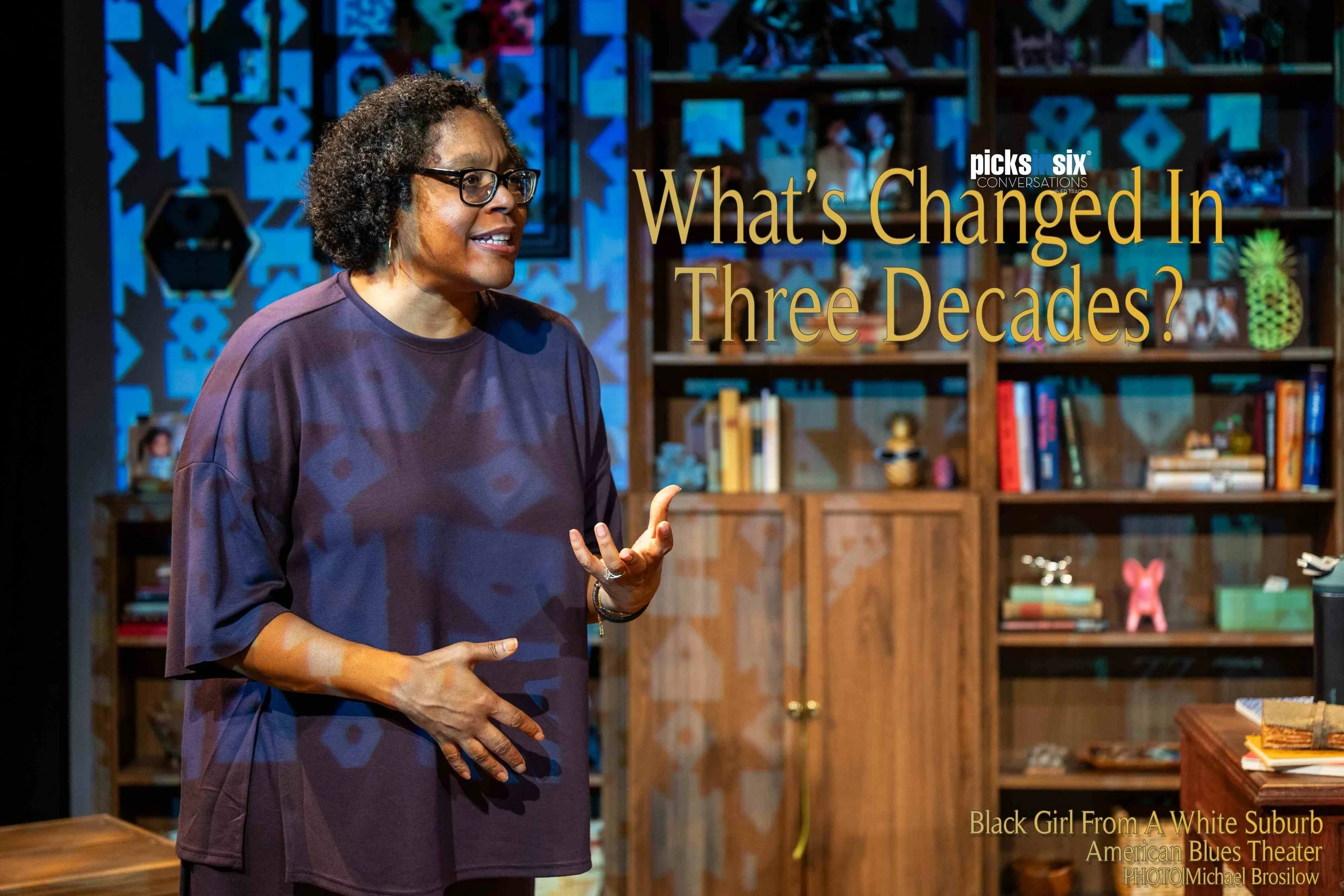
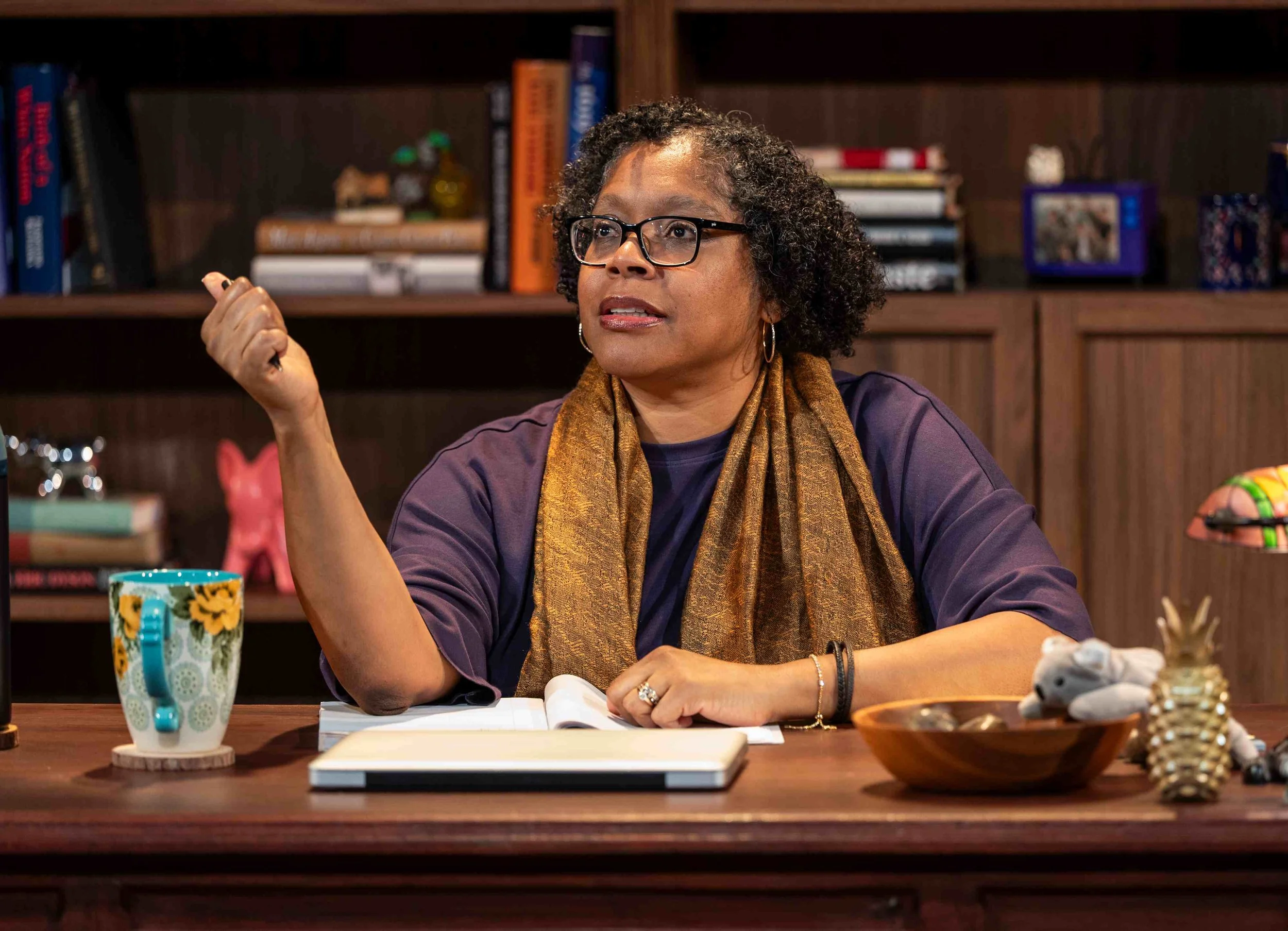
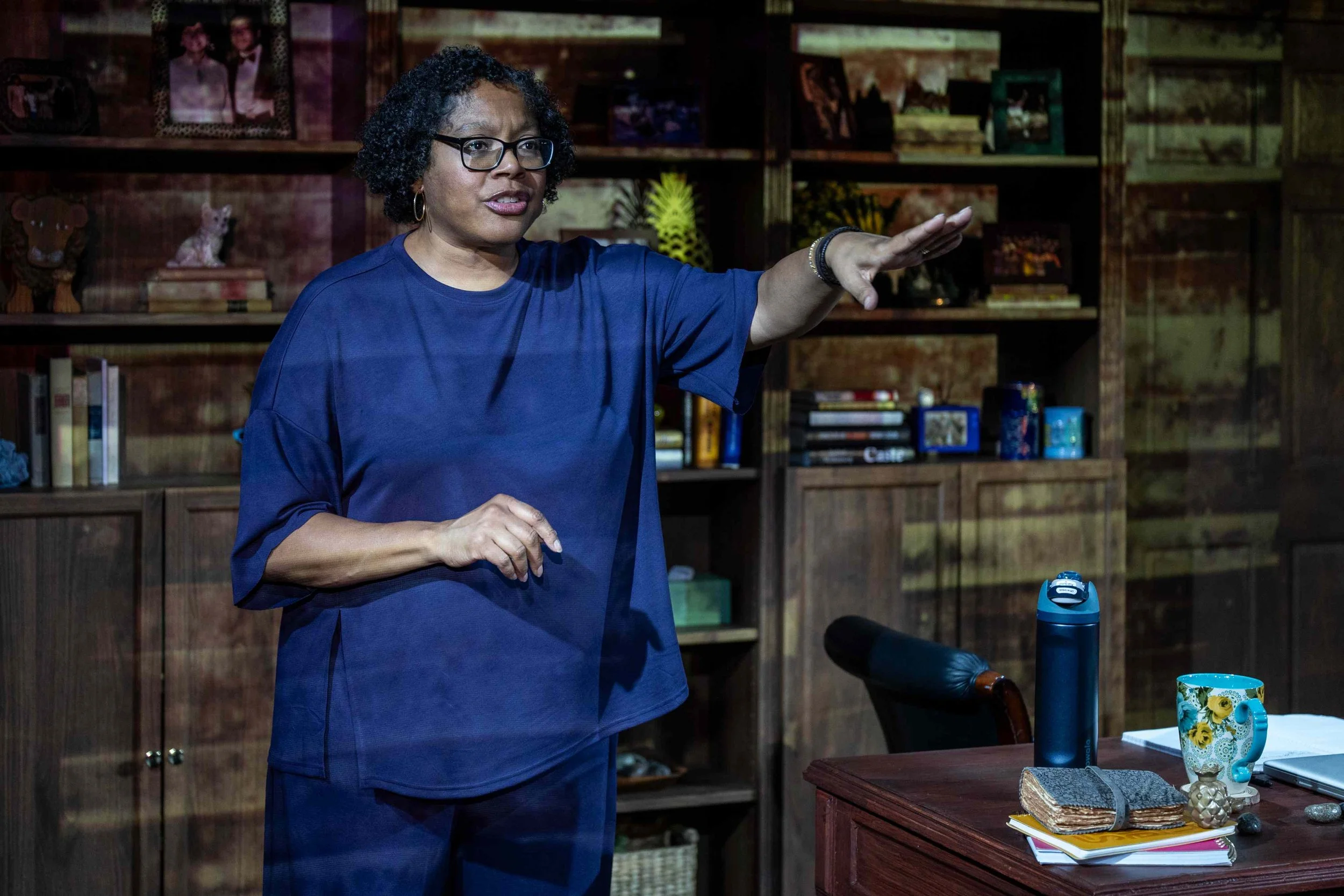
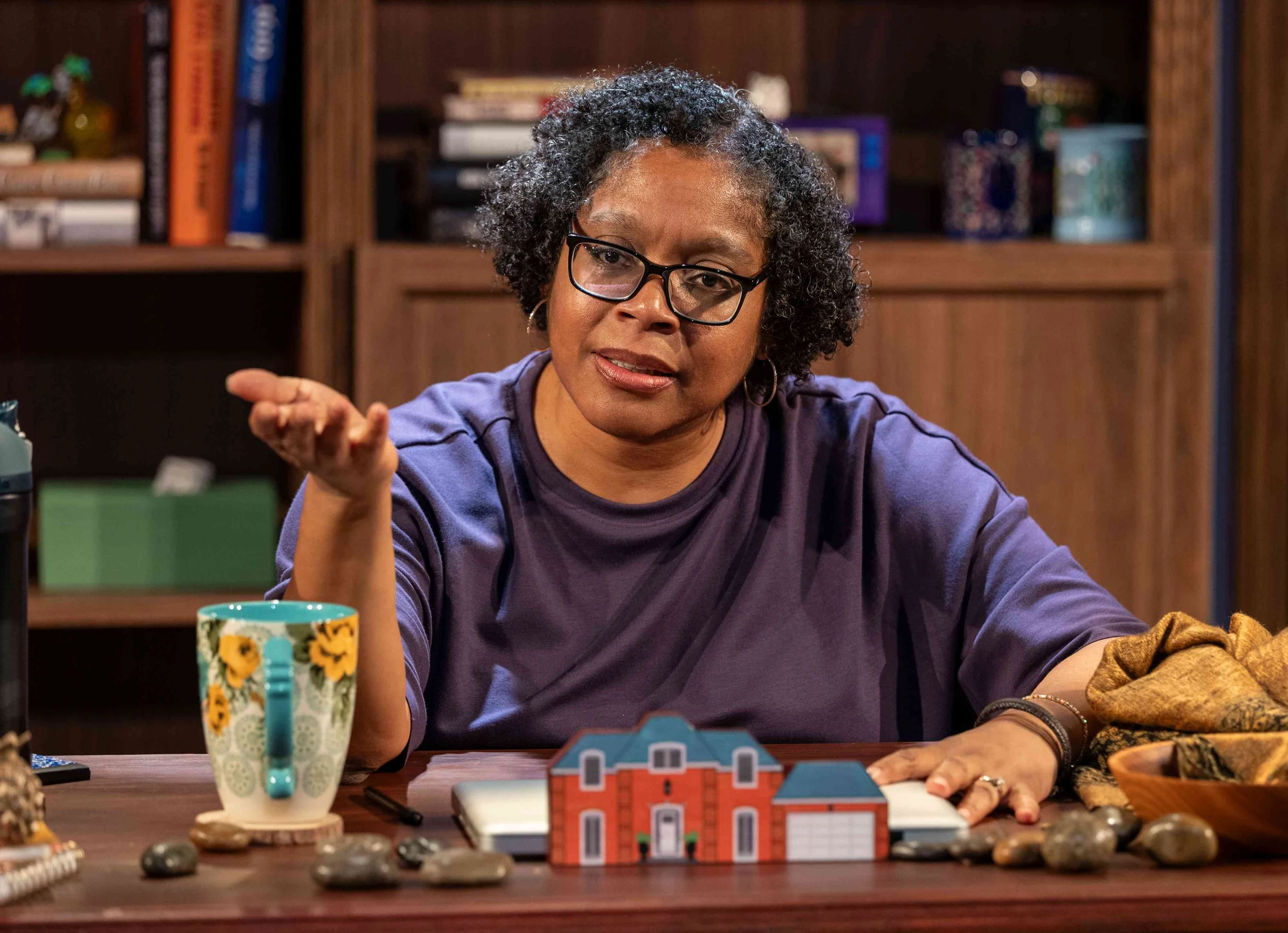
“Black Girl From A White Suburb” immerses us in schools and theaters alike but starts in a living room. This American Blues Theater’s black box space is intimate—ideal for such a personal show that speaks directly to its audience. Wooden shelves span our backdrop with an array of knickknacks and photographs placed upon them. A similarly designed desk sits in the center, framed by two windows. Shokie Tseumah’s overall design is subtle, but stylish, creating a set mutable enough to transform from a grade school to the Steppenwolf Theatre. Each time, this shift is heralded by playwright and actress Tania Richard. She starts off the show by slipping onstage and lying down on the rug, all while the pre-show music keeps playing.
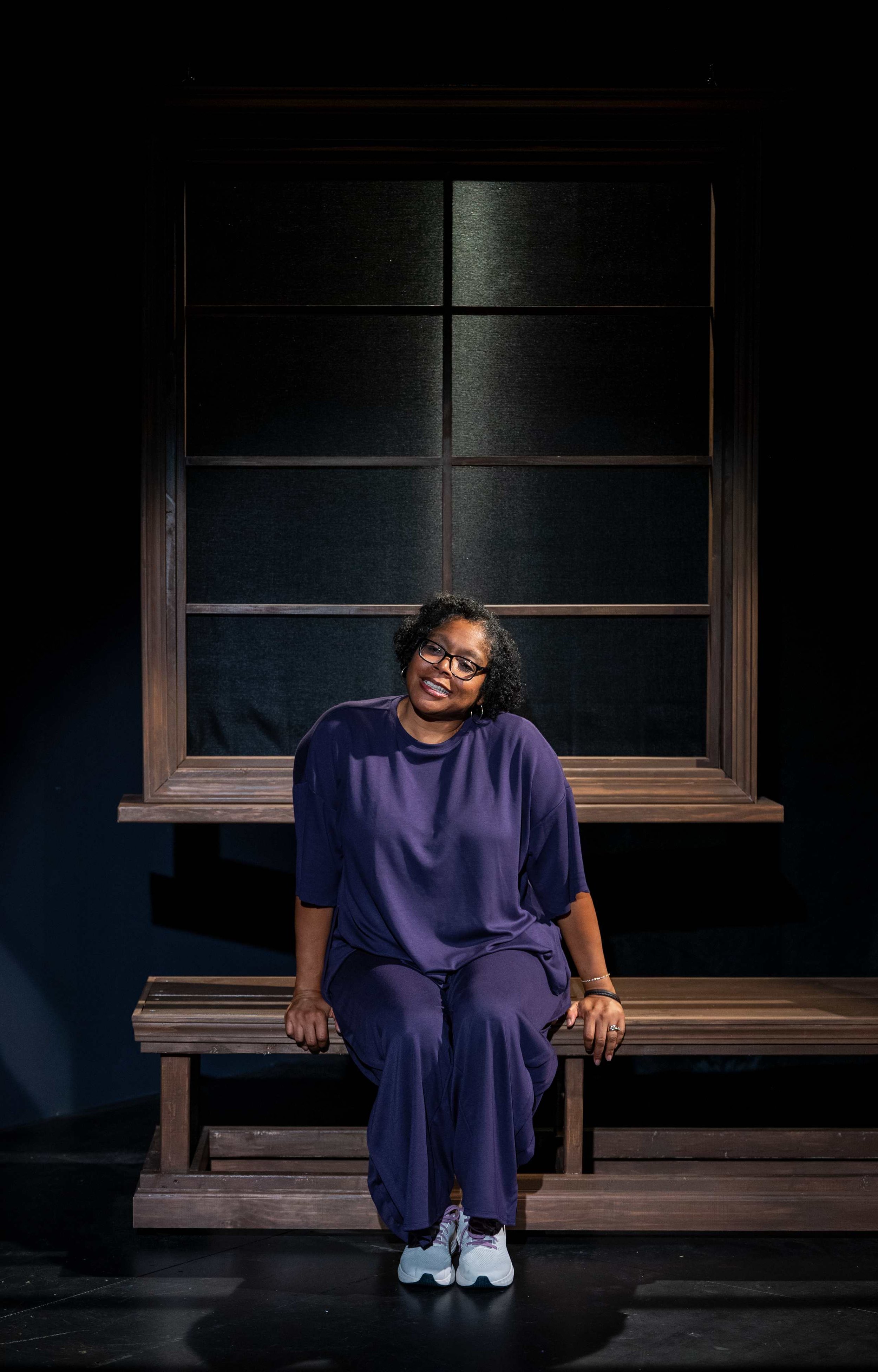
After a brief rant on the broad nature of storytelling, Richard launches into the tale of her upbringing. She describes how her Haitian parents raised her in Western Springs, Illinois, the overwhelming whiteness of which is emphasized via dozens of school photographs being projected across the shelves and windows (courtesy of Paul Deziel). From early childhood, Richard’s love of theatre is strong and endearing, touting the familiar, awkward joy of middle school drama club members. That joy is repeatedly strangled by the pervasive racism sidelining her, punishing her, and in one production of “The Wizard of Oz,” literally erasing her Blackness with green body paint. Her transition from adolescence to adulthood is marked by her self-perception changing from “not white” to “Black”. For the first time, she speaks out against unfair criticism on her college’s production of “A Raisin In The Sun.” As part of the all-Black cast of “The Song of Jacob Zulu,” she finds joy in Zulu vocalizations and grief over the acquittal of police officers who assaulted Rodney King. Richard takes us on an emotional rollercoaster, ending with a call to tell our stories, as she has just told hers.







Whether acting as herself or stepping into someone else’s shoes, Richard is magnetic. Her audience interactions vary, sometimes asking us questions and insisting on an answer, and other times just allowing us to sit with our thoughts. Her humor ranges from soft to sharp, always pointedly in service of the greater story she’s telling. And, whether embodying her mother, a racist history teacher, or that dorky tweenage theatre kid whose enthusiasm was sound even if her logic wasn’t, Richard makes you believe she is who she says she is. She’s warm and personable, inviting you in to hear her stories. Even—and especially—the most harrowing ones.
The strength of “Black Girl From A White Suburb,” as directed by J. Nicole Brooks, is the specific personal experience it contains. When Richard is rattling off buzzwords for the audience to research, I’m not drawn in. But when she’s describing locking eyes with her grade school drama teacher who’s demanding to know whether her tears during an acting exercise are real, I’m enraptured. Richard presents us with many compelling moments, most notably, the ending. During the opening night of “School Girls; Or, The African Mean Girls Play,” after months of suffering through the despair and rage of Breonna Taylor and George Floyd’s murders, of battling lungs damaged by Covid and neglected by medical professionals, Richard finally breathes deeply enough to shout her line, “THAT’S ENOUGH!” It’s because of powerful moments like these that I’m left wanting more. Granted, it’s difficult to adapt a 300-page book into an hourlong one-woman show. But I felt, compared to how in depth Richard delved into her childhood, we didn’t get enough of her adulthood. How did she transition from having a parasocial relationship with the college cast of “A Raisin In The Sun” to having a professional and social relationship with the Steppenwolf cast of “The Song of Jacob Zulu?” What shifted her writing process from fanfiction of white characters to activism, Black joy, and memoir? After describing her first experience being in an all-Black cast, Richard states it would be another 32 years before experiencing her first all-Black women cast. That blunt time skip is effective, and sobering. But we miss so much of her life in this significant gap.

“Disappointed, but not surprised” is a phrase used in “Black Girl From a White Suburb,” and it’s how I felt hearing about Richard’s adolescent theatre experiences. Granted, being cast as the main villain in her high school’s otherwise all-white production of “The Wiz” was particularly egregious. But did the fact that an almost entirely white school decided to put on “The Wiz,” of all shows, shock me? No. Because in the decades since, colorblind casting for race-specific shows hasn’t stopped. In fact, it’s a common enough occurrence within predominantly white drama programs that I’ve heard fellow Gen Z thespians using alternate titles denoting these productions—such as In the Whites (“In the Heights”), White Side Story (“West Side Story”), and Whites On This Island (“Once On This Island”). I haven’t found a name for this one, but I have seen an elementary school production of “Hairspray” where Motormouth Mabel was played by an Asian girl in an Afro wig. And these weren’t the only familiar tales. I’ve heard several writers of color, both in-person peers and online strangers, talk about how they’d only recently realized that every character they wrote about was white. A brilliant Black actress I worked with once mentioned how, for her first decade of professional acting, she never got cast in a leading role in her predominantly white town. Her Chicago debut had her as the leading woman—reassuring her that it wasn't her lack of talent that had been inhibiting her. It had been others’ bias.
So, at the end of “Black Girl From A White Suburb,” when Richard encouraged the audience to tell their stories like she was, a part of me wondered—what would it do? What could it affect, when the racism a woman three decades my senior experienced is the same racism my peers are facing now? When the answer came to me, it was so simple, my prior confusion was laughable. One woman sharing her history isn’t going to change the world. But she can change someone’s mind. Maybe a writer of color in the audience realizes they can write more than just white characters. Maybe a high school teacher decides to push back against the drama department’s insensitive programming. Maybe another Black girl from a white suburb is watching her own experiences play out onstage, and it’s a reprieve from the isolation Richard suffered through for her entire adolescence. Everyone can take a message from “Black Girl from a White Suburb” and spend days mulling it over, questioning it, dissecting it, and learning from it. The thinking doesn’t stop once you exit the theater.
GUEST CONTRIBUTOR | PERSE GRAMMER is a multidisciplinary writer and theatre artist based in Chicago. Grammer is currently developing their latest play through a mentorship with Sandy Shinner at Shattered Globe Theatre. They hold a BFA in Playwriting from The Theatre School at DePaul University. www.persegrammer.com
PHOTO|Michael Brosilow
American Blues Theater
presents
World Premiere
Black Girl From A White Suburb
5627 N Lincoln
through October 4, 2026
WEBSITE
TICKETS
PROGRAM
BACKSTAGE GUIDE
For more reviews, visit: Theatre In Chicago
PicksInSix® is a registered trademark of Roxbury Road Creative, LLC