
PicksInSix Review: Hayward - Gift Theatre
To See Or Not To See?
PicksInSix® Review | Guest Contributor | Perse Grammer
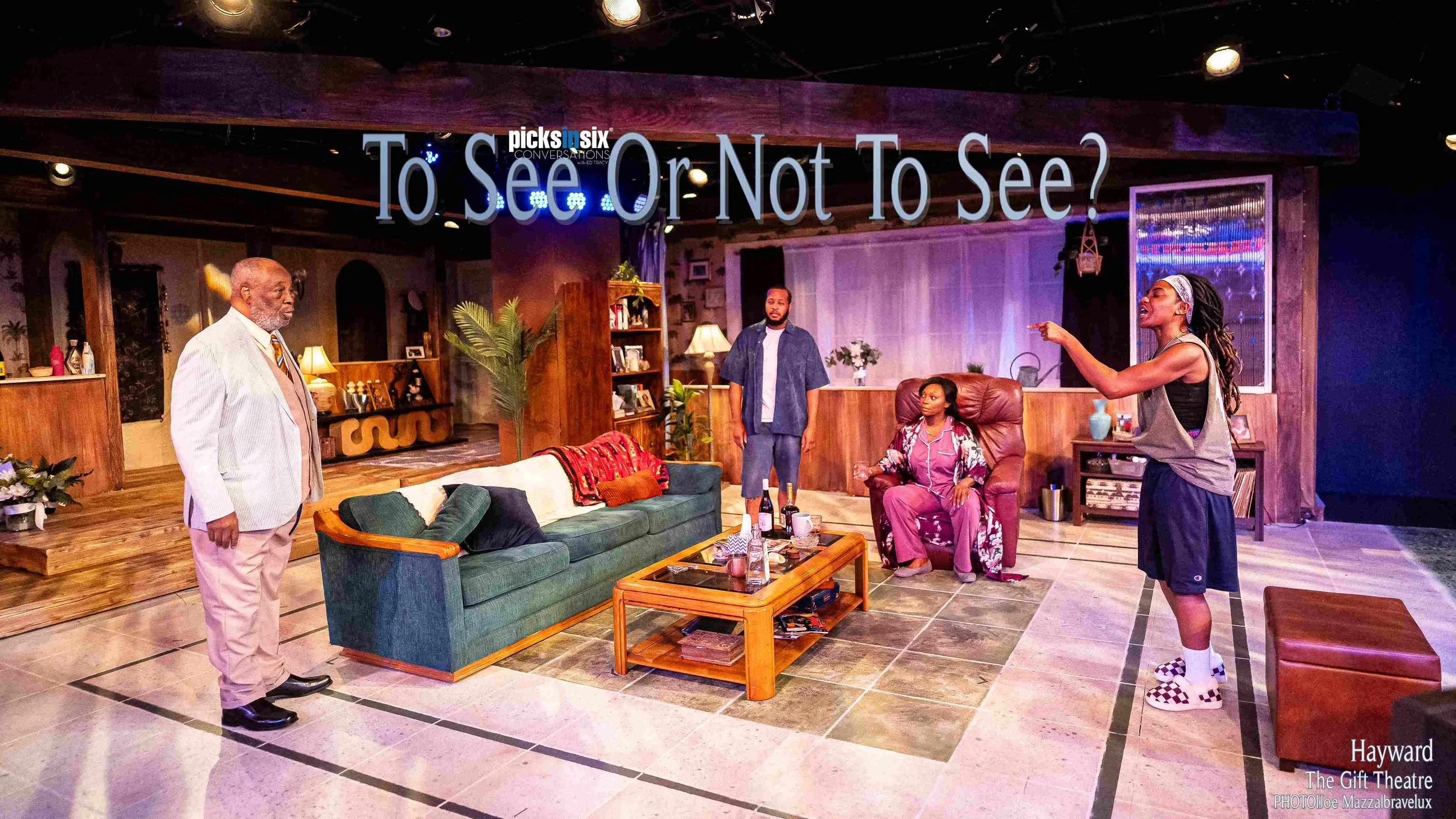
When we step into Steppenwolf’s 1700 Theater, we are quickly transported to a church washed in purple light. The Gift Theatre’s world premiere production of “Hayward,” directed by AmBer Montgomery, works well in this intimate space. The triangular stage is adorned with potted plants and framed by two stained glass windows. In the center stands a wooden pulpit, and a photo of a man framed with flowers. The Hayward family files in, dressed in outfits of varying style, but all the same stark white color—courtesy of costume designer Saawan Tiwari. Luna, the youngest of four siblings, opens the show by delivering a powerful eulogy. There is something achingly real about her words, and that is in part because this eulogy was written for playwright Netta Walker’s actual father. From the beginning, Walker has made it clear what her show will be about—family and grief.
During her eulogy, and shortly after the funeral, Luna is met with visions of her father. He tells her to kill the aggravating Pastor Johnson who was involved in his death. From there, the drama unfolds—as does the set, transforming into the Haywards’ wooden, airy, lived-in family room, a work of art from scenic designer Sydney Lynne. While Luna hides further visions of her father from her family, the Hayward sibling spats worsen, and they turn to different methods of coping with grief. Of course, Luna’s instructions to kill Pastor Johnson become a lot more difficult to ignore when the pastor himself pays the Haywards another visit. Despite their baggage, the Haywards reach a point of openness about their history with mental health struggles. And they can all agree that nobody messes with their family and gets away with it.







The Haywards are played by a team of actors who know exactly how to create a coherent family unit. Their connection is strong and palpable. Ireon Roach (Luna) does a beautiful job of communicating fear, sadness and vulnerability as the youngest sister experiencing a mental health crisis on top of the death of her father. Playing the younger brother Eric, Victor Musoni portrays the depth of his character by easily shifting between immature and emotionally intelligent moments. As older sister Leila, Sydney Charles can say much with a silent facial expression or quick-cutting comment. Her performance touched me, especially during a scene where she expressed her sisterly love for Luna. Gregory Fenner as AJ embodies the more emotionally repressed, caretaking older brother wonderfully, especially in scenes with his mother. Shanésia Davis is stunning. She brings hilarity, charisma and a deep sadness to the recently widowed Maria Hayward. I was blown away by her performance, especially her monologue toward the end, which dances between sweetness and sharpness. Though we don’t see him often, Watson Swift as Tony Hayward is a marvelous ghost father, living up to the legend of his character throughout the play. And any scene with Alfred Wilson (Pastor Johnson) is guaranteed to be hilarious.
One of the biggest strengths of “Hayward” is its complex family dynamics. Each sibling has a very individual personality, yet their similarities born from a shared childhood are very clear. They hurt hard, and thus, hit hard. But despite the cruel comments and threats, it’s so clear that they love one another dearly. And before it’s ever explicitly mentioned, where they fall in the birth order is made very clear due to the acting and writing. Another strength is the play’s range in mood. The fast-paced dialogue will have you laughing in an explosive moment, only for one devastating line to leave you solemnly silent the next. The grief is raw, the humor is real, and neither of those elements detract from the other. Lighting designer G. “Max” Maxin and sound designer Daniella Brown work hard to transport us to the chaos of Luna’s mind. Intense multicolor lighting and eerie music convey her grief, panic, confusion and rage.




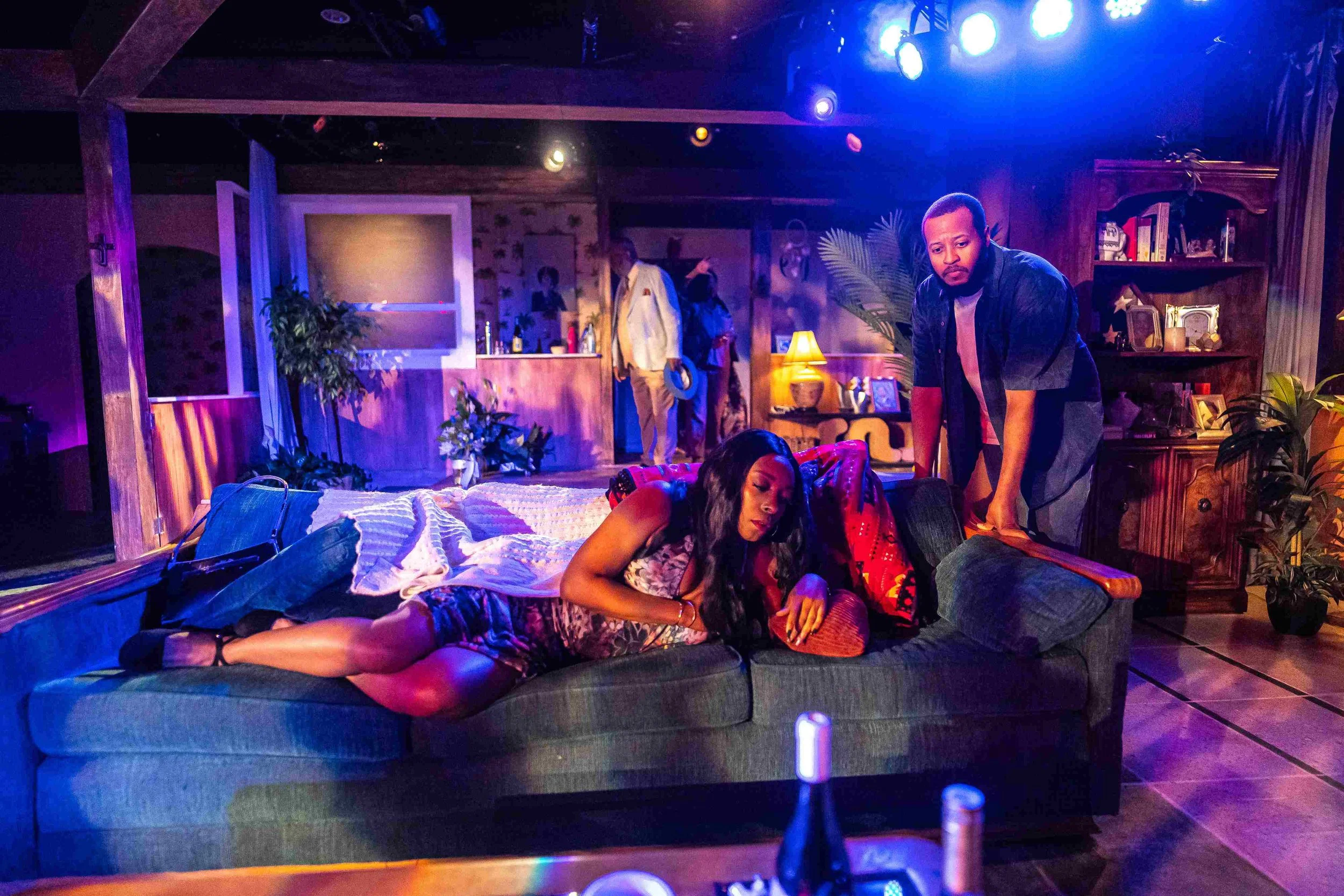
“Hayward” could be improved with tighter pacing. The transitions with almost no changes to the set took longer than I would have expected, which makes the momentum generated by the fast-paced dialogue difficult to maintain across scenes. There also appeared to be some confusion over choreography during the most dramatic incident of the play, which led the chaos to feel a bit drawn out and underwhelming when it has the potential to be fast and thrilling. However, this seems like it could be improved simply with more reps of running the show.
While the beginning of “Hayward” sets us up for what could be a Hamlet adaptation, I wouldn't call it more than loosely inspired. The thread of Pastor Johnson influencing Tony Hayward’s death never quite got followed up on, and there isn’t much of a one-to-one with Hamlet plot lines outside of that. However, I can’t imagine Hamlet-ifying the story would improve it. The living Hayward family is the focus, and rightfully so, as they are the beating heart of the play. Even those exhausted with the age-old theatre genre of family drama wouldn’t be bored by this tale. “Hayward” is fresh, compelling and well worth watching.
GUEST CONTRIBUTOR | PERSE GRAMMER is a multidisciplinary writer and theatre artist based in Chicago. Grammer is currently developing their latest play through a mentorship with Sandy Shinner at Shattered Globe Theatre. They hold a BFA in Playwriting from The Theatre School at DePaul University. www.persegrammer.com
PHOTO|Joe Mazza bravelux
For more reviews, visit: Theatre In Chicago
PicksInSix® is a registered trademark of Roxbury Road Creative, LLC