CONVERSATIONS with Ed Tracy

Inspire. Educate. Entertain.

CONVERSATIONS|PicksInSix®Reviews featuring short form critical reviews and podcasts with authors and influential leaders in the arts, media and business.

Filtering by Tag: Jeff Perry

PicksInSix Review: The Dance of Death - Steppenwolf Theatre Company
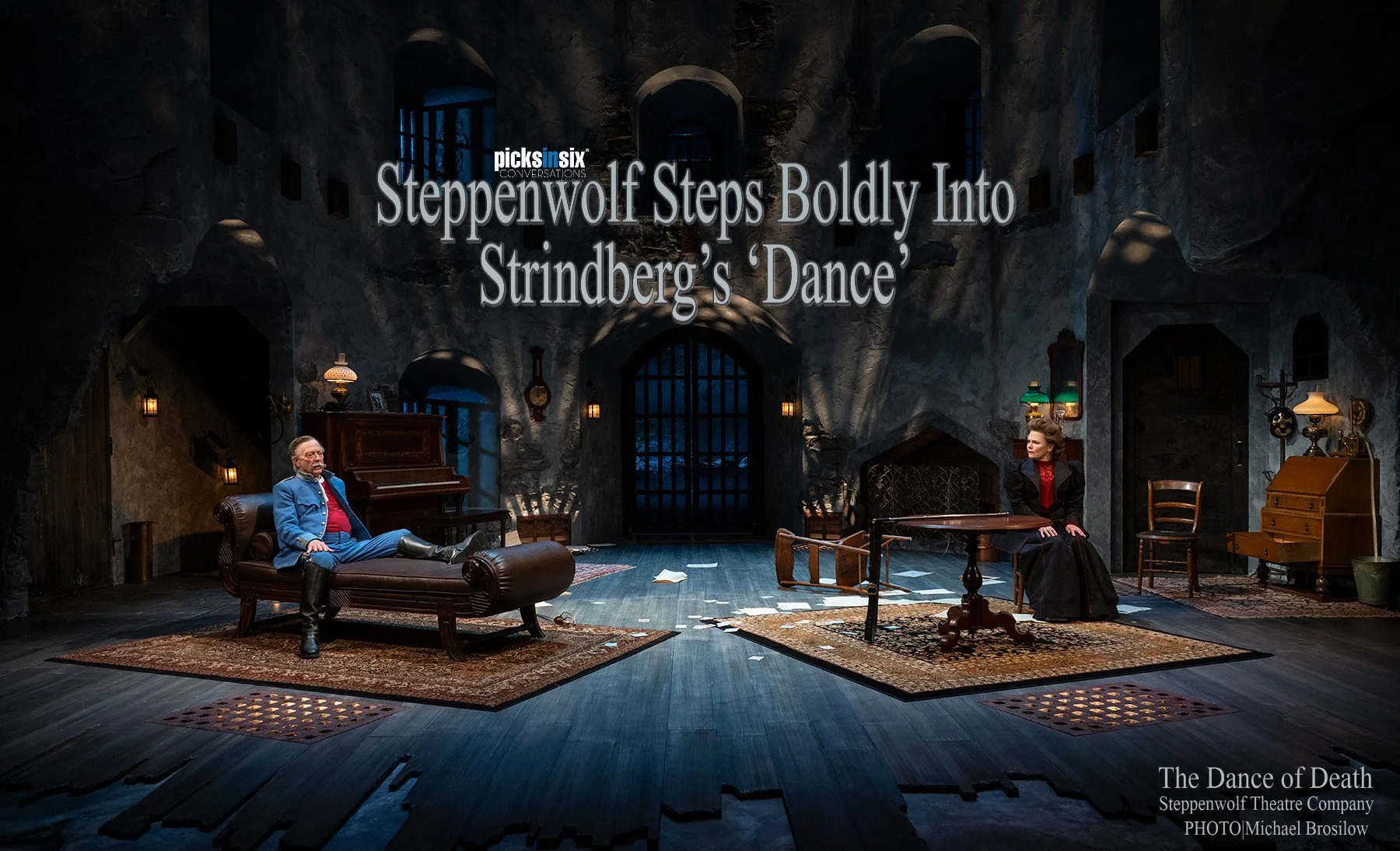


Steppenwolf Steps Boldly Into Strindberg’s ‘Dance’
PicksInSix® Review | Guest Contributor |
Ronald Keaton

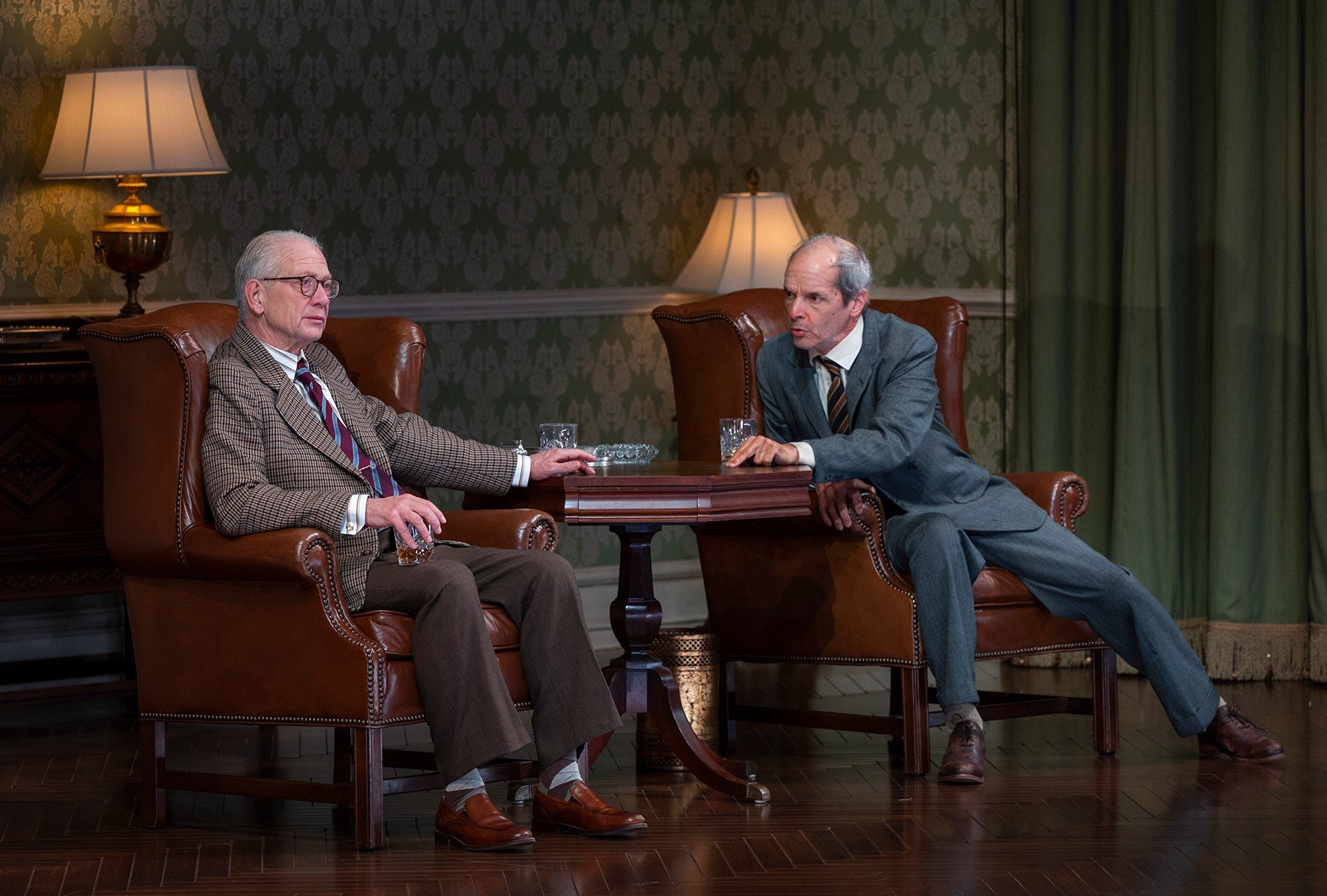
Now playing at Steppenwolf through March 22, the Swedish playwright August Strindberg's taut, visceral play “The Dance of Death” is a story of a power struggle within a long marriage, the emotional abuse it produces, and the influence of societal laws on personal relationships. And in a remarkable adaptation by the great Irishman Conor McPherson, it becomes more than just a dark comedy full of societal turmoil as molded from the grand hands of a Steppenwolf stalwart, director Yasen Peyankov.

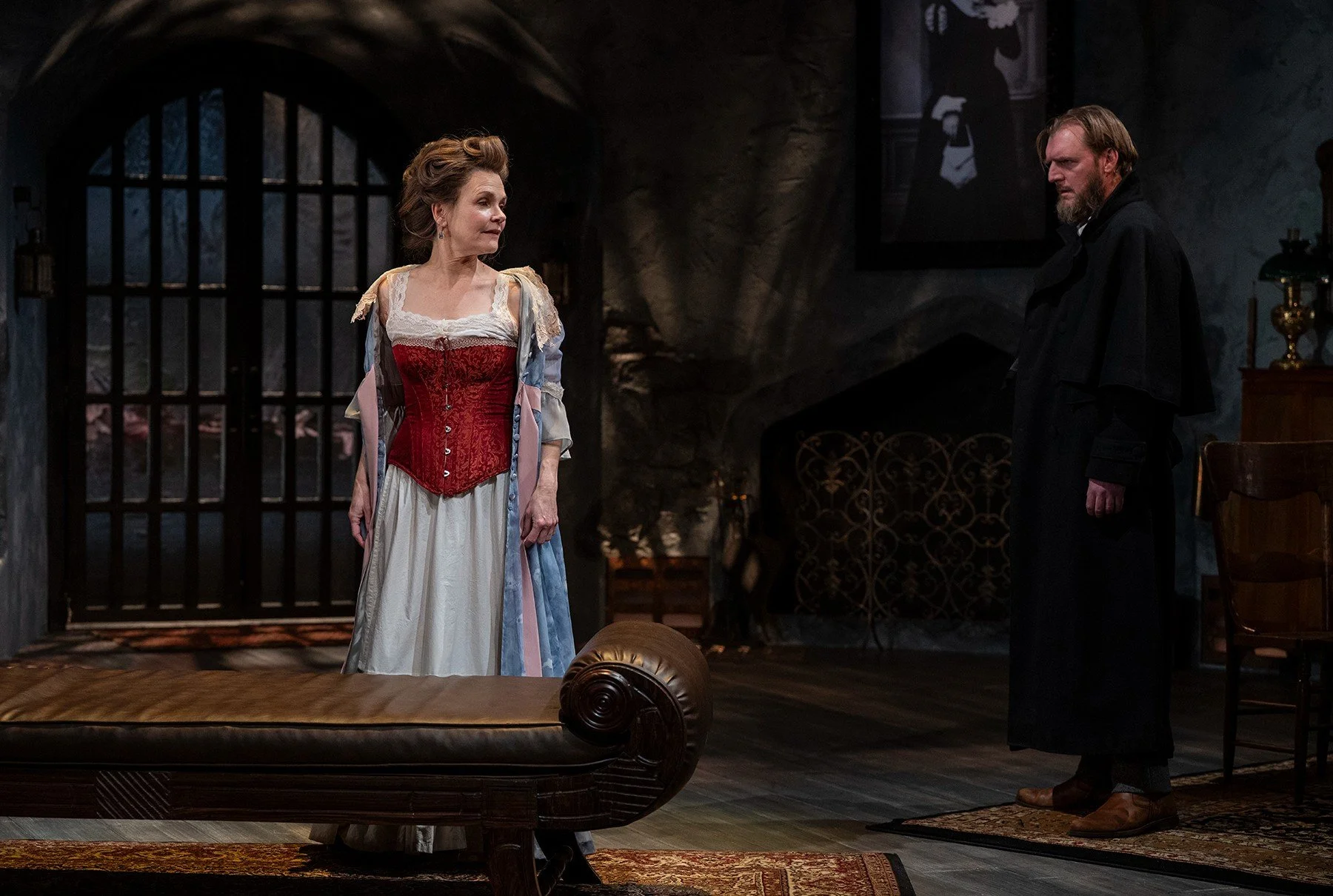
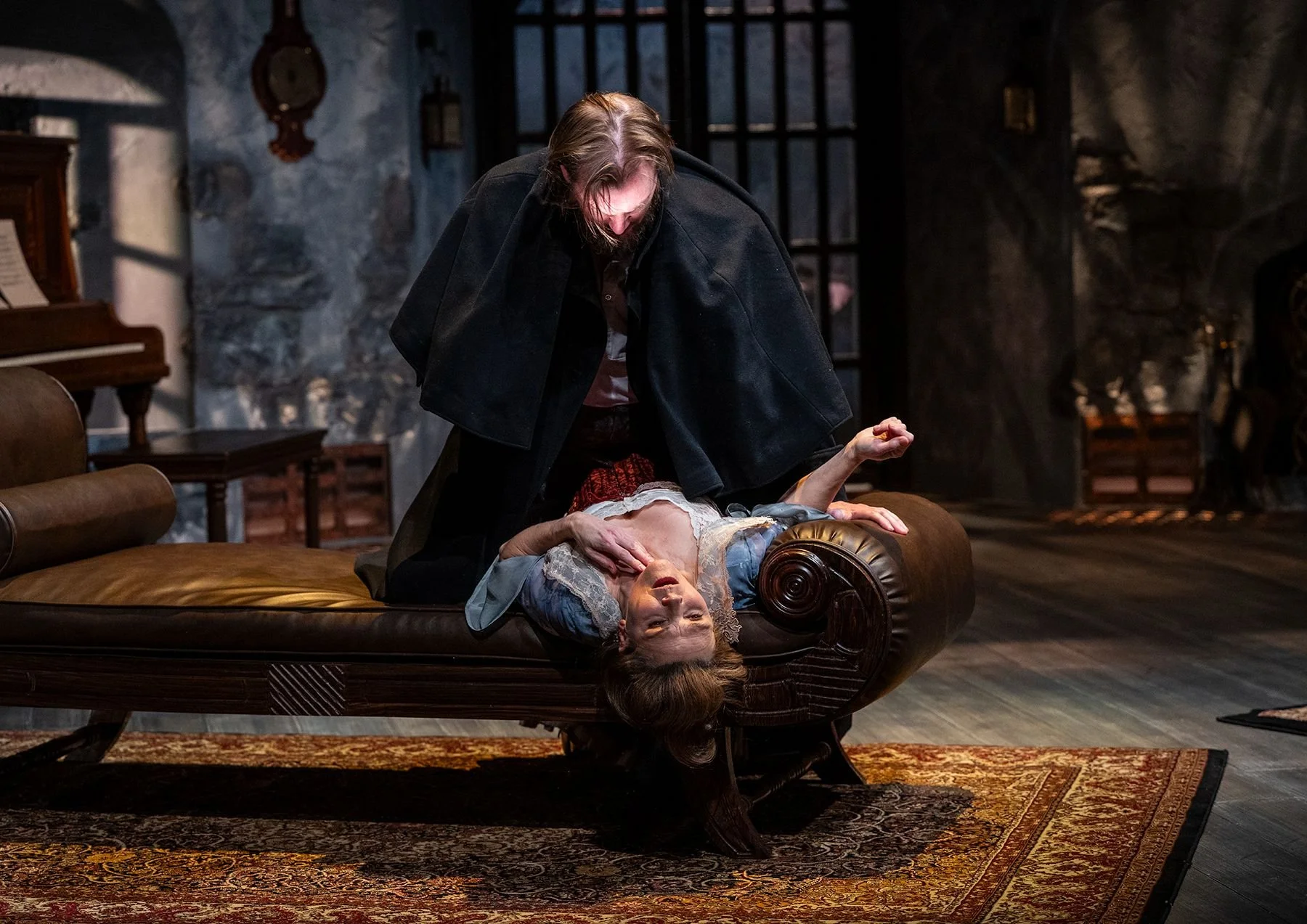
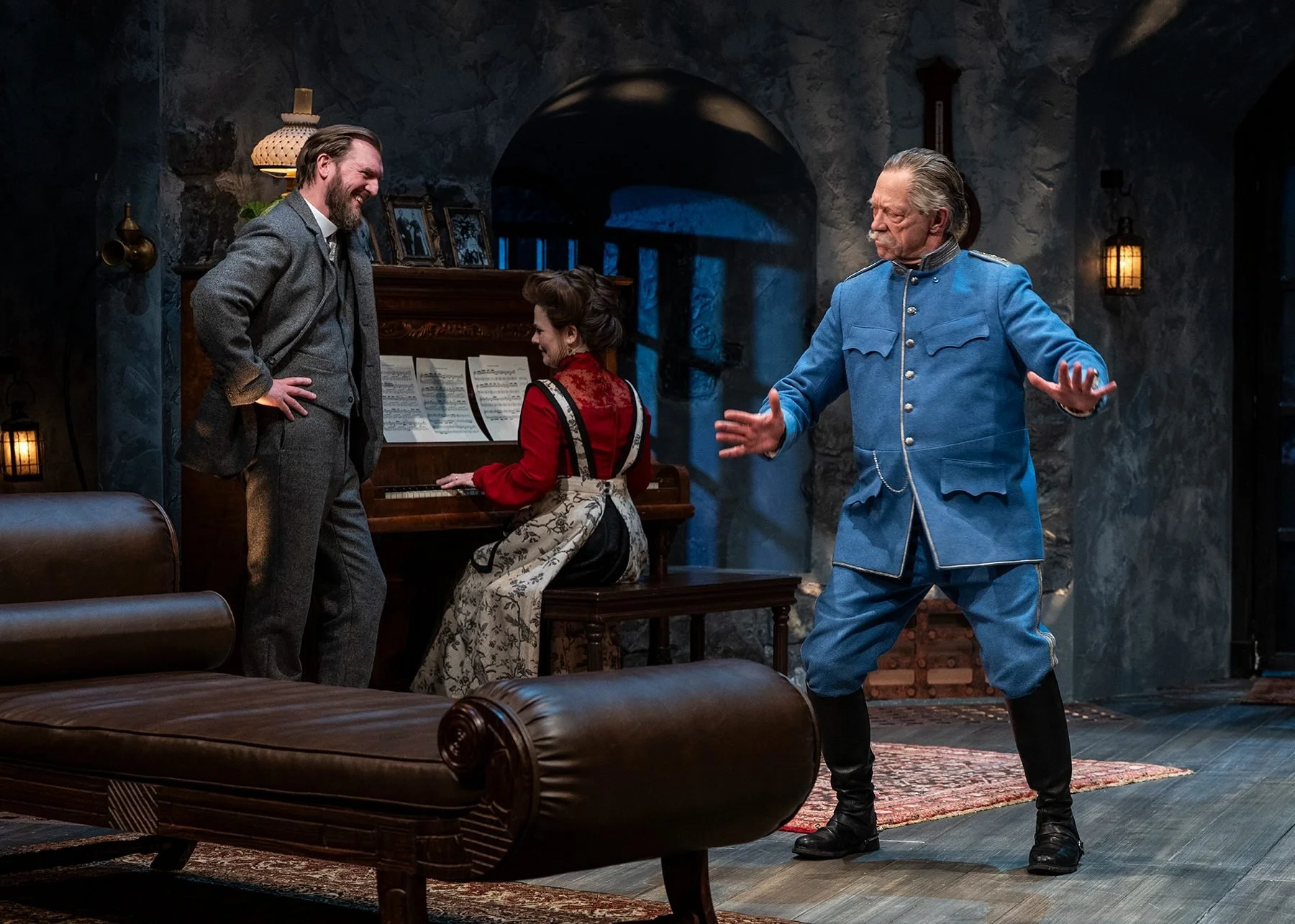
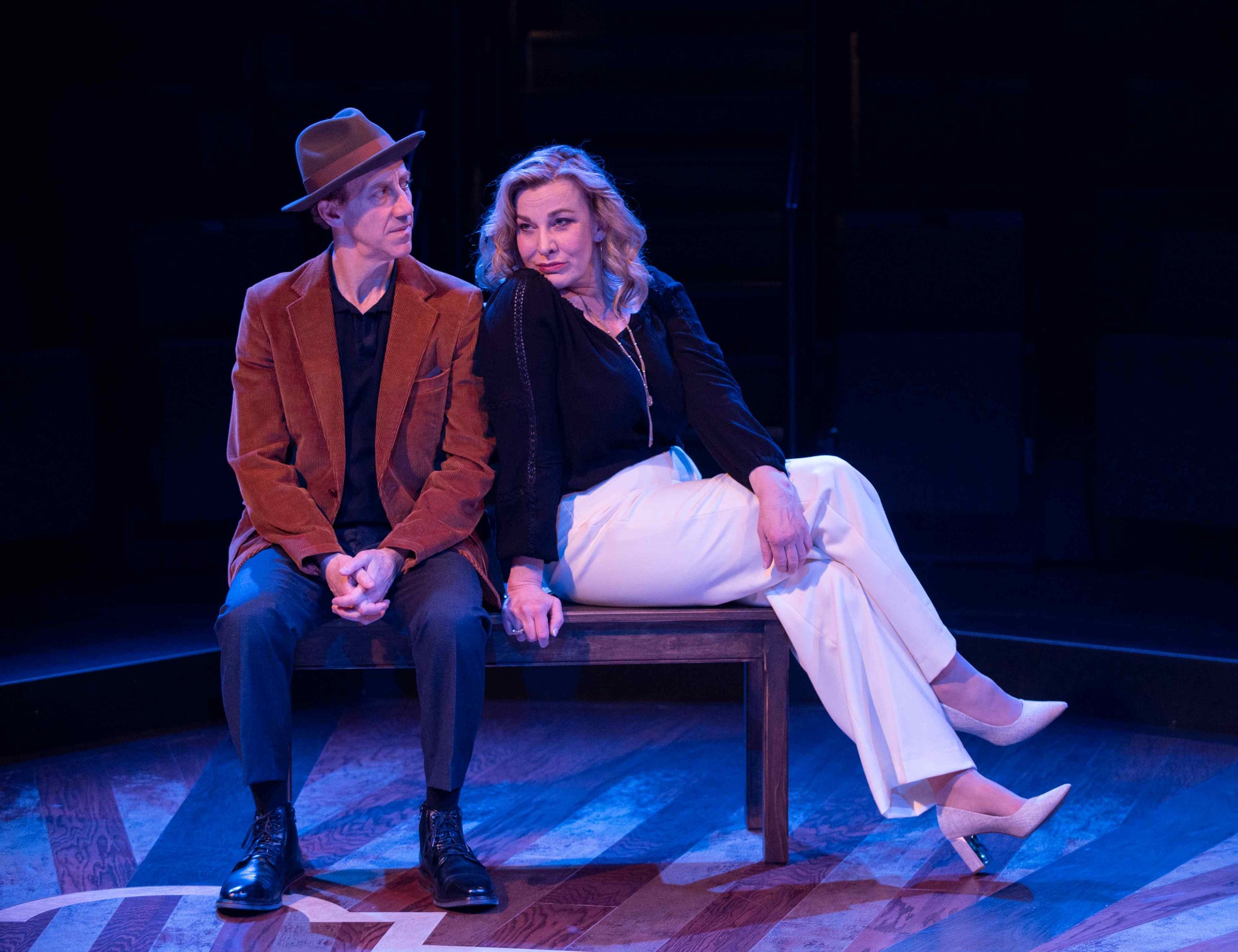
There are three characters in this play, all filled with their angst. The story is about a married couple storming quite haphazardly toward their 25th wedding anniversary. They hate each other in brutal and ferocious ways. The husband, who is called Captain, is an artilleryman who rules his home with a military fervor of iron. His wife, Alice, is a former actress. They live in isolation on an island— it doesn't matter where it is. Their two children don't live with them, as their parents have methodically turned them against the other parent. The Captain is having heart problems and may not have long to live. Alice sometimes plays the piano as her husband dances a kind of bizarre sword pattern. As he dances, she hopes it might kill him, and he threatens to cut her out of his will. Enter Kurt, a distant cousin to Alice, and the man who introduced the couple to each other. Kurt has his own history about him. He's divorced and the courts have banned him from contact with his own children. Kurt has come to the island to, as he says, "find peace"... read: got religion. Both Captain and Alice have their own versions of Kurt's role in their beginnings. All three are doggedly distrusting of life and of each other.


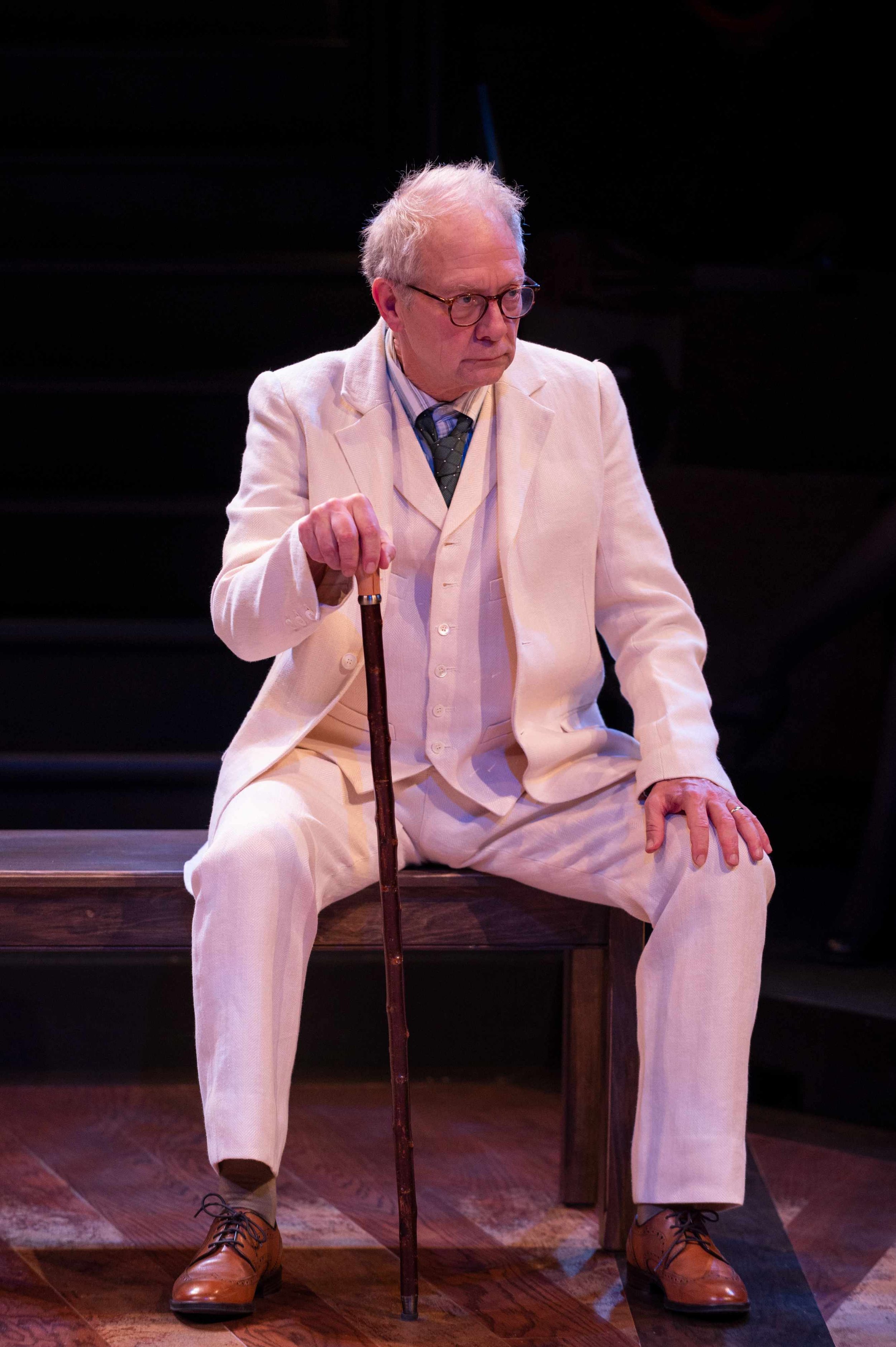
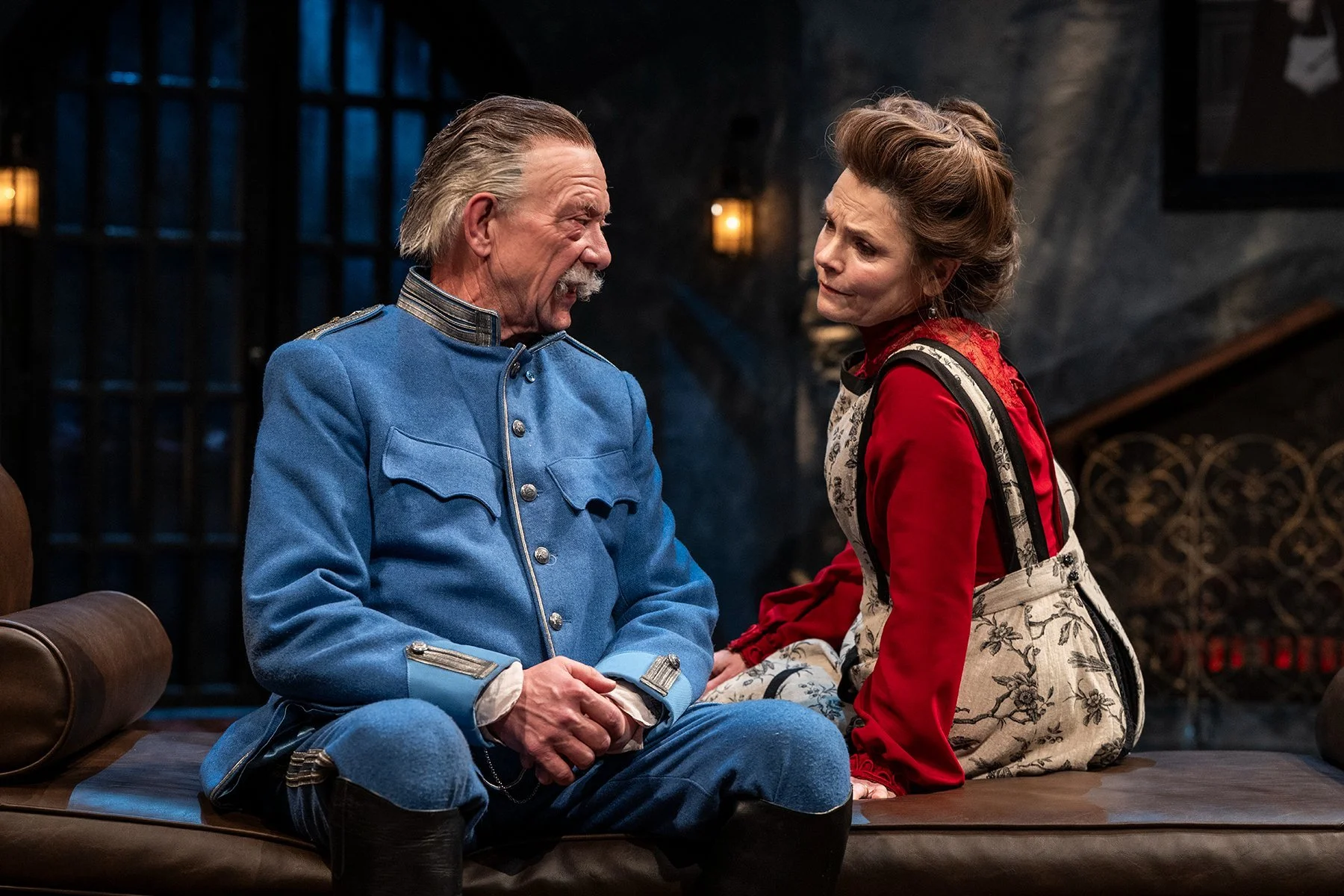
Jeff Perry offers one of the most eccentric, unique comic performances imaginable as the dominating Captain. It's complex and challenging, almost Pythonesque. In these experienced hands, Captain is at once a full-on monster of a marriage partner, only to be self-denigrating and capricious in his authoritarian revealing of his own inferiority. With an ever-present mustache and brass-buttoned coat, Mr. Perry grabs us from his first entrance with a wild walk and interpretation that forces us to hold on in its creative joy. Thank you, costume designer Ana Kuzmanic.

Kathryn Erbe as Alice, the long-suffering yet dish-it-back wife, is also elegantly inflated in her opinion of herself. Alice has funneled her theatrical ways into her married life. So many of her responses, while just as withering, take on a sniper's mount. Ms. Erbe is simply marvelous in her expertise here. The entire relationship moves almost violently toward an obvious, modern comparison—Edward Albee and his George and Martha. Both couples can only express their hate and anger in such ways that somehow the codependency evolves into a strange kind of love. And unlike Martha, who lets it all go all the time, this Alice takes her shots carefully without much raising of the voice.
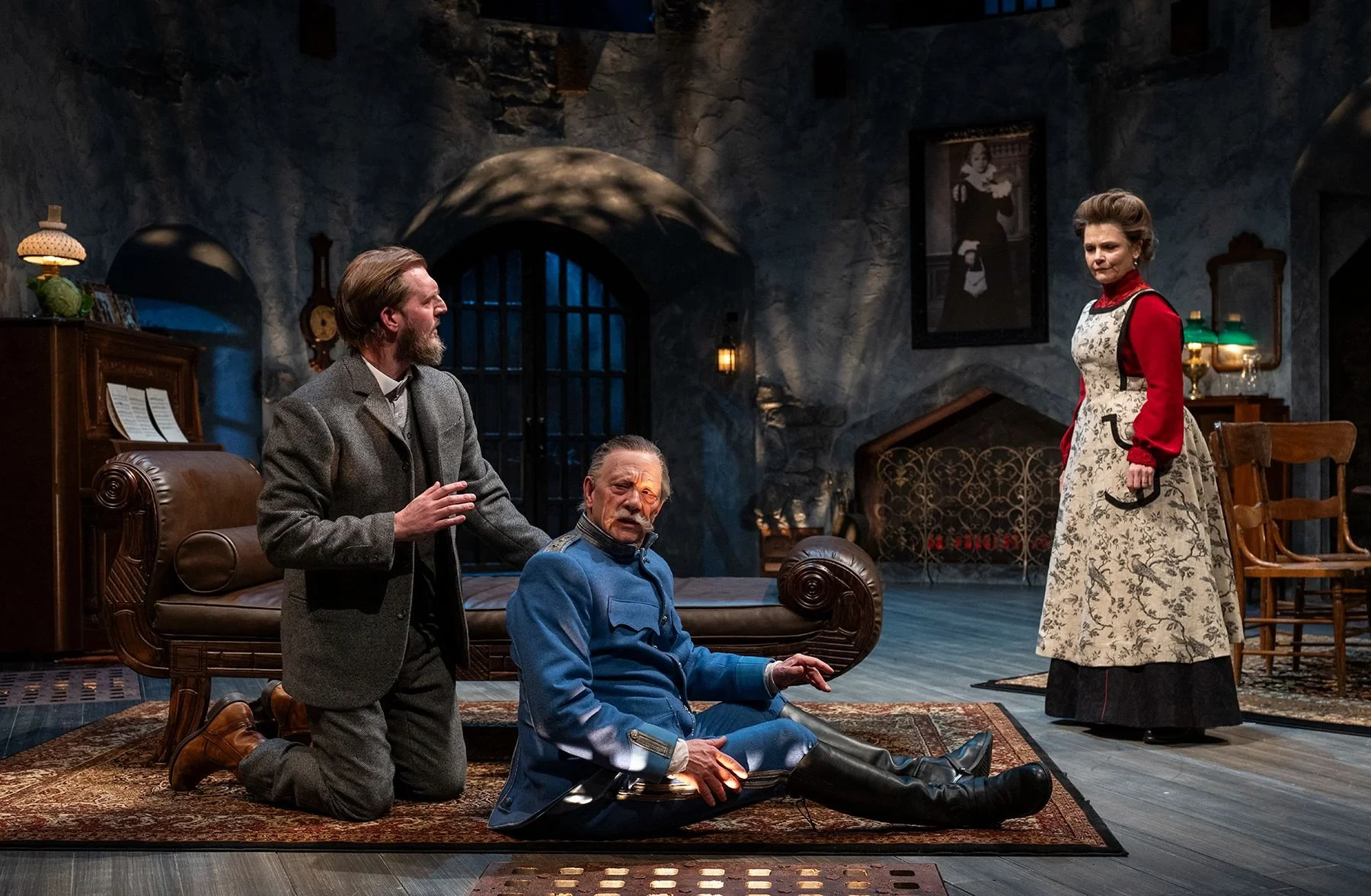
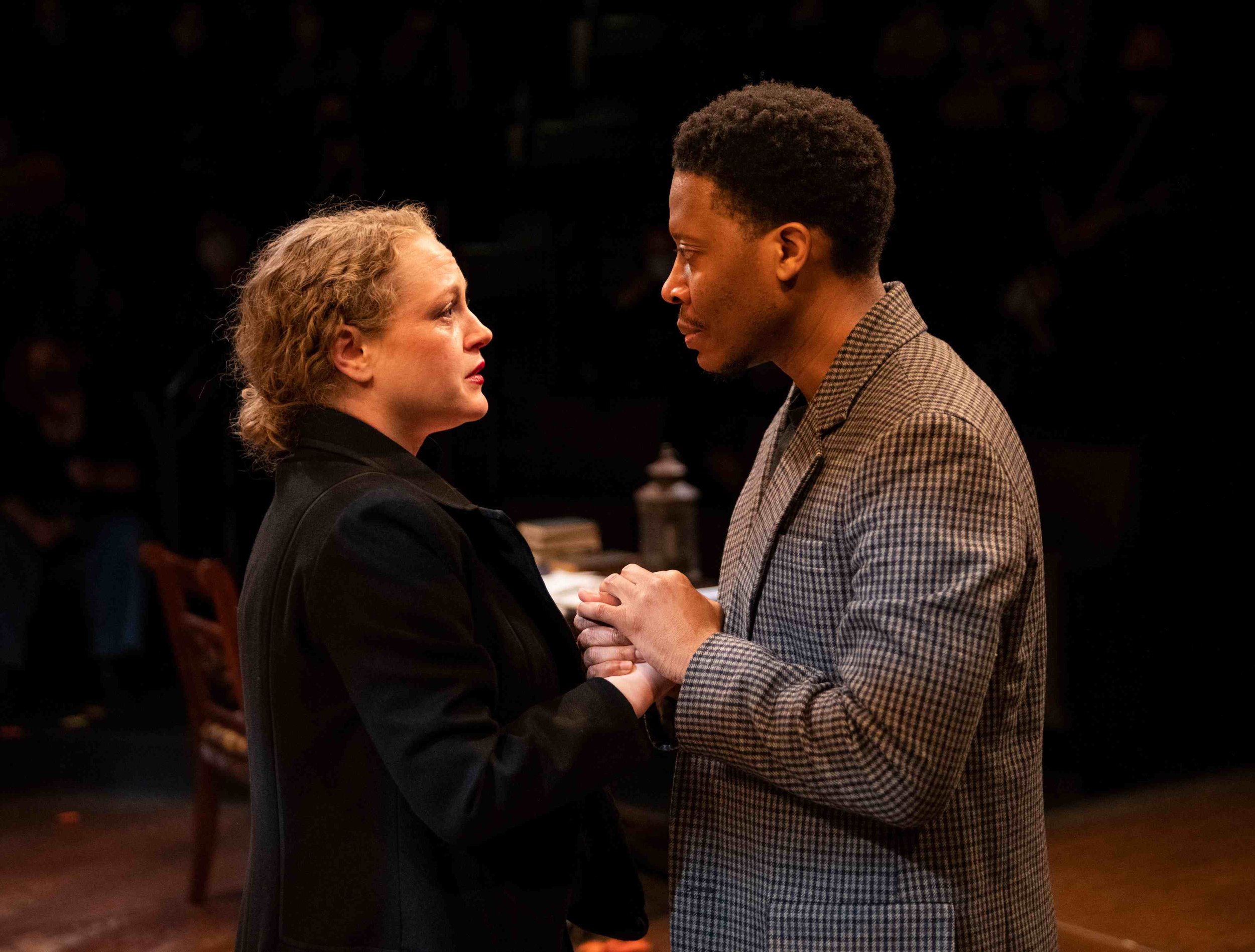
Alice and Kurt show a sexualized regard for each other, one that takes a bit of a side trip into aggressive behavior. Kurt (Cliff Chamberlain as a man seemingly unaware of his own weaknesses in character) is, at first, so innocent and righteous, dazzled by the emotional battle in front of him. Then he lets his guard down, expresses his long-dormant attraction to Alice, and realizes the predicament into which he has arrived. It all, of course, drives him out the door with the proclamation "You both deserve this hell you've created!" Mr. Chamberlain is both charming and powerful.

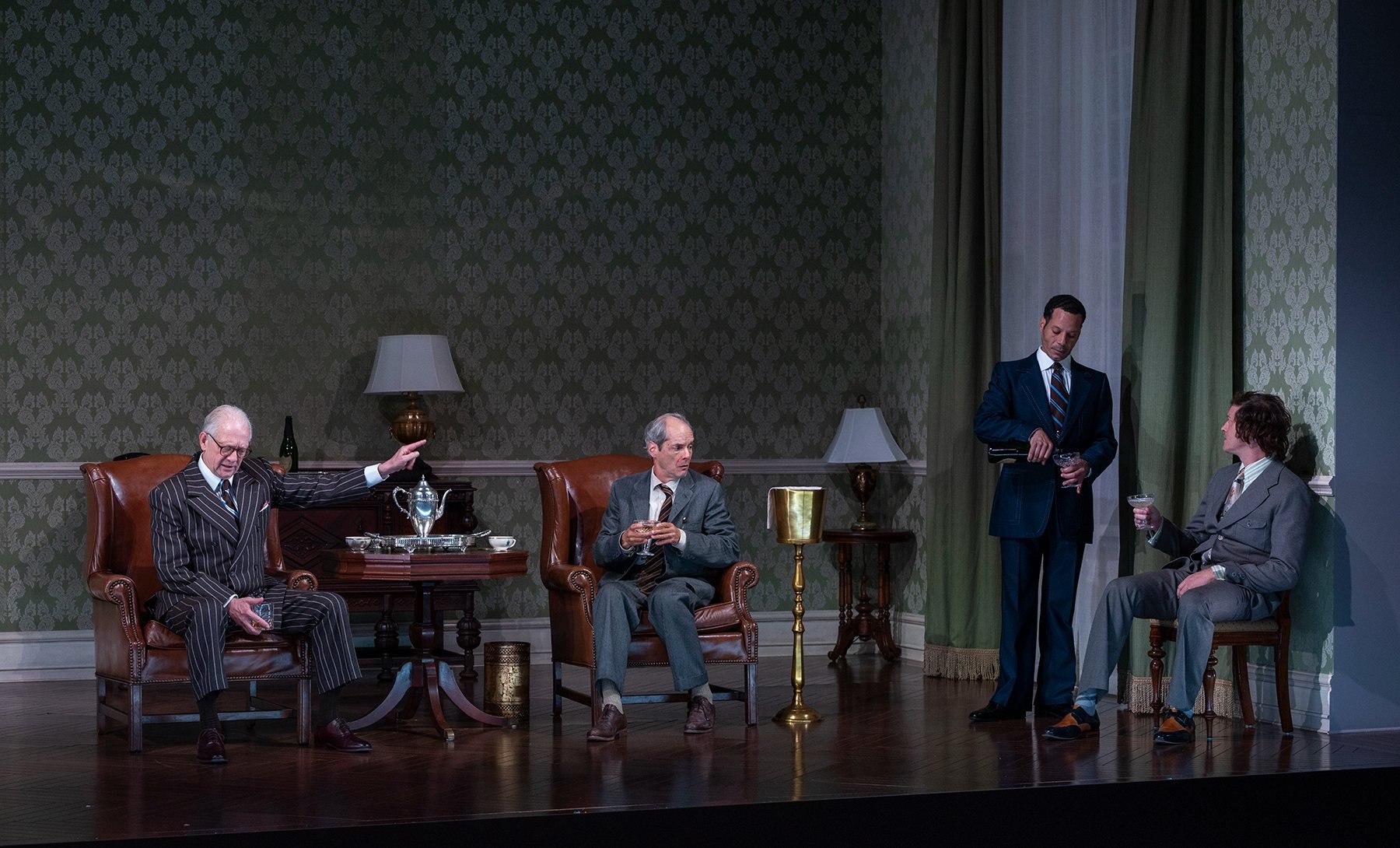
The monolithic castle the couple lives in was born from the fertile imagination of scenic designer Collette Pollard. Lee Fiskness creates a lighting design of wide variety, with subtle tones in the family battleground area combined with sharp, revealing shafts of light and shading. Ultimately, one might rightfully ask what makes such desecration of the human spirit so funny. In the knowing minds of both Mr. Strindberg and Mr. McPherson, we are held in total thrall by an excellent cast and crew that step so boldly toward such storytelling.

GUEST CONTRIBUTOR | RONALD KEATON received an Equity Jeff Award for the performance of his one-man show CHURCHILL. www.solochicagotheatre.org.  Coming soon, his new solo play about Ben Franklin, THE FIRST EMBASSY.

PHOTO|

Steppenwolf Theatre Company
presents
The Dance of Death
Downstairs Theater
1650 North Halsted Street
through March 22, 2026


WEBSITE

PROGRAM

STUDY GUIDE


For more reviews, visit: Theatre In Chicago

ARCHIVE

PicksInSix® is a registered trademark of Roxbury Road Creative, LLC
PicksInSix Review: No Man's Land - Steppenwolf Theatre Company


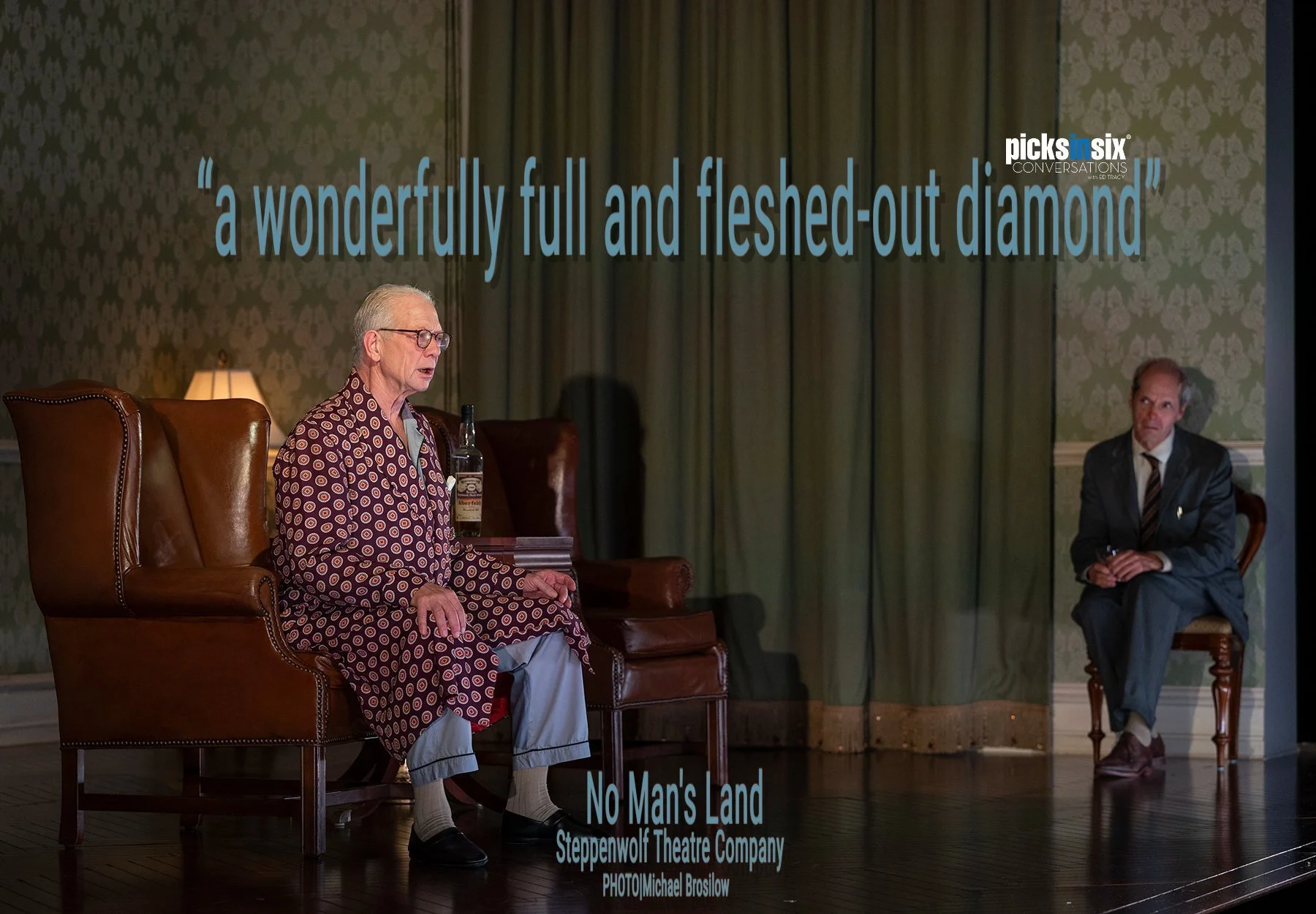
“a wonderfully full and fleshed-out diamond”
PicksInSix® Review | Guest Contributor | Ronald Keaton

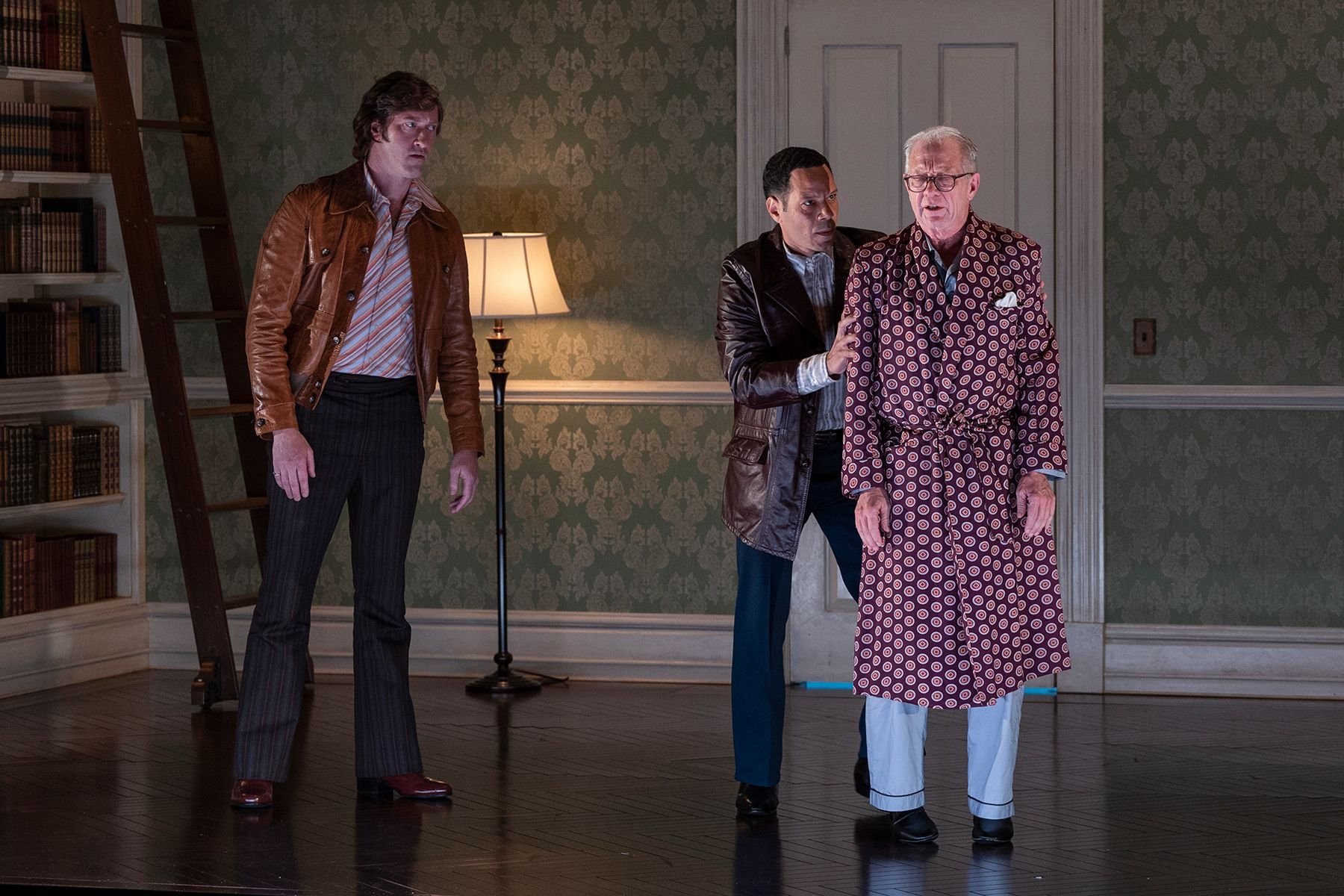
There is a great deal that one might say about the 1975 Harold Pinter classic “No Man’s Land.”  It is a concentrated collage of all kinds of theatre with its drama so surreal, its absurdist bent quite humorous and insightful, its echoes of entities as disparate as Monty Python and Samuel Beckett.  But one thing is not in dispute: the current revival at Steppenwolf Theatre, which opened Sunday and runs through August 20, is a wonderfully full and fleshed-out diamond.  I would urge those here to come and learn from truly professional actors with purpose, who offer their own clinic in ensemble acting.

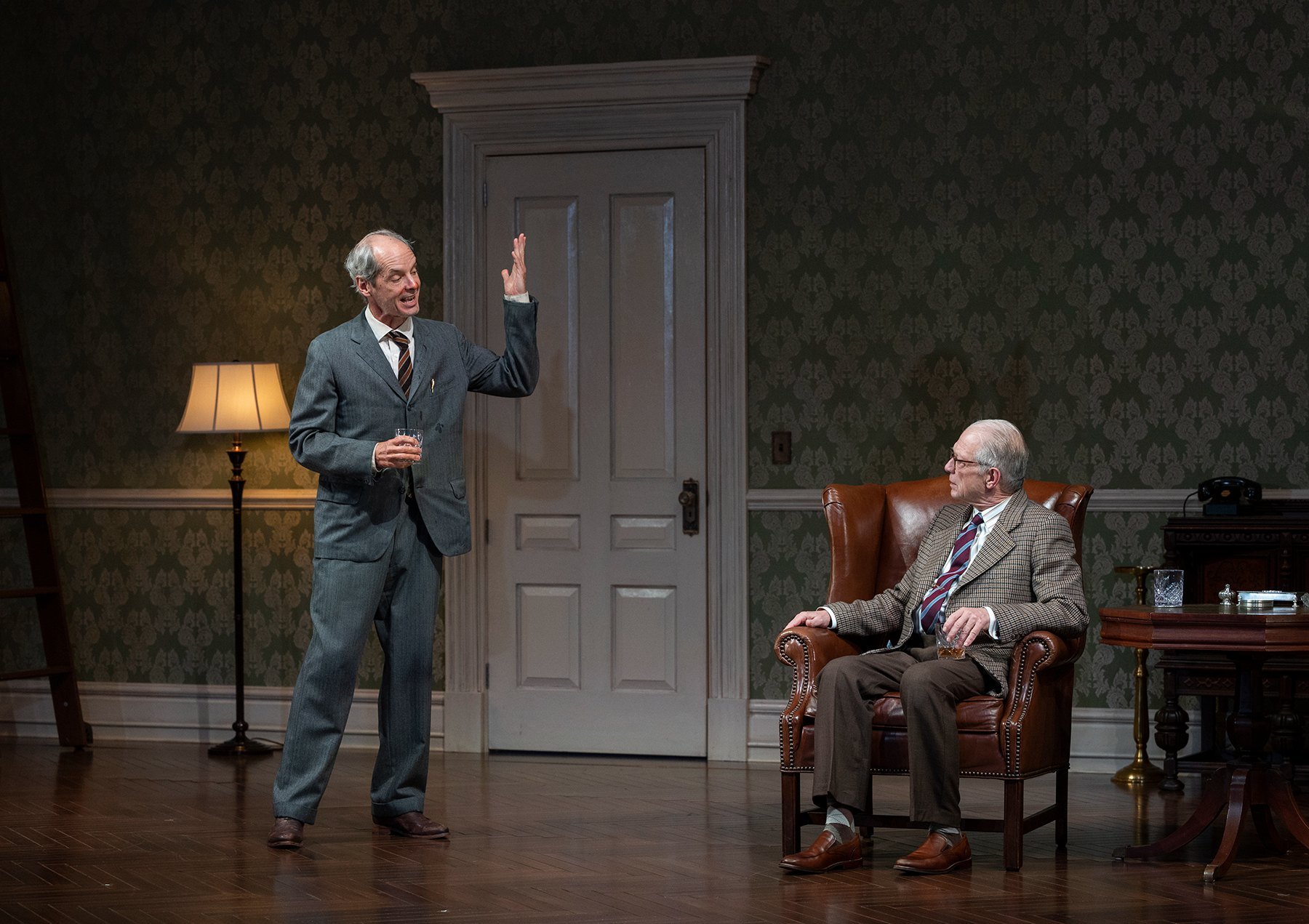
Directed in easy, informed touches by Les Waters, the play’s plot is honestly simple.  Two men with varying degrees of literary accomplishment meet in the lavish home of the more successful writer, Hirst (a sparkling, brilliant turn by Jeff Perry).  The guest Spooner (in endlessly varied and superb strokes by Mark Ulrich) talks and talks about, well, nothing that they might have in common.  The beginning of the piece is, in essence, a monologue for Spooner, and the loving exchange between them—two totally different kinds of actors in different modes of intoxication—also reflects the respect that each performer has for the other.

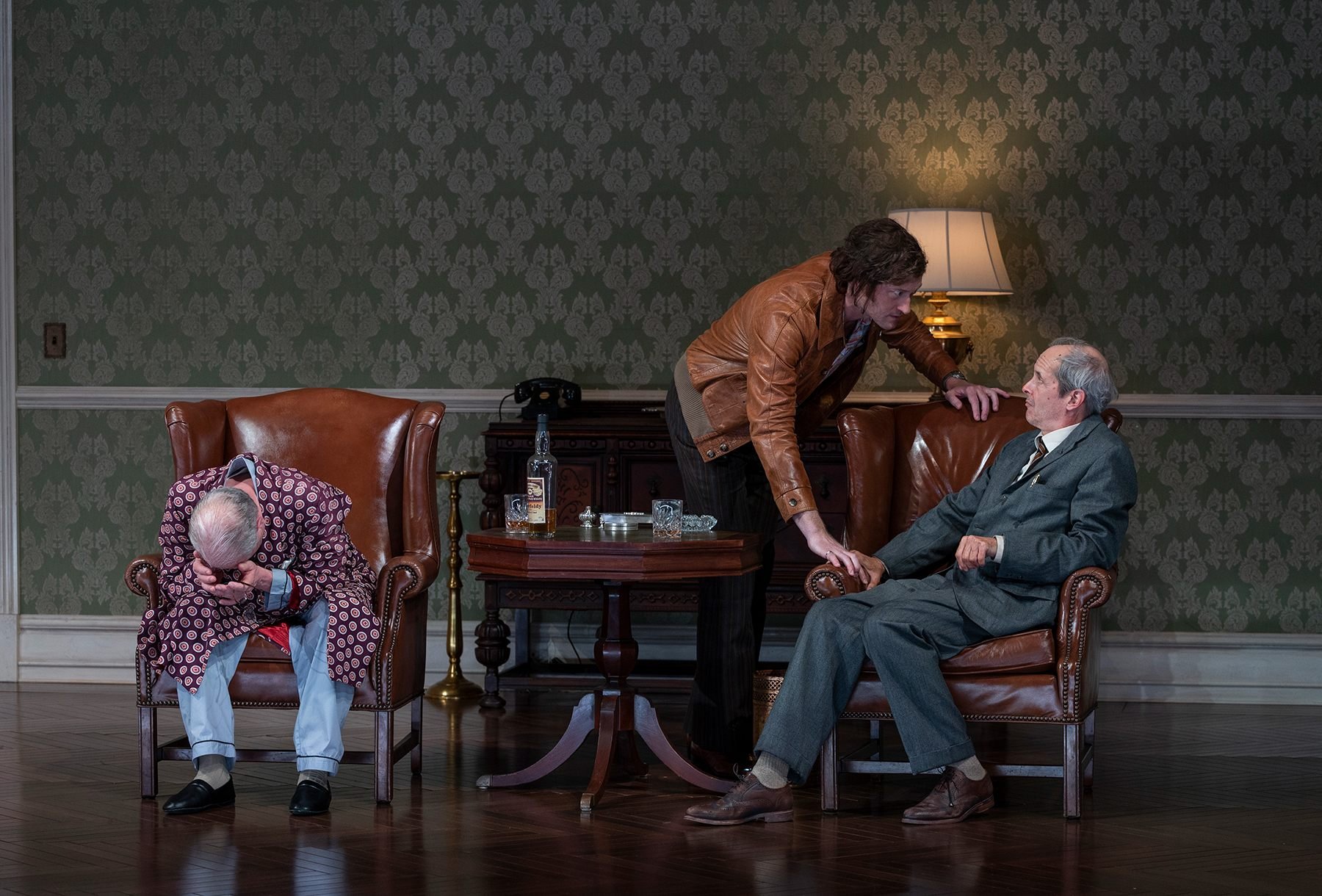
As the plot goes on, two employees of the house—Foster (a wonderful imposing, yet innocent presence by Samuel Roukin), a housekeeper and bodyguard; and Briggs (a marvelous, inspired Jon Hudson Odom), the house butler and, oh yes, bodyguard as well—make sure that this stranger Spooner is no threat to the ‘boss’, as they refer to Hirst.  Hirst is both authoritarian and host, as he imagines Spooner to be an old school chum.  And maybe he is, which brings us to story.

Much of the time in theatre of the absurd, there are questions as to what in the world the playwright is trying to say.  Story, of course, is different than plot, and each character has a very interesting story of his own to tell. Hirst is a writer/critic/essayist of high regard who constantly damages his gift with his drinking.  Yet he has moments of linguistic fancy that take the communal breath of the audience away and tries to answer those questions… Pinter at his true best.

Spooner is a lifelong aspiring poet who talks a great game in conversation but seems to say little. What he does say is a thick and potentially emotional comment on loneliness and isolation. Briggs is the cynic in the group.  He always doubts Spooner’s veracity and tends to rule the roost in the house.  But even when threatened with being fired for insubordination, Briggs stays with Hirst—a kind of tough love on both sides.  Foster is yet another poet-who-hasn’t-done-much and wants fervently to “do” the work needed.  But as a big tough guard in the house (Mr. Roukin’s physical presence emphasizes that skillfully), he feels stuck and wonders what he really can do with his life.  We’ve all been there.  Hirst, who is the one with the most to lose in practicality, simply moves on in his entitled existence, treating the help as if he were royalty, living with the realization that his best years are behind him, and almost casually accepting the losses of family and friends in his life—an experience he shares with Spooner in a very touching Act II give-and-take.

The great collective lesson learned here is two-fold.  First, we are confronted in the storytelling by the prospect of memory that is skewed, even imperfect, and how it affects the stark reality existing between these splendid characters.  And second, we are captured by the sight of four actors totally in love with their craft—and how they can so eloquently share it with each other and with the audience as well. A brilliant combination that makes Steppenwolf’s “No Man’s Land” an actor’s treat and an audience’s delight.  

GUEST CONTRIBUTOR | RONALD KEATON received an Equity Jeff Award for the performance of his one-man show CHURCHILL. www.solochicagotheatre.com  Coming soon, his new solo play “Echo Holler.” www.echoholler.com

PHOTO|Michael Brosilow


Steppenwolf Theatre Company
presents

No Man’s Land

Downstairs Theater
1650 N. Halsted St.

through April 20, 2023

(312) 335-1650

WEBSITE

TICKETS

PROGRAM

For more reviews, visit: Theatre In Chicago

ARCHIVE

PicksInSix® is a registered trademark of Roxbury Road Creative, LLC

ALL RIGHTS RESERVED

Copyright 2014-2026

Roxbury Road Creative, LLC
Powered by Squarespace