CONVERSATIONS with Ed Tracy

Inspire. Educate. Entertain.

CONVERSATIONS|PicksInSix®Reviews featuring short form critical reviews and podcasts with authors and influential leaders in the arts, media and business.

Filtering by Tag: Kelvin Roston Jr.

PicksInSix Gold Review: Ma Rainey's Black Bottom - Goodman Theatre
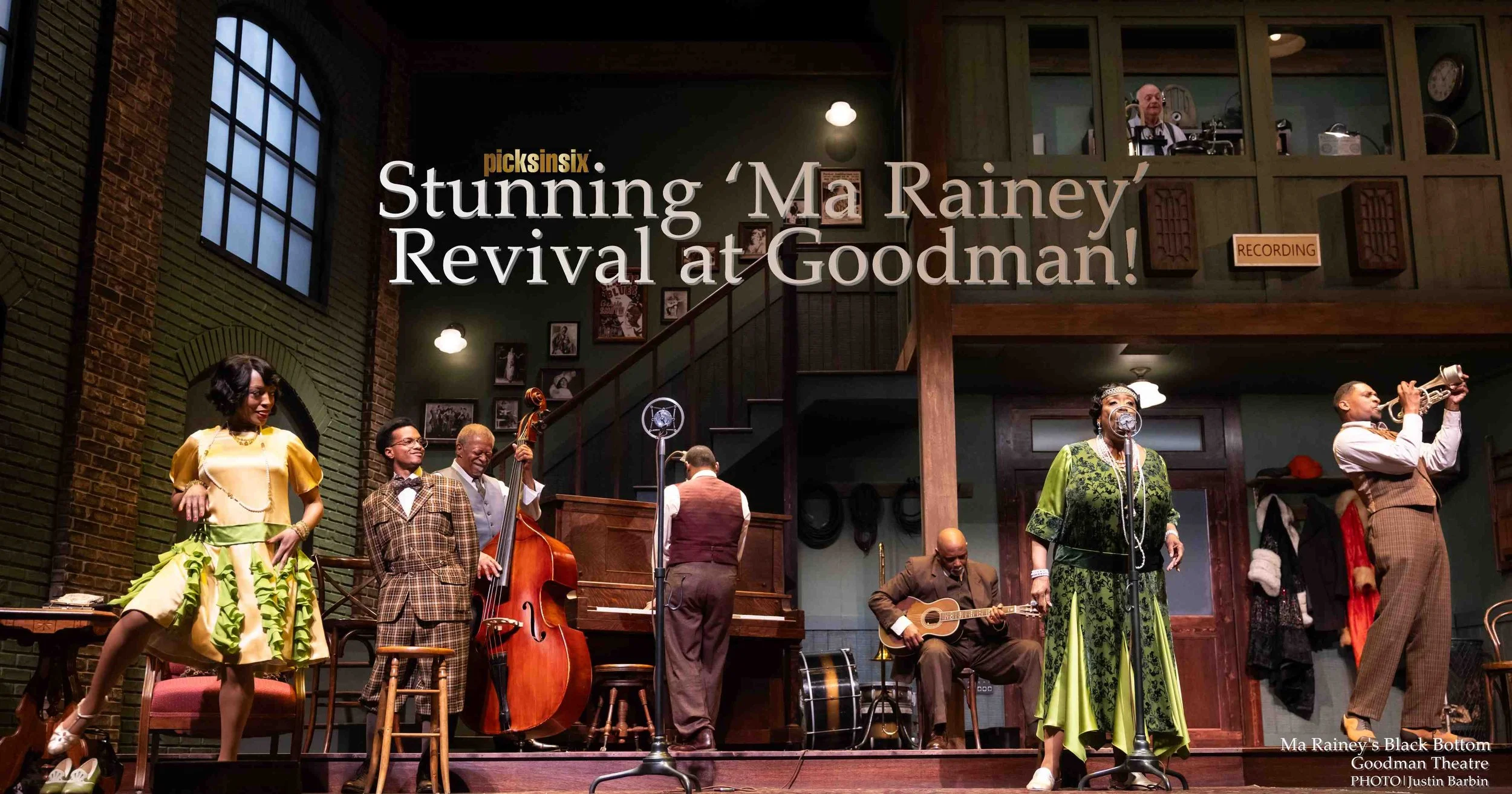


Stunning ‘Ma Rainey’ Revival at Goodman!
PicksInSix® Gold Review |
Ed Tracy

The 1982 drama “Ma Rainey’s Black Bottom”—August Wilson’s study of Black music and culture in Chicago during the tumultuous 1920s—is the only one of ten plays in Wilson’s landmark Century Cycle set outside of Pittsburgh. The epic 1997 Goodman production, directed by Chuck Smith in collaboration with Wilson, looms largely at the top of a list of bold and inspiring productions in the rich 100-year history of the theater.

It’s difficult to discern if Wilson’s brilliant work shines brighter through Chicago’s gritty undertones or if the heart of Chicago theater beats more profoundly by Wilson’s attention. One thing is clear: the powerful force of Wilson’s legacy has helped to both expose and define the harsh realities of racial inequality and social injustice in America, whenever and wherever his plays are performed. And this production, at this time in Chicago with its phenomenal cast, provides a brilliant opportunity to experience the emotional thrust, the preciseness of the lyrical dialogue and the realization of Wilson’s complex characters.

Both director Smith and associate director and music director Harry Lennix, who played Levee in the 1997 production, have returned to forge the stunning revival that opened Monday night in the Albert. It is a story about the true-to-life presence of Ma Rainey (E. Faye Butler) whose unequalled talent and rebellious influence on the music of the era reflects the challenges that run through all of Wilson’s work. It is also a piece that has stood the test of time, as powerful and gripping a drama today as then with a dream team of a cast.


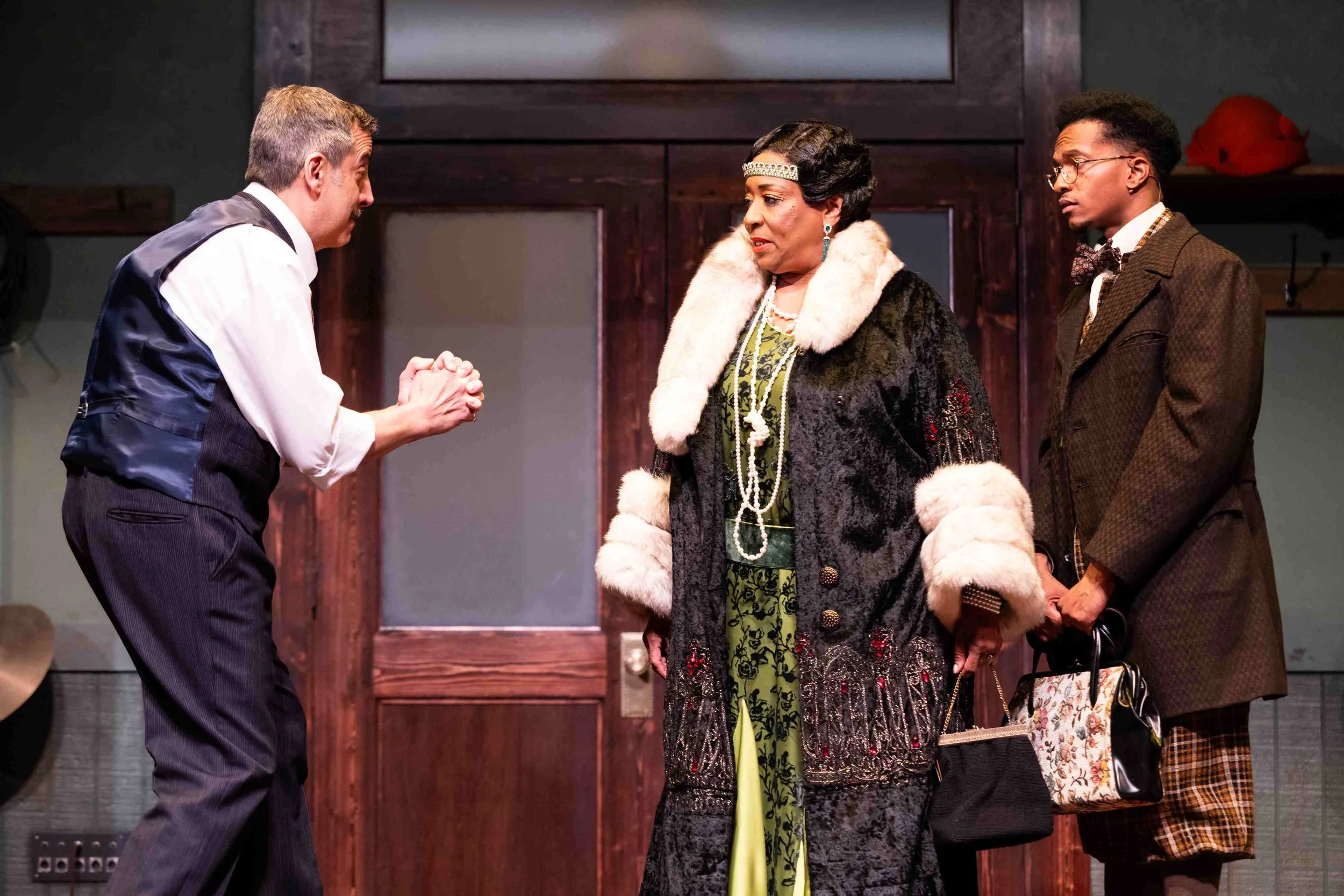
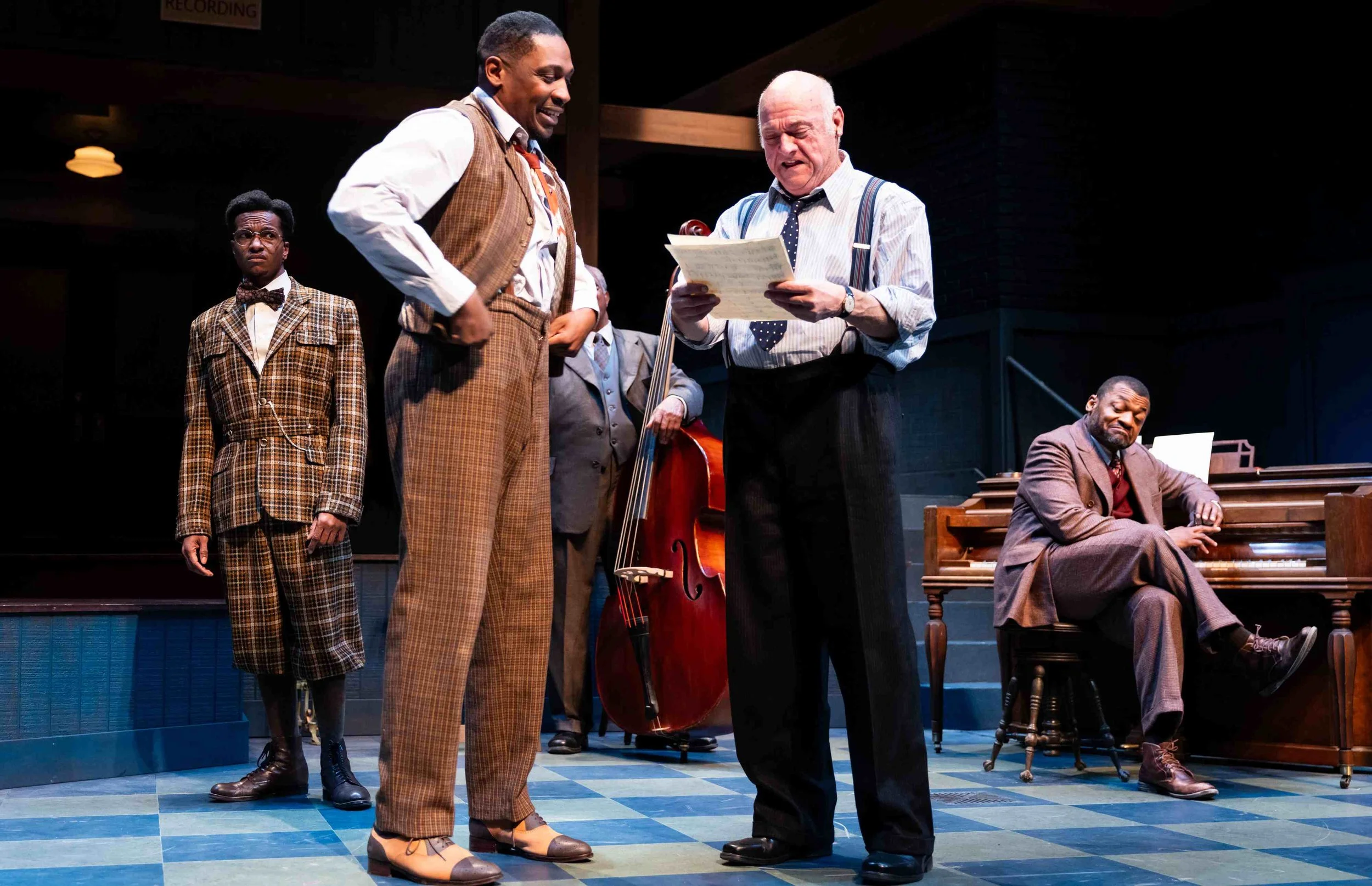
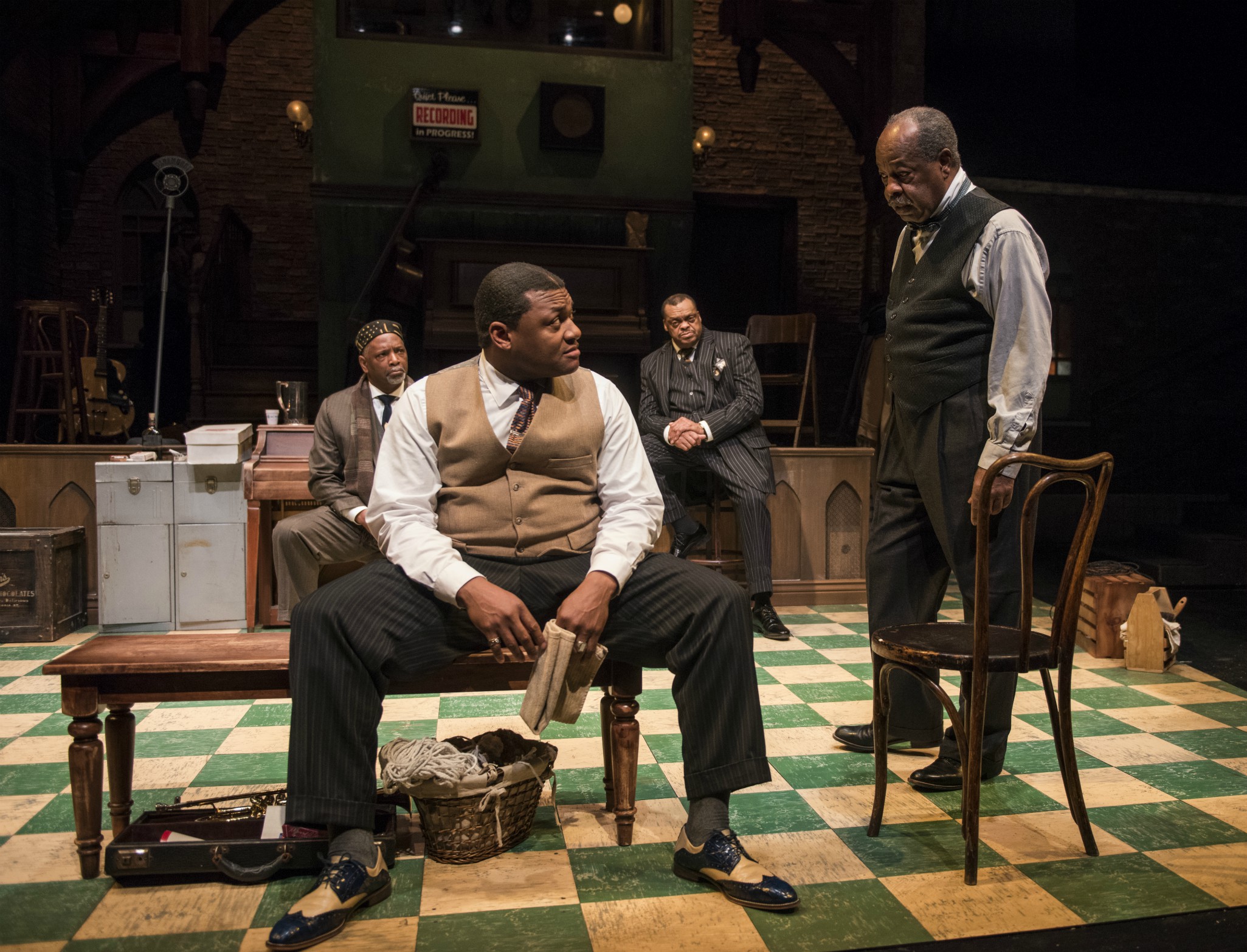
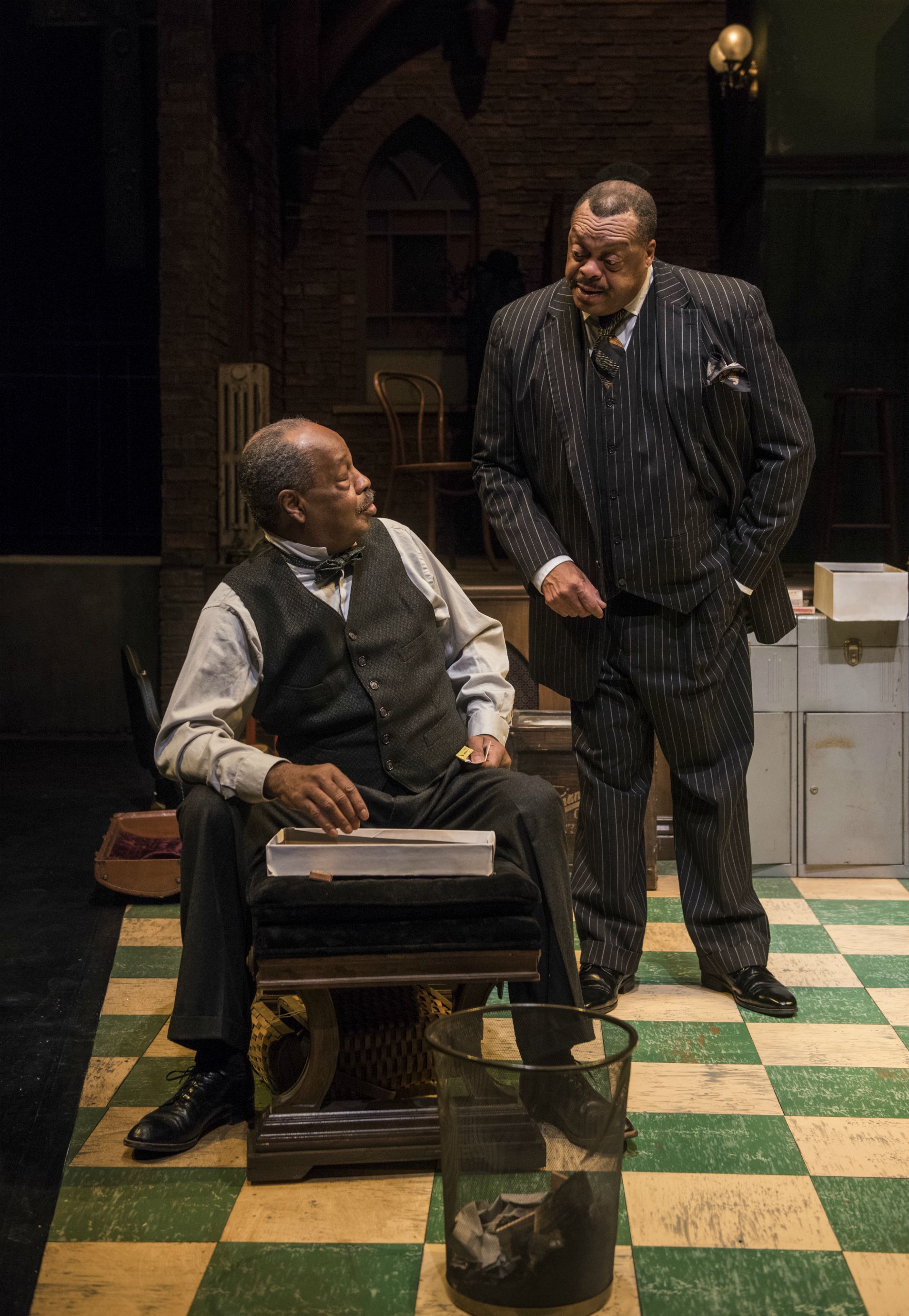
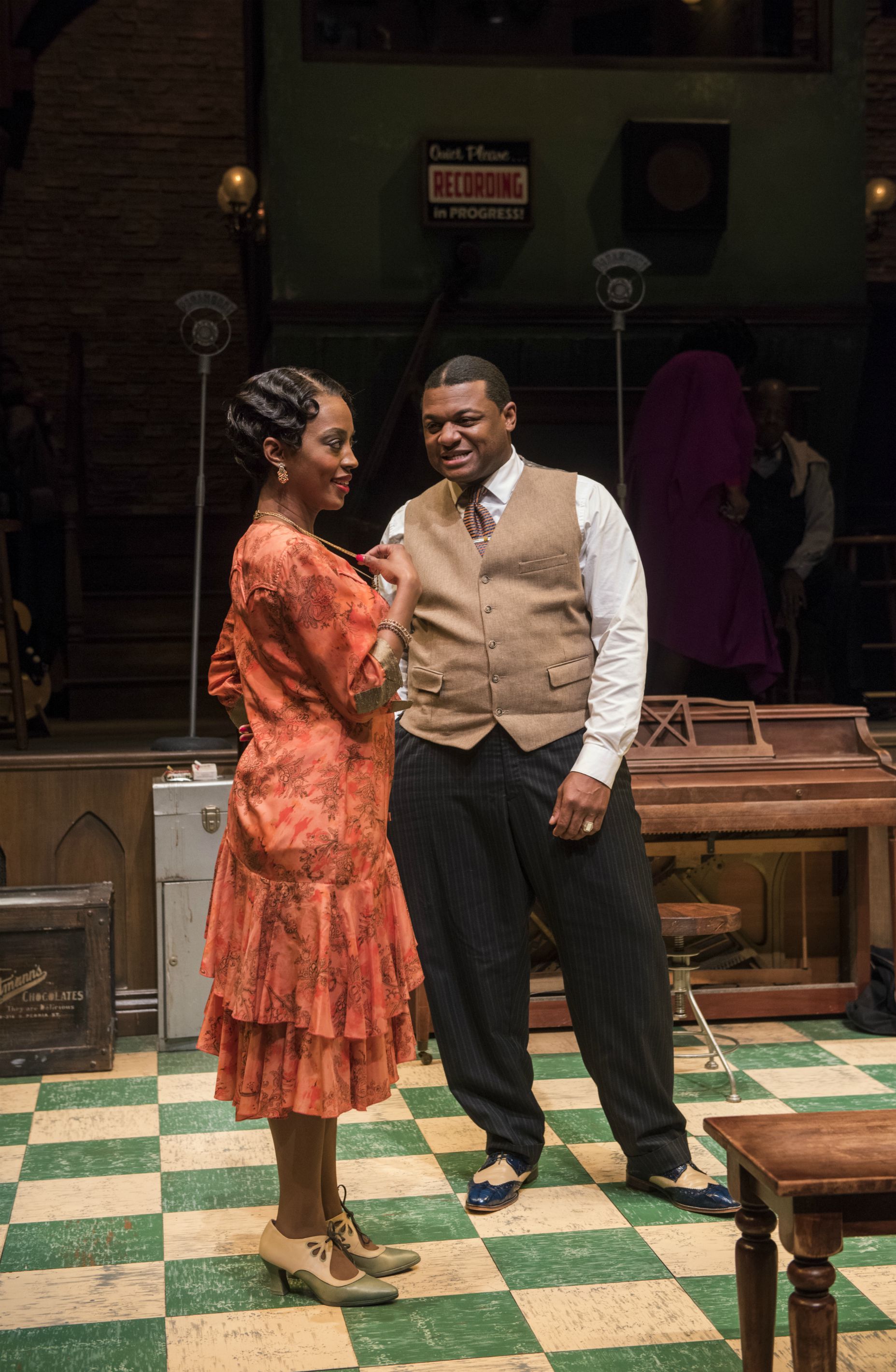
It’s March 1927 and Ma Rainey and her band—Sylvester (Jabrai Khaliq), Levee (Al’Jaleel McGhee), Toledo (Kelvin Roston Jr.) and Slow Drag (Cedric Young)—are gathering at a Southside recording studio run by Sturdyvant (Matt DeCaro) to record a new album. Ma’s manager Cutler (David Alan Anderson) must deal with Sturdy’s impatience when Ma and her entourage—nephew Irvin (Marc Grapey) and the sultry Dussie Mae (Tiffany Renee Johnson)—who are nowhere to be found.

In the meantime, Slyvester, Toledo and Slow Drag get along well in the rehearsal room, each loyal to Ma’s powerful influence and committed to doing the job they have been hired to do. The dynamic changes significantly when Levee arrives, decked out in his new shoes and emboldened by Sturdy’s commitment to use his arrangements with a promise to record other songs with a band of his own. The others don’t buy it, even when Cutler tells them that the decision to use Levee’s arrangements has been made.

That conversation sets the stage for Ma’s blistering arrival and the realization that there is only one opinion that matters in the room. Ma Rainey arrives in a whirlwind of commotion, driven by the presence of policeman (Scott Aiello) who wants to arrest Ma for a traffic accident on the way to the studio. To nobody’s surprise, the unfolding plans for the session do not jive at all with Ma either. The band is sent back down for rehearsal with Irvin, who will be doing things Ma’s way, despite Irvin’s pronounced speech impediment.
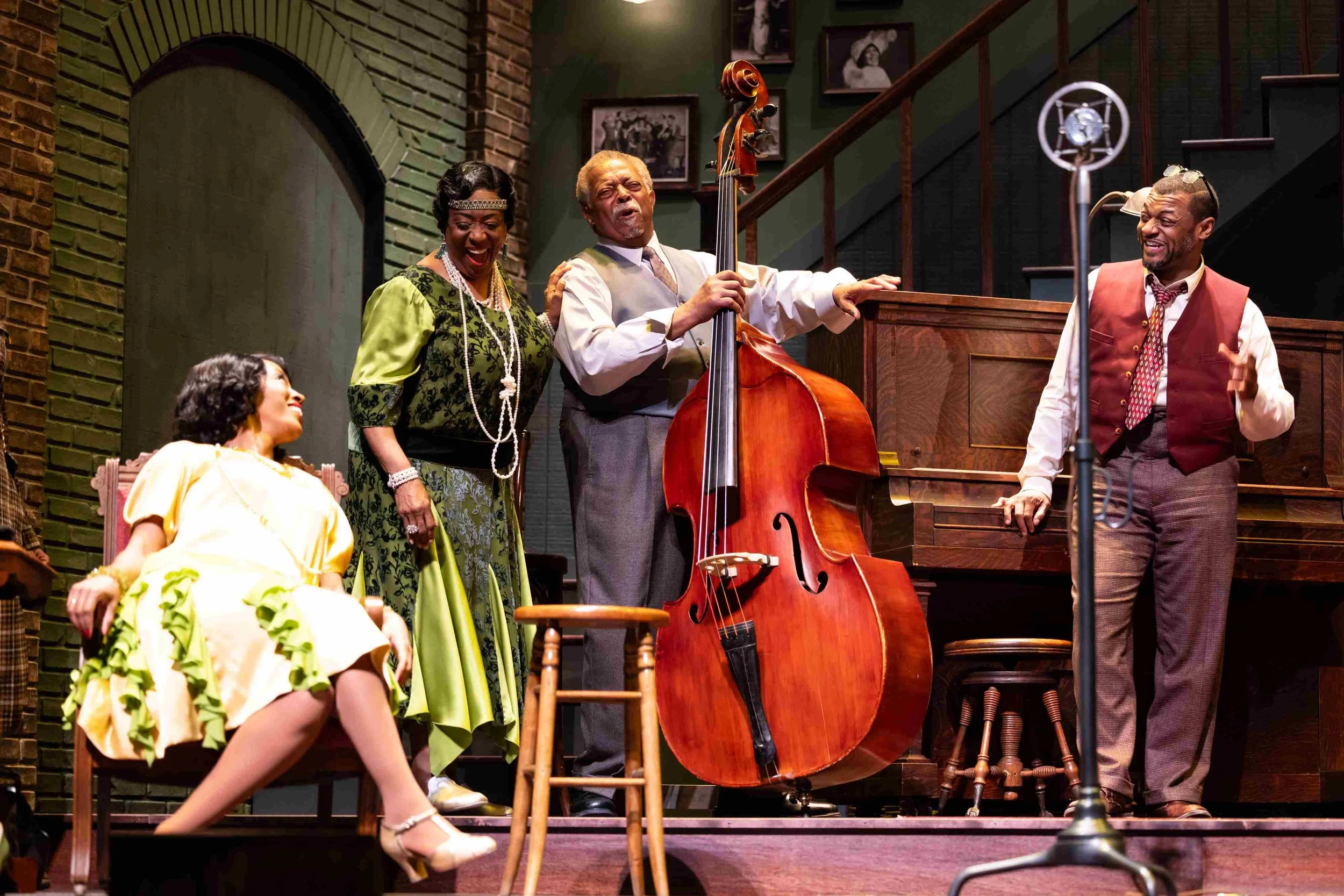
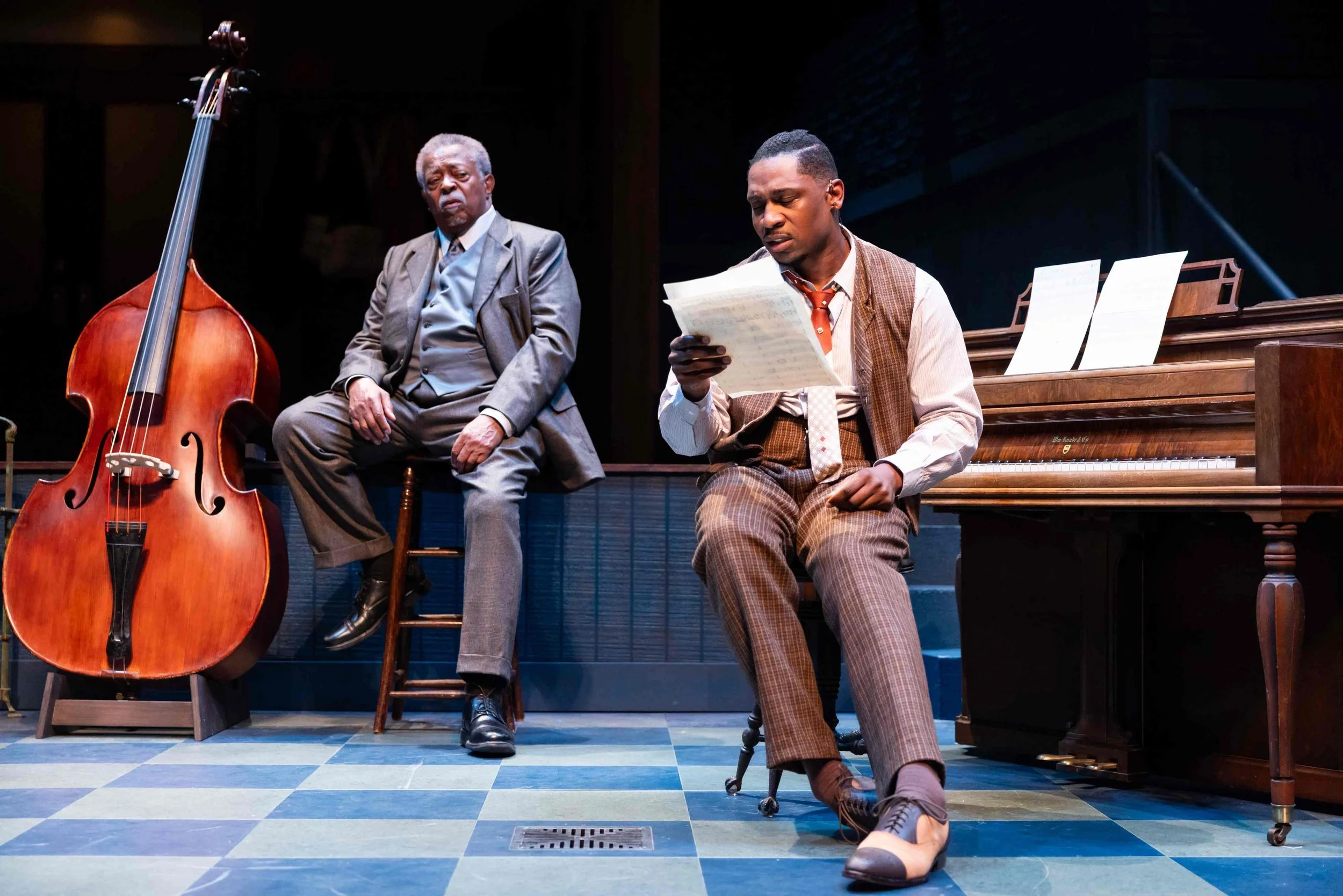
The conflict comes to a head when Ma and Levee face off on the direction of the recording of her signature piece “Ma Rainey’s Black Bottom.” Levee represents a new and innovative talent in jazz music but blindly resists the notion that white recording producers are only in it for themselves. Ma Rainey and her contemporaries in the band recognize that they will receive only token payments and little respect for their work, while Levee’s hopes continue to be dashed at virtually every turn, fueled by deep-seated images of his youth that eventually prove to be inescapable.

The true power of Wilson’s work lies in Levee’s struggles. McGhee’s commanding performance fires on every cylinder in the challenging role, as the emotionally unhinged Levee shifts on a slow burn from impassioned musician to deranged psychopath, the helpless victim of his own violent and embattled childhood.

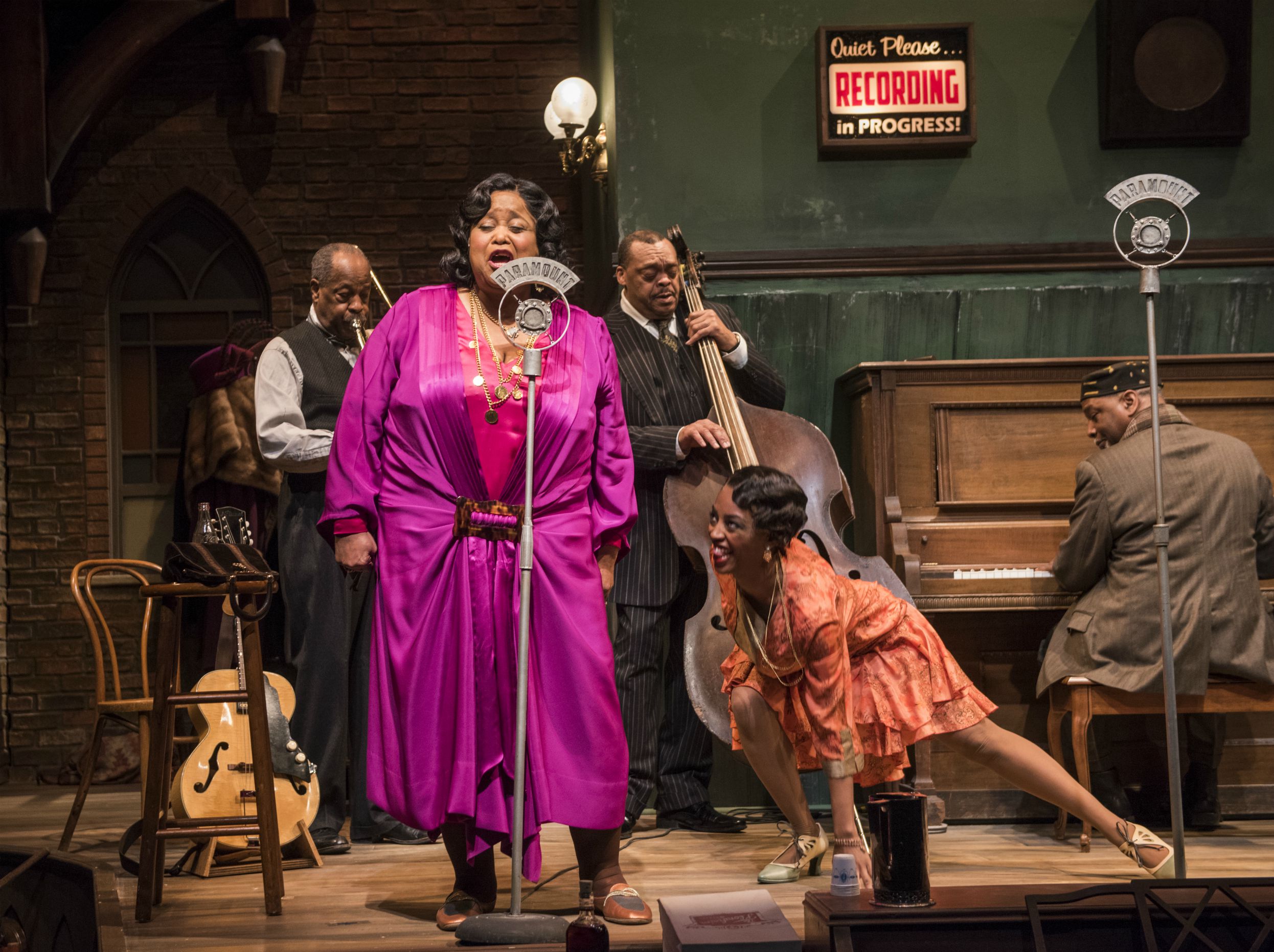
The production runs expertly through Butler’s super-charged performance as Rainey, alternating between her larger-than-life presence, striking fear in virtually everyone within earshot, to her mesmerizing vocal’s and the touchingly quiet reflective moments where Butler peels back the public image and shares Rainey’s innermost feelings with Sylvester. Director Smith’s pacing expertly elevates the lighthearted exchanges and so solidly stages this drama that, at the most gripping moments, you can hear a pin drop.

It all unfolds on Linda Buchanan’s gritty set design, an urban, tri-level structure capped by a control room above the main recording studio that is connected by stairs to a lower level rehearsal room. Jared Gooding’s stylized lighting design defines the areas and extends beyond the staged interior providing a reminder of the Chicago streets just outside the door. Evelyn M. Danner’s costumes expertly evoke the period, especially Ma Rainey’s resplendent ensemble. The music direction under Lennix features orchestrations by Dwight Andrews and sound design by Rob Milburn and Michael Bodeen, all placing Goodman Theatre’s “Ma Rainey’s Black Bottom” at the top of the list for shows to see right now in Chicago.

PHOTO|Justin Barbin

Goodman Theatre
presents
Ma Rainey’s Black Bottom
Albert Theatre
170 N Dearborn

Extended through May 3, 2026

WEBSITE

STUDY GUIDE

For more reviews, visit: Theatre In Chicago

ARCHIVE

PicksInSix® is a registered trademark of Roxbury Road Creative, LLC
PicksInSix Review: Miss Julie - Court Theatre


Trapped, Strindberg Style: Aristocratic Summer Solstice
PicksInSix® Review | Guest Contributor |
Sarah Frances Fiorello

It’s been a long, hard winter here in Chicago, but on the south side at Court Theatre it is currently the longest day of the year. August Strindberg's “Miss Julie” is encapsulated night after night at the turn of the 20th century and in the warmth of midsummer’s eve, for audiences to experience now through March 8th.

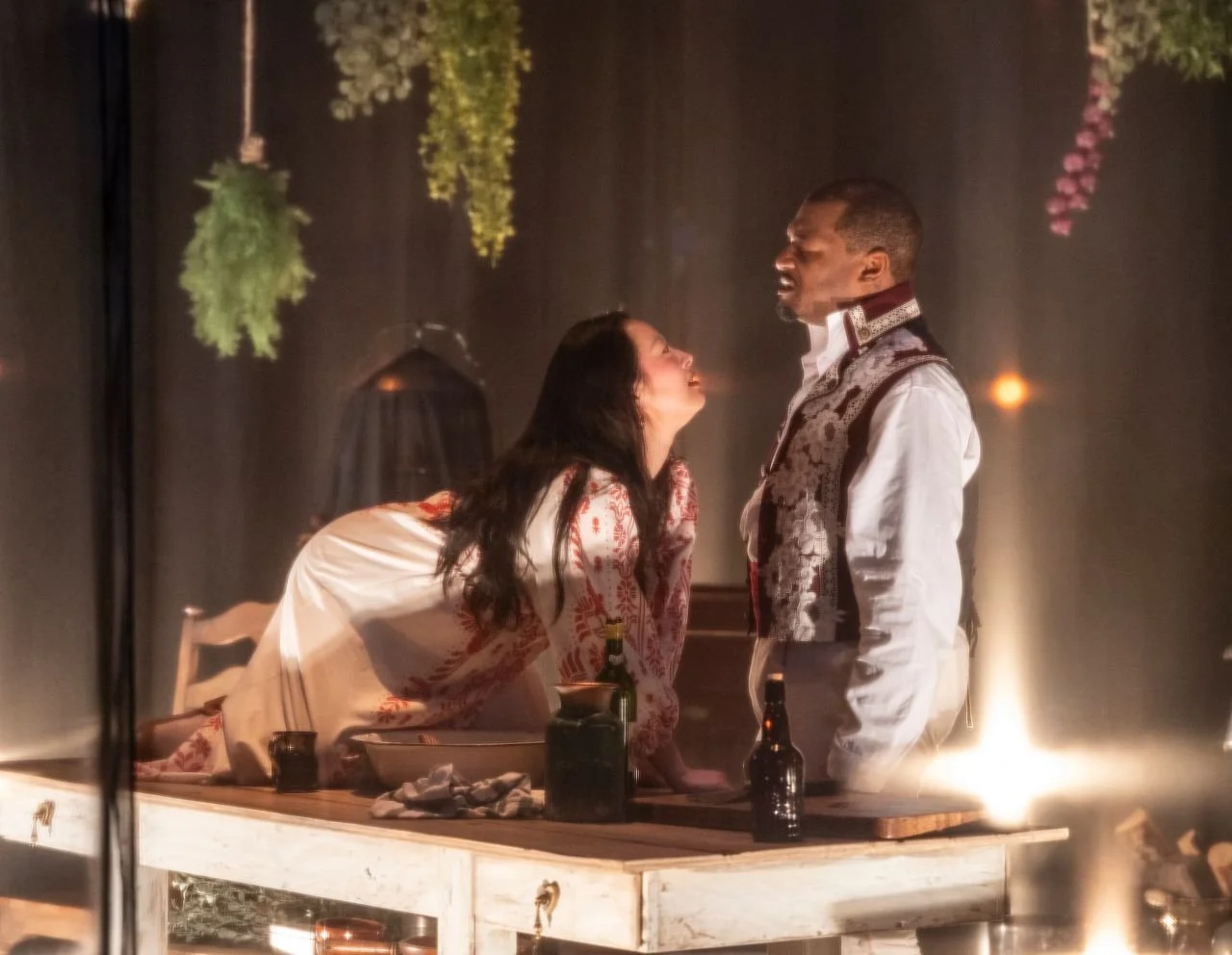
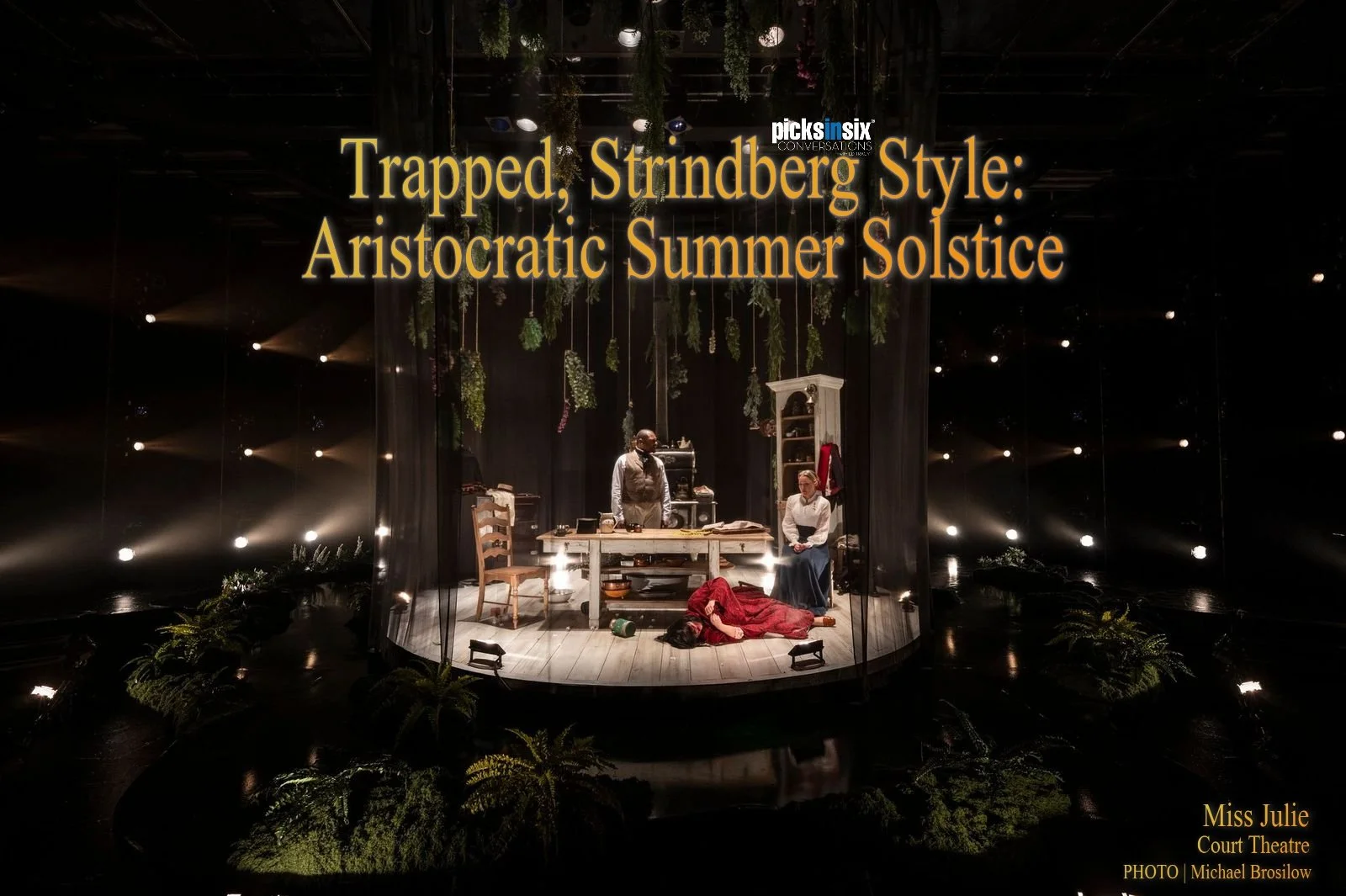
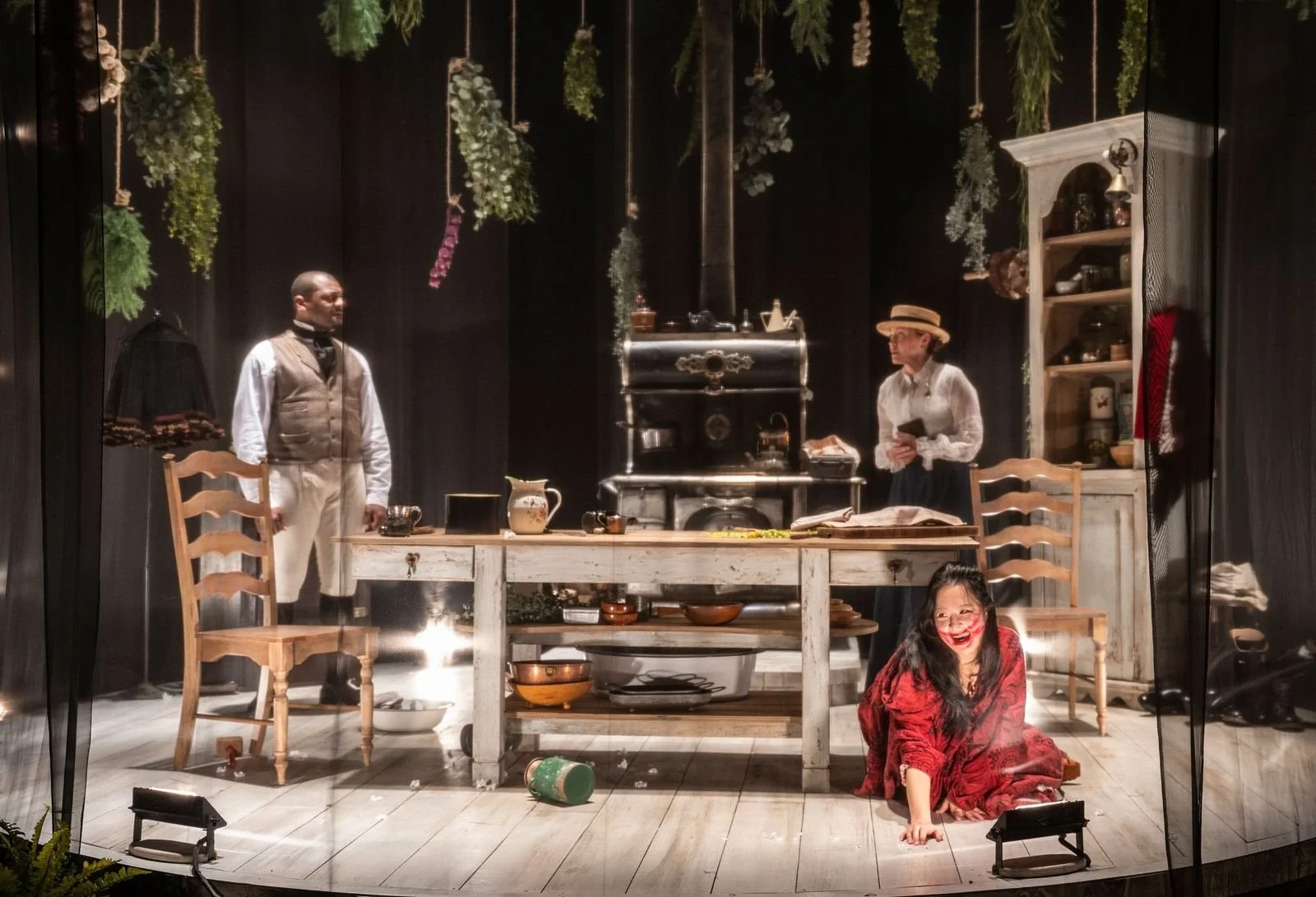
The play drops in on Julie’s servants, Jean and Kristine, discussing her wildish, reckless behavior during an otherwise garish (offstage) aristocratic summer solstice. Kristine respectfully heads to bed giving way for Julie and Jean to spend an evening jockeying for position, using status, sex, and social standing as levers to pull on each other to get what they want. The situation grows more dire and claustrophobic, as we slowly become privy to the inner workings of these characters—what haunts them, what moves them, and what traps them despite their agency and overwhelming desire to escape.

Mounting Strindberg in 2026 is an academic undertaking, one that requires care and attention to not only the spirit in which he created the work, but the implications that the piece—alongside Strindberg’s Naturalist theatre movement as a whole—had in the late 1800’s. Ironically, I was put at ease with this production's EDM overture, signaling an earnest understanding that Strindberg was allergic to a comfortable night at the theatre. It says, “Welcome to our psychological experiment, we hope you brought your thinking cap.”

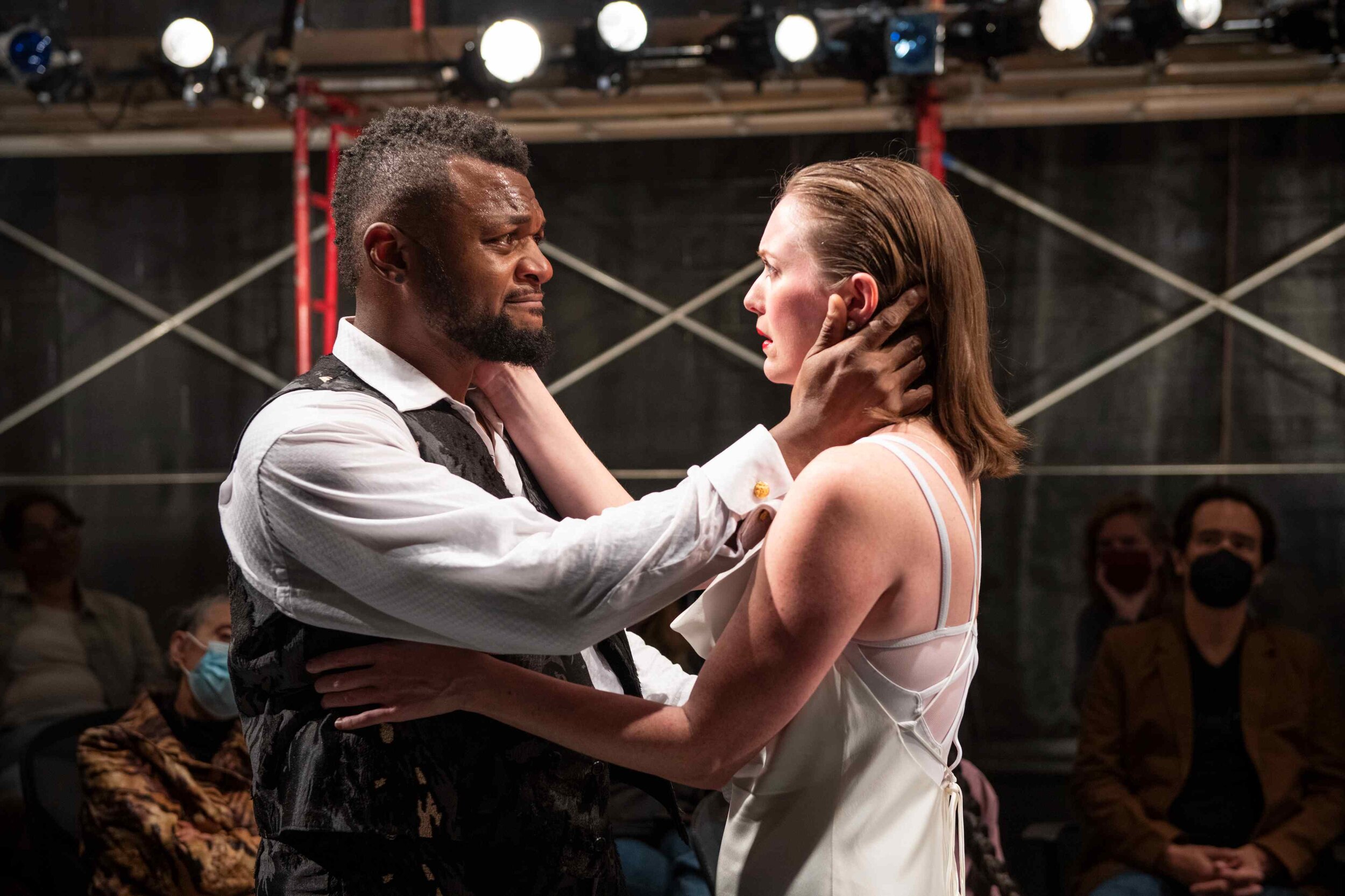
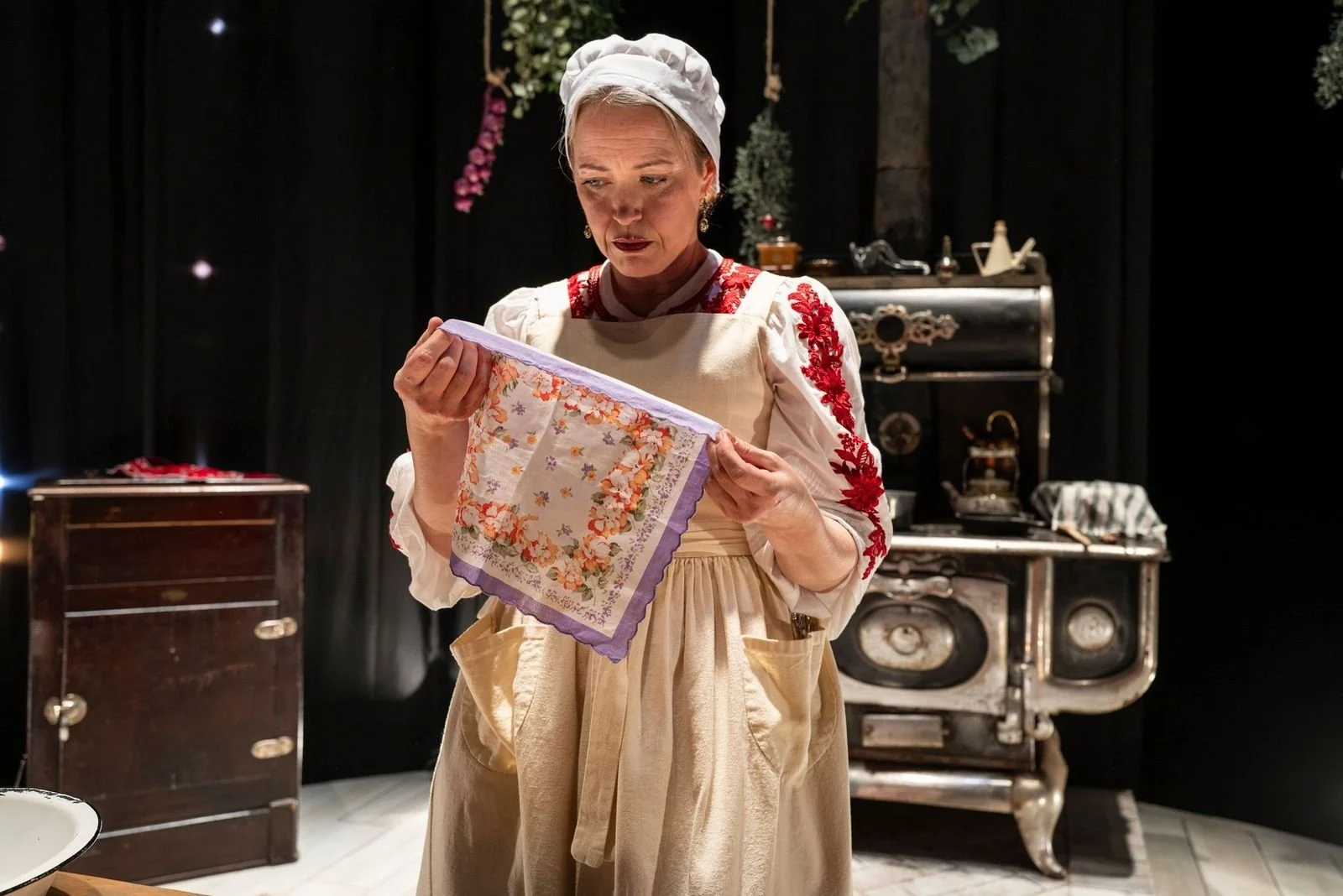
Our three actors carry this play with poise and certainty. Kelvin Roston Jr. shines and makes it look easy as Jean, maneuvering between emotional heavy lifting and thinly veiled subtext, all while serving as a near constant presence on stage during this one hour and 40-minute one act.  Mi Kang as Miss Julie rises to the occasion without giving way to what could easily become a two-dimensional, misogynistic, overbaked fever pitch portrayal. She moves with nuance, allowing us to feel both sorry for her and disgusted by her, often at the same time. Rebecca Spence as Kristine delivers each line with surgical precision and dripping with intentionality, offering a master class in theatrical interpretation.

The creative team equally shines here. John Culbert’s stunning scenic design is as beautiful as it is claustrophobic, echoing the emotional notes of Strindberg’s writing. Raquel Adorno’s costume design is delicate and thoughtful while Abhi Shrestha’s dramaturgical work is a cornerstone to the foundation of “Miss Julie’s” resonance. All of this under the expert direction of Dr. Gabrielle Randle-Bent, whose fingerprint is over every inch of this production. No stranger to Court Theatre (directing “A Raisin in the Sun,” “Antigone,” and “The Island”), her scholarly understanding of the work and arresting theatrical storytelling style can be felt, transmuting as one within Culbert’s earthy, organic space.

Harry G. Carlson’s translation of “Miss Julie” does more than hold up at Court Theatre. You’ll be entertained, but that is hardly the point. The actors and creative team make this undertaking look effortless, doing all the requisite work to ensure that the 130-year-old play lands squarely in your lap, offering you a chance to think critically about the themes that are as relevant today as they were at the end of the 19th century.

GUEST CONTRIBUTOR | SARAH FRANCES FIORELLO is a graduate of Shenandoah Conservatory with a BFA in Music Theatre and a Chicago-based poet, writer, and performer. 
Instagram: 
@writtenbysarahfrances

PHOTO | Michael Brosilow

Court Theatre
presents
Miss Julie
Abelson Auditorium
5535 S. Ellis Ave
through March 8, 2026


WEBSITE

TICKETS

PROGRAM

For more reviews, visit: Theatre In Chicago

ARCHIVE

PicksInSix® is a registered trademark of Roxbury Road Creative, LLC
PicksInSix Review: East Texas Hot Links - Court Theatre


Articulate, Impactful ‘East Texas Hot Links’
PicksInSix® Review | Guest Contributor | Ronald Keaton

There is a stellar production of Eugene Lee’s signature play “East Texas Hot Links” playing now at Court Theatre in Chicago through September 29. It is an articulate, impactful play that echoes in one’s mind long after the curtain comes down in its eloquent and painful comment on the remnants of the civil rights movement in America, how it continues to resonate and affect so many of our societal mores.  It bears the unmistakable stamp of the great director Ron OJ Parson, who has a relationship with this piece that forces us, in its sheer professionalism alone, to see an unencumbered view of what Jim Crow has done to our world and continues to do today.

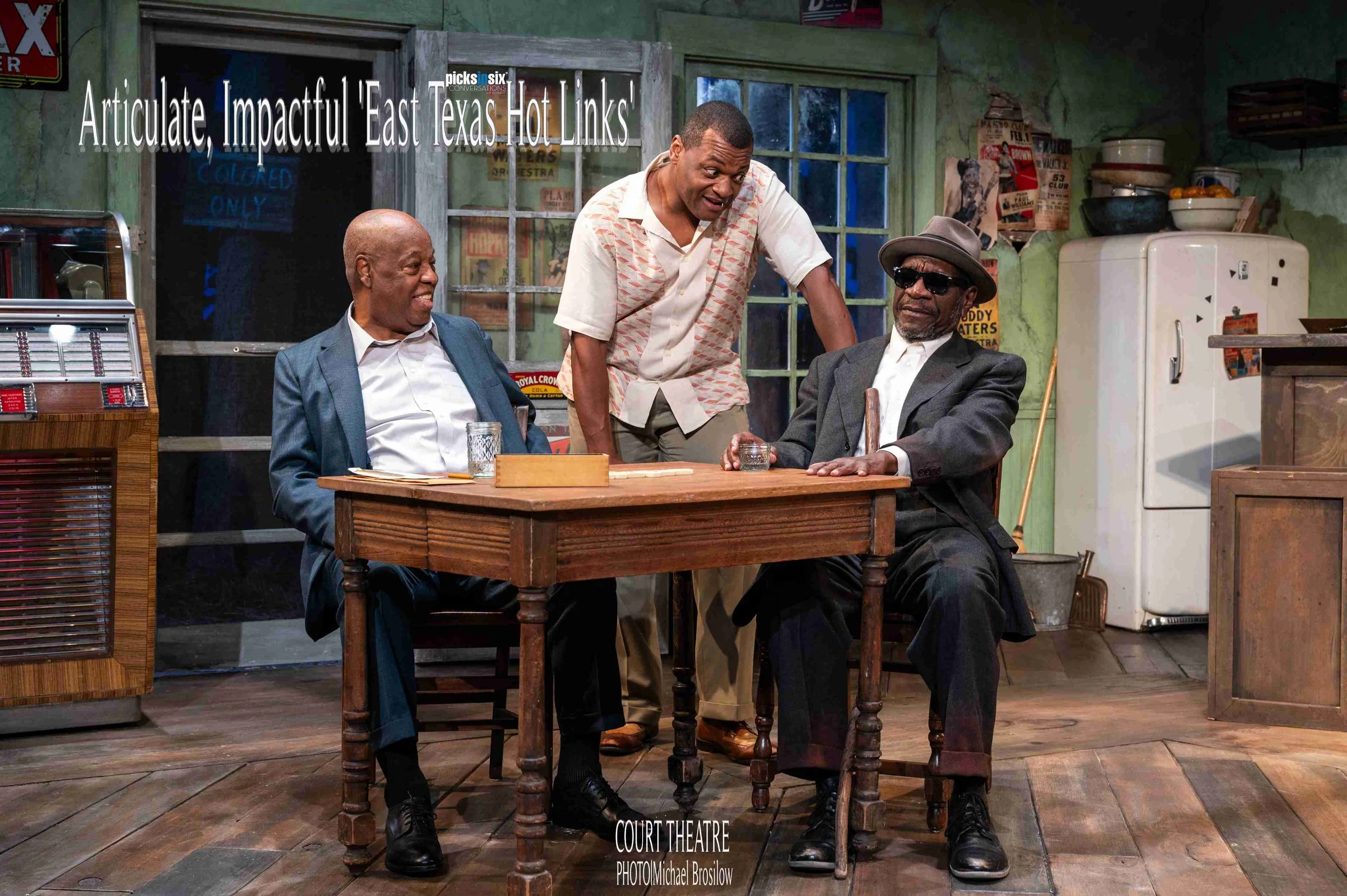
Imagine the mid-1950s in the South—in this case, east Texas—at a small café/saloon back in the “piney woods.”  We are privy to a group of folks who all know each other, whose familiarity is not just palpable, it’s vital for the telling of this story. And this production offers one of the finest presentations of true ensemble acting we will ever see.  The intimate banter, the intuitive approaches in character, the story’s roadmap that is laid out for the cast, enhancing each actor’s planting of their artistic feet by literally grabbing and shaking us. It’s as hard as anything we may have seen in recent seasons at Court.  And it’s all couched in, yes, the love that people can have for each other by pointing out the bad and raising high the good in us.

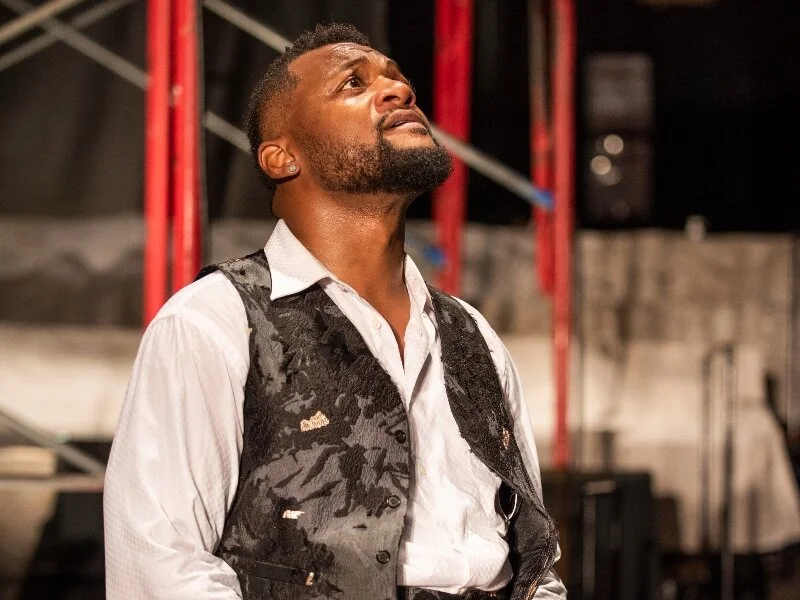
This cast. The play begins with Kelvin Roston Jr., a Court favorite, as Roy, a man whose checkered past (a trait shared by others here) has made him look at starting over in a more productive way. He’s always had a huge attraction for the owner/bartender Charlesetta (a glowing AnJi White), who keeps him and all the men in the bar constantly at bay. There’s Adolph (Willie B. in a strong portrayal), a blind philosopher of sorts whose gravitas helps steer the conversation. Beside him at his table is Columbus (Alfred H. Wilson is a compelling influence) whose ownership of property gives him a more telling voice.

There’s the formidable AC Smith whose hustler/fortune teller Broochie dominates the story halfway through by a simple reading of the palm of Delmus (a naïve young man given wonderful shrift by David Dowd), a kid with big dreams and plans. Then there’s Buckshot (a dark and yet emotionally delicate performance by Geno Walker) who’s just gotten out of jail and simply trying to find his way.  And there’s Juwan Lockett in a defining portrayal as XL, a man whose instinct for survival overpowers his sense of decency and responsibility to his friends and family.

Little by little, the silence at the beginning of the play—one that is held to observe for a reason—gives way to exchanges between characters that make you listen to the words, other times to their rhythms, all the time to the presence and power of the voices. With the specter of the Klan exerting power all through it, director Parson deftly handles the intensity with the skill of a surgeon. This kind of story telling is indeed his specialty and it’s marvelous to watch.  And it’s a simple, highly effective Jack Magaw set design, this small tavern that offers big story. It’s highly complimented by a soft, layered lighting design from Jason Lynch.

Let us also remember that the setting and locale for “East Texas Hot Links” lives in the wake of Brown vs. Board of Education and Emmitt Till and Rosa Parks and the emergence of MLK in the public eye. This is not just Black history, but American history, no matter any regard for political expedience. These characters are etched so well within these creative walls by Mr. Lee, an August Wilson disciple and accomplished actor/writer in his own right, and expertly guided by Mr. Parson to the ultimate surprise at the end of the play.  Well, unfortunately not a surprise to all, as you will see.  

GUEST CONTRIBUTOR | RONALD KEATON received an Equity Jeff Award for the performance of his one-man show CHURCHILL. www.solochicagotheatre.com  Coming soon, his new solo play “Echo Holler.” www.echoholler.com

PHOTO|Michael Brosilow

COURT THEATRE
presents
East Texas Hot Links
5535 S Ellis Ave.
through September 29, 2023

WEBSITE

TICKETS

PROGRAM

For more reviews, visit: Theatre In Chicago

ARCHIVE

PicksInSix® is a registered trademark of Roxbury Road Creative, LLC
PicksInSix Review: The Gospel at Colonus - Court Theatre


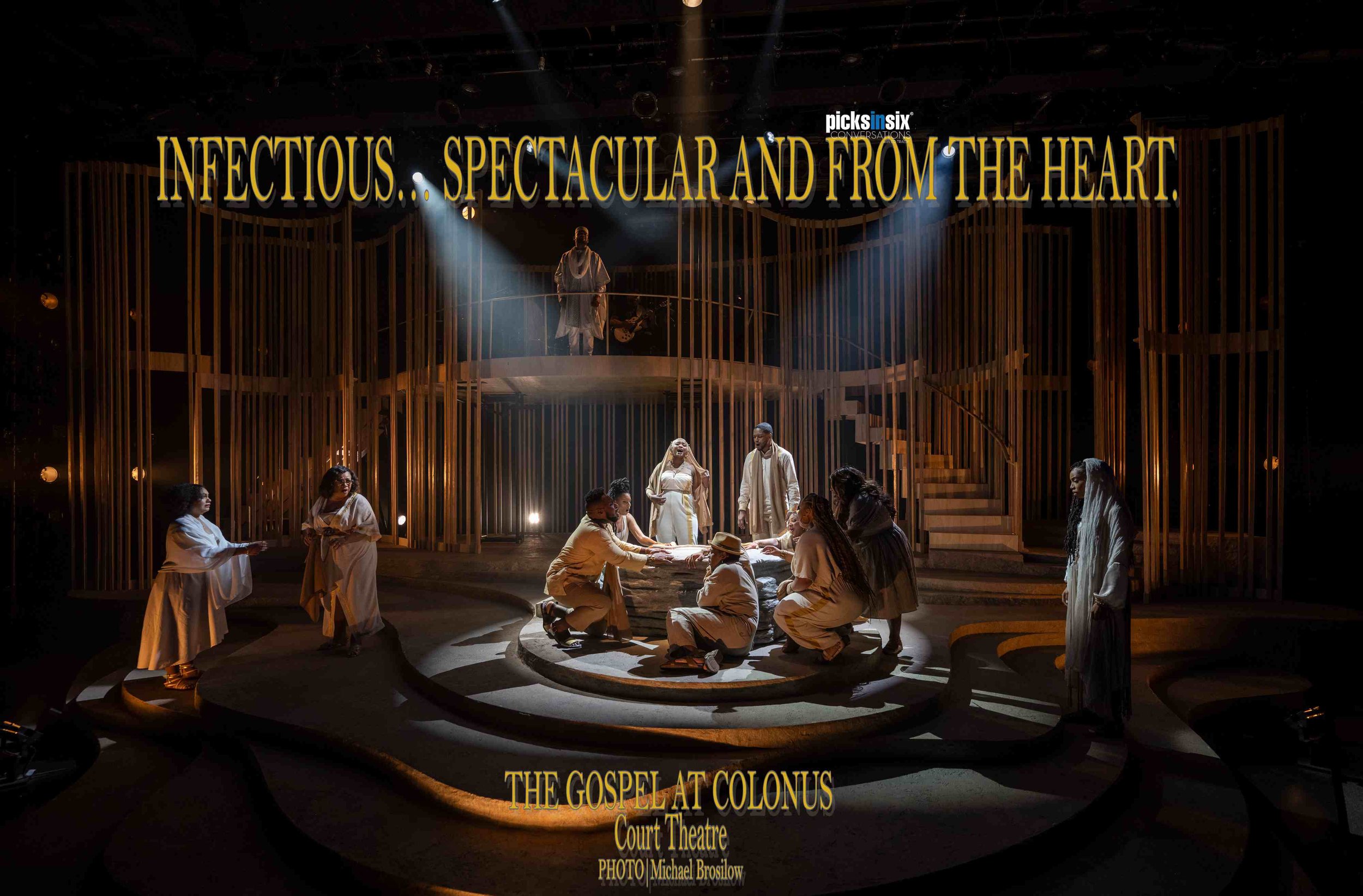
Infectious… spectacular and from the heart.
PicksInSix® Review | Guest Contributor Ronald Keaton

There is so much to share about “The Gospel at Colonus,” the absolutely marvelous production now playing at Court Theatre through June 11, that one hardly knows where to start – or whether all the praise can fit in here.  Based on the Oedipus trilogy by Sophocles, it views the Greek tragedy – and in this case a specific tale that shows subsequent comparisons to Christian fact and legend – through the energetic prism of the Black Pentecostal Church.  It’s a fascinating adaptation that seems naturally to play into such customs and stories.

Some background: “Oedipus at Colonus” is the middle play in the trilogy.  Oedipus has already experienced what the gods say he will endure.  His father the king is killed in battle by his son’s hand.  In mourning, the son attends his mother Jocasta and, in time, they have three children together.  When that shame is discovered by the world, Oedipus then blinds himself as punishment for his sins and wanders the world for twenty years. Yes, that’s quite thumbnail in description, but it sets up the second play, where Oedipus is now cared for, by first one and then both daughters, as he is guided back to Thebes, desiring now to go home and die quietly.  And of course, nothing is quiet in Greek storytelling.

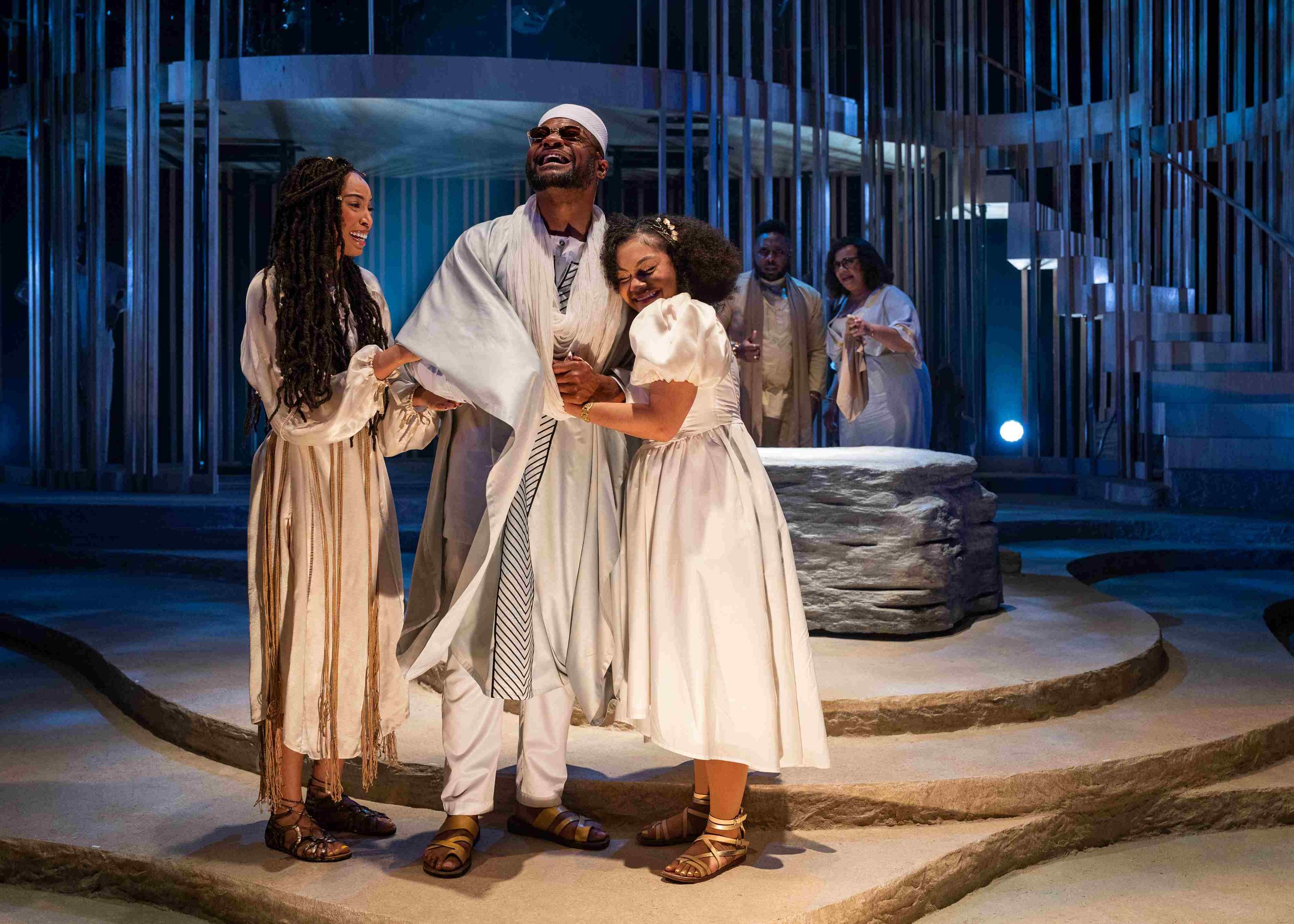
The versatile Kelvin Roston Jr. gives an Oedipus of great emotion and strength that translates into non-stop passion throughout the play.  As the two sisters, Aeriel Williams (Antigone) and Ariana Burks (Ismene) are both zealous, vulnerable guards of their father’s welfare.  Mark Spates Smith (Theseus, King of Athens) is a calming presence as his character converts to a narrator/minister of the church here. And it’s lovely to watch the wisdom in his work.  Timothy Edward Kane is a smooth, slick Creon, who is Jocasta’s brother, tempting Oedipus to return to his birthplace, so that the fortunes the gods have predicted will not come true and Creon can retain power in Thebes… And on the story goes.

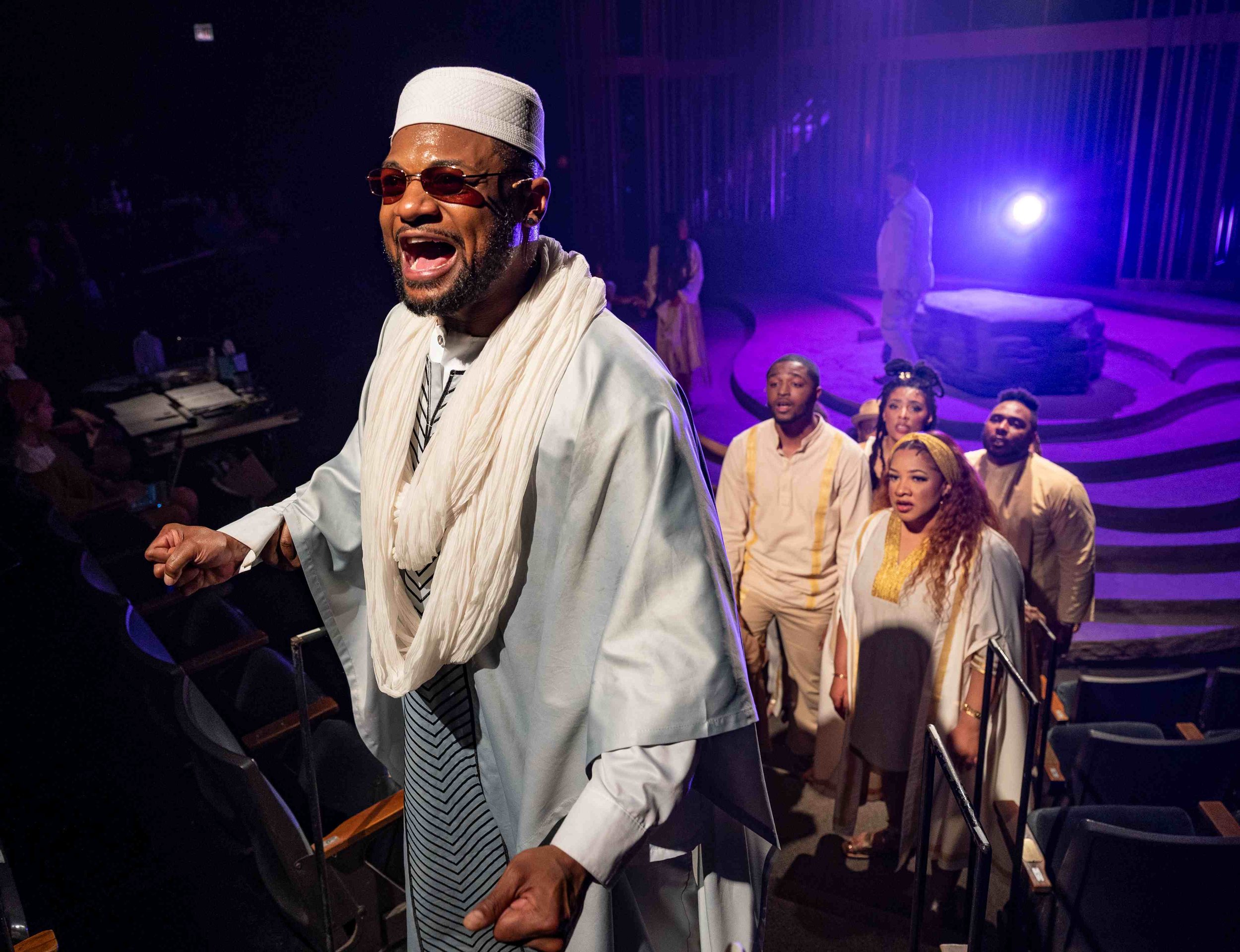
There are so many high points from a talented ensemble, a most entertaining entity this writer enjoyed thoroughly.  Juwon Tyrel Perry portrays The Friend, who first tells Oedipus he cannot enter a holy place, in a stunning vocal turn. Kai A. Ealy as the evil son Polyneices offers wonderful character work, full of depth and deception.  As dual Choragos whose advice Oedipus accepts, Eric A. Lewis and Shari Addison deftly lead the citizenry in alternating moments of huge passion and quiet choral harmonies, all rooted in the Pentacostal tradition of call-and-response that is nothing if not exciting to watch here.  Everyone deserves mention – Jessica Brooke Seals as a knowing preacher of sorts, augmented by a Greek chorus (Jerica Exum, Cherise Thomas, Isaac Ray, Shantina Lynet, Eva Ruwe) who takes the captivating music to emotional heights in a totally unique take of the Court’s classic theatre mode.

“The Gospel at Colonus” is co-directed with an elegant combination of big choral strokes and intimate individual moments by Mark J.P. Hood and Charles Newell with associate director Taron Patton. A sparse scenic design by John Culbert; the colorful Raquel Adomo costuming; the wonderful, attentive shafts of sharp light in one moment and warm, enveloping light in another by Keith Parham; the complimentary sound layers designed by Sarah Ramos – all eloquent pieces to a puzzle of thick design and story.  All of these elements, expert as they are, grabbed onto the coattails of the exciting, heartfelt gospel blues from the five-piece unit led by Mahmoud Khan. Along with the audience, one could even see Production Stage Manager Kate Ocker clapping along from the stage manager’s booth. That’s how infectious it is – spectacular and from the heart.

Created by Lee Breuer and Bob Telson, the show had its original 1983 production at the famed Brooklyn Academy of Music in New York – after workshops at the Walker Art Center in Minneapolis and in London – with Morgan Freeman as the preacher and the great Blind Boys of Alabama as Oedipus, in what Mr. Breuer and Mr. Telson called a “eureka moment” in their casting. It is a fascinating adaptation of an exceedingly challenging story to tell that naturally plays into the customs and traditions of Black churches.  I would venture to say that if they saw this production in all its fullness and nuance, they would be quite happy with the result.

GUEST CONTRIBUTOR | RONALD KEATON received an Equity Jeff Award for the performance of his one-man show CHURCHILL. www.solochicagotheatre.com  Coming soon, his new solo play “Echo Holler.” www.echoholler.com

PHOTO|Michael Brosilow

COURT THEATRE
presents
THE GOSPEL AT COLONUS
5535 S Ellis Ave.
EXTENDED through June 18, 2023

WEBSITE

TICKETS

PROGRAM

HEALTH & SAFETY

For more reviews, visit: Theatre In Chicago

ARCHIVE

PicksInSix® is a registered trademark of Roxbury Road Creative, LLC

ALL RIGHTS RESERVED

Copyright 2014-2026

Roxbury Road Creative, LLC
Powered by Squarespace