
PicksInSix Review: A Strange Loop - About Face Theatre and Raven Theatre
If Only It Really Looped Forever!
PicksInSix® Gold Review | Guest Contributor | Perse Grammer
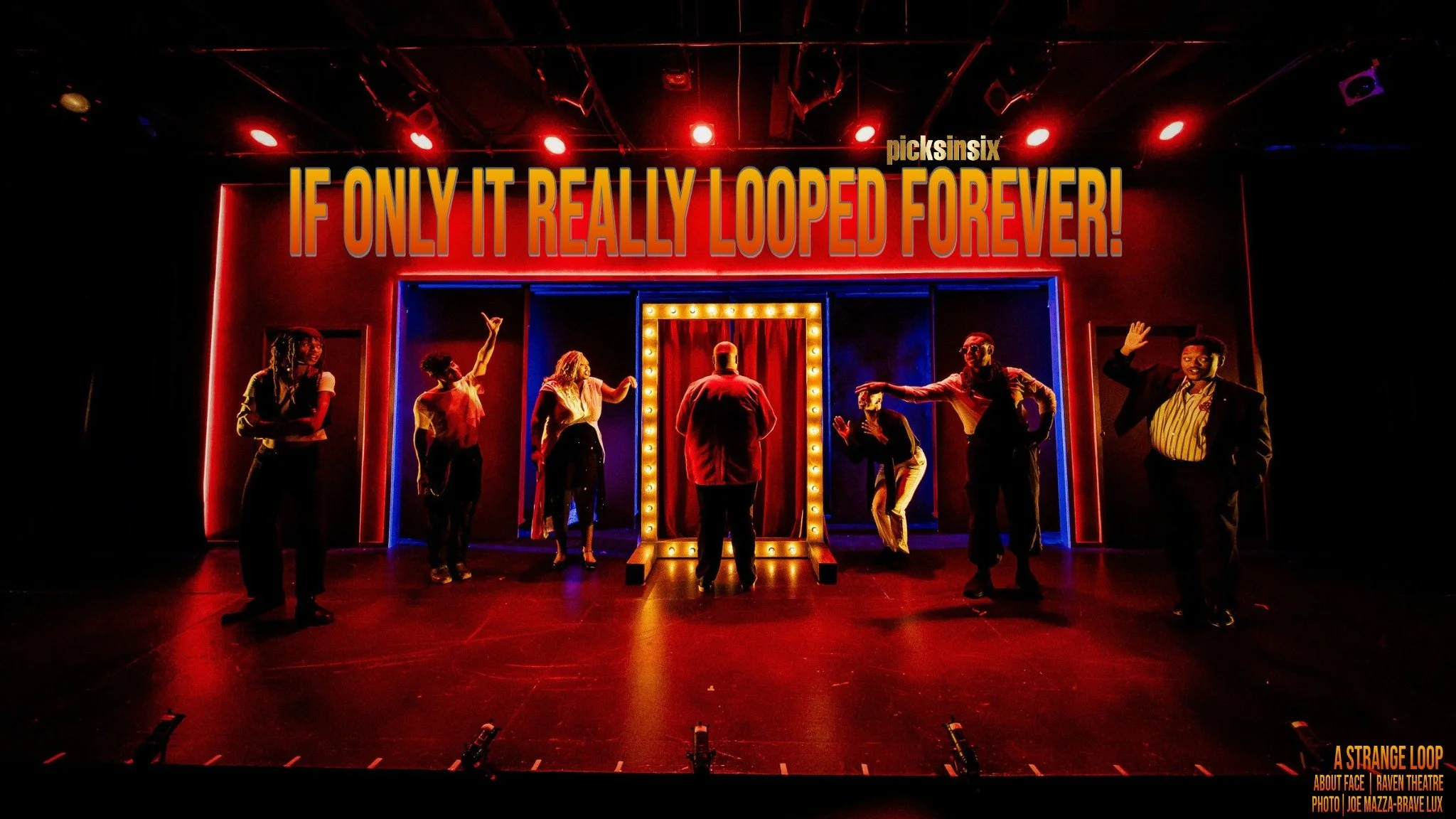
About Face Theatre and Raven Theatre’s co-production of Michael R. Jackson’s Pulitzer Prize and Tony Award–winning musical “A Strange Loop” begins with a pre-show playlist consisting entirely of “The Lion King” musical soundtrack. The set is minimal and striking. A strip of lights outlines the walls of the stage, which frame a series of blank sliding panels. Center stage contains a red curtain hanging in a doorframe ringed with lightbulbs.
For the majority of the show, we won’t see many more additions to what is already onstage. But scenic designer Sydney Lynne and lighting designer Brenden Marble’s versatile creativity have made maximalism wholly unnecessary, as their work will transport us to many new locations. As the rousing opening number begins—tight choreography courtesy of Breon Arzell—it’s clear that director Mikael Burke has engineered a night of astonished laughter, seamless transitions, and an utter celebration of theatrical talent.






“A Strange Loop” introduces us to Usher, an early career playwright working as an usher at “The Lion King” on Broadway. Usher is struggling to write the musical we’re currently watching, and his ensemble of criticizing Thoughts—as the characters are defined—aren’t helping. There’s little acceptance for Usher in the gay community, as he’s either rejected or fetishized for his Blackness. His religious parents don’t understand the dream he moved away to pursue, or how his homosexuality isn’t a hurtful choice he’s making. As Usher digs deeper into his musical, he realizes that he can’t write it without attempting to confront his parents with his true, artistic, queer self.
Jackson’s “A Strange Loop” is artfully structured. It starts strong and keeps ramping up. When we need a change from upbeat numbers, the show takes a sinister turn. When we need to catch our breath, we’ve already begun a sweet, simpler scene. And just when we think the performance can’t get any more outrageous, it’s been cranked up to an eleven with a gospel number and a wholly unexpected set reveal.
Burke’s exceptional ensemble has mastered the art of working perfectly in sync while still each bringing something unique and exciting to the table—theatrical chameleons shifting between wildly different characters, playing elegant in one scene and raunchy in the next. The wonderful Micah Mixon (Thought 1) is effortlessly charming. She stands out especially in the role of Usher’s Sympathetic Ear, bringing much-needed warmth to the stage. Whether he’s playing the sassy, influencer-like character of Usher’s self-loathing, or Harriet Tubman, Matheus Barbee (Thought 2) is boldly hilarious. Christopher Wayland (Thought 3) is also comedic in his many roles, but his style is subtler, drawing out laughs with a finely-tuned facial expression. Usher’s mother is embodied fully by Michael Turrentine (Thought 4) who deftly walks the fine line between portraying a caricature and a real woman who makes us believe she can change—and breaking our hearts when she doesn’t. John-Payne (Thought 5) utilizes their impressive bass, especially during their solo numbers as Usher’s father, dancing in the overlap of silly and sinister. And even as Naphtali Curry (Thought 6) is playing the sleazy, racist white man that sexually degrades Usher, his presence carries an undeniable air of refinement throughout the show.
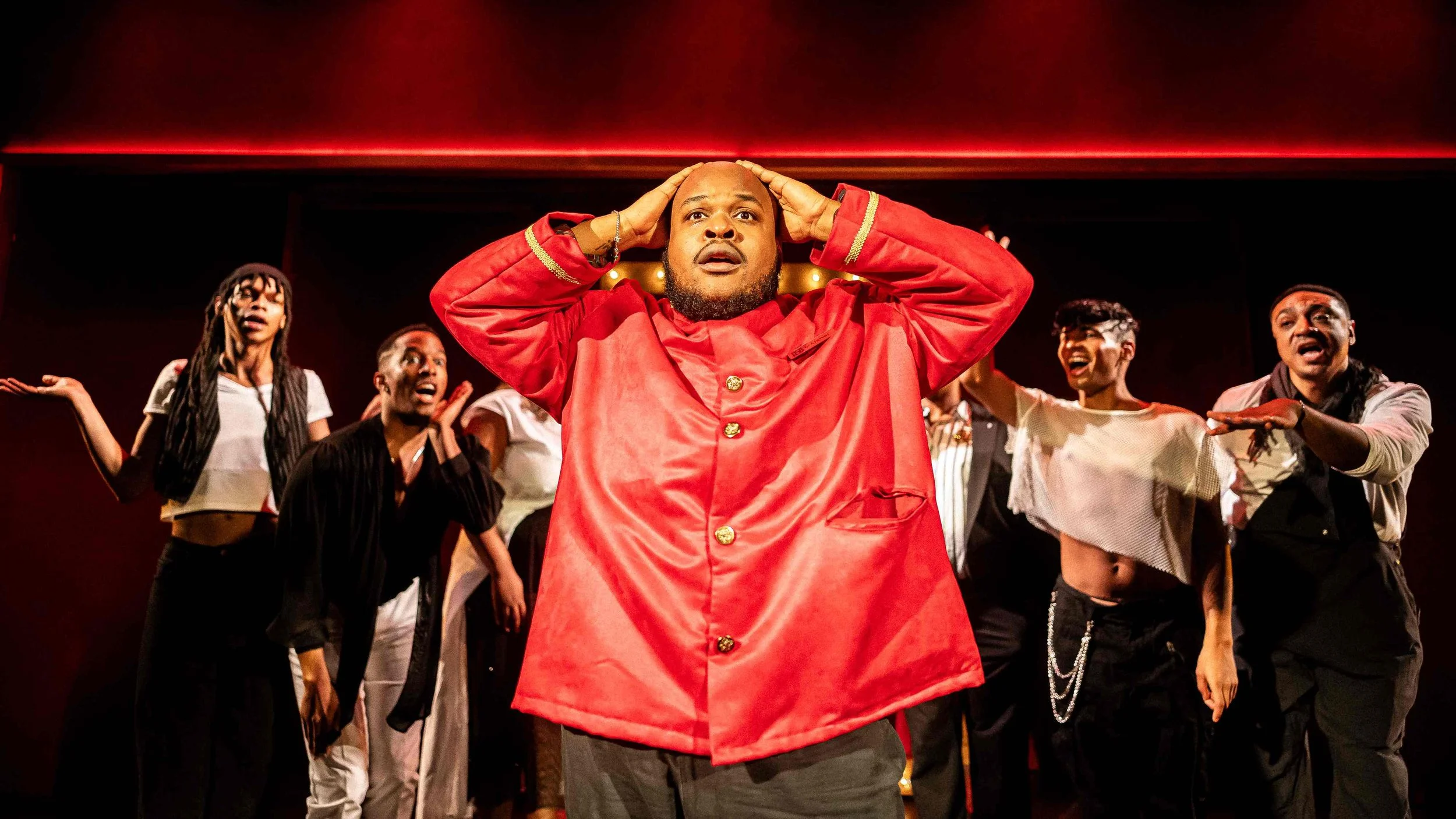
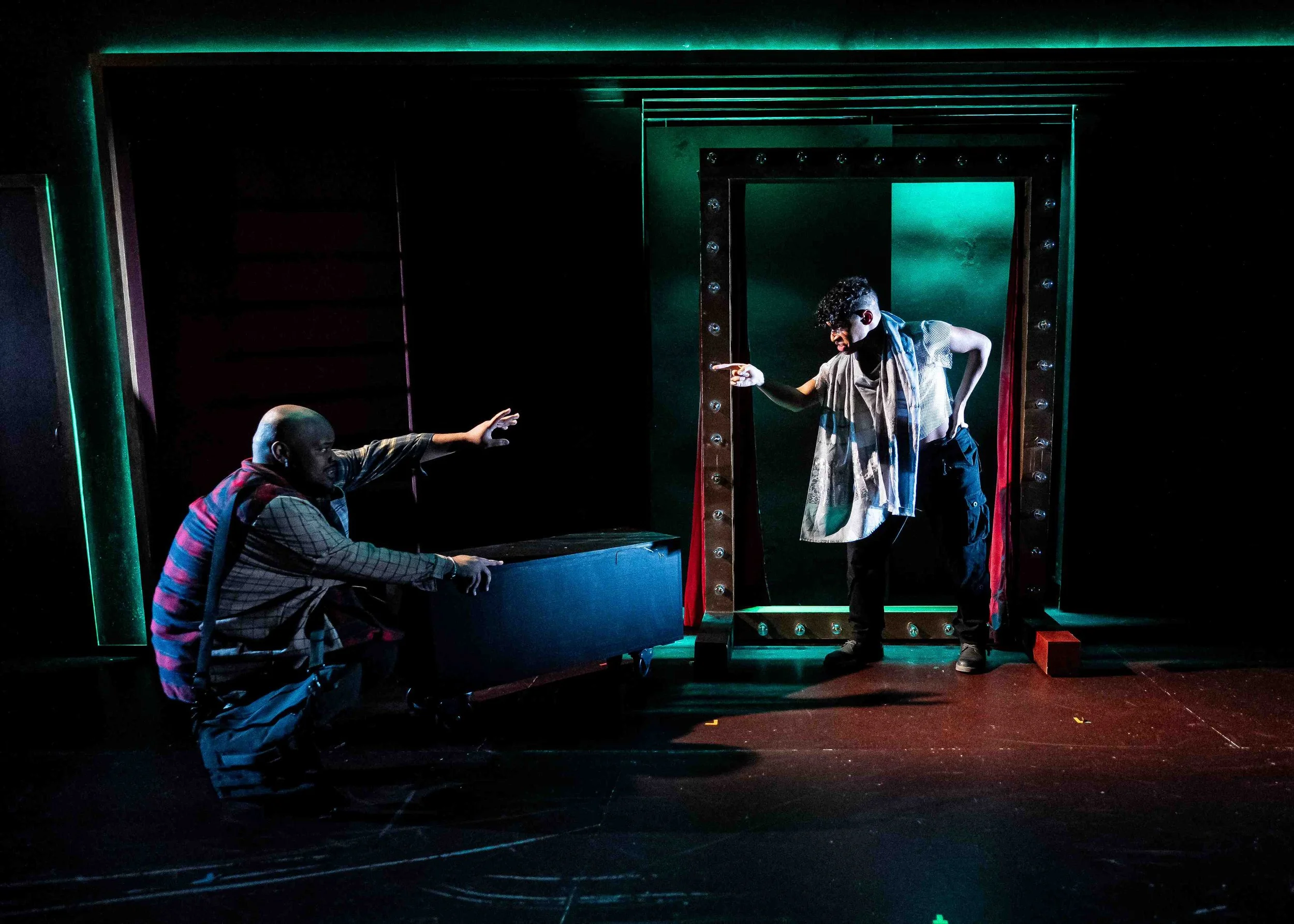

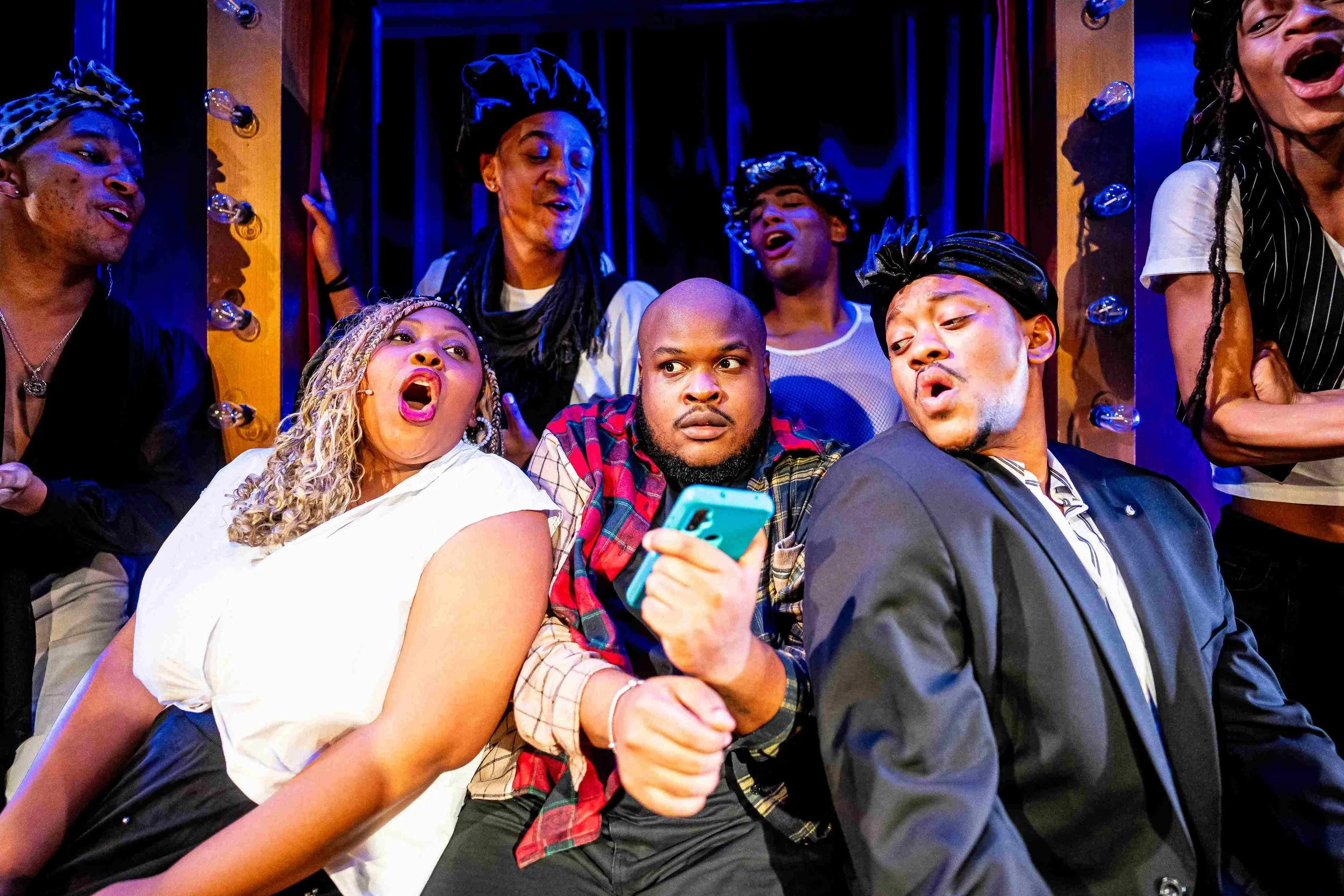
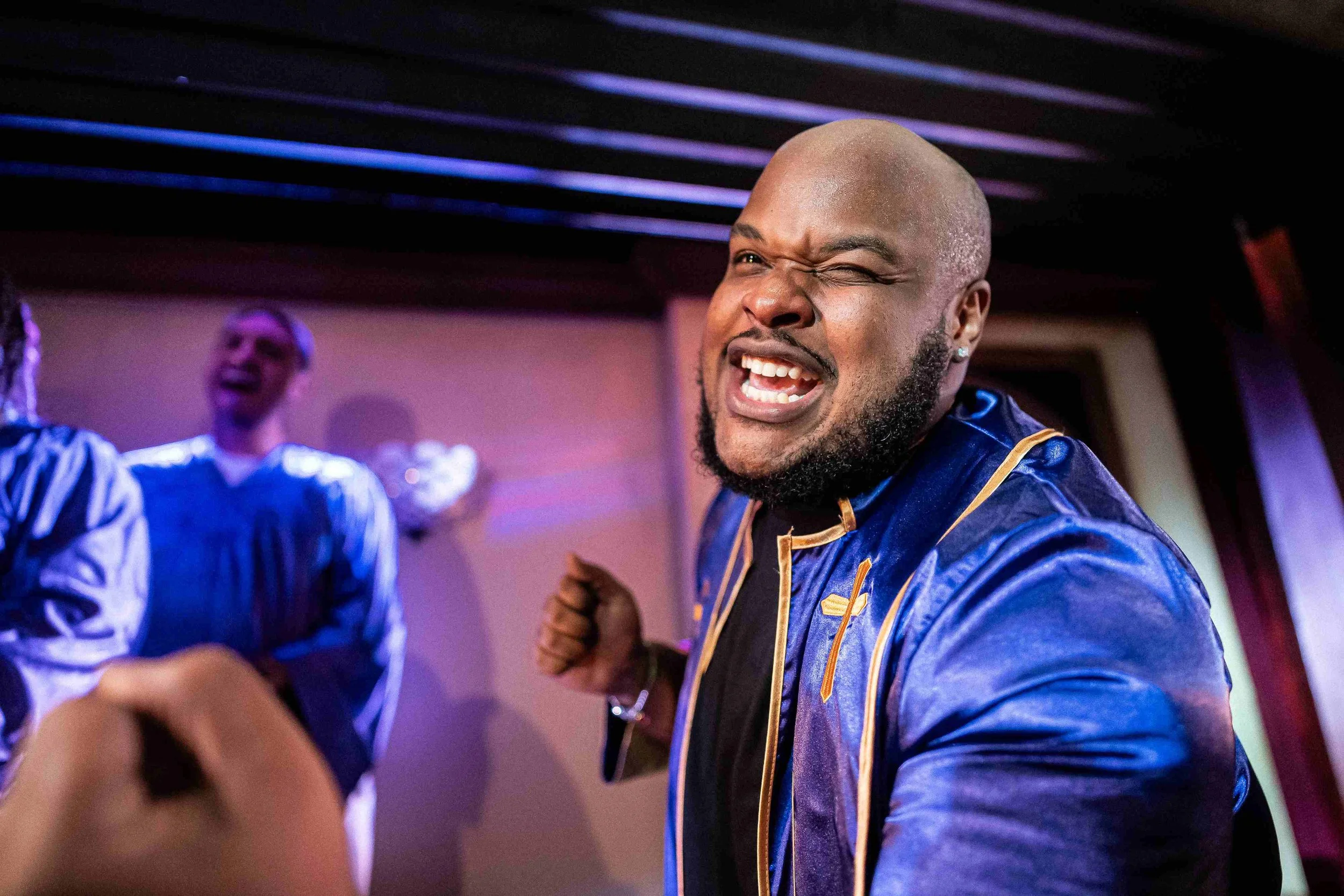
Every cast member is an utter powerhouse, but Eddie Weaver takes Usher to a new level. From the very beginning, he wears his heart on his sleeve, with an eagerness that instantly has us rooting for this underdog. His portrayal of Usher is complex, weaving together joy and insecurity, vulnerability and strength. Though Weaver doesn’t have the chance to rapidly morph from character to character like the Thoughts do, he still gets a chance to show off his flexibility when acting out every character in a Tyler Perry show. His repeated bids for connection with his mother are heartbreaking, and Weaver absolutely nails the monologue about Black love and lust’s place in the world. One could easily lose the sincerity and nuance of Usher’s character in how heightened “A Strange Loop” can get, but Weaver stays grounded in his performance throughout the show.
Janelle Smith’s costume design reflects the unity and individuality of this ensemble. Each actor bears a strikingly different assembly of layers, silhouettes, and fabrics, while still reading as a coherent unit dressed in black and white.
Playwrights writing themselves as characters is always a risky gamble. One can easily slip into self-indulgence, sugarcoating, and a lack of awareness as to why anyone who isn’t a writer in their very specific scenario would relate to or care about their character. Jackson not only gracefully avoids these pitfalls, but he utterly succeeds in the creation of Usher. “A Strange Loop” is a testament to the writing adage that the more specific you get, the more universal your play feels. Usher battles with self-loathing, a desire to be loved that outweighs his self-respect at times, and the expectations from his family that contradict his own dreams. His identity as an obese Black gay male playwright is the lens in which we view these struggles, which means belonging to any number of these demographics undoubtedly enhances one’s viewing experience. But you don’t have to be similar to Usher in order to connect with his achingly human story.
“A Strange Loop” is a masterpiece, and Jackson is well-deserving of the 2020 Pulitzer Prize. Beyond the incredible writing and relentlessly talented production, what sets it apart is its pure honesty. The play is deeply vulnerable and refuses to pull any punches. There are no deadpan quips at the irony of such a meta show, no smug mocking of the audience or Jackson/Usher for creating what’s happening onstage. One might think this would come at the sacrifice of comedy, but “A Strange Loop” will make you howl with laughter without softening any of the deep sincerity. It fully embodies its line, “If you're not scared to write the truth, then it's probably not worth writing. And if you're not scared of living the truth, then it's probably not worth living.” Everyone should get the chance to see a show as brilliantly heartfelt as “A Strange Loop” and the sold out run has now been extended through November 22.
GUEST CONTRIBUTOR | PERSE GRAMMER is a multidisciplinary writer and theatre artist based in Chicago. Grammer is currently developing their latest play through a mentorship with Sandy Shinner at Shattered Globe Theatre. They hold a BFA in Playwriting from The Theatre School at DePaul University. www.persegrammer.com
PHOTO | Joe Mazza-brave lux
About Face Theatre
and
Raven Theatre
presents
Chicago Premiere
A Strange Loop
6157 North Clark Street
EXTENDED through November 22, 2026
WEBSITE
TICKETS
For more reviews, visit: Theatre In Chicago
PicksInSix® is a registered trademark of Roxbury Road Creative, LLC