CONVERSATIONS with Ed Tracy

Inspire. Educate. Entertain.

CONVERSATIONS|PicksInSix®Reviews featuring short form critical reviews and podcasts with authors and influential leaders in the arts, media and business.

Filtering by Tag: Burt Lancaster

PicksInSix Review: Come Back Little Sheba - American Blues Theater
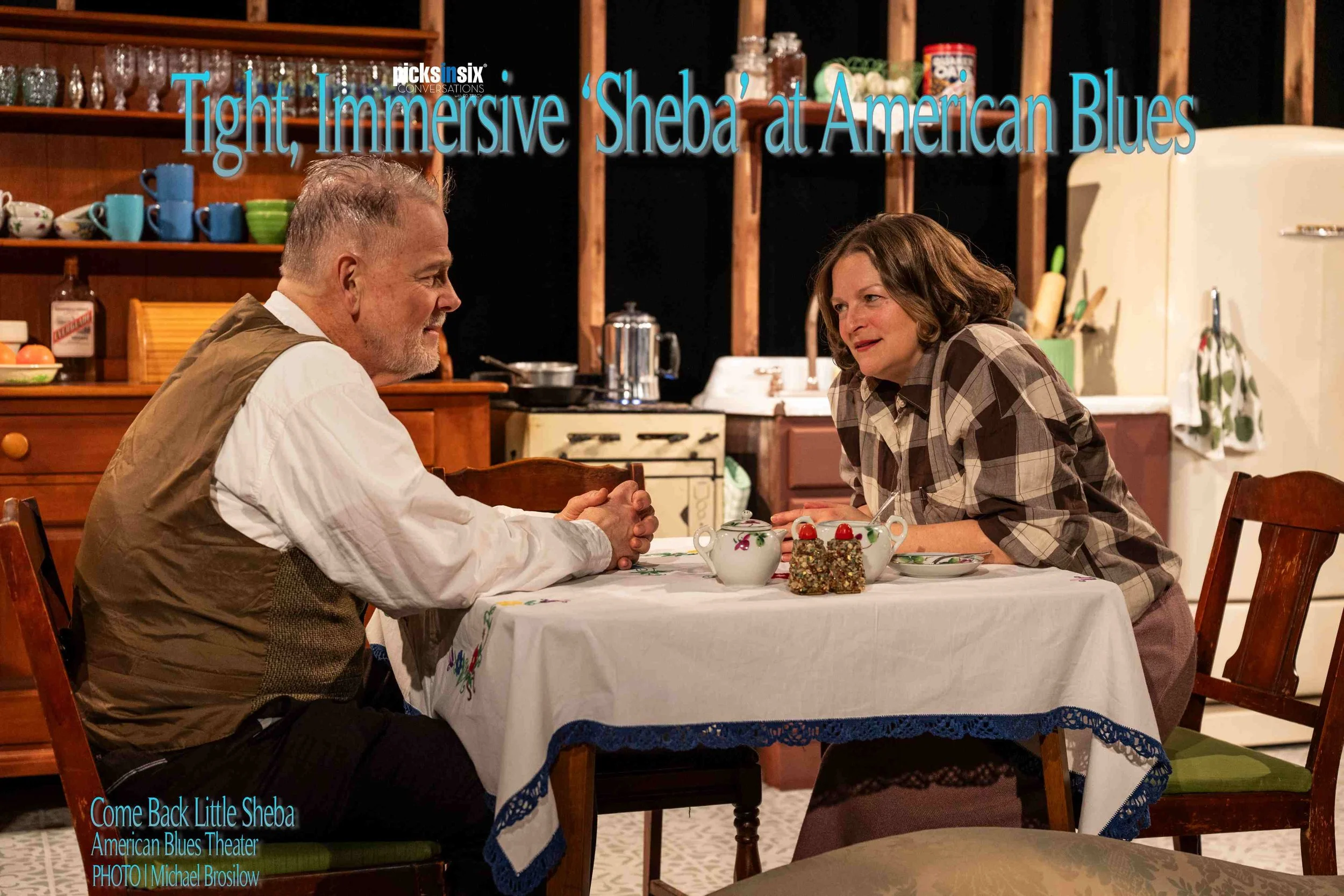


Tight, Immersive ‘Sheba’ at American Blues
PicksInSix® Review | Guest Contributor |
Ronald Keaton

There is a fascinating little piece of trivia connected with the lead character Lola in William Inge's breakthrough classic “Come Back Little Sheba” now playing in a tight, immersive production at American Blues Theater's studio space through March 22. Directed in subtle, loving strokes by Associate Artistic Director Elyse Dolan, the play itself was a landmark in its frank portrayal of alcoholism and many of the features of how people deal with it. Film buffs, of course, recall the great 1952 version with Shirley Booth and Burt Lancaster.

Lola and Doc Delaney are a middle-aged couple in a 20-year loveless marriage, thanks to Doc's drinking issues, which have receded for the moment, but have cost him a promising medical career. It's obvious there's not much affection in this house. They have taken on a boarder, Marie, a young college student with lots of energy and ambition—and two boyfriends. Doc sees Marie and does his best to create time with her. He makes breakfast. He comments on her clothing and her appeal. Lola likes her as well; she sees Marie as a reminder, it seems, of her lost beauty-queen youth. Now Lola does everything she can to not be obvious, but she engages in mild flirtation with both the milkman and the mailman, and to them, well, it's pretty obvious. But she perseveres. In fact, one of the great things about Lola is her endless optimism, no matter what it might cost her.


One evening, Marie invites Turk, a star athlete at school and someone she's been dating, over to study. Eventually the evening goes farther in its youthful way, and Marie and Turk spend the night together in her room. In the morning, Doc—who disapproves of such actions in a staid, conservative way—sees Turk leave. It's a trigger for him, a strong one, and he goes out on a drinking binge. It leaves Lola frantic and wondering what happened to make Doc fall off the wagon. She calls Doc's AA friends, who come to fetch him to hospital—but not before Doc has threatened his wife with a hatchet and insults her to no end. After some time in recovery, Doc comes home hesitantly to a wife who is absolutely petrified but remains loyal in an almost misguided way. They vow yet again to try harder to keep their marriage alive.

This writer admits that at first, the play seems creaky and showed its age. After all, our world has grown up and dealt with alcoholism in more mature material, especially on film. But when the engine kicked into gear as the play's conflict is played out, it took us along strongly. It is indeed a play of its time and really was a breakthrough in its willingness to lay out the alcoholic's plight from Mr. Inge's well-established Midwest platform, which in later years produced “Bus Stop,” “Picnic,” and “The Dark at the Top of the Stairs.”
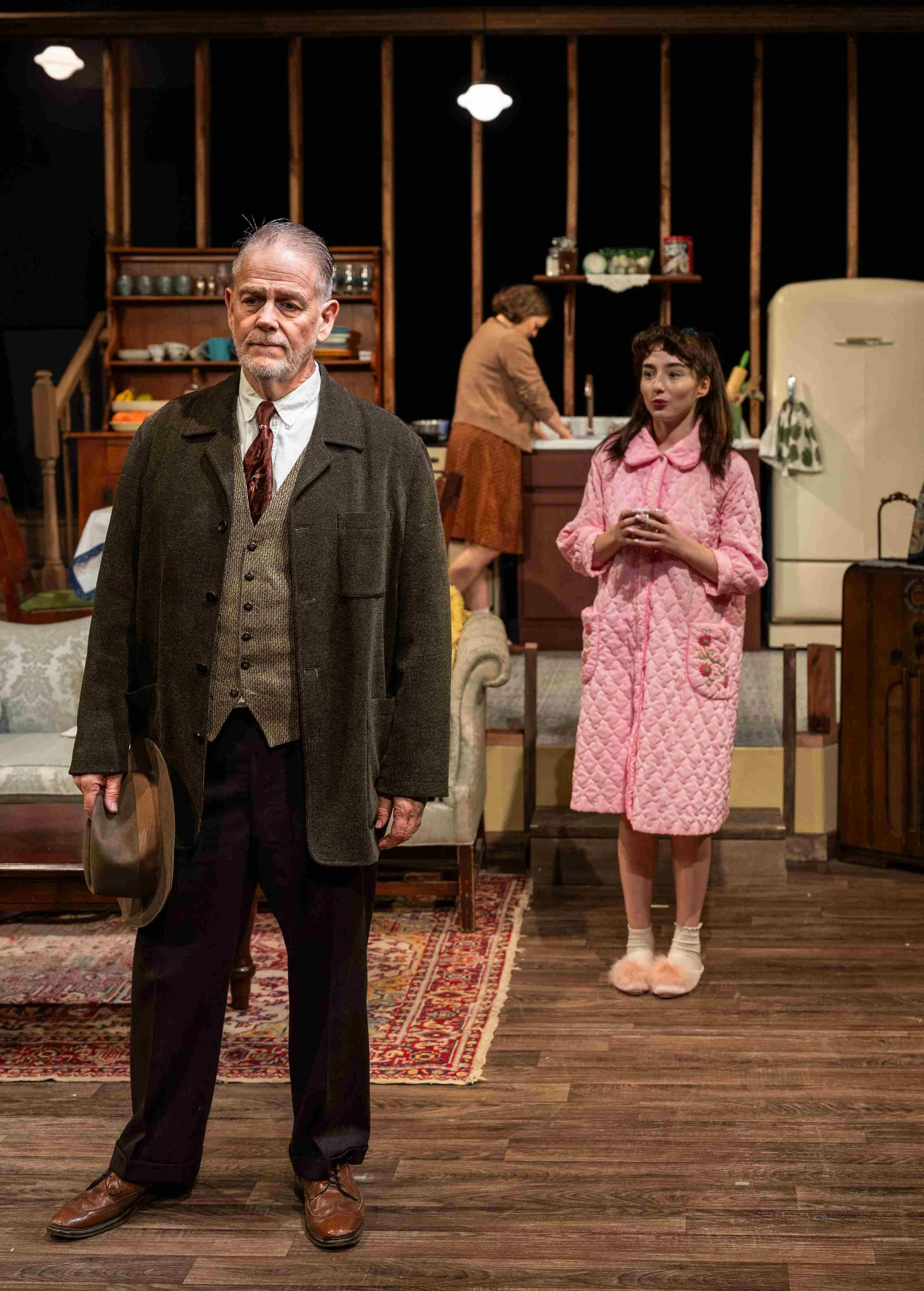
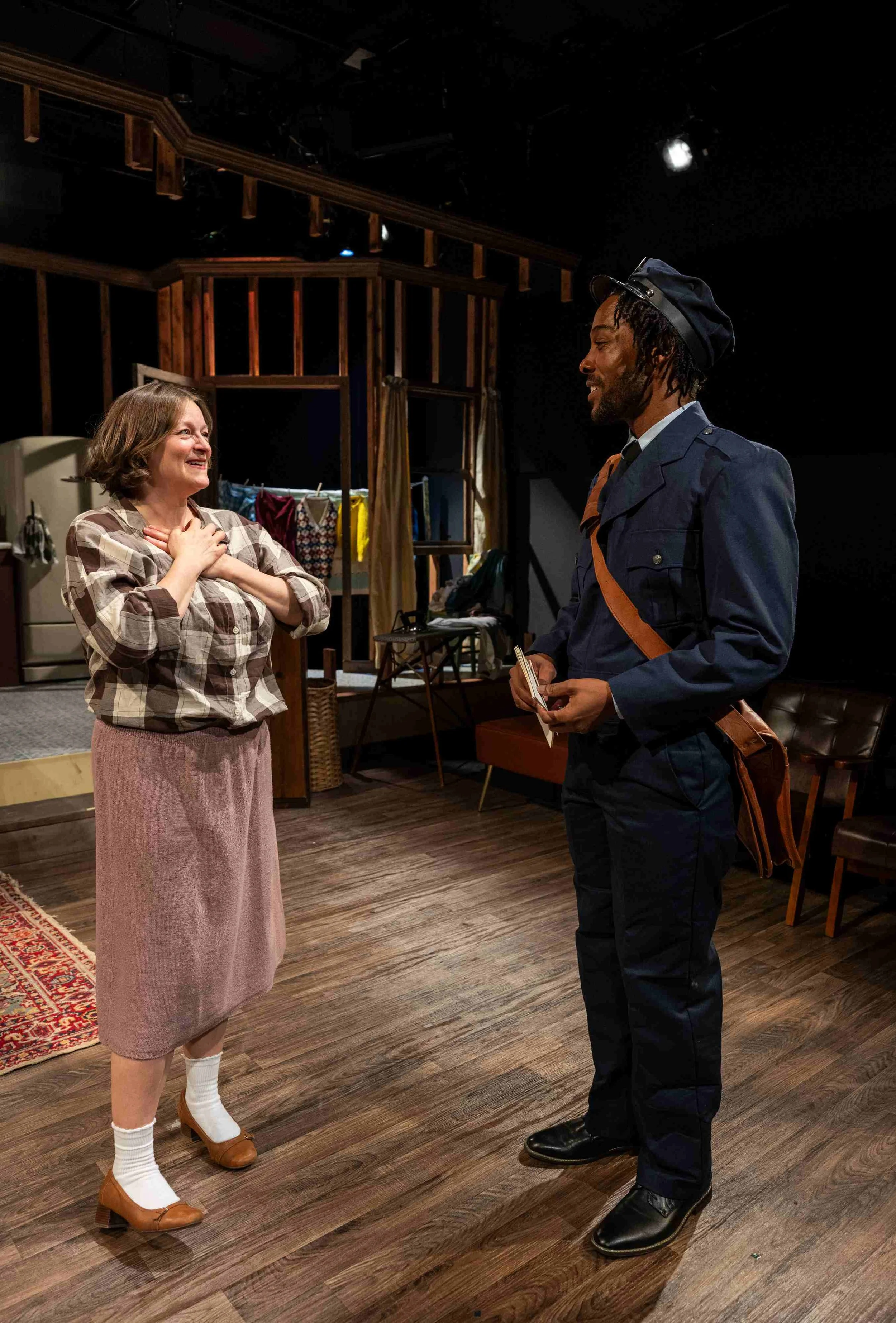
Let there be no doubt that the play belongs to Lola. She's lonely. She's almost broken in spirit, but her commitment to her marriage is rock-solid, and she tries everything she can to keep it alive and filled with whatever passes for love in this house. To be honest, it would be easy to assess her chosen kindness for classic nagging and a kind of mournful cry. The cry displays itself in Lola calling out for her missing pup Sheba every night. There is also no doubt that ABT stalwart Gwendolyn Whiteside is at the top of her game. She's practically unrecognizable as Lola. Her face takes on some of the traits of her husband's disease. She's frumpy and desperate. Yet she's constantly busy with a smile and an emotional exhaustion that makes us riveted in watching her. Ms. Whiteside offer a master class in detail and in disposition in scene work, and it demands our attention.
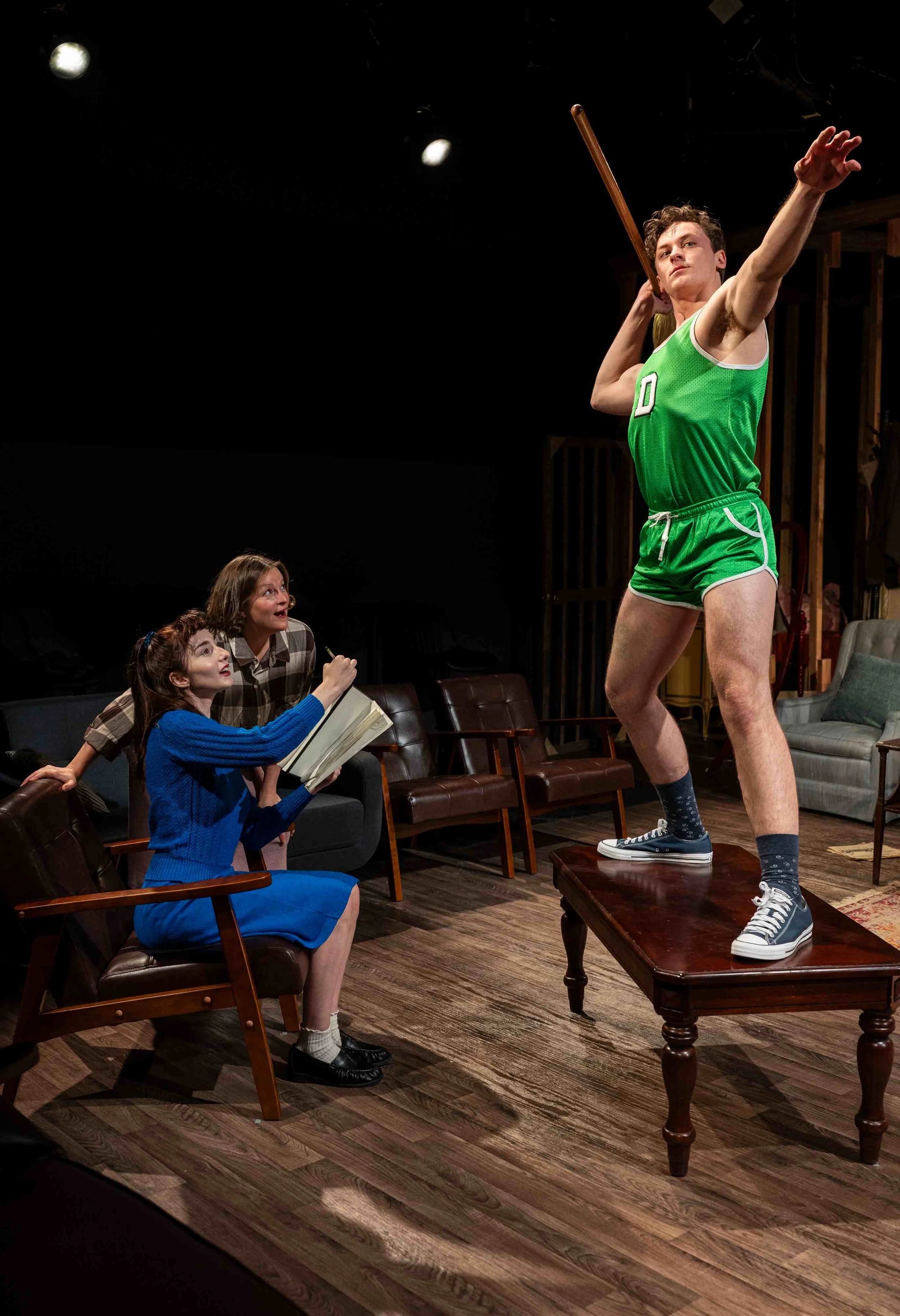
Philip Earl Johnson is the earnest, shaky Doc, who is like many men of his generation, burying inside the issues they need to face. Maya Lou Hlava gives her Marie the tightly wound, youthful energy needed to stimulate Lola to her own dreams. Ethan Surpan as Turk and Justin Banks as Bruce are Marie's two eager suitors. Joslyn Jones is a bright light as Mrs. Coffman, the next-door neighbor. Scenic designer Shayna Patel has done exceptionally richly detailed work here. And, about that little piece of trivia: When the playwright Inge was himself in AA, he met and observed the wife of another AA member. Her name was Lola and she became the model for the character in this fine play—Mr. Inge’s first—that undeservedly may have fallen in memory. It remains an honest and compelling examination of one of society's great ills.

GUEST CONTRIBUTOR | RONALD KEATON received an Equity Jeff Award for the performance of his one-man show CHURCHILL. www.solochicagotheatre.org.  Coming soon, his new solo play about Ben Franklin, THE FIRST EMBASSY.

PHOTO| Michael Brosilow

American Blues Theater
presents
Come Back Little Sheba
ABT Studio
5627 N Lincoln
through March 22, 2026


WEBSITE

TICKETS

PROGRAM

BACKSTAGE GUIDE

For more reviews, visit: Theatre In Chicago

ARCHIVE

PicksInSix® is a registered trademark of Roxbury Road Creative, LLC

PicksInSix Review - AVA: The Secret Conversations - Studebaker Theater


Stardom In and Out of Limelight
PicksInSix® Review | Guest Contributor | Ronald Keaton

Downtown at a jewel of a performance space, the renovated Studebaker Theater located in the Fine Arts Building, the latest bill of fare stars the elegant Elizabeth McGovern in “AVA: The Secret Conversations,” her adaptation of the book by Peter Evans, a character in the play portrayed by Aaron Costa Ganis. The show plays in Chicago through October 12, after runs at the Geffen Theatre in Los Angeles and then at New York's City Center.

In 1988, Ava Gardner has summoned the British journalist to ask him to ghostwrite a memoir or a full autobiography. At first Evans hesitates, being quite experienced in writing unauthorized biographies in real life. In fact, it's interesting that the first character we see onstage is not Ava Gardner, but Peter Evans. He nevertheless conceives an idea of a North Carolina girl picking herself up by the proverbial bootstraps of her upbringing and moving to Hollywood. Indeed, she was 18 in her first film in 1941. In fact, Ava wants to concentrate on sharing her views on her film career, thinking that the stories behind the making of such work would be entertaining for an audience. Evans, with constant pressure from his agent ("Get her to talk about the penis story!"), relents and walks a very difficult tightrope between making sure his agent is satisfied and adhering to what she wishes to talk about.

As the story progresses, we see a rather unique dramatic device that playwright McGovern utilizes in making the writer also stand in for her three husbands—Mickey Rooney, jazz legend Artie Shaw and Frank Sinatra. Slowly, Evans (Ganis valiantly assumes the persona of each husband in the storytelling), tries to convince Ava that he has her best interests at heart, while satisfying his agent's penchant for the gossip simultaneously. Rooney was at his performer's height during their marriage and, as is told, they constantly had sex, wherever and whenever they could. It disguises the fact that they were married only a year, and none of it affected his career—all to Ava's chagrin, as she really was not yet a star. Evans continues to accumulate material with Ava in constant catfight interviews and late-night exchanges, many enveloped in profanity and verbal offense. Then came her marriage to Shaw, one of the most famous jazz musicians in the country, in 1945 at the end of WWII. In time, Ava described him as "emotionally abusive" and yet another marriage lasted hardly a year or so.

In the meantime, Ava finally gets proper attention for her role in The Killers (1946), which turned both her and Burt Lancaster into major stars. And this is what Ava wishes to talk about—her various films, which include: Showboat (1951), Mogambo (1953), and The Barefoot Contessa (1954). It was during this career height that she met and married Sinatra. She was proud of the fact that she used what influence she had to help Sinatra land his Oscar-winning role in From Here To Eternity (1953). The marriage was tumultuous and passionate and the talk of Hollywood for six years, the length it lasted. All of this is fodder for Evans in writing for Ava. Lots of other affairs, including with Howard Hughes, followed. Ava remained true, in her eyes, to the fact that she did what she wanted and ignored judgment on it all.

So now we come closer to the time of the Gardner/Evans breakup and the entire project being shelved. It seems that Evans conveniently forgot to tell Ava that he was involved at one time in a lawsuit for publishing rights to a story about Frank Sinatra, whom she had told was her ghostwriter. He warned her. She confronted Evans, who tried to laugh it off to no avail. A final shouting match ends with Ava, putting on her coat and walking toward the stage apron into a stunning special effect of her disappearing into film.

There's a lovely drawing room set designed by LA scenic designer David Meyer. Projections abound here, too, covering the entire set in neon and streetlights and old film clips, all designed and assembled by Alex Bosco Koch. The entire experience was directed by Broadway veteran Moritz von Stuelpnagel. And as for the actors, well, it's basically a two-hander and a real challenge for any performer. Mr. Ganis offers a huge versatility and gameness for tackling what could have been a thankless role to play and even gets to sing a Sinatra staple, Fly Me To The Moon. Ms. McGovern, always the star here and playing almost the entire show barefoot (as was Ms. Gardner's real habit), has a real gift for dialogue and scene creation as a playwright and a proud Southerner from the beginning.

GUEST CONTRIBUTOR | RONALD KEATON received an Equity Jeff Award for the performance of his one-man show CHURCHILL. www.solochicagotheatre.org  Coming soon, his new solo play about Ben Franklin, THE FIRST EMBASSY.

PHOTO| Jeff Lorch

Elizabeth McGovern and Aaron Costas Ganis
AVA: The Secret Conversations

Studebaker Theater
Fine Arts Building
410 S Michigan Avenue
through October 12, 2025


WEBSITE

TICKETS

SHOW WEBSITE

For more reviews, visit: Theatre In Chicago

ARCHIVE

PicksInSix® is a registered trademark of Roxbury Road Creative, LLC

ALL RIGHTS RESERVED

Copyright 2014-2026

Roxbury Road Creative, LLC

Powered by Squarespace