CONVERSATIONS with Ed Tracy

Inspire. Educate. Entertain.

CONVERSATIONS|PicksInSix®Reviews featuring short form critical reviews and podcasts with authors and influential leaders in the arts, media and business.

Filtering by Tag: Justin Banks

PicksInSix Review: Come Back Little Sheba - American Blues Theater



Tight, Immersive ‘Sheba’ at American Blues
PicksInSix® Review | Guest Contributor |
Ronald Keaton

There is a fascinating little piece of trivia connected with the lead character Lola in William Inge's breakthrough classic “Come Back Little Sheba” now playing in a tight, immersive production at American Blues Theater's studio space through March 22. Directed in subtle, loving strokes by Associate Artistic Director Elyse Dolan, the play itself was a landmark in its frank portrayal of alcoholism and many of the features of how people deal with it. Film buffs, of course, recall the great 1952 version with Shirley Booth and Burt Lancaster.

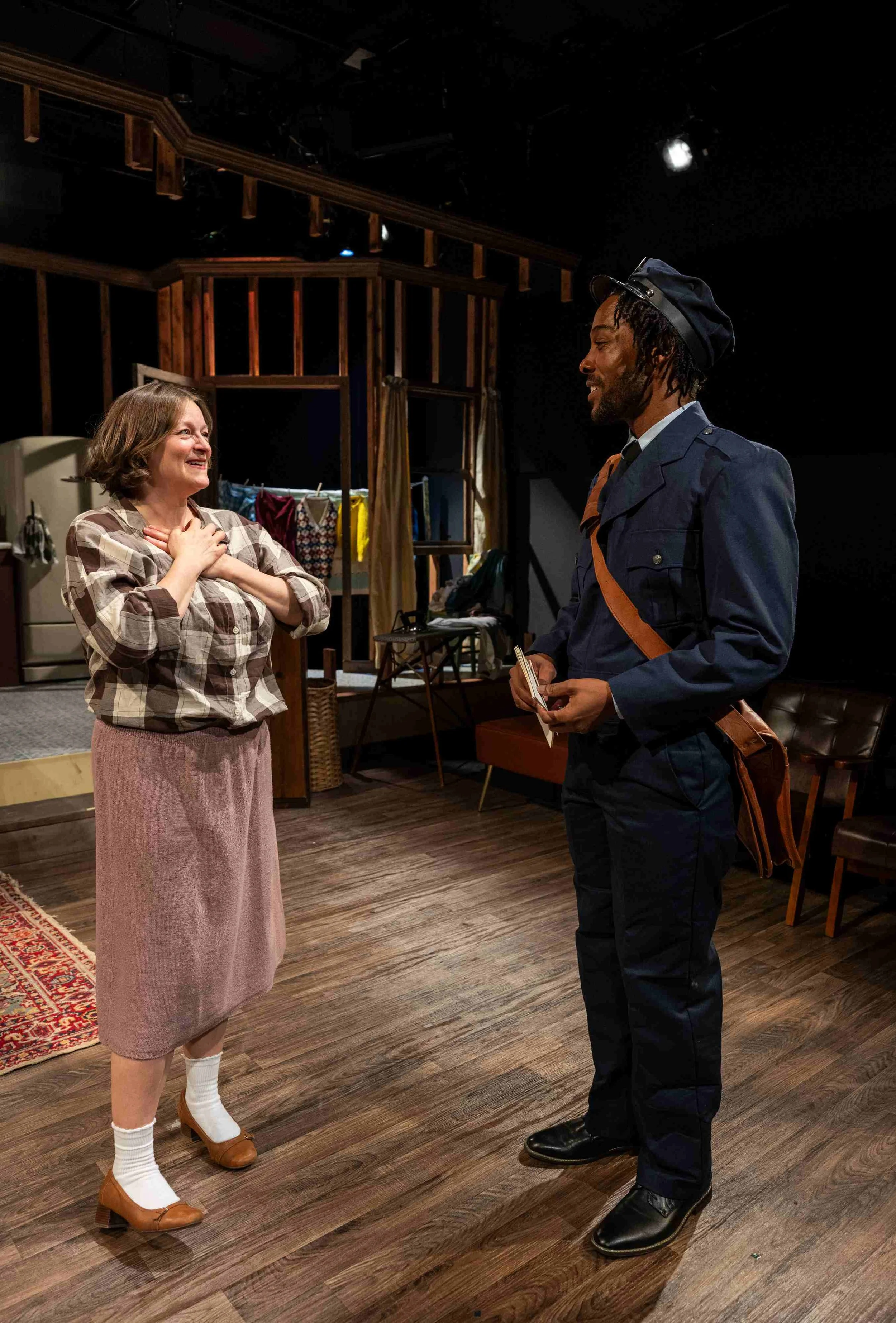
Lola and Doc Delaney are a middle-aged couple in a 20-year loveless marriage, thanks to Doc's drinking issues, which have receded for the moment, but have cost him a promising medical career. It's obvious there's not much affection in this house. They have taken on a boarder, Marie, a young college student with lots of energy and ambition—and two boyfriends. Doc sees Marie and does his best to create time with her. He makes breakfast. He comments on her clothing and her appeal. Lola likes her as well; she sees Marie as a reminder, it seems, of her lost beauty-queen youth. Now Lola does everything she can to not be obvious, but she engages in mild flirtation with both the milkman and the mailman, and to them, well, it's pretty obvious. But she perseveres. In fact, one of the great things about Lola is her endless optimism, no matter what it might cost her.


One evening, Marie invites Turk, a star athlete at school and someone she's been dating, over to study. Eventually the evening goes farther in its youthful way, and Marie and Turk spend the night together in her room. In the morning, Doc—who disapproves of such actions in a staid, conservative way—sees Turk leave. It's a trigger for him, a strong one, and he goes out on a drinking binge. It leaves Lola frantic and wondering what happened to make Doc fall off the wagon. She calls Doc's AA friends, who come to fetch him to hospital—but not before Doc has threatened his wife with a hatchet and insults her to no end. After some time in recovery, Doc comes home hesitantly to a wife who is absolutely petrified but remains loyal in an almost misguided way. They vow yet again to try harder to keep their marriage alive.

This writer admits that at first, the play seems creaky and showed its age. After all, our world has grown up and dealt with alcoholism in more mature material, especially on film. But when the engine kicked into gear as the play's conflict is played out, it took us along strongly. It is indeed a play of its time and really was a breakthrough in its willingness to lay out the alcoholic's plight from Mr. Inge's well-established Midwest platform, which in later years produced “Bus Stop,” “Picnic,” and “The Dark at the Top of the Stairs.”
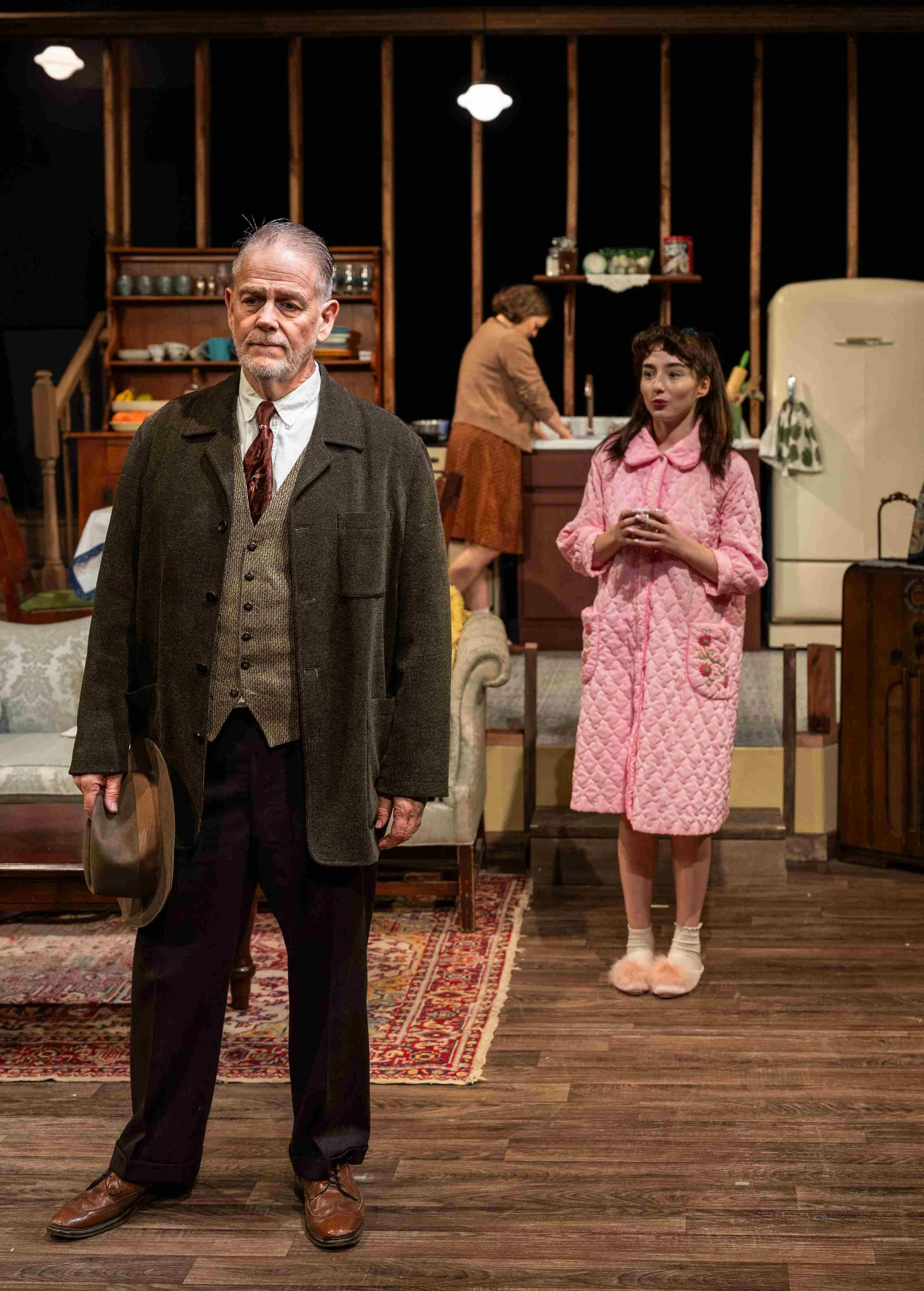
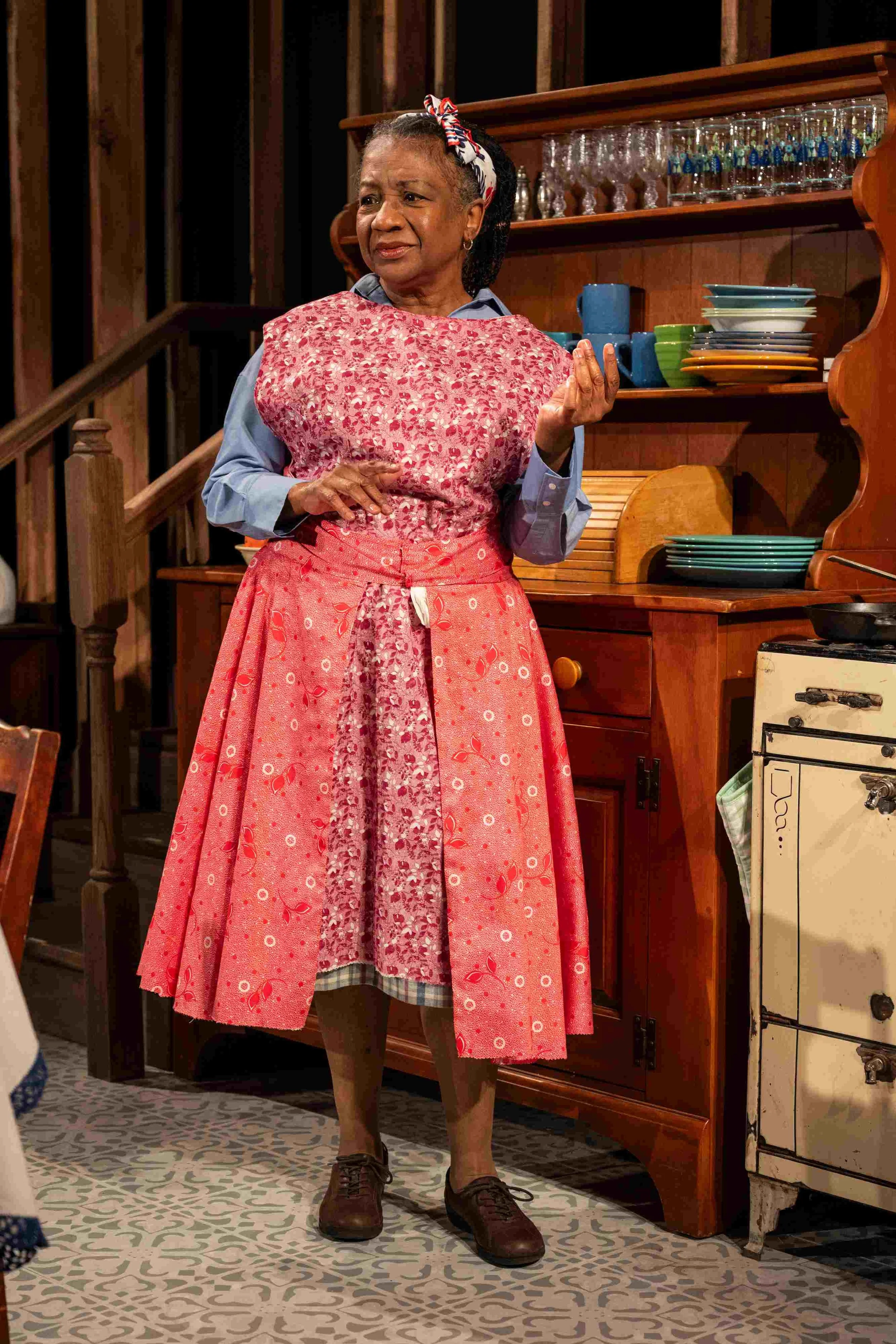
Let there be no doubt that the play belongs to Lola. She's lonely. She's almost broken in spirit, but her commitment to her marriage is rock-solid, and she tries everything she can to keep it alive and filled with whatever passes for love in this house. To be honest, it would be easy to assess her chosen kindness for classic nagging and a kind of mournful cry. The cry displays itself in Lola calling out for her missing pup Sheba every night. There is also no doubt that ABT stalwart Gwendolyn Whiteside is at the top of her game. She's practically unrecognizable as Lola. Her face takes on some of the traits of her husband's disease. She's frumpy and desperate. Yet she's constantly busy with a smile and an emotional exhaustion that makes us riveted in watching her. Ms. Whiteside offer a master class in detail and in disposition in scene work, and it demands our attention.
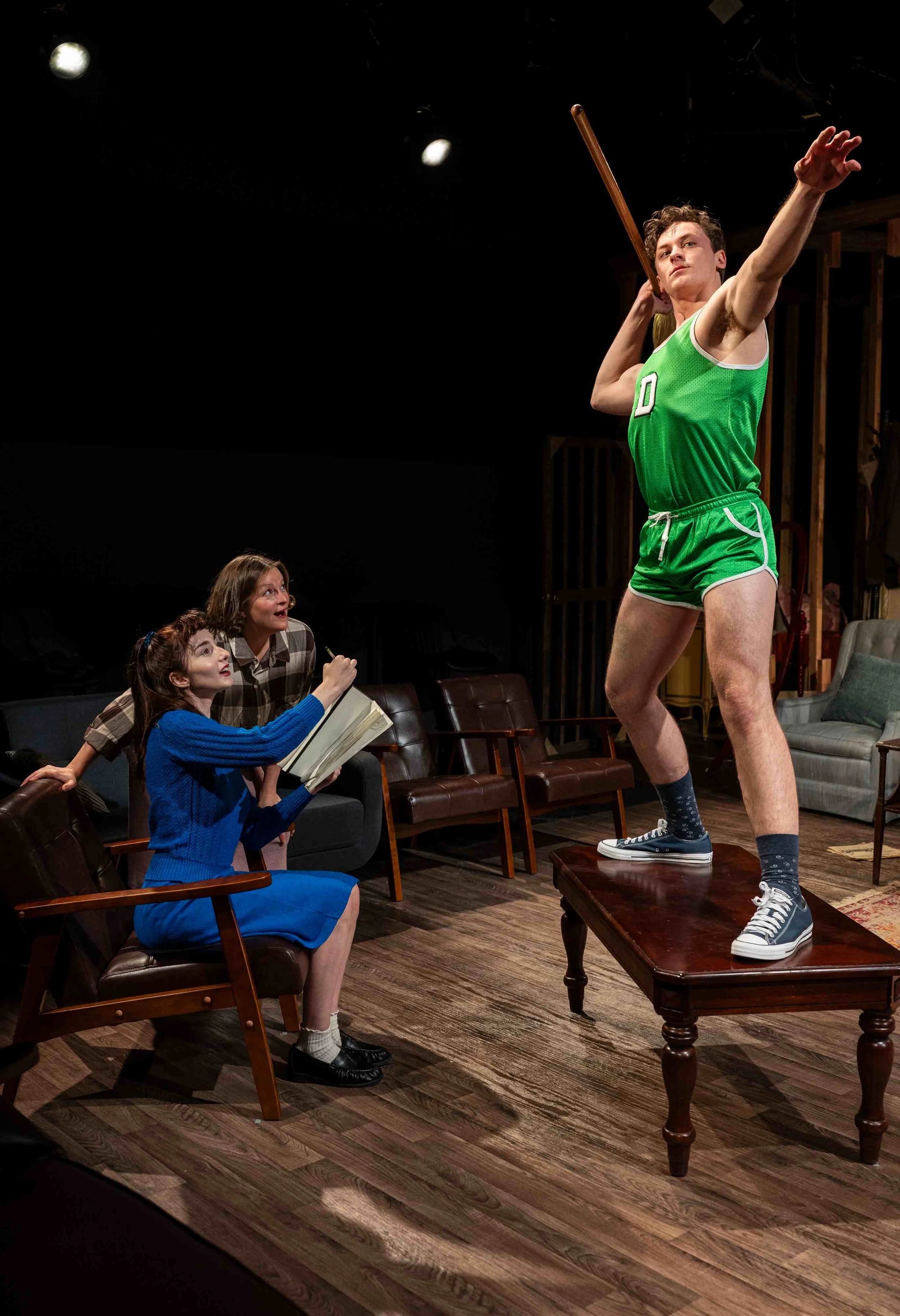
Philip Earl Johnson is the earnest, shaky Doc, who is like many men of his generation, burying inside the issues they need to face. Maya Lou Hlava gives her Marie the tightly wound, youthful energy needed to stimulate Lola to her own dreams. Ethan Surpan as Turk and Justin Banks as Bruce are Marie's two eager suitors. Joslyn Jones is a bright light as Mrs. Coffman, the next-door neighbor. Scenic designer Shayna Patel has done exceptionally richly detailed work here. And, about that little piece of trivia: When the playwright Inge was himself in AA, he met and observed the wife of another AA member. Her name was Lola and she became the model for the character in this fine play—Mr. Inge’s first—that undeservedly may have fallen in memory. It remains an honest and compelling examination of one of society's great ills.

GUEST CONTRIBUTOR | RONALD KEATON received an Equity Jeff Award for the performance of his one-man show CHURCHILL. www.solochicagotheatre.org.  Coming soon, his new solo play about Ben Franklin, THE FIRST EMBASSY.

PHOTO| Michael Brosilow

American Blues Theater
presents
Come Back Little Sheba
ABT Studio
5627 N Lincoln
through March 22, 2026


WEBSITE

TICKETS

PROGRAM

BACKSTAGE GUIDE

For more reviews, visit: Theatre In Chicago

ARCHIVE

PicksInSix® is a registered trademark of Roxbury Road Creative, LLC
PicksInSix Review: Golden Leaf Ragtime Blues - American Blues Theater


Generations Collide in Nostalgic ‘Ragtime Blues’
PicksInSix® Review | Guest Contributor | Ronald Keaton

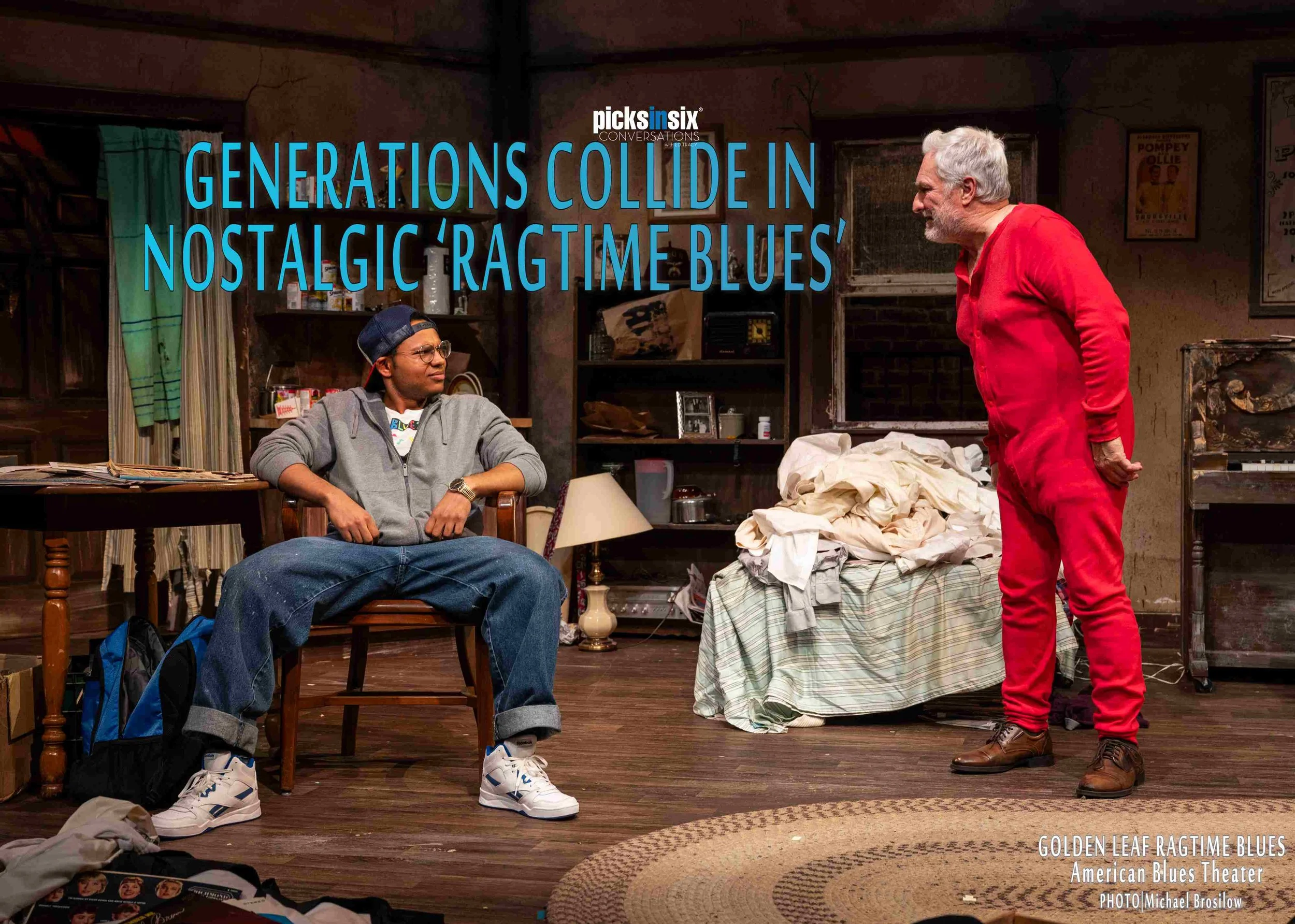
The fine playwright Charles Smith has written a thoughtful play, “Golden Leaf Ragtime Blues,” now playing through June 29 at American Blues Theater's intimate space on Lincoln Avenue. He has offered up lots of food for considerable thought in what is a deceptively simple premise in this Chicago premiere expertly directed by Chuck Smith. Two characters—one, an elderly vaudevillian who does not want to give up the chase for the next laugh; and the other, a young Black teenager with a great deal of history to deal with, as well as personal anger—are thrown together in a shabby apartment to deal with each of their issues. And there are many.

It all takes place sometime in the 1990s. The fictional comedy team of Pompey and Ollie, who played a minor vaudeville circuit as well as any, are rehearsing an old routine. Pompey (such an elegant performance by ABT Ensemble Member Dennis Cockrum) has forgotten a punchline to a joke that he and Ollie (the wonderfully understated James Sherman) have done thousands of times. This is apparently a pattern of forgetfulness by Pompey, so much so that Ollie decides to break up the act. It all rattles Pompey greatly and he holds anger toward an old friend that is not necessarily justified. What it comes down to is the death of Pompey's style of humor.

Segue to Pompey’s apartment, a rundown and not-well-kept living quarters full of old cans and newspapers and laundry that needs to be done. Three weeks ago, Ollie died unexpectedly, and Pompey is so distraught that he pulls out a gun and threatens to shoot himself. He is saved by a knock on the door from his daughter Marsha (Dawn Bach in a strong offering), who has come by on a rare visit. The predictable argument between the generations is interrupted by another knock on the door. A young Black kid, whose nickname is Jet, has come to tell Marsha that her car is about to be ticketed. Soon it comes out that Marsha and Jet (Justin Banks is pretty riveting throughout) have actually talked about adoption, which upsets Pompey to no end.

Marsha finds a way to finally get out the door to take care of the car by going to the grocery store to get her father some food—all he has are endless cans of SpaghettiOs. So now the meat of the play begins. Pompey and Jet play a unique game of cat-and-mouse in letting little bits of personal story out, while each says that he really doesn't care. Jet's history is quite checkered and difficult. Fourteen different foster families. Endless stays in group homes.  His mother died of cancer; his father is in jail for an extended stay because of possession of two joints. Remember this is the early 90s, when laws about marijuana were much stricter, and minorities were overly charged and convicted in such matters.

The strengths in the Smith script are dominant here. The constant tensions that ping-pong back and forth between Pompey and Jet are admirably handled. This could sink into a battle of stereotypes, and it avoids that trap through fun ideas from the playwright's rich, creative arsenal. Pompey and Jet actually toy with the idea that they might partner up and create their own act. But Pompey's jokes are hopelessly outdated, so Jet suggests adapting some blue material from the recordings of Redd Foxx, which are hilarious on their own. We then get the privilege of seeing Pompey react to Jet's sharing in comedic horror. Then there are the highly personal moments. Jet talks painfully of seeing his mother being driven away in an ambulance, while the authorities take him into juvenile custody and, eventually, his first group home.  Pompey fights a strong feeling of irrelevance by constantly delving into his bag of show business jokes and details. It's a unique exchange that seems headed toward a kind of happy moment.  Until...

And the last ten minutes or so, I will leave for future audiences to discover. Mr. Cockrum is simply grand in his element here as the sad clown who can't find his way to happiness in life. Mr. Sherman appears in moving, ghostly form a couple of times after Ollie's death in Pompey's thoughts to help him find his way. Ms. Bach injects some informed depth into her Marsha, a woman of her time in holding down a job while feeling the attraction, however drawn she is, to a kind of motherhood. Mr. Banks is the real dramatic coin in the ensemble, making sure that Jet's generation is regarded by Pompey as more than a stereotype. In the hands of Mr. Banks, Jet is indeed a real flesh-and-blood young man playing the cards he's been dealt as well as he knows how. And it's all directed with the usual expert eloquence by the wonderful director Chuck Smith. The experience here is noble, nostalgic, achingly personal and deserves all praise.

GUEST CONTRIBUTOR | RONALD KEATON received an Equity Jeff Award for the performance of his one-man show CHURCHILL. www.solochicagotheatre.com  Coming soon, his new solo play “Teddy’s Last Ride.”

PHOTO|Michael Brosilow

American Blues Theater
presents
Chicago Premiere
Golden Leaf Ragtime Blues
5627 N Lincoln
through June 29, 2025


WEBSITE

TICKETS

PROGRAM

BACKSTAGE GUIDE

For more reviews, visit: Theatre In Chicago

ARCHIVE

PicksInSix® is a registered trademark of Roxbury Road Creative, LLC

ALL RIGHTS RESERVED

Copyright 2014-2026

Roxbury Road Creative, LLC

Powered by Squarespace