CONVERSATIONS with Ed Tracy

Inspire. Educate. Entertain.

CONVERSATIONS|PicksInSix®Reviews featuring short form critical reviews and podcasts with authors and influential leaders in the arts, media and business.

Filtering by Category: Chicago Theatre

PicksInSix Review: The Winter's Tale - Chicago Shakespeare Theater



‘Winter’s Tale’– A Study of Extremes.
PicksInSix® Review |
Ed Tracy

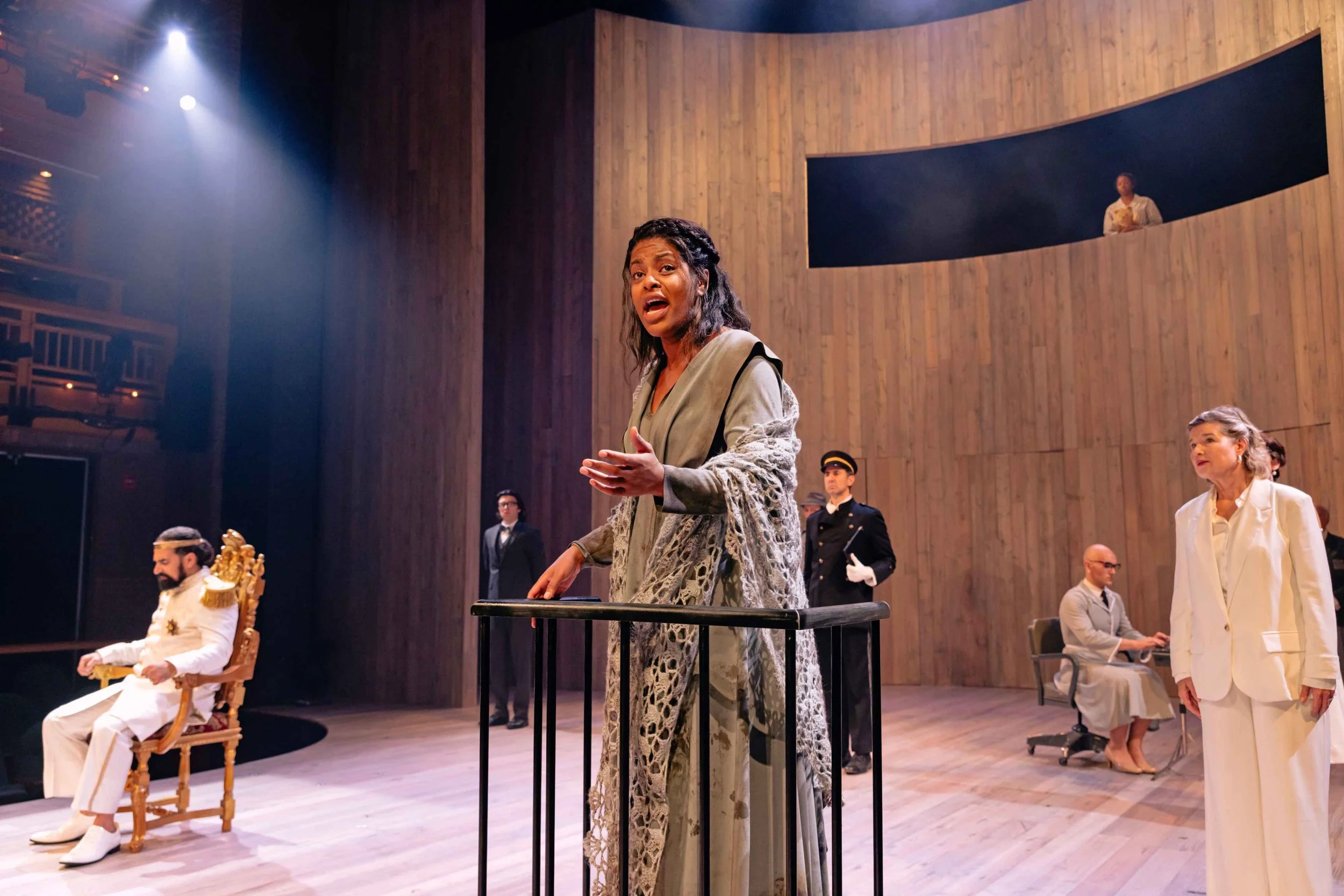
You can be sure that at some point in an early production meeting for Chicago Shakespeare Theater’s “The Winter’s Tale,” CST Artistic Director Edward Hall surely said that the bear at the center of Antigonus’s famous demise needed to be big. Extremely BIG!

It’s a singular highlight of many in Hall’s ambitious and thrilling 40th season opener that debuted on Sunday with the first of two of Shakespeare’s plays presented in repertory by a company of 14 exceptionally gifted actors, many of whom have been at the heart of the theatre's work for decades. The connective tissue between “Winter's Tale” and the second offering, “A Midsummer Night’s Dream,” are two studies of dramatic extremes centered around love, jealousy, loss and redemption. “Winter’s Tale,” with its dark and disturbing opening, sets a much more serious set of circumstances then the fantastical frolicking of fairies in “Midsummer.”

The inherent elements in the drama of “Winter’s Tale” revolve around the unyielding actions of Sicilia King Leontes (Demetrios Troy), a jealous cad who is unable to contain his rage and hatred amid his own unfounded suspicions of an affair between his pregnant Queen Hermione (Jessica Dean Turner) and his longtime friend Polixenes (Chiké Johnson), King of Bohemia. The fallout from Leontes’s actions lead to the banishment of his baby daughter Perdita and the unseen deaths of Hermione, reported by Paulina (Issy Van Randwyck), and their son Mamillius (Felicia Oduh). As Act I draws to a close, Leonte withdraws into deep depression after learning the truth from the oracle of Delphos presented at Hermione’s trial for adultery. If that is not enough heartache, consider Leonte’s order to his attendant Camillo (Erik Hellman) to kill Polixenes, who tells Polixenes of the scheme and then escapes to Bohemia with him. All the while the dutiful Antigonus (Ronald L. Conner), Lord of Sicilia, abandons the baby Princess Perdita in Bohemia before meeting a tragic end himself by the aforesaid bear.


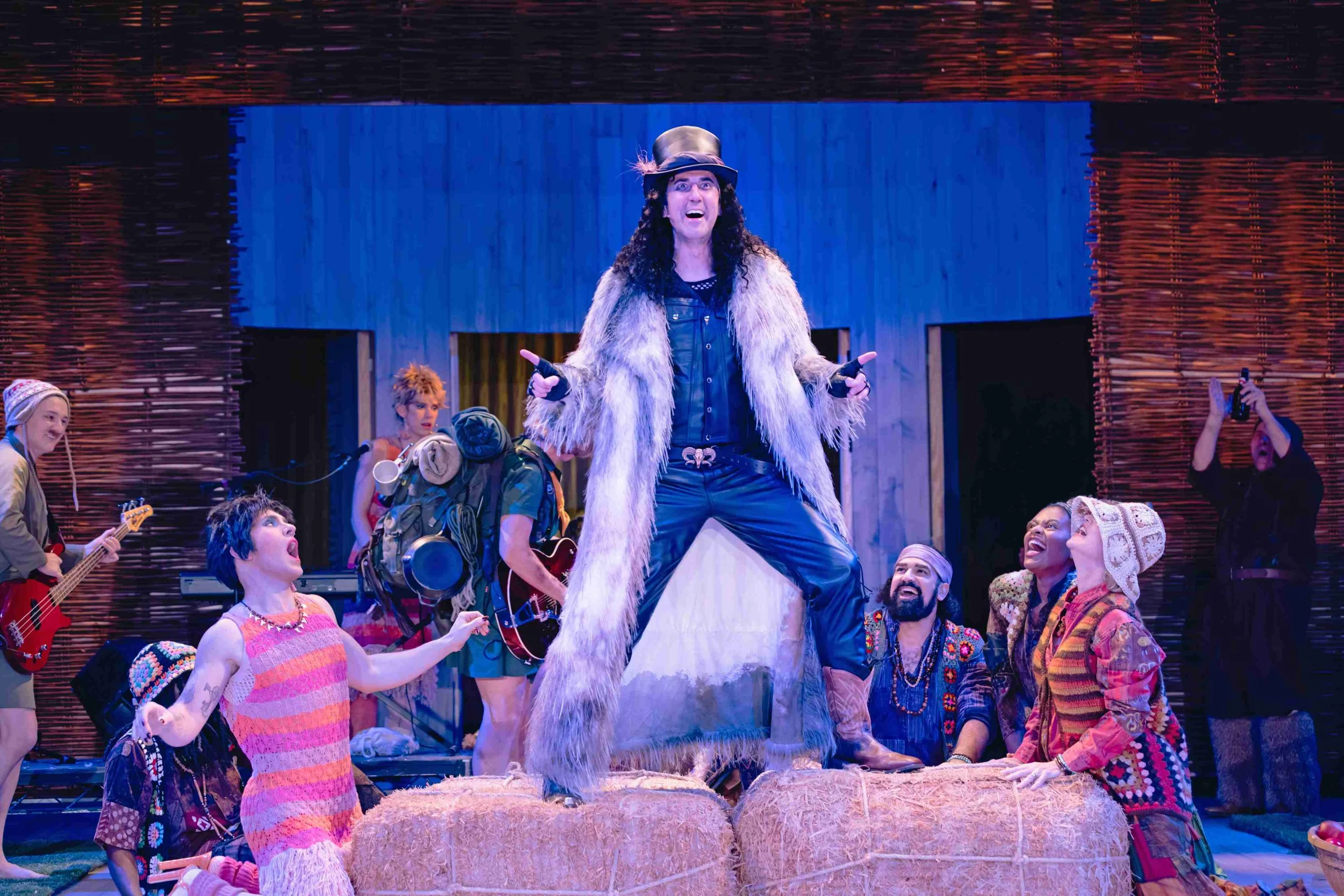
As a breath of fresh air, Act 2 begins 16 years later in the colorful Bohemian opulence where Perdita (Oduh) has been raised by the Old Shepherd (Kevin Goodall) and his simple son the Young Shepherd (Dan Haller). Hall creates a festive atmosphere in Bohemia with innovative staging and the spirited music of the band “Sheep Trick” with its charismatic frontman Autolycus (Sean Fortunato). In another stellar comic performance, Fortunato dazzles as a salty rogue whose endearing charm and captivating nature literally strip the pants off Haller’s Young Shepherd. Autolycus eventually gets his comeuppance but not before Fortunato delivers a belly full of broad laughs.

Perdita and Polixenes’ son, Florizel (Esteban Ortiz-Villacorta), declare their love for each other despite his father’s disapproval. Returning to Sicilia, and with the passing of time exposed, so is the fine line between remorse and redemption. Always a challenging element of this particular play based on what has come before, Hall masterfully navigates the staging of the emotional reconciliation. While there is hope for the young lovers, a powerful and timely message of the moment about repentance and forgiveness is delivered that felt truer to the story than in any other production I have ever seen, and all without a spoken word. Watch for the moment. It is quite remarkable.
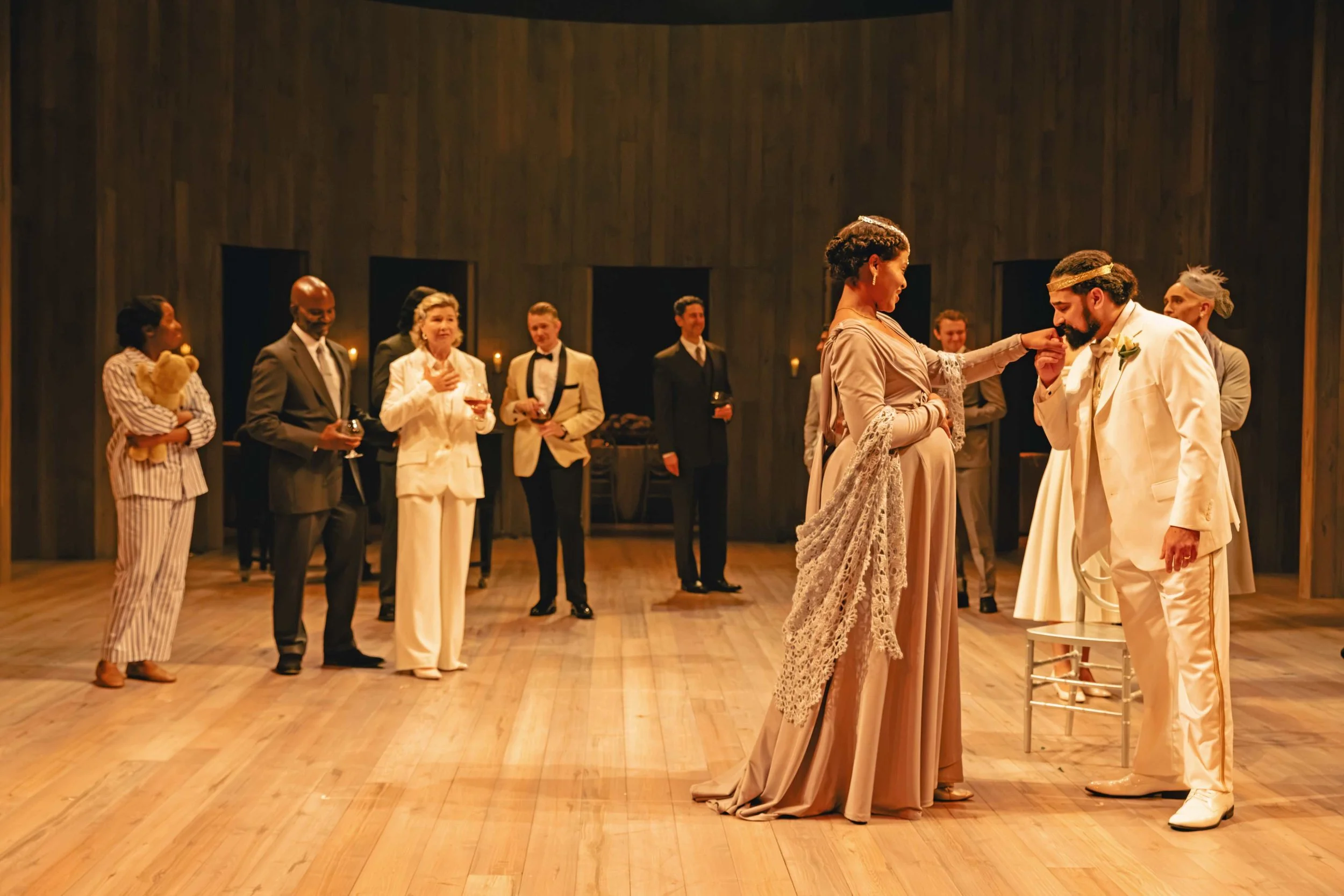
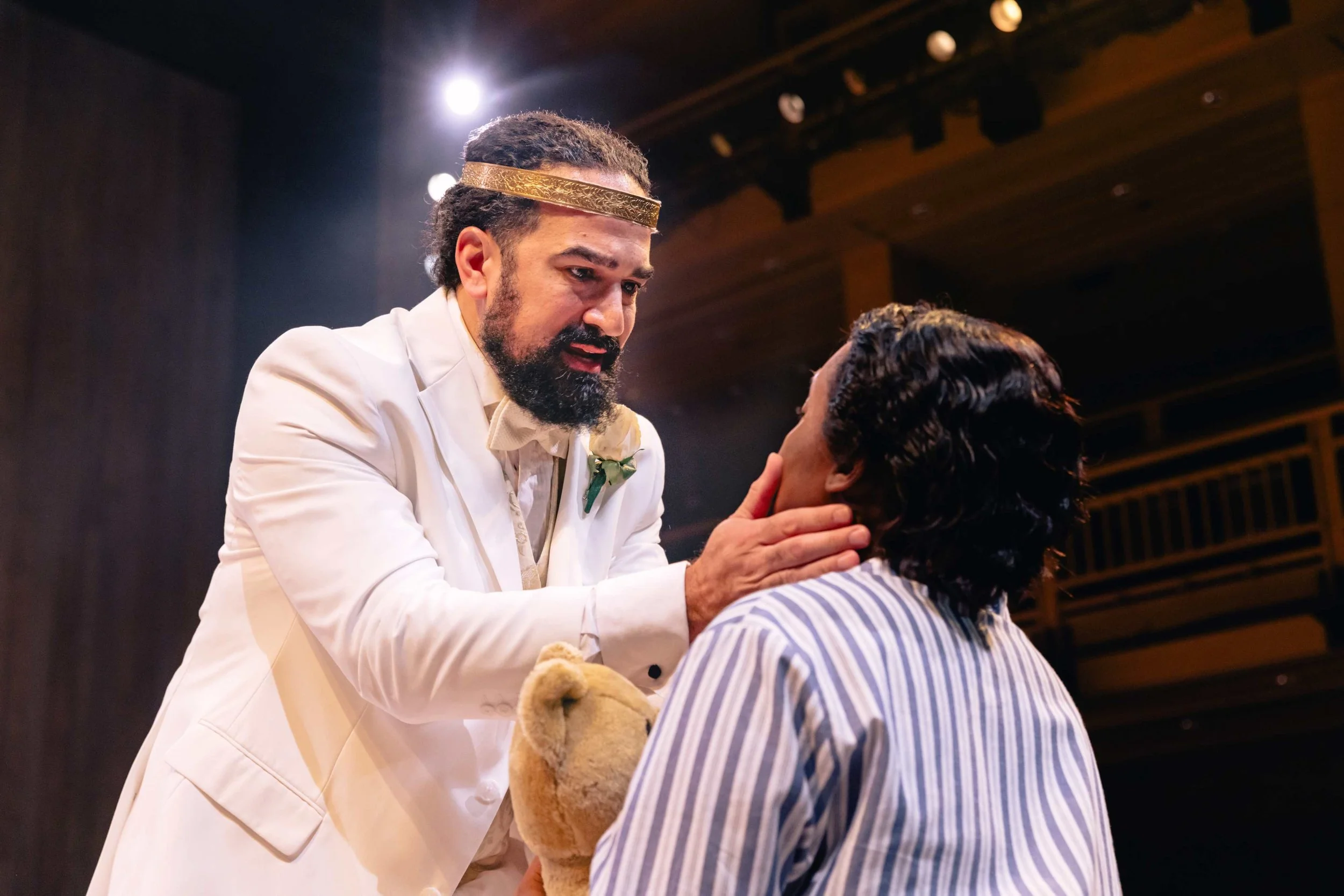
Hall’s repertory company is universally excellent. There are clever and entertaining performances of original compositions by Kieran McCabe throughout. Michael Pavelka’s elegant costumes and expansive set design transforms effortlessly from a courtly manor to a textured, earthy look awash in color for Bohemia with eye-popping projections. Marcus Doshi’s stunning lighting design, with an arresting soundscape by Emily Hayman, completes a versatile and visually stunning look for this superb production.

PHOTO|Kyle Flubacker

Chicago Shakespeare Theater
presents
The Winter’s Tale
Courtyard Theater
Navy Pier
through December 12, 2026
In repertory with
A Midsummer Night’s Dream
November 11, 2026 through January 3, 2027


WEBSITE

TICKETS

PROGRAM

For more reviews, visit: Theatre In Chicago

ARCHIVE

PicksInSix® is a registered trademark of Roxbury Road Creative, LLC
PicksInSix Review: A Strange Loop - About Face Theatre and Raven Theatre


If Only It Really Looped Forever!
PicksInSix® Gold Review | Guest Contributor |
Perse Grammer

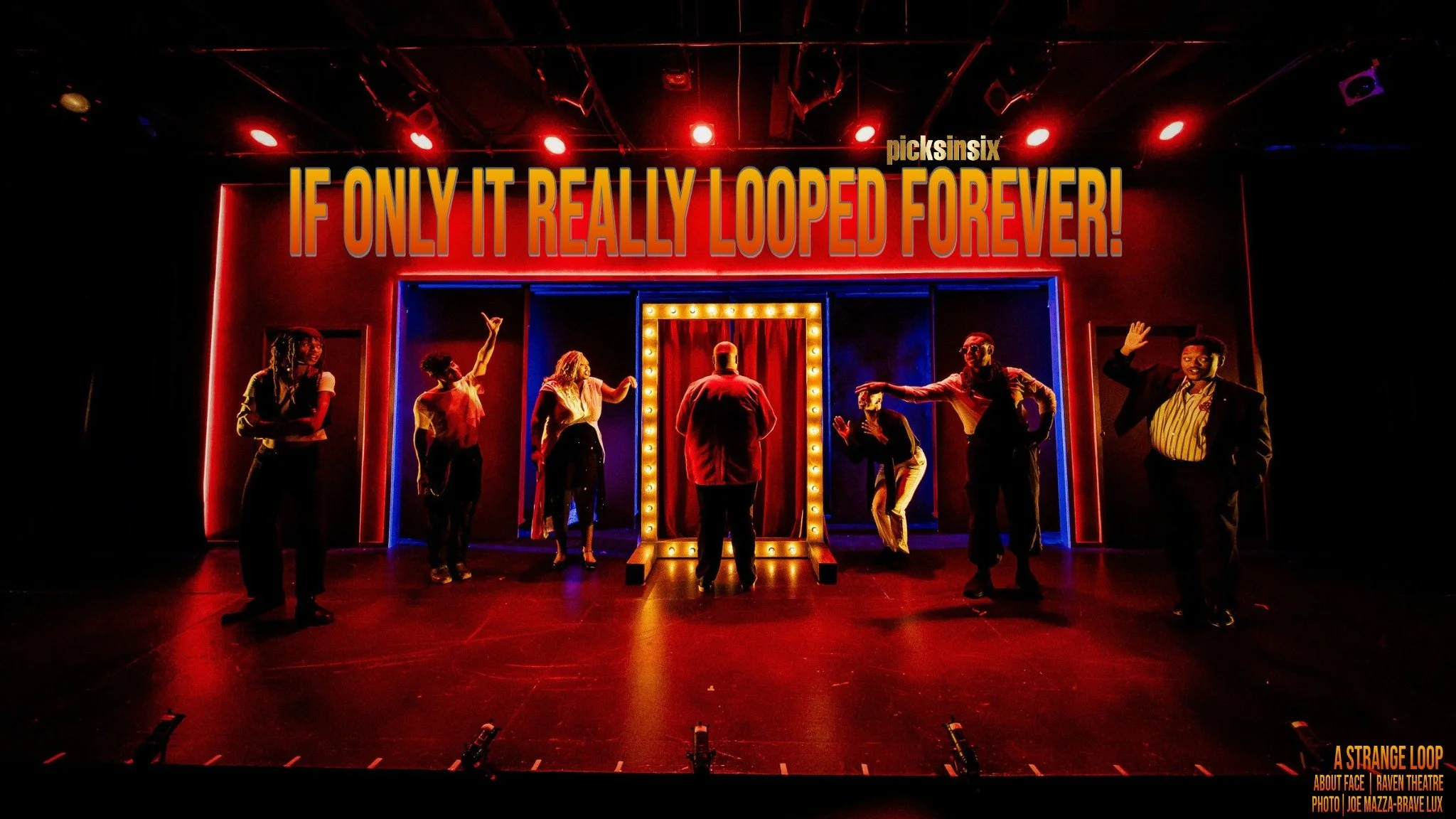
About Face Theatre and Raven Theatre’s co-production of Michael R. Jackson’s Pulitzer Prize and Tony Award–winning musical “A Strange Loop” begins with a pre-show playlist consisting entirely of “The Lion King” musical soundtrack. The set is minimal and striking. A strip of lights outlines the walls of the stage, which frame a series of blank sliding panels. Center stage contains a red curtain hanging in a doorframe ringed with lightbulbs.

For the majority of the show, we won’t see many more additions to what is already onstage. But scenic designer Sydney Lynne and lighting designer Brenden Marble’s versatile creativity have made maximalism wholly unnecessary, as their work will transport us to many new locations. As the rousing opening number begins—tight choreography courtesy of Breon Arzell—it’s clear that director Mikael Burke has engineered a night of astonished laughter, seamless transitions, and an utter celebration of theatrical talent.

“A Strange Loop” introduces us to Usher, an early career playwright working as an usher at “The Lion King” on Broadway. Usher is struggling to write the musical we’re currently watching, and his ensemble of criticizing Thoughts—as the characters are defined—aren’t helping. There’s little acceptance for Usher in the gay community, as he’s either rejected or fetishized for his Blackness. His religious parents don’t understand the dream he moved away to pursue, or how his homosexuality isn’t a hurtful choice he’s making. As Usher digs deeper into his musical, he realizes that he can’t write it without attempting to confront his parents with his true, artistic, queer self.

Jackson’s “A Strange Loop” is artfully structured. It starts strong and keeps ramping up. When we need a change from upbeat numbers, the show takes a sinister turn. When we need to catch our breath, we’ve already begun a sweet, simpler scene. And just when we think the performance can’t get any more outrageous, it’s been cranked up to an eleven with a gospel number and a wholly unexpected set reveal.

Burke’s exceptional ensemble has mastered the art of working perfectly in sync while still each bringing something unique and exciting to the table—theatrical chameleons shifting between wildly different characters, playing elegant in one scene and raunchy in the next. The wonderful Micah Mixon (Thought 1) is effortlessly charming. She stands out especially in the role of Usher’s Sympathetic Ear, bringing much-needed warmth to the stage. Whether he’s playing the sassy, influencer-like character of Usher’s self-loathing, or Harriet Tubman, Matheus Barbee (Thought 2) is boldly hilarious. Christopher Wayland (Thought 3) is also comedic in his many roles, but his style is subtler, drawing out laughs with a finely-tuned facial expression. Usher’s mother is embodied fully by Michael Turrentine (Thought 4) who deftly walks the fine line between portraying a caricature and a real woman who makes us believe she can change—and breaking our hearts when she doesn’t. John-Payne (Thought 5) utilizes their impressive bass, especially during their solo numbers as Usher’s father, dancing in the overlap of silly and sinister. And even as Naphtali Curry (Thought 6) is playing the sleazy, racist white man that sexually degrades Usher, his presence carries an undeniable air of refinement throughout the show.

Every cast member is an utter powerhouse, but Eddie Weaver takes Usher to a new level. From the very beginning, he wears his heart on his sleeve, with an eagerness that instantly has us rooting for this underdog. His portrayal of Usher is complex, weaving together joy and insecurity, vulnerability and strength. Though Weaver doesn’t have the chance to rapidly morph from character to character like the Thoughts do, he still gets a chance to show off his flexibility when acting out every character in a Tyler Perry show. His repeated bids for connection with his mother are heartbreaking, and Weaver absolutely nails the monologue about Black love and lust’s place in the world. One could easily lose the sincerity and nuance of Usher’s character in how heightened “A Strange Loop” can get, but Weaver stays grounded in his performance throughout the show.

Janelle Smith’s costume design reflects the unity and individuality of this ensemble. Each actor bears a strikingly different assembly of layers, silhouettes, and fabrics, while still reading as a coherent unit dressed in black and white.

Playwrights writing themselves as characters is always a risky gamble. One can easily slip into self-indulgence, sugarcoating, and a lack of awareness as to why anyone who isn’t a writer in their very specific scenario would relate to or care about their character. Jackson not only gracefully avoids these pitfalls, but he utterly succeeds in the creation of Usher. “A Strange Loop” is a testament to the writing adage that the more specific you get, the more universal your play feels. Usher battles with self-loathing, a desire to be loved that outweighs his self-respect at times, and the expectations from his family that contradict his own dreams. His identity as an obese Black gay male playwright is the lens in which we view these struggles, which means belonging to any number of these demographics undoubtedly enhances one’s viewing experience. But you don’t have to be similar to Usher in order to connect with his achingly human story.

 “A Strange Loop” is a masterpiece, and Jackson is well-deserving of the 2020 Pulitzer Prize. Beyond the incredible writing and relentlessly talented production, what sets it apart is its pure honesty. The play is deeply vulnerable and refuses to pull any punches. There are no deadpan quips at the irony of such a meta show, no smug mocking of the audience or Jackson/Usher for creating what’s happening onstage. One might think this would come at the sacrifice of comedy, but “A Strange Loop” will make you howl with laughter without softening any of the deep sincerity. It fully embodies its line, “If you're not scared to write the truth, then it's probably not worth writing. And if you're not scared of living the truth, then it's probably not worth living.” Everyone should get the chance to see a show as brilliantly heartfelt as “A Strange Loop” and the sold out run has now been extended through November 22.

GUEST CONTRIBUTOR | PERSE GRAMMER is a multidisciplinary writer and theatre artist based in Chicago. Grammer is currently developing their latest play through a mentorship with Sandy Shinner at Shattered Globe Theatre. They hold a BFA in Playwriting from The Theatre School at DePaul University.  www.persegrammer.com

PHOTO | Joe Mazza-brave lux

About Face Theatre
and
Raven Theatre
presents
Chicago Premiere
A Strange Loop
6157 North Clark Street
EXTENDED through November 22, 2026

WEBSITE

TICKETS

For more reviews, visit: Theatre In Chicago

ARCHIVE

PicksInSix® is a registered trademark of Roxbury Road Creative, LLC
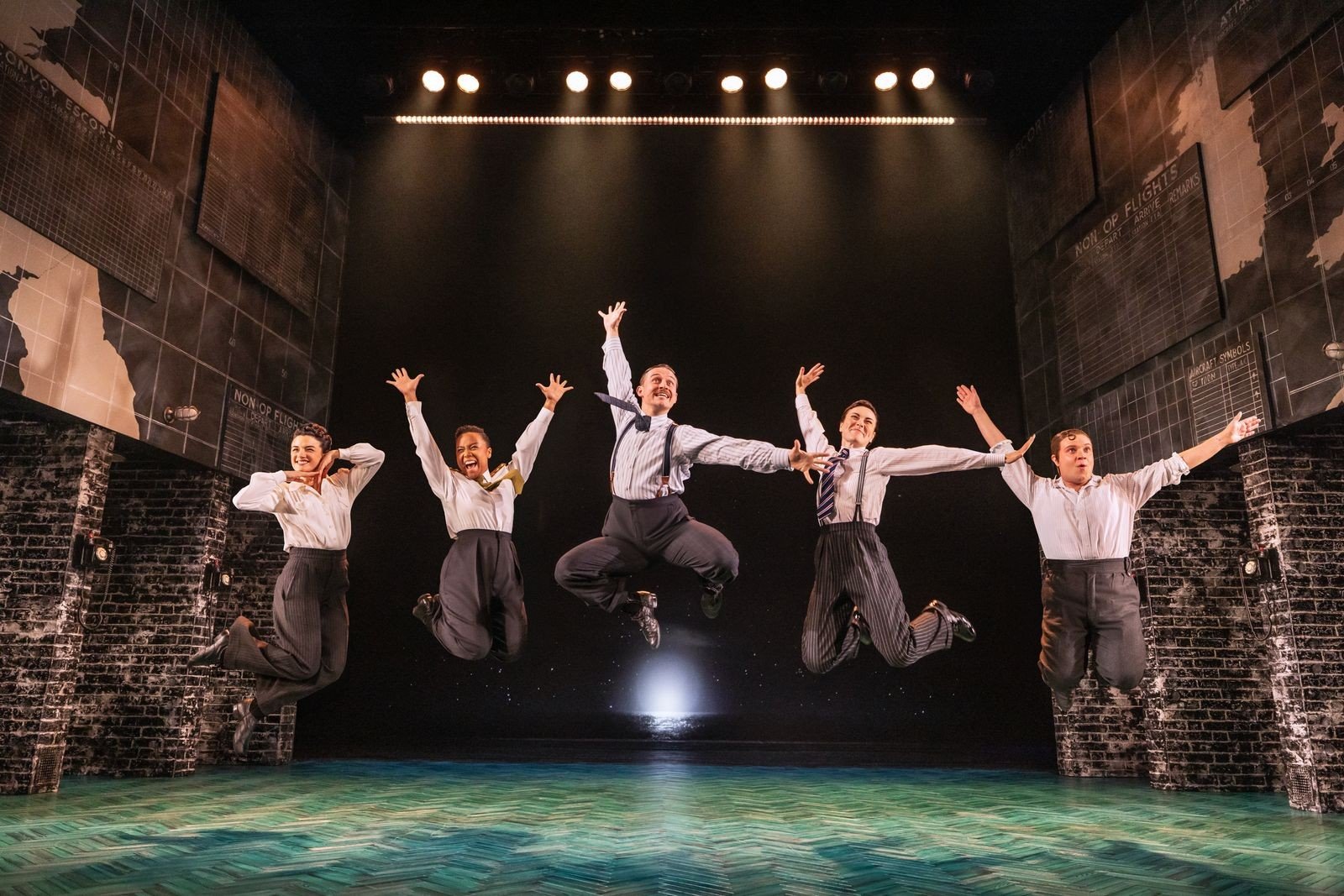
PicksInSix Review: Operation Mincemeat - Broadway in Chicago


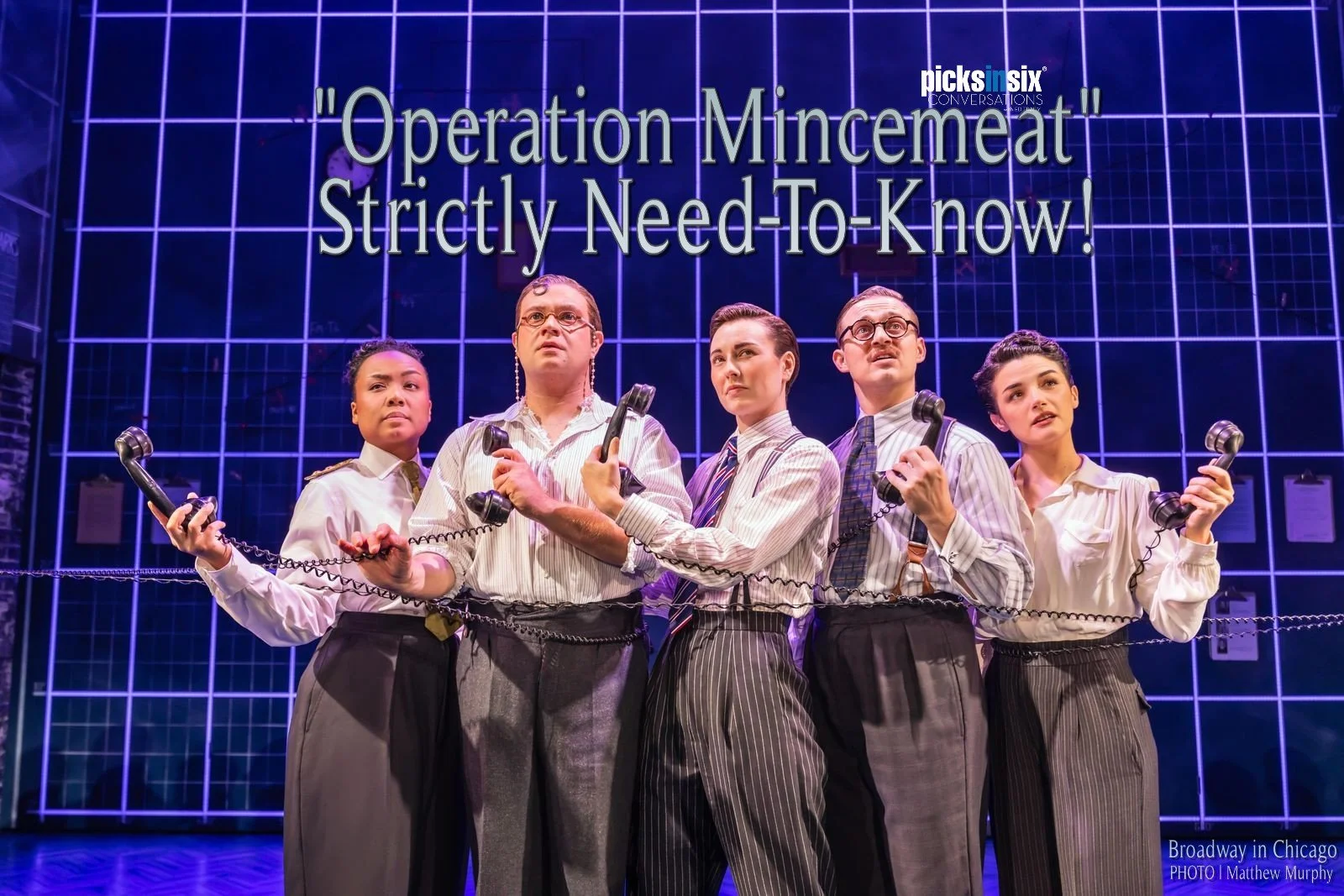
“Operation Mincemeat” – Strictly Need-To-Know!
PicksInSix® Review |
Ed Tracy

Over three decades ago, a prominent military historian had me enthralled in the telling of the British master plan to outfit a uniformed corpse and set the bloke adrift in the ocean to wash up on shore with bogus invasion plans to hoodwink the Nazi command and divert them away from the intended invasion of Sicily. That plan—coded named “Operation Mincemeat,” the origin of which dates back to a 1939 list of strategic options credited to future James Bond author Ian Fleming, an aide to the British director of naval intelligence at the time—is well-documented in Ben Macintyre’s 2010 book and was the basis for the 2021 film. Then came London’s 2024 Olivier Award-winning Best New Musical followed by the Broadway offering nominated for four 2025 Tony Awards and winning one for featured performance.  And it’s still playing everywhere, including the North American Tour of “Operation Mincemeat: A New Musical,” that landed with a big splash at Broadway in Chicago’s CIBC Theatre on Wednesday night.

The musical—a mix of “Hamilton,” and “Monty Python” with a British spin of “Hogan’s Heroes” and much more—could be a royal farce of a send-up to a classic spy thriller if it was not essentially a true story about the 1943 team who had a significant impact on the outcome of World War II. The two British intelligence officers leading the charge–Charles Cholmondeley (Jake Bentley Young) and Ewen Montagu (Katie Kleiger)—developed the plan that was far from perfect, but it worked well enough to give the Allies the decisive edge in the critical invasion of Sicily.

I will admit that I rolled my eyes all those years ago when I first heard about the musical project, but the book, music and lyrics by the team of David Cumming, Felix Hagan, Natasha Hodgson, and Zoë Roberts is just the kind of madcap show that captures our imagination for adventure and intrigue. Add a clever, non-traditional storyline, lots of comic repartee, and one whiz-bang musical number after another, and “Operation Mincemeat” adds up to a nonstop, highly entertaining, musical comedy with a message that will keep you laughing all night long.

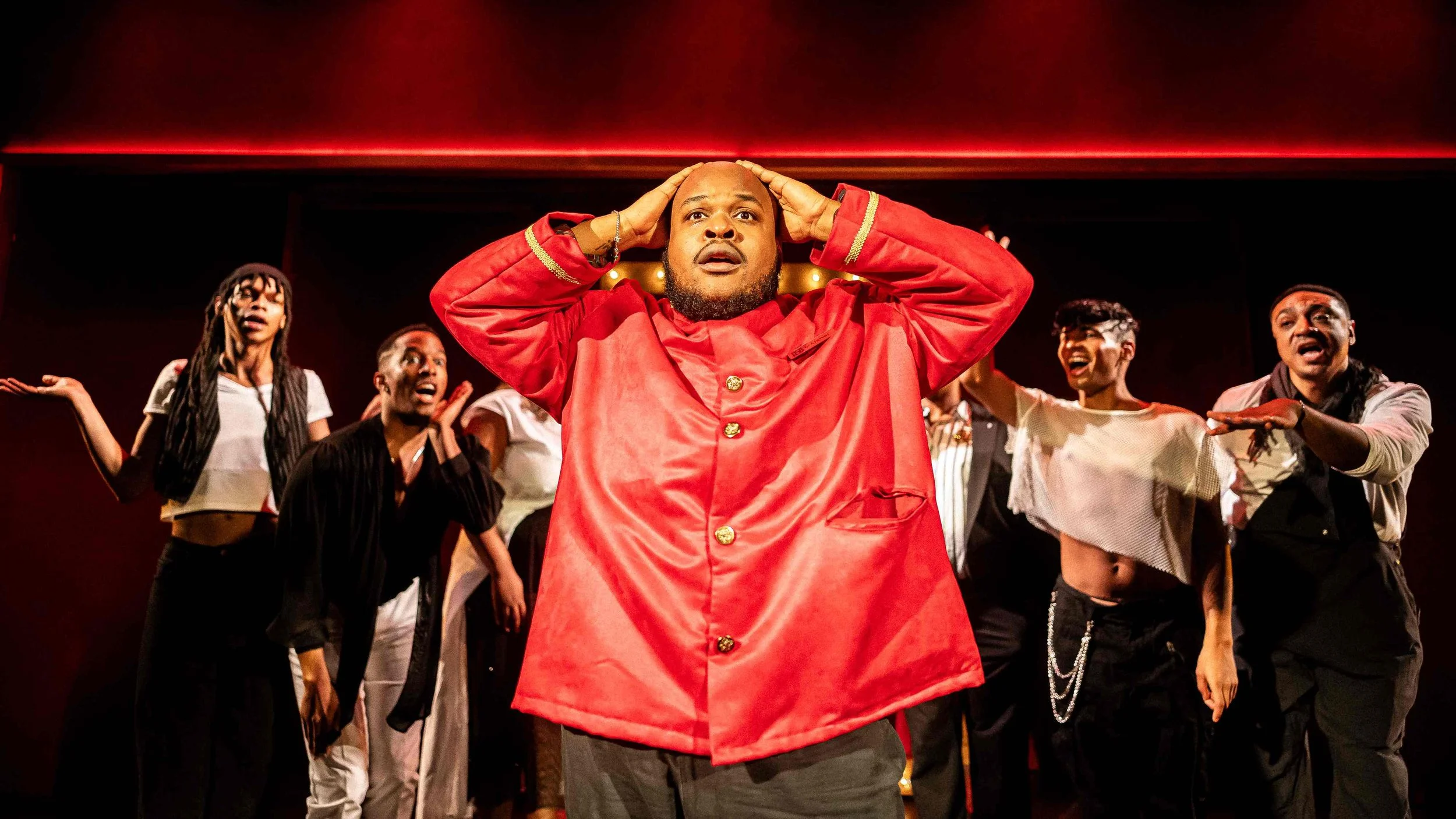
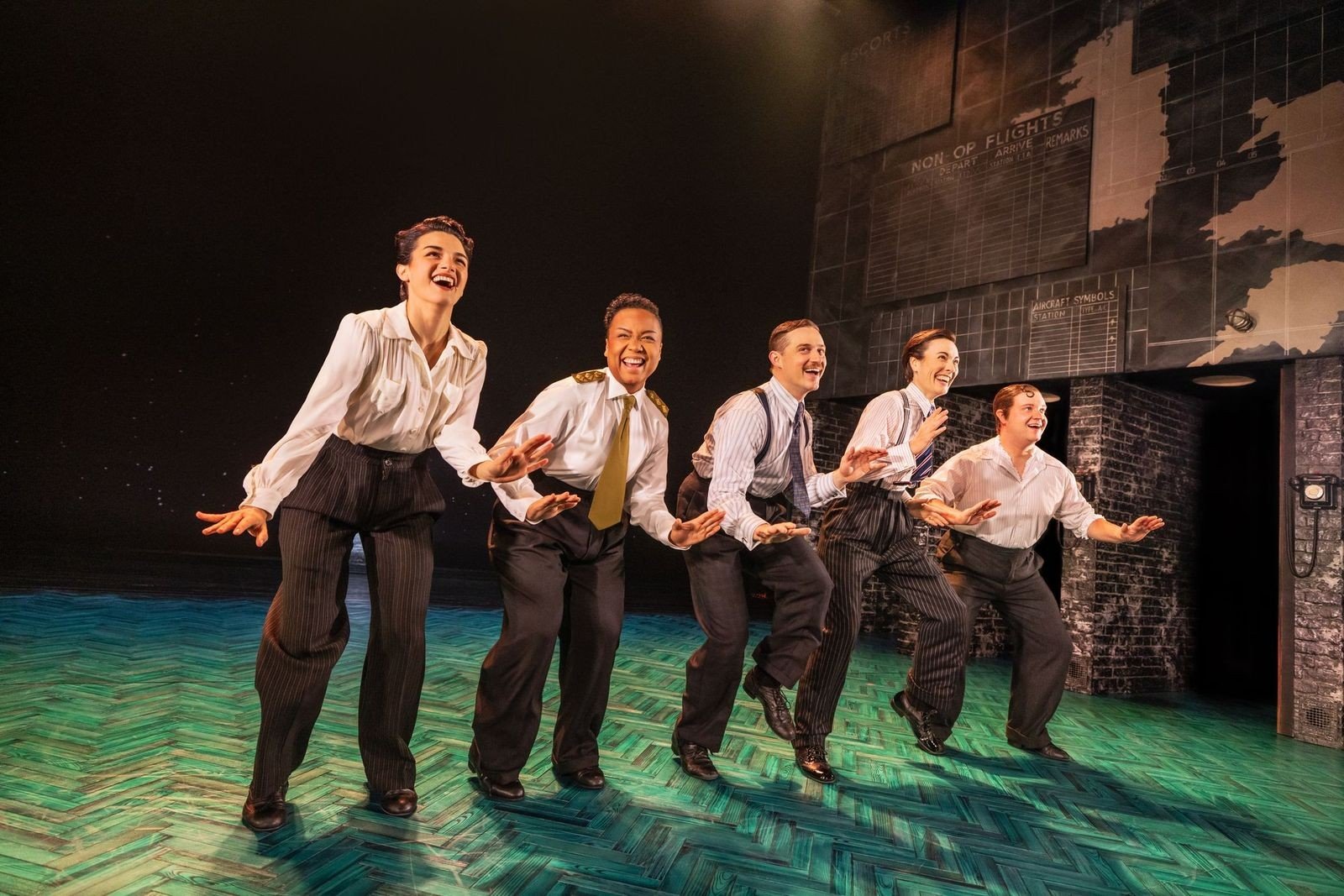
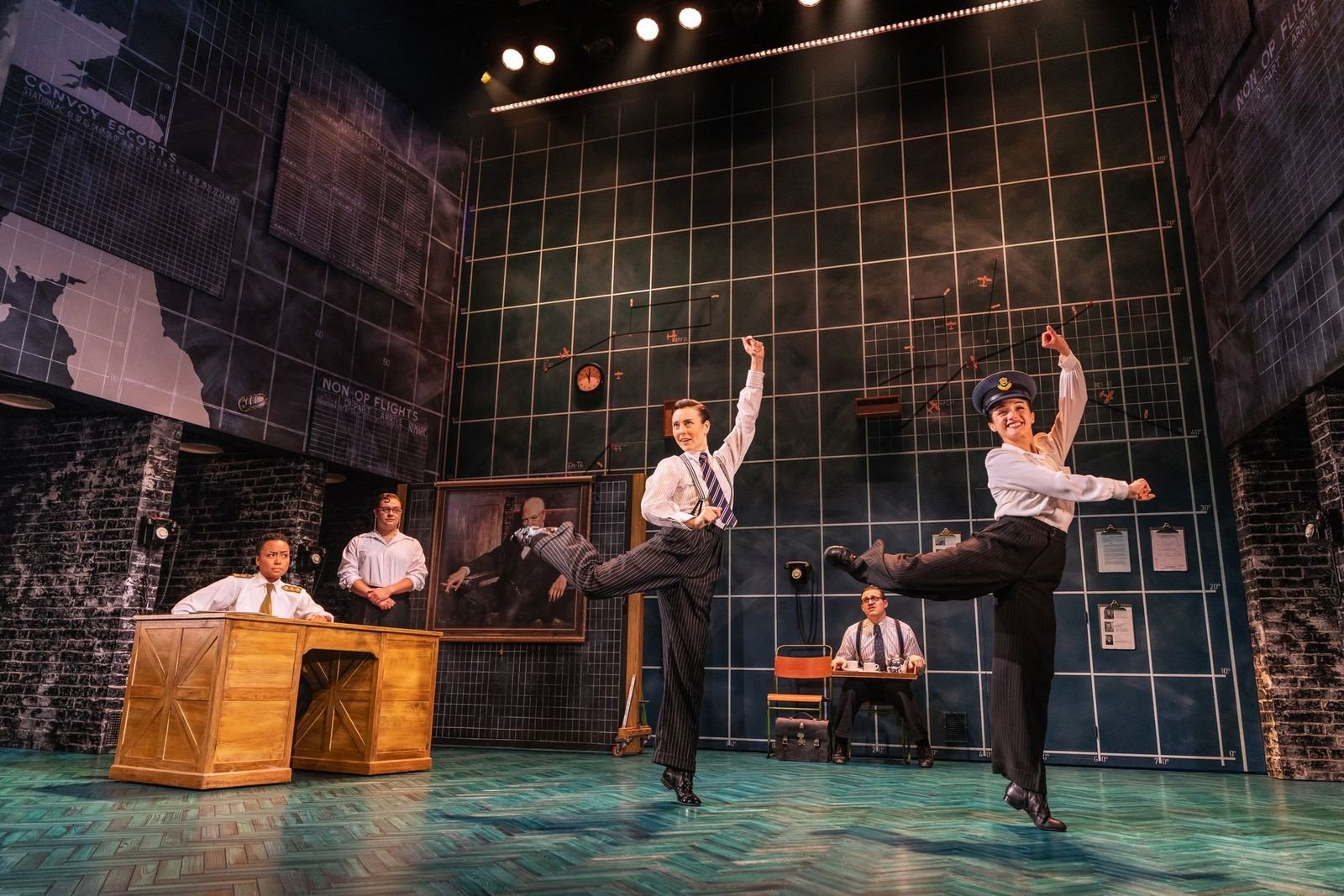
What is truly remarkable is that all of the action is performed by a superb five-member ensemble, with each member portraying a prominent featured role in the developing storyline in addition to playing over 80 characters to flesh out the fascinating story. In addition to Young and Kleiger, the ensemble includes the terrific, multi-talented Luke Antony Neville (Hester Leggatt), Erin Ramirez (Jean Leslie) and Mariah Copeland (Johnny Bevan). To the credit of their combined efforts, all swiftly move the plan’s development along in the backroom of Britain’s Military Intelligence unit (MI5) which is the backdrop for most of the action in the musical. There are some notable departures to add context, and a rousing, slam-bang finish, that add up to a fast-paced serving of humor and pathos.

It’s a rollicking good time right from the top as facts shape the backstory at a critical juncture for the allied war effort. With the successful Allied completion of the African campaign, thr German command turned attention to shoring up forces to defend an invasion of Sicily. As “Mincemeat” unfolds, MI5 operatives create a compelling identity for the man who never was, a past that includes all the conceivable elements of his life, save one, which proves to be a major dramatic turning point of the story and for the operation. What starts out as a fantastical story lands with some mighty emotional weight later on.

Directed with gusto by Robert Hastie, propelled by the clever choreography of Jenny Arnold and a big nod to Ben Stones’s set and extraordinary, ever-changing costume design, “Operation Mincemeat” feels much broader and more complex than you may think that the modest-in-numbers ensemble might be capable of delivering. It’s a workout, to be sure, but this talented group are fun to watch and the story, while staying more or less faithful to the gravity of the piece, is clever and entertaining, even if it’s a plan that is strictly need-to-know.

PHOTO|Matthew Murphy

Broadway in Chicago
presents
NorthAmerican Tour
Operation Mincemeat
A New Musical
CIBC Theatre
18 W Monroe
through October 11, 2026

WEBSITE
TICKETS
TOUR WEBSITE


For more reviews, visit: Theatre In Chicago

ARCHIVE

PicksInSix® is a registered trademark of Roxbury Road Creative, LLC
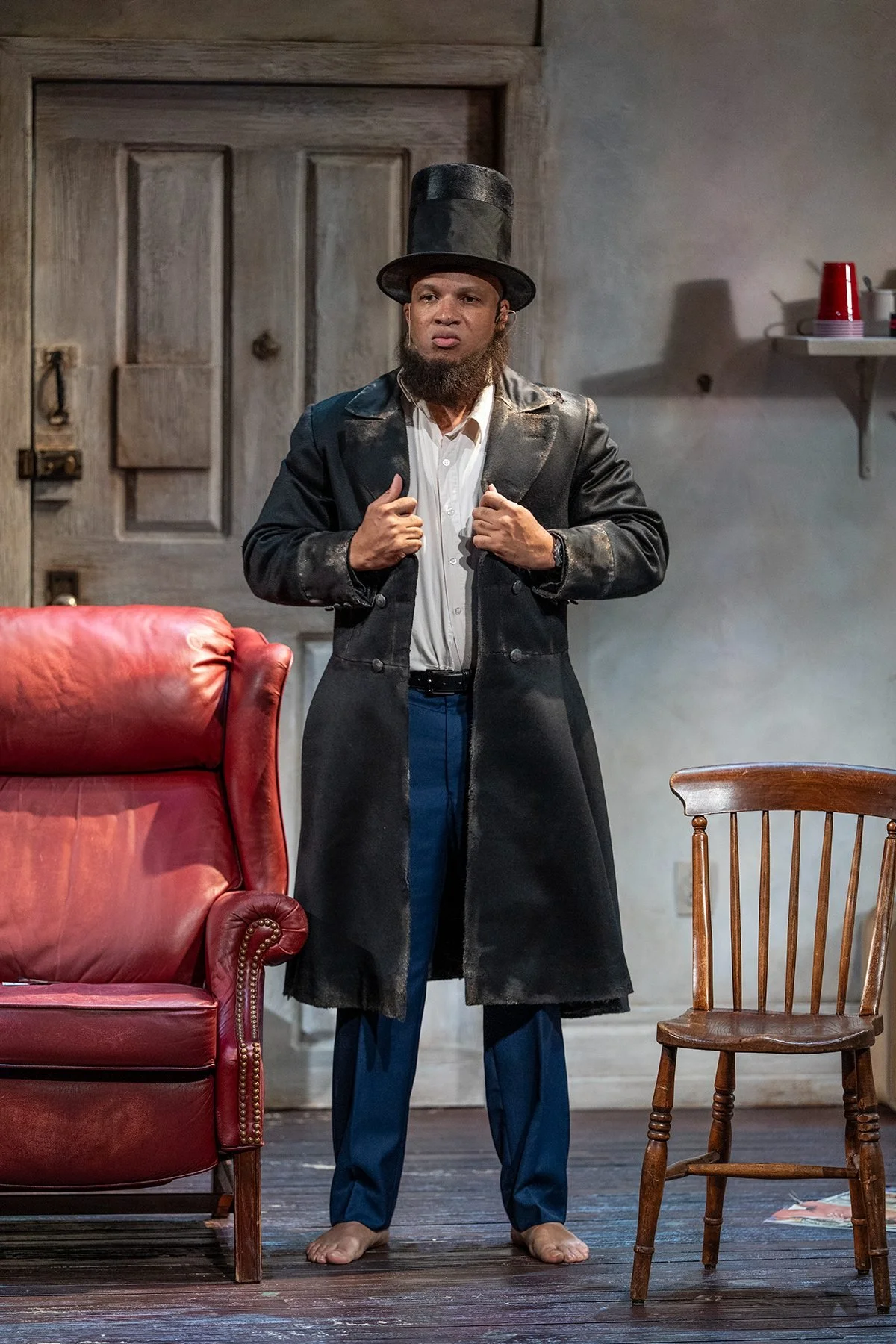
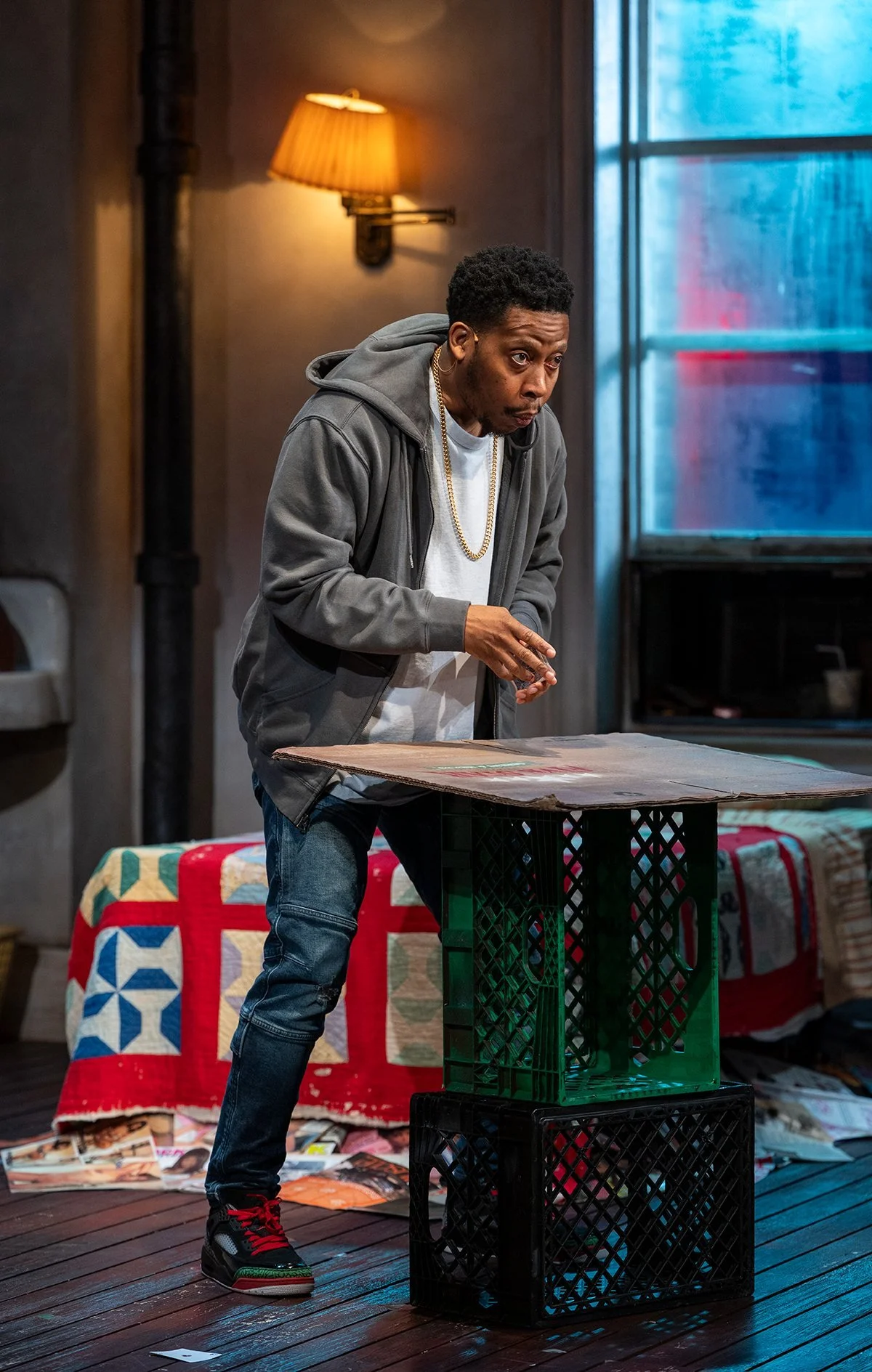
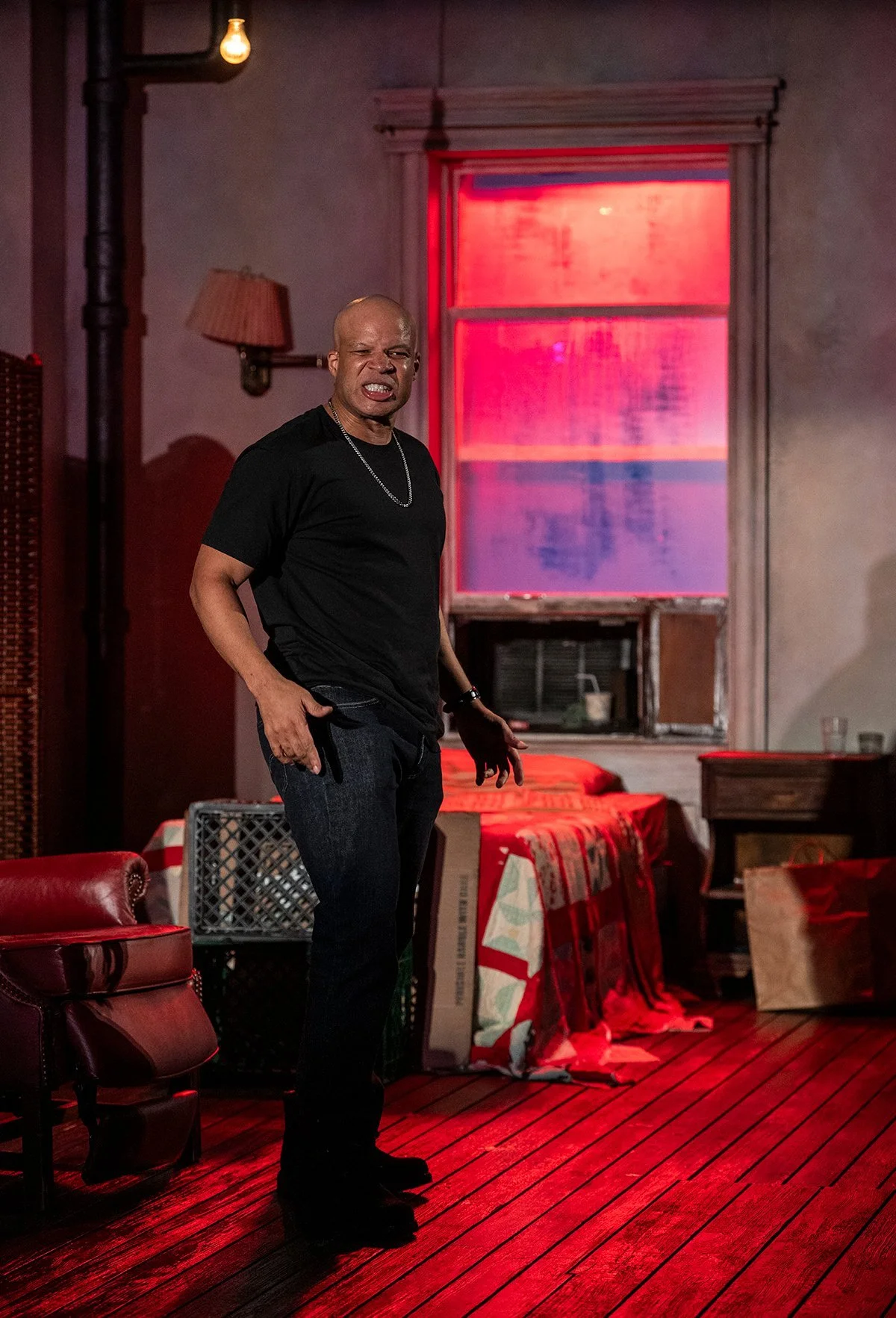
PicksInSix Review: Topdog/Underdog-Steppenwolf Theatre Company


Sterling Version of “Topdog/Underdog” at Steppenwolf!
PicksInSix® Review | Guest Contributor | Ronald Keaton

There is a great deal to admire about the fast-moving production of “Topdog/Underdog” at Steppenwolf, now running through November 1 in their Downstairs Theater. Originally done here in a lauded 2003 production, this sterling version of the remarkable Suzan-Lori Parks play lives up to every bit of expectation a theatregoer might conjure. The writer won a Pulitzer, after all. And it's steered by one of America's great, innovative directors in Kenny Leon, whose previous experience with this piece would seem to offer an expert's path to its fruition.

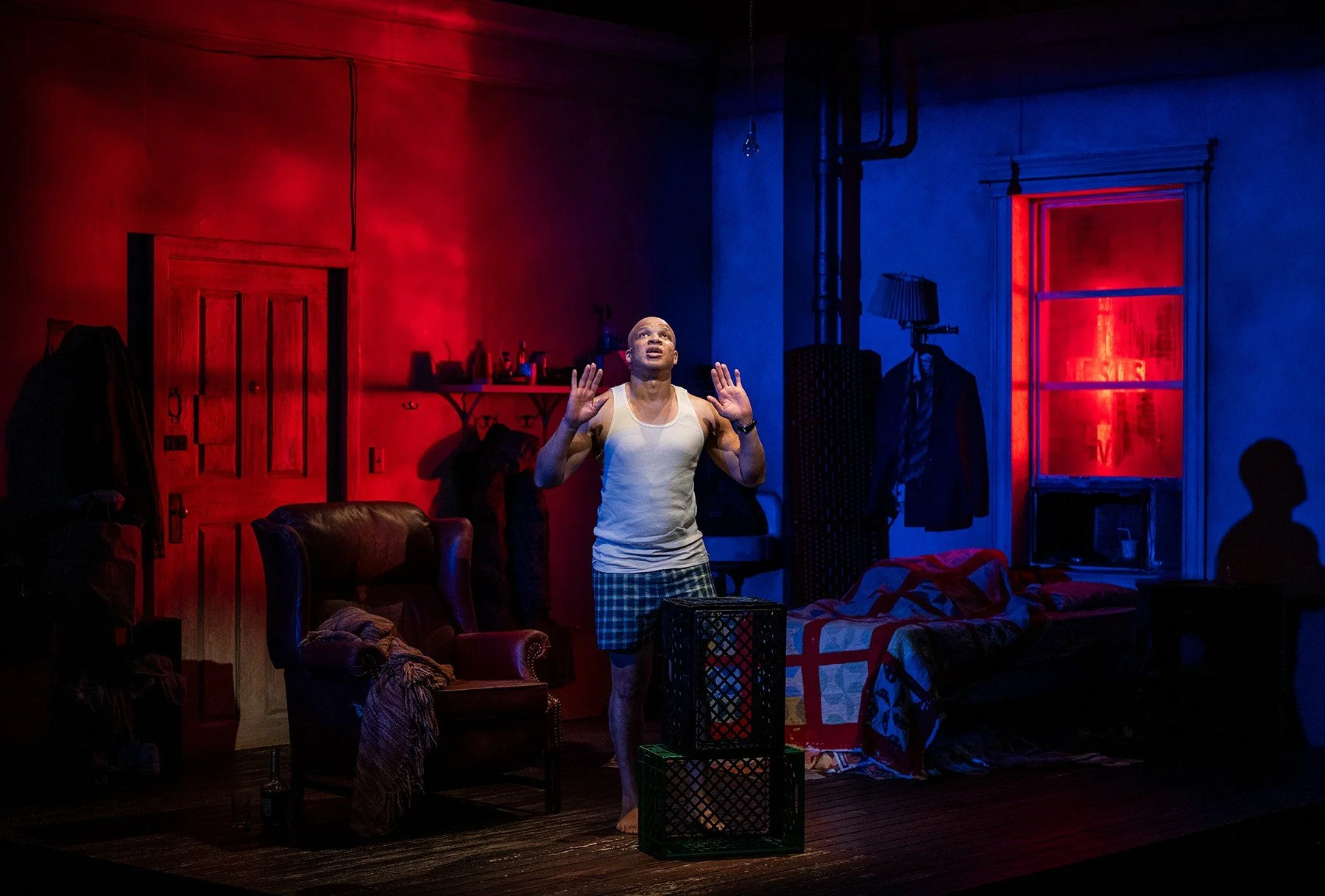
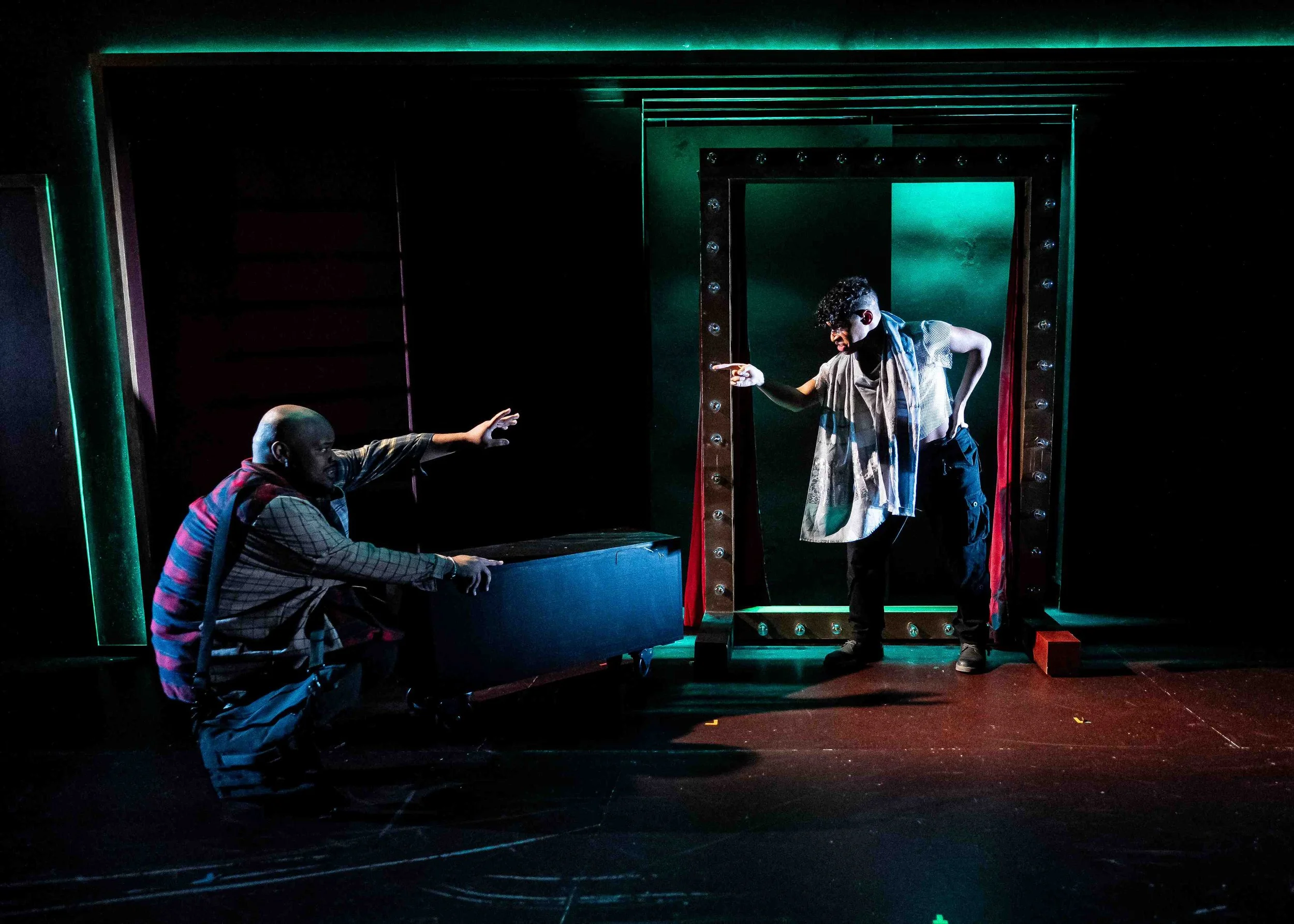
Let's begin with the language in the play. Ms. Parks has created an endlessly rhythmic verbal sound with a tempo and pace that rapidly pulls us along. It's nothing short of miraculous in its thoroughly absorbing word-music approach to the story, while in the next moment, it's guttural and emotional and rhapsodic all at once. It's a unique retelling of the Cain and Abel saga of two brothers sharing a dingy apartment—appropriately depressing and sparse in its design by Arnulfo Maldonado with gorgeous noir lighting by Lee Fiskness—as both try to survive as best they can. Then again, these brothers have been given names that rival any pair in American history for recognition and impact—Lincoln and Booth. Once we understand that they were saddled with parents of a dubious humor, we can go along for the ride of a lifetime—literally so.

Mr. Leon conducts all this so eloquently. Such conflicting ebb and flow lives in one moment, while a kind of intellectual rocket is strapped to the next in everything that is said—impactful and immediate in its layers of poetic persuasion. Enough praise cannot be offered for his guidance here, with some of the best directing strokes seen in Chicago at present from a current master of the trade.

Okay, consider some brass tacks. The brothers are thrown together in survival mode from their boyhood abandonment by their parents. And they've been stuck there. There's only one bed and no bathroom in the apartment unit they share. It belongs to Booth (a riveting, cutting portrayal by Steppenwolf ensemble member Namir Smallwood), who has no job and doesn't seem to mind it, as he's always looking for a bigger score. He constantly works on his slick three-card monte moves and patter—he has even named himself "Three-Card"—as he attempts to take up his brother's old way of working. Lincoln (Steppenwolf ensemble member Glenn Davis, so intense and emotionally committed), on the other hand, has been in limbo since his wife dumped him and simply wants to hang on to his new job as a Lincoln impersonator, complete with whiteface, at the arcade down the street. He studiously avoids the deck of cards, despite his legend, as he doesn't wish to be drawn back into hustling yet again.

But Lincoln loses his job at the arcade—budget cuts being the culprit—and the temptation of the street threatens to envelop him again. Booth tries to convince him that it's a righteous move and wants to learn more from his brother to make himself the street king he wishes to be. The brothers reflect each other in all this until a moment between them changes everything into its own kind of tragic mirror at its nadir.

This needs to be said: the chemistry between two great actors is palpable and consistent. Both these men own a real hand in sharing the Parks language and the endless rhythms so elegantly built in. Mr. Davis and Mr. Smallwood challenge each other as peers and as talents here, eye to eye. What a pleasure to see truly committed actors at the top of their game.

GUEST CONTRIBUTOR | RONALD KEATON received an Equity Jeff Award for the performance of his one-man show CHURCHILL. Coming soon, his new solo play about Ben Franklin, THE FIRST EMBASSY. www.solochicagotheatre.com.

PHOTO|

Steppenwolf Theatre Company
presents
Topdog/Underdog
Downstairs Theater
1650 N. Halsted St.
through November 1, 2026

WEBSITE

TICKETS

PROGRAM

STUDY GUIDE

For more reviews, visit: Theatre In Chicago

ARCHIVE

PicksInSix® is a registered trademark of Roxbury Road Creative, LLC

PicksInSix Review: Play On! - Chicago Shakespeare Theater


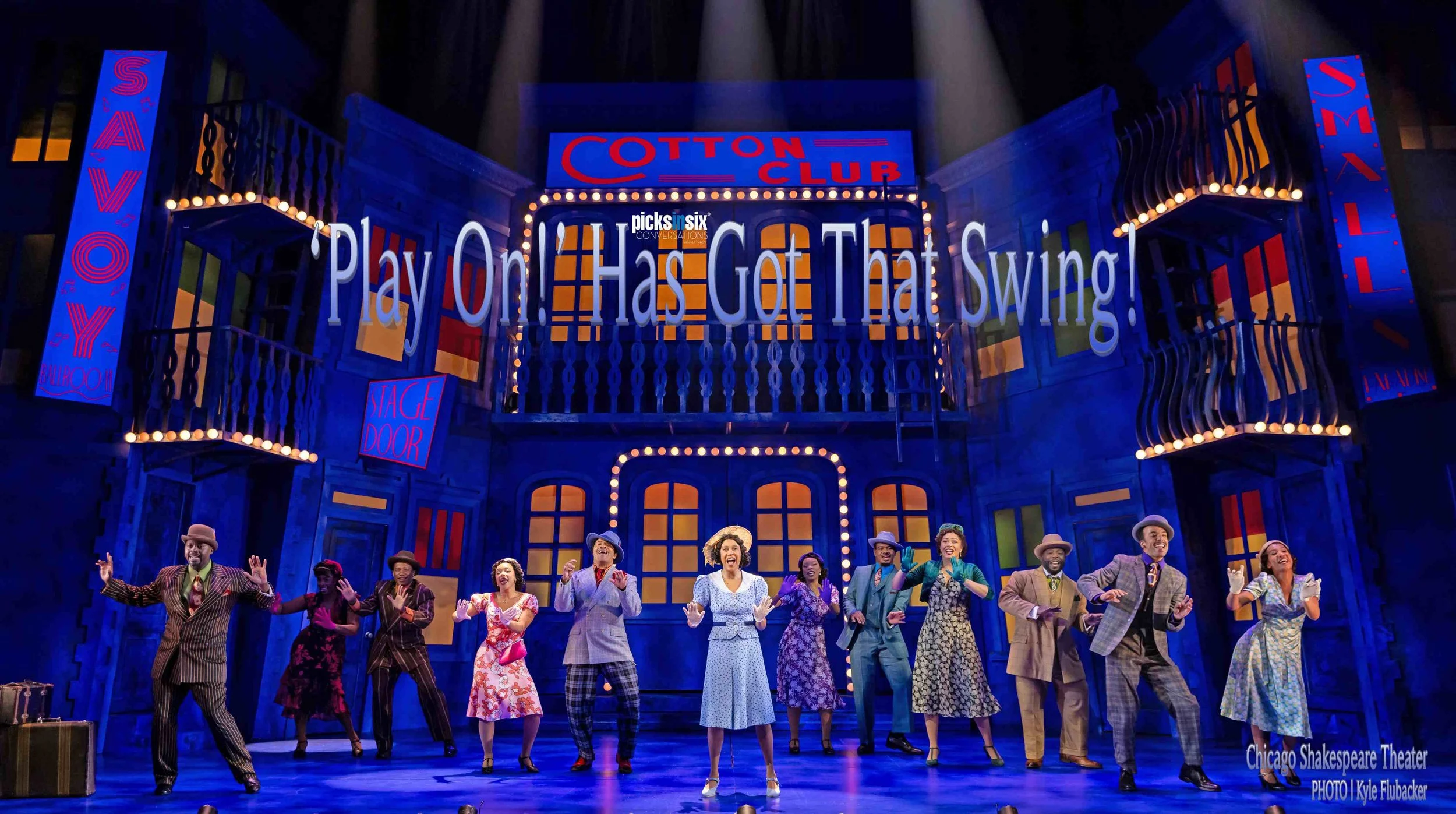
‘Play On!’ Has Got That Swing!
PicksInSix® Review | Guest Contributor |
Perse Grammer

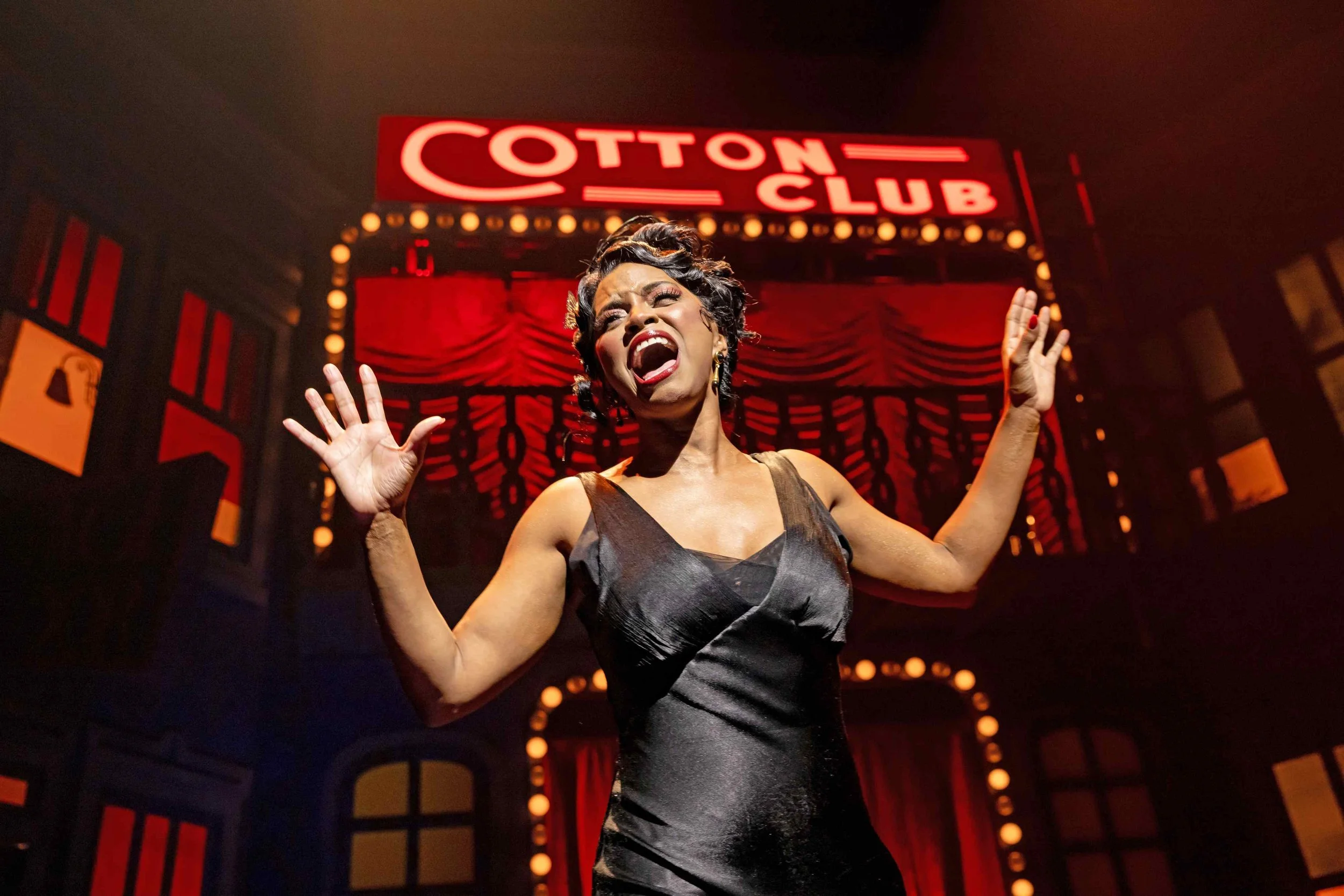
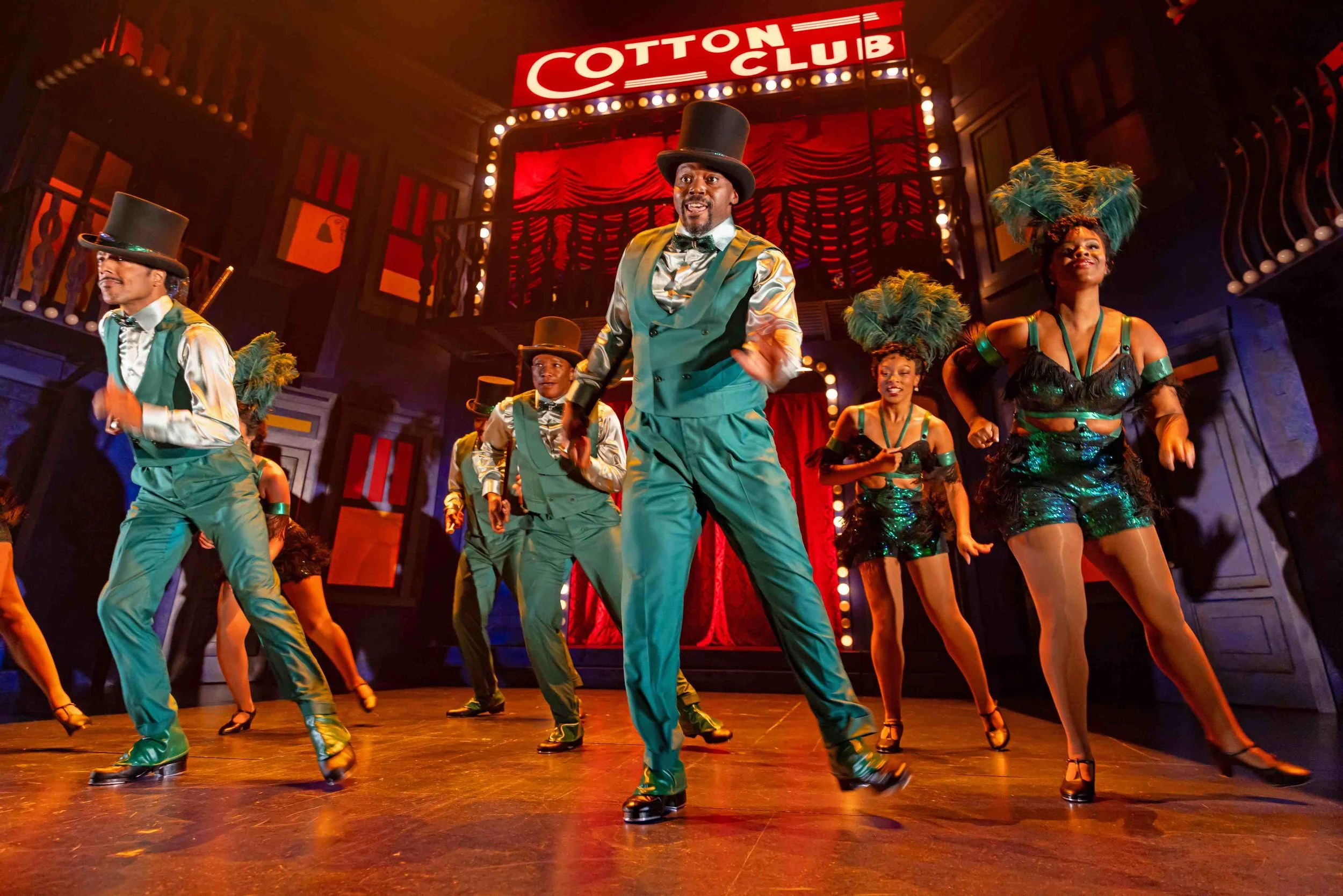
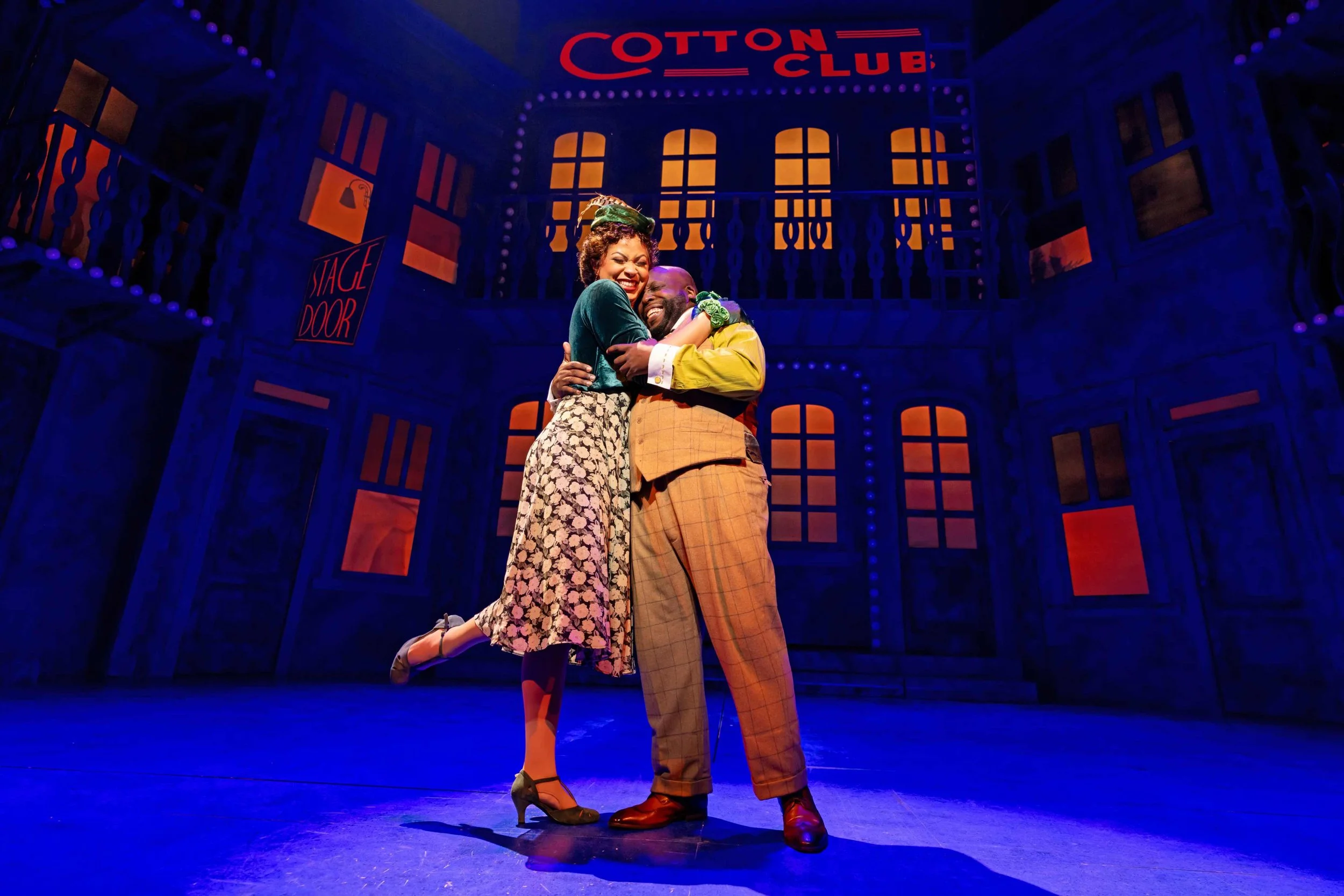
“Play On!” at Chicago Shakespeare Theater doesn’t give anything away until the curtain rises. A dynamic opening number informs us that this Shakespearean comedy is taking place in 1940s Swing-era Harlem. Beowulf Boritt’s set design and Adam Honoré’s lighting design meld to create electric, dramatically leaning streets and buildings, the most important of which is the Cotton Club.

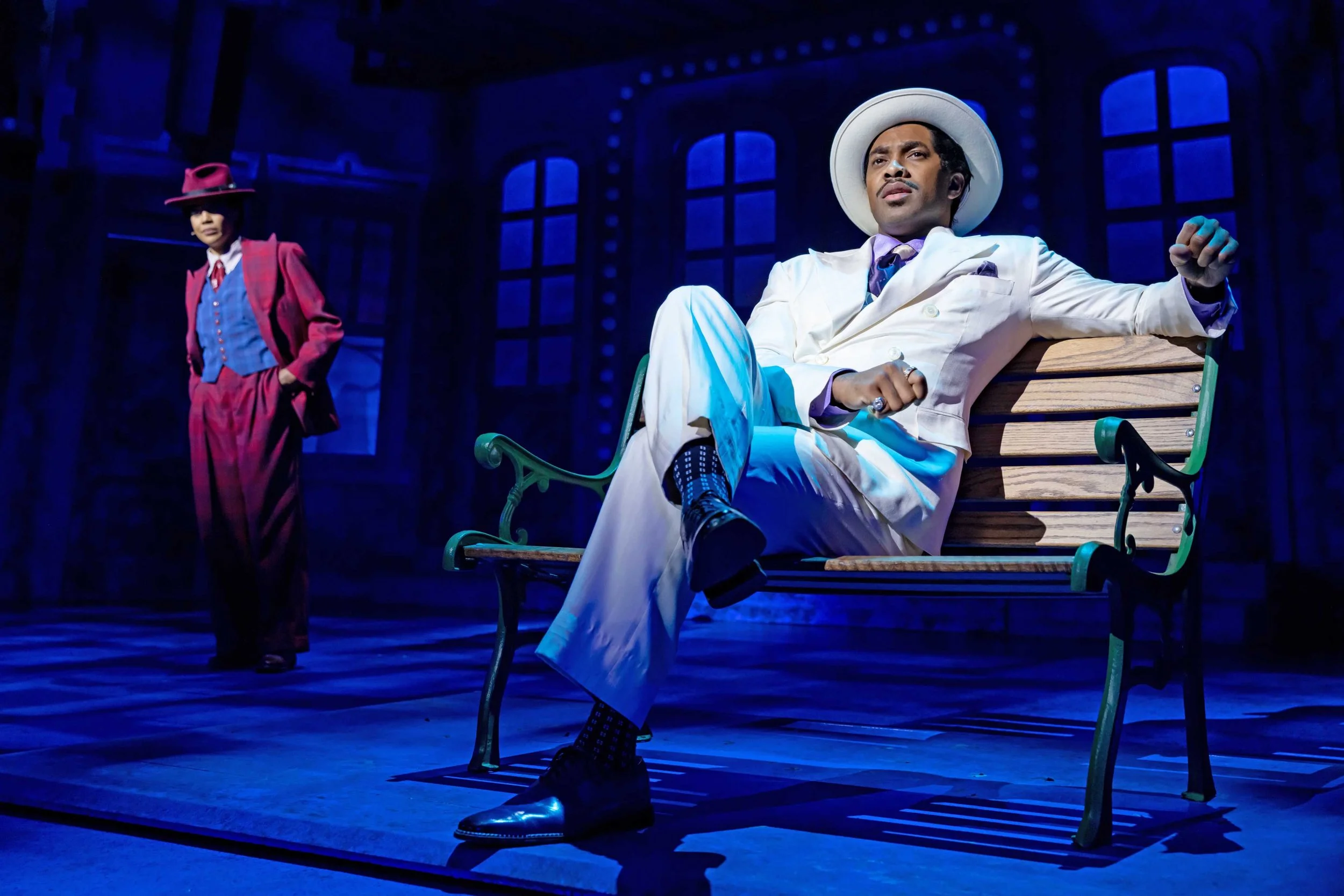
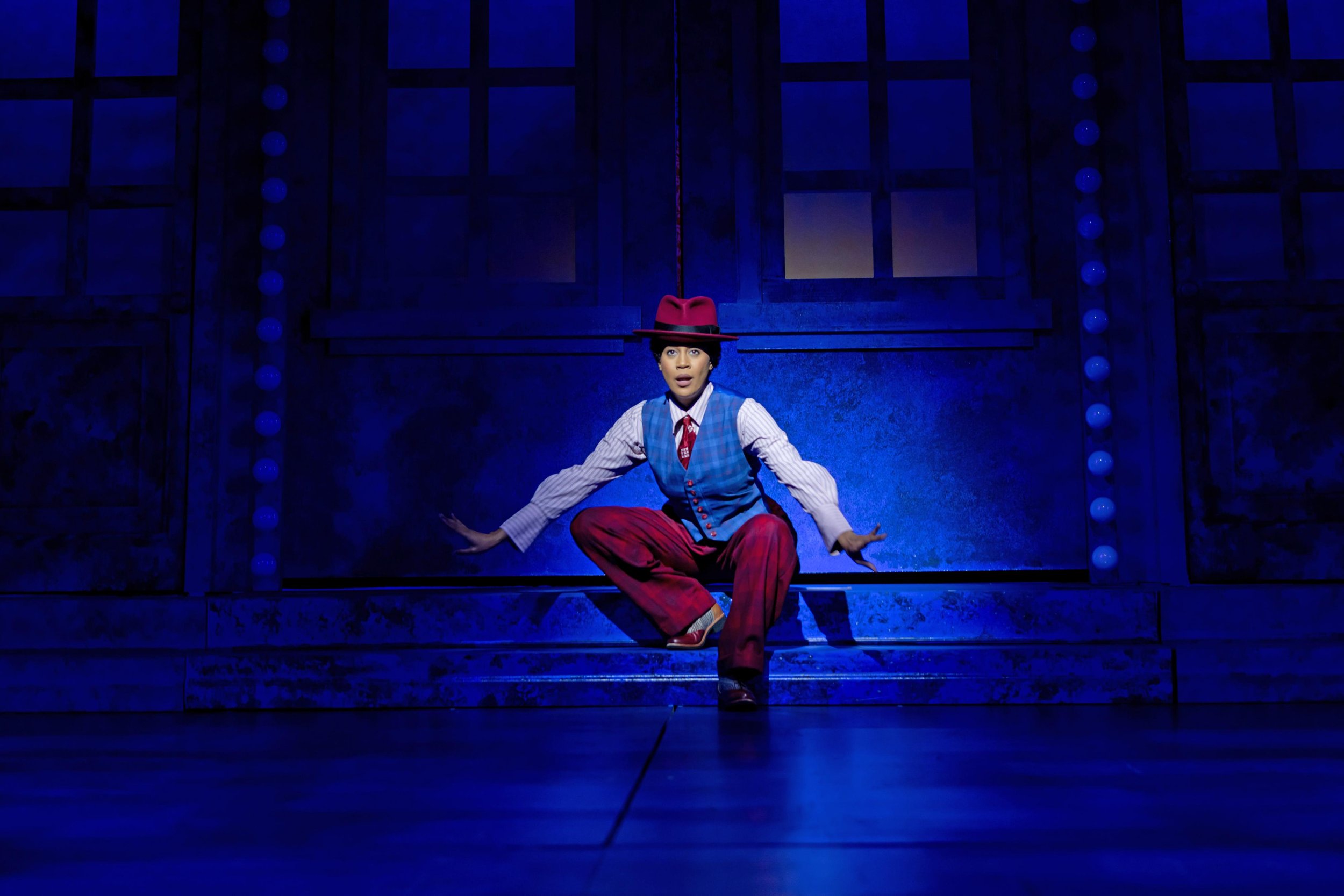
In this version of “Twelfth Night,” Vy has gone to Harlem to pursue her and her late brother’s dream of being a songwriter. Her uncle Jester decides the only way for her to succeed is as a man, and thus, Vy is disguised as Vy-Man. Jester gives her an in with Duke, a top-notch band leader languishing over his unreturned love for the great singer and diva, Lady Liv. As Vy delivers songs to Lady Liv, Lady Liv quickly falls for her—but Vy is developing feelings for Duke. Meanwhile, Miss Mary and Sweets, Cotton Club workers and bickering couple, have caught onto their boss Rev’s feelings for Lady Liv. Jester leads a charge to humiliate Rev by making him “cool enough” to impress his crush. Meanwhile, Vy and Duke grow closer, hindered by Duke’s confusion over feeling romantically toward a man. Finally, Vy reveals herself as a woman, Miss Mary and Sweets resolve their arguments, and Lady Liv falls for Rev as his true, stoic self. Cue the triple wedding!

There is no such thing as a weak link in this cast. Hailee Kaleem Wright bursts with passion and endearing awkwardness in her performance of Vy. James Harkness (Jester) is a smooth mover and talker, James Earl Jones II (Sweets) is a deft comedian, and Alanna Lovely (Miss Mary) more than earns her round of applause for scatting. Krystal Joy Brown (Lady Liv) is just as magical as her initial grand entrance, and the rich, strong voice of Edred Utomi (Duke) immediately pulled me in. My biggest cast-related critique is that the sensational ensemble was criminally underutilized. Every member is an incredibly strong singer and dancer. Kaylah Janssen as the cheeky CC is especially a delight to watch as she embodies energetic effortlessness onstage.

Director Sheldon Epps has woven together a very coherent show. Physical comedy is well utilized—most notably in “Ain’t Got That Swing,” though the biggest laugh of the night came from a bartending ensemble member leaning in to hear a conversation he never spoke in once. Playwright Cheryl L. West’s dialogue is fast and funny. Admittedly, from a writer’s perspective, the written comedy and wordplay is slightly predictable, but nonetheless effective. An-Lin Dauber’s costumes walk a fine line of vibrant and unique without being over the top. This means the outfits meant to be the most stunning—or the most comical—have the desired effect. The music throughout the show is, of course, phenomenal. Everyone does Duke Ellington’s discography justice, with the harmonies of “Solitude” closing Act I being a particular standout.

In such a music-centric show, it was a pity the audience didn’t get to see the actual band more. They got a nice moment of recognition at the top of Act II, but they spent much of the show shut behind a partition. While every number was wonderful, I found myself more drawn toward the solos and duets as compared to the group numbers. This is likely because they had more emotion and connection to the story than the group numbers, which were quite a spectacle. The duet rendition of “I Got It Bad And That Ain’t Good” was compelling, though three back-to-back romantic duets before the finale was a bit much.

“Play On!” addresses some deeper themes but doesn’t go much further beyond the surface. Vy starts out focused on her ambition and fulfilling her and her late brother’s dream, but that motivation gets dropped as her relationship with Duke gains more focus. Granted, theirs is a love story born of creative collaboration, but it felt a bit short and disjointed. Replacing a few scenes about Miss Mary and Sweets, who have much less of a relationship arc, with Vy and Duke, could help flesh out their relationship more. A conflict between the two that never really gets resolved is Duke’s misogyny. While Vy is dressed as a man, Duke tells her about how he doesn’t believe women have the emotional depth to be songwriters. Vy pushes back, but there isn’t much follow through on this. Which leads me to wonder—when Duke learns his beloved collaborator is a woman, does that change his perception of all women, or does he just see Vy as the exception? As much as I’d like to dig into the darkness and discomfort, that’s not what this show is about. “Play On!” is lighthearted and rousing, guaranteeing you walk out of the theater happier than when you walked in. The influence of Shakespearean comedy is strong, but you don’t need to know much about “Twelfth Night” to understand and enjoy the show. Because indeed, enjoyment is the most important factor of “Play On!” and this musical knocks it out of the park!

GUEST CONTRIBUTOR | PERSE GRAMMER is a multidisciplinary writer and theatre artist based in Chicago. Grammer is currently developing their latest play through a mentorship with Sandy Shinner at Shattered Globe Theatre. They hold a BFA in Playwriting from The Theatre School at DePaul University.  www.persegrammer.com

PHOTO|Kyle Flubacker

Chicago Shakespeare Theater
presents
PLAY ON!
The Yard
Navy Pier
through October 18, 2026


WEBSITE

TICKETS

PROGRAM

For more reviews, visit: Theatre In Chicago

ARCHIVE

PicksInSix® is a registered trademark of Roxbury Road Creative, LLC
PicksInSix Review: Kowalski - Brando Beginnings - Lookingglass Theatre Company


Smoldering Performances Bring ‘Kowalski’ To Life.
PicksInSix® Review |
Ed Tracy

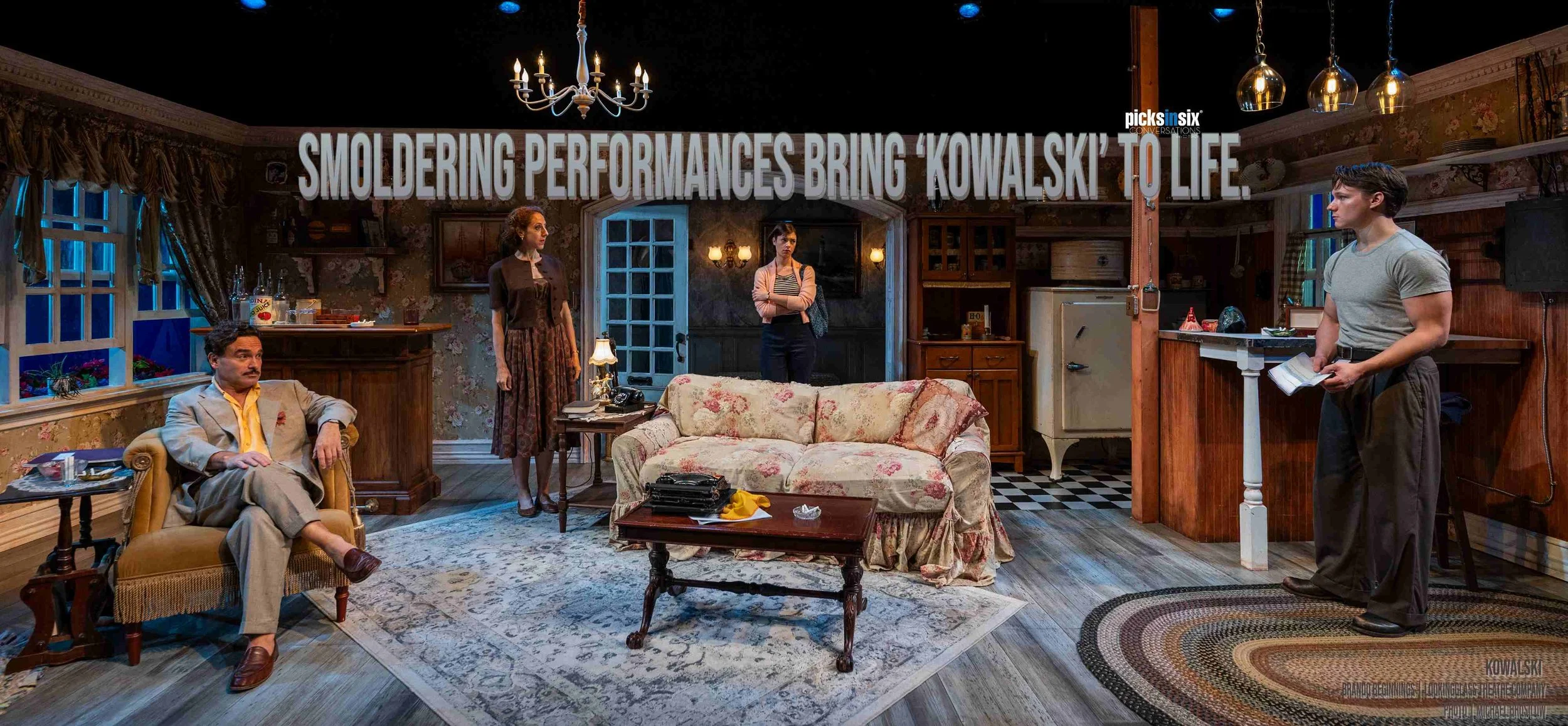
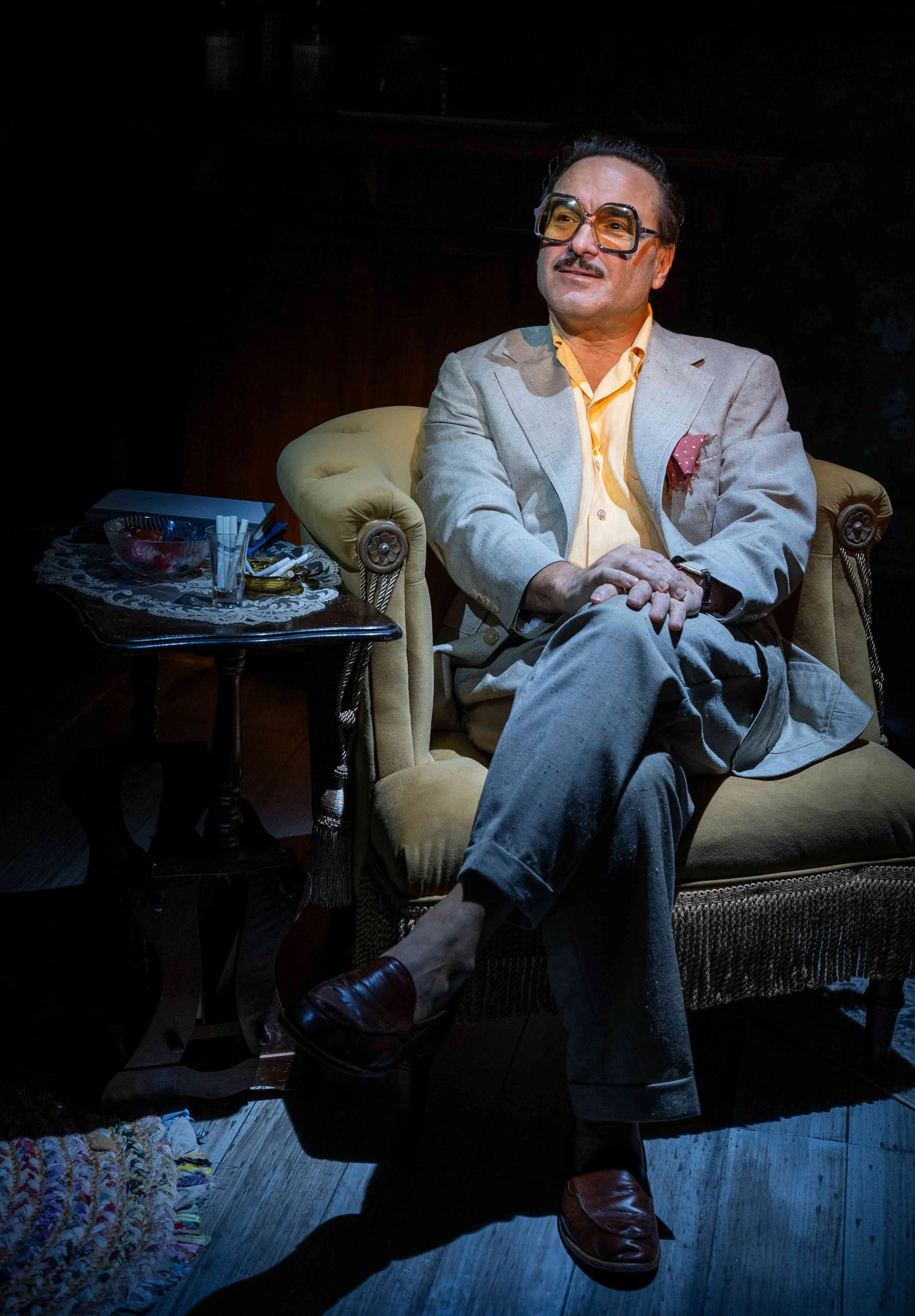
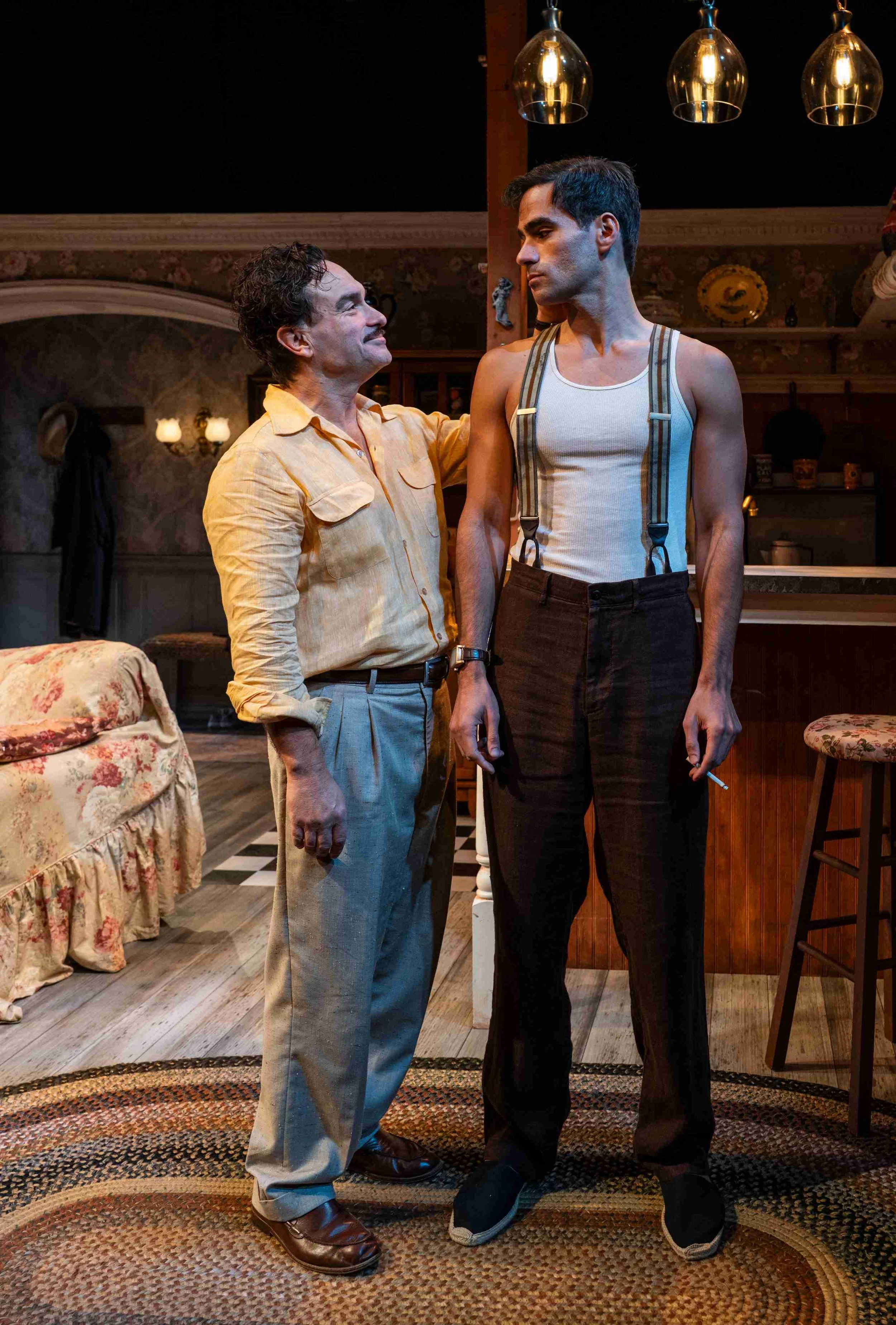
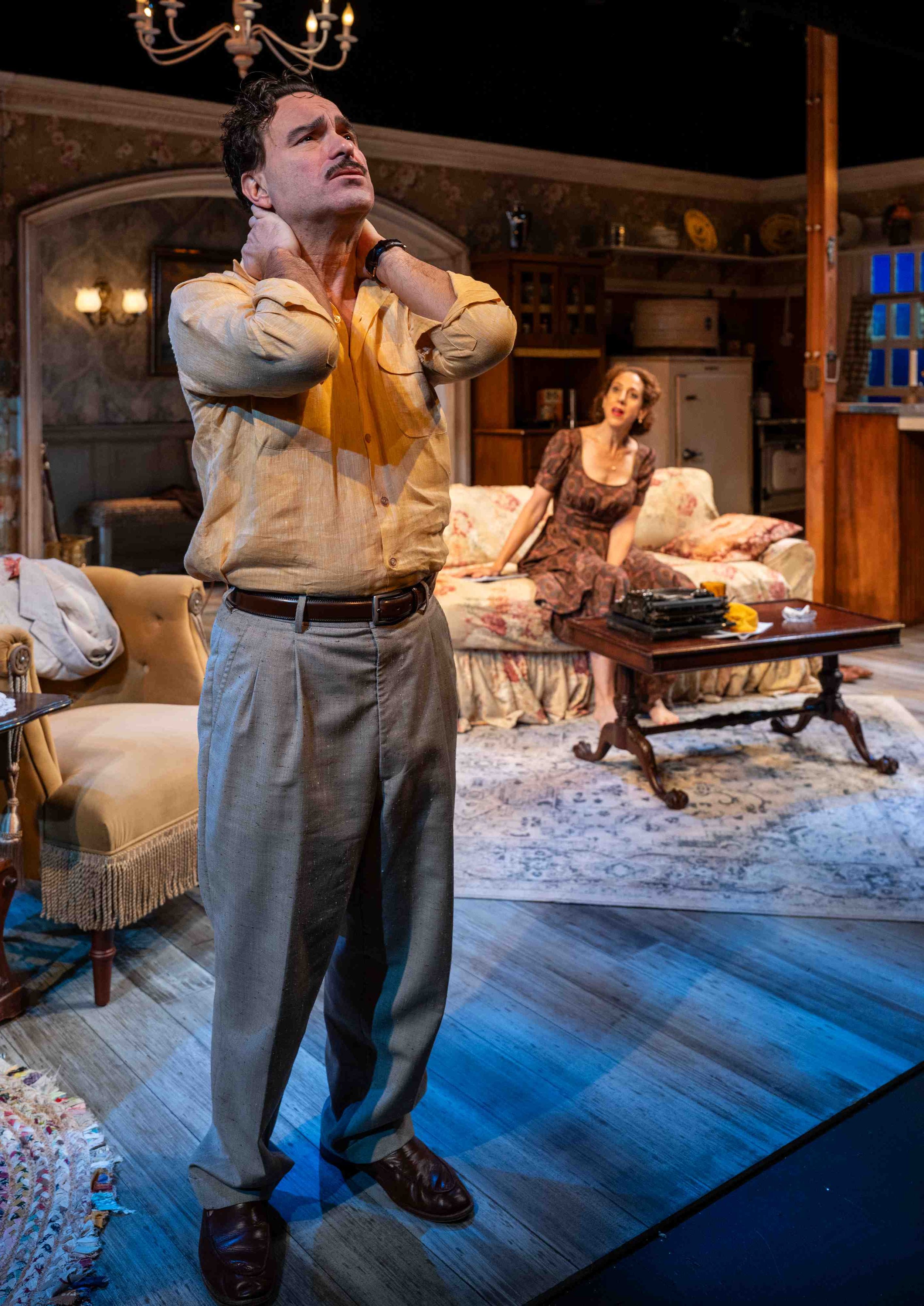
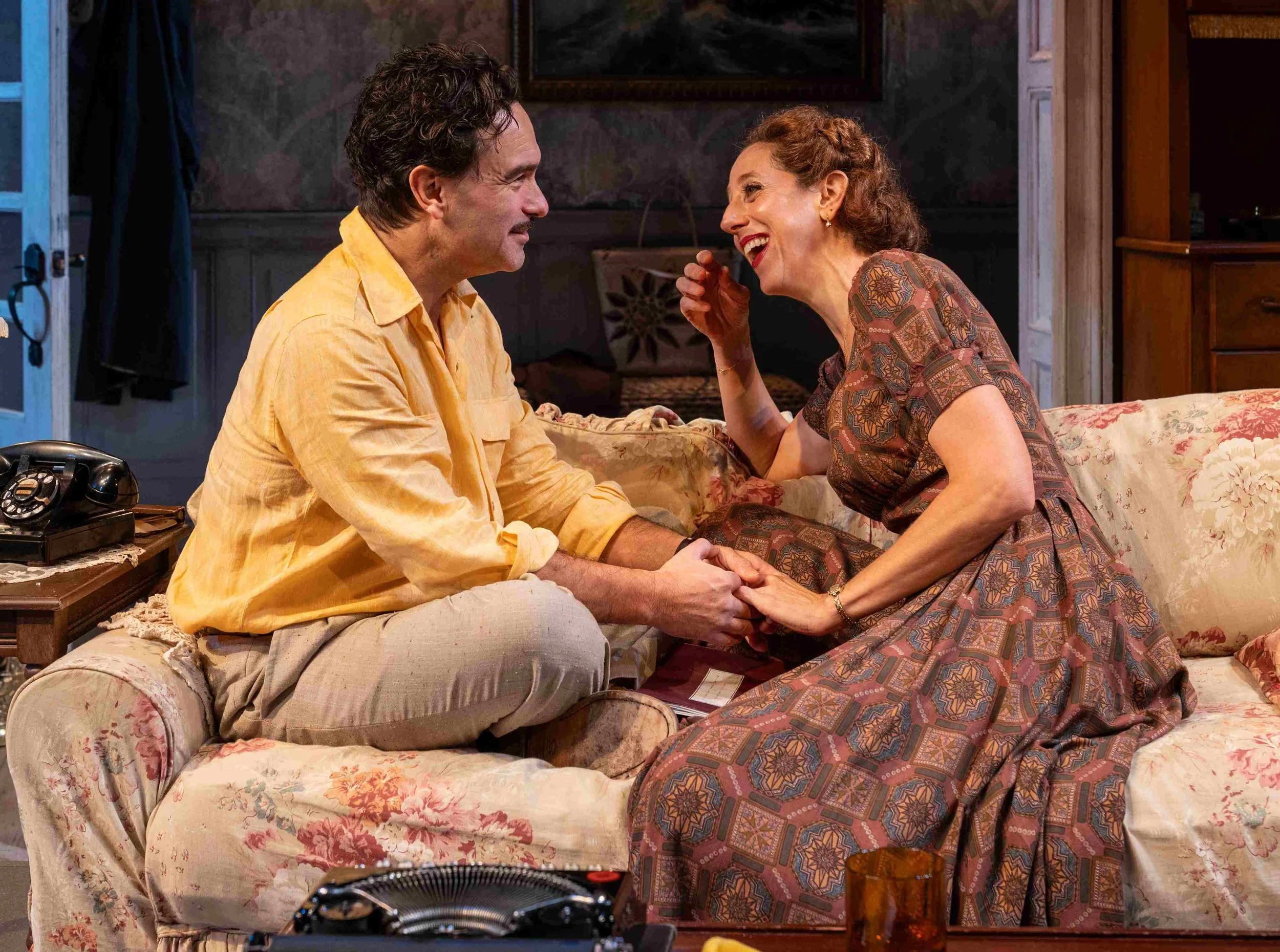
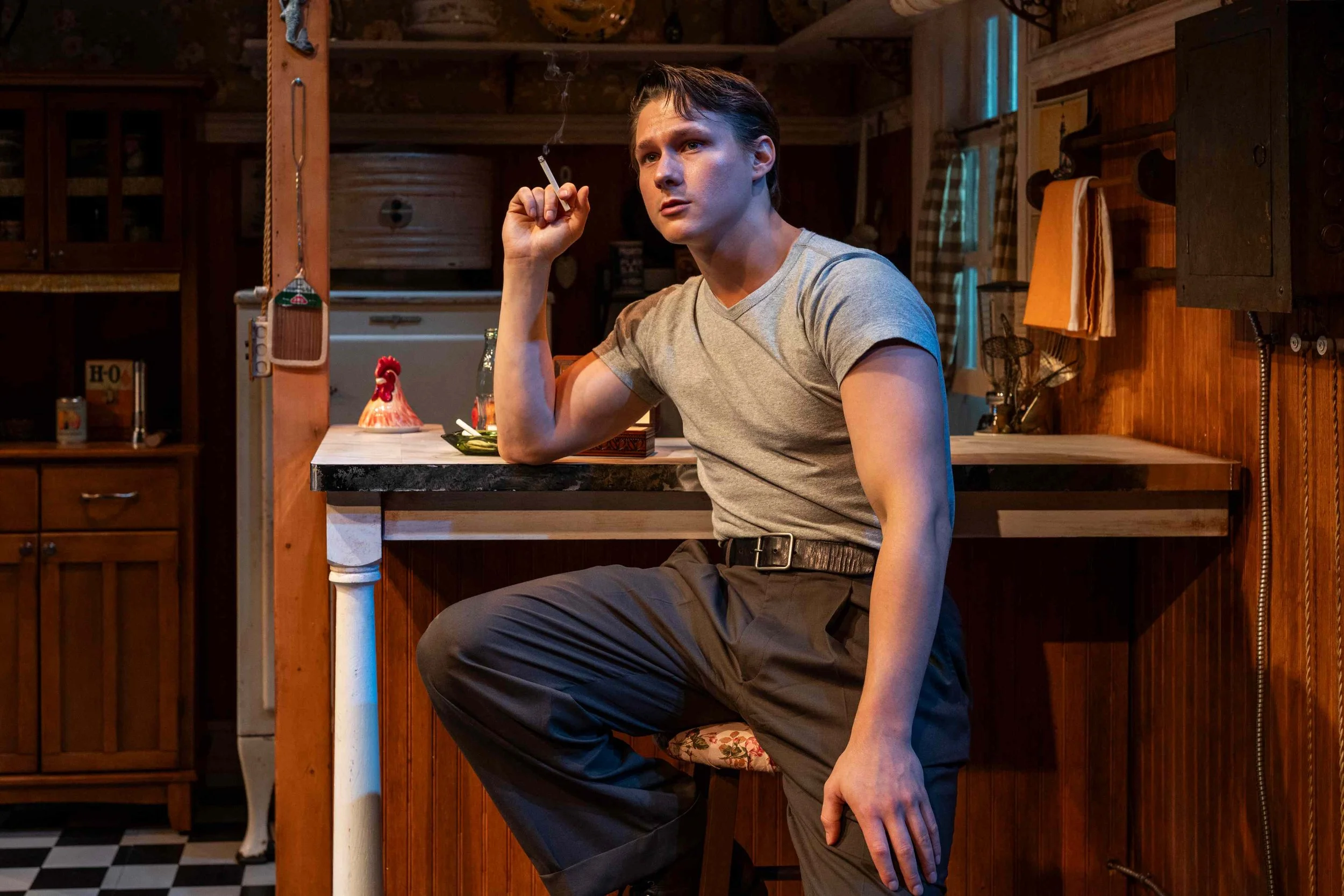
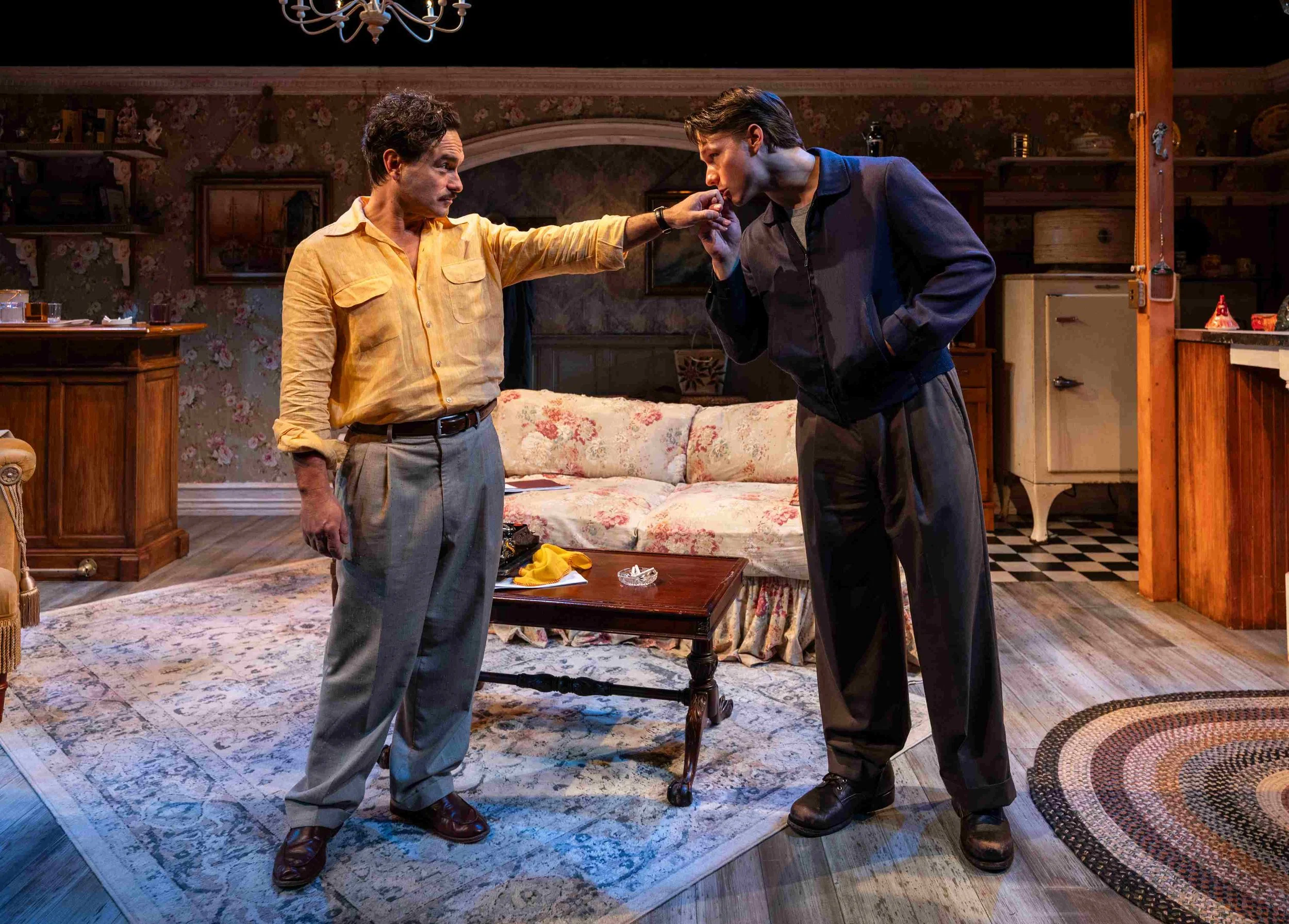
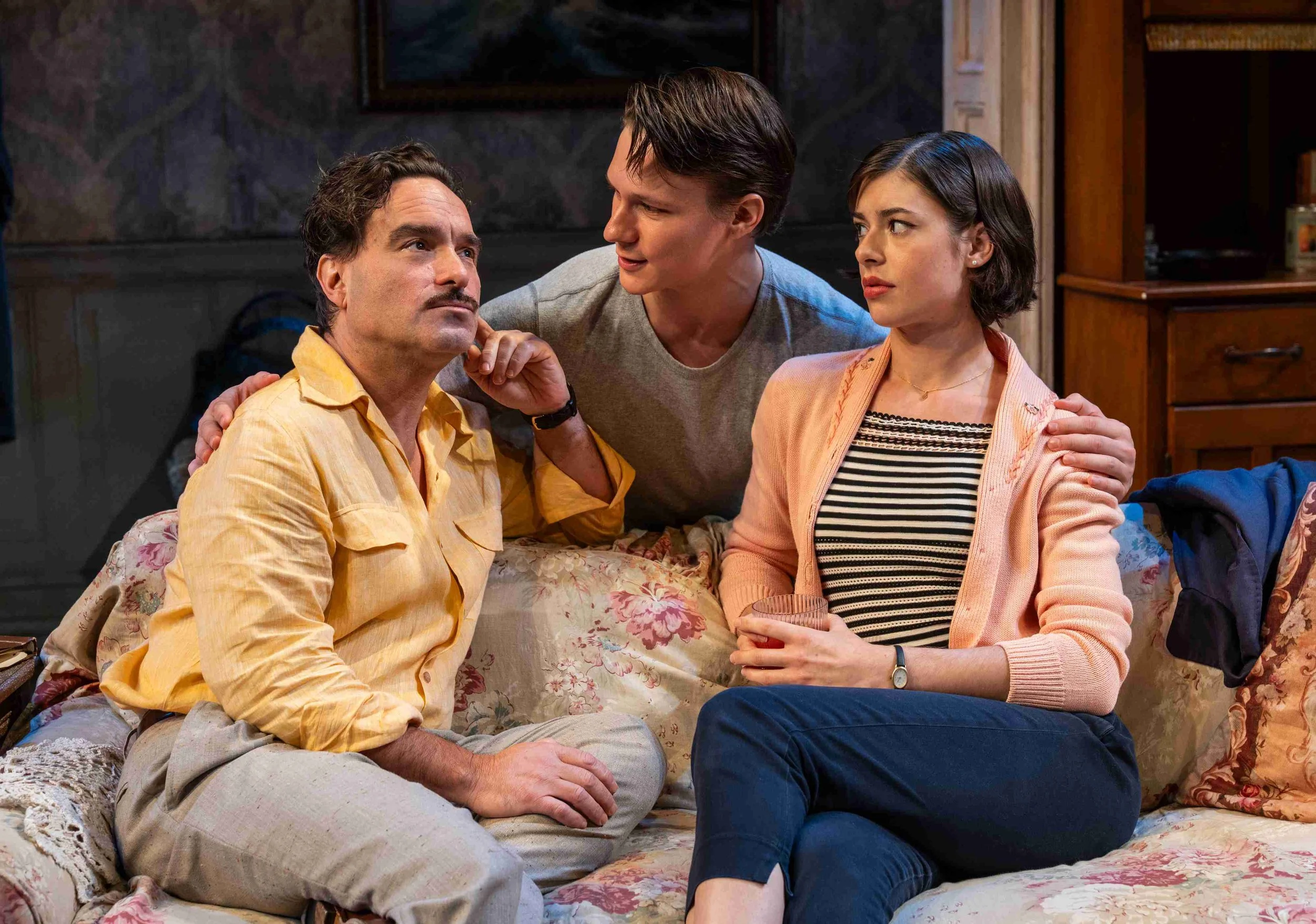
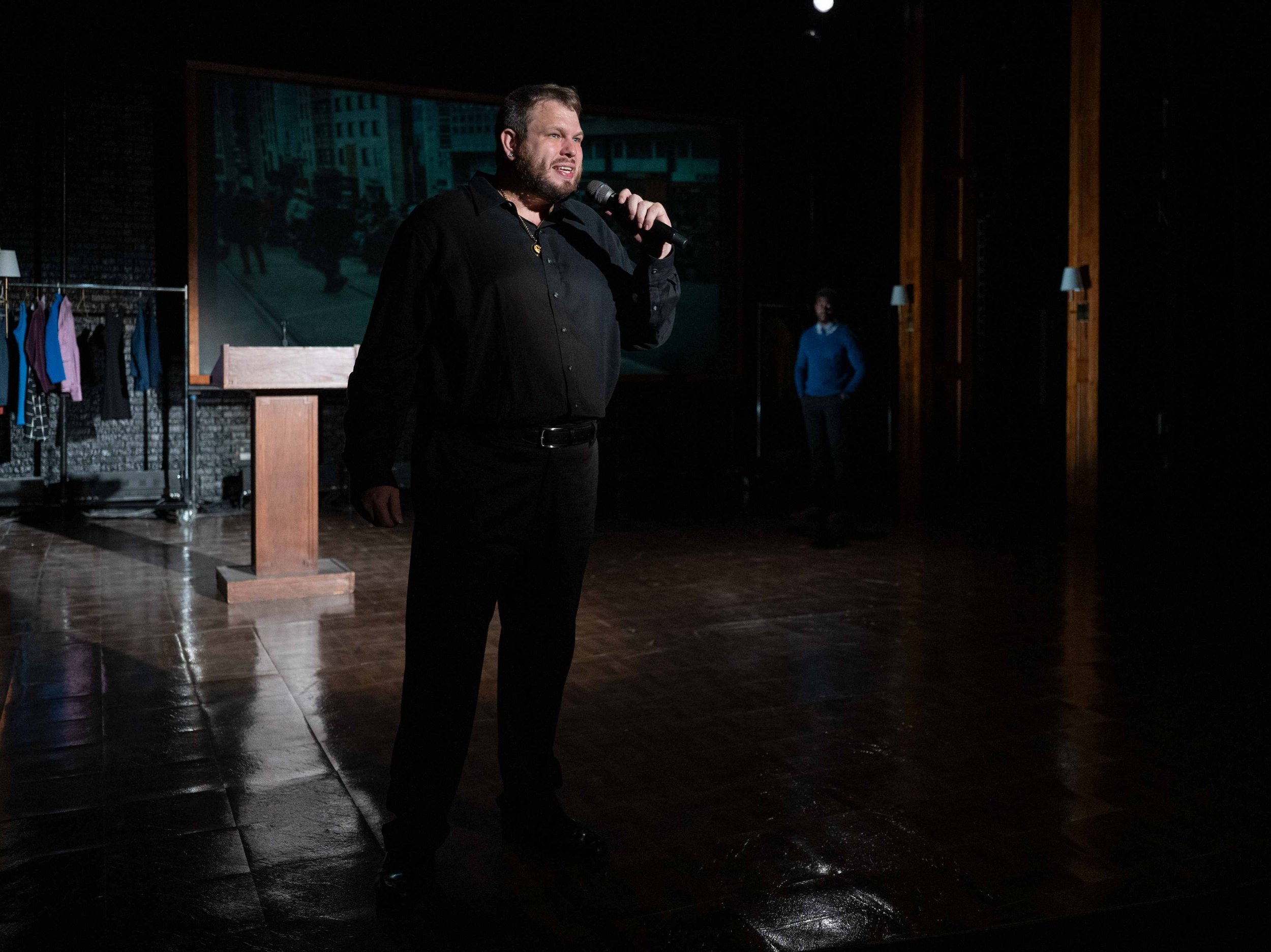
To get right to the point, the Chicago premiere of “Kowalski” that opened at the Lookingglass Theatre on Saturday night features a tour-de-force performance by Johnny Galecki as Tennessee Williams in a superb play written by Gregg Ostrin and directed by Colin Hanlon. The piece imagines the first meeting between Williams and a young Marlon Brando rendered by the equally compelling Jacob Moskovitz. Galecki, a hometown Chicagoan with numerous stage credits, is best known in films and for his television success on ‘The Big Bang Theory.” You will also recognize Moskovitz in the Amazon Prime series “Elle,” among others.

The play begins in 1977 with Williams ruminating to an unseen interviewer about the meeting with Brando to discuss the role of Stanley Kowalski in “A Streetcar Named Desire.” The new play, which followed Williams legendary success on Broadway with “The Glass Menagerie,” was already well along in preproduction, but the pivotal role of Kowalski was yet to be cast. At the urging of director Elia Kazan, Williams agreed to take a meeting with Brando, but, for unknown reasons at the time, Brando did not show.

Picking up in 1947, it is three days later and Williams’ confidant Margo Jones (Alison Cimmet) is reading the “Streetcar” script intently. There is a deep kinship between the two and the dialogue is crisp and saucy. So too is the interplay with his lover Pancho (Reece Dos Santos) who we realize is jaded and at odds with the flamboyant Williams. There is friction and things start to unravel.

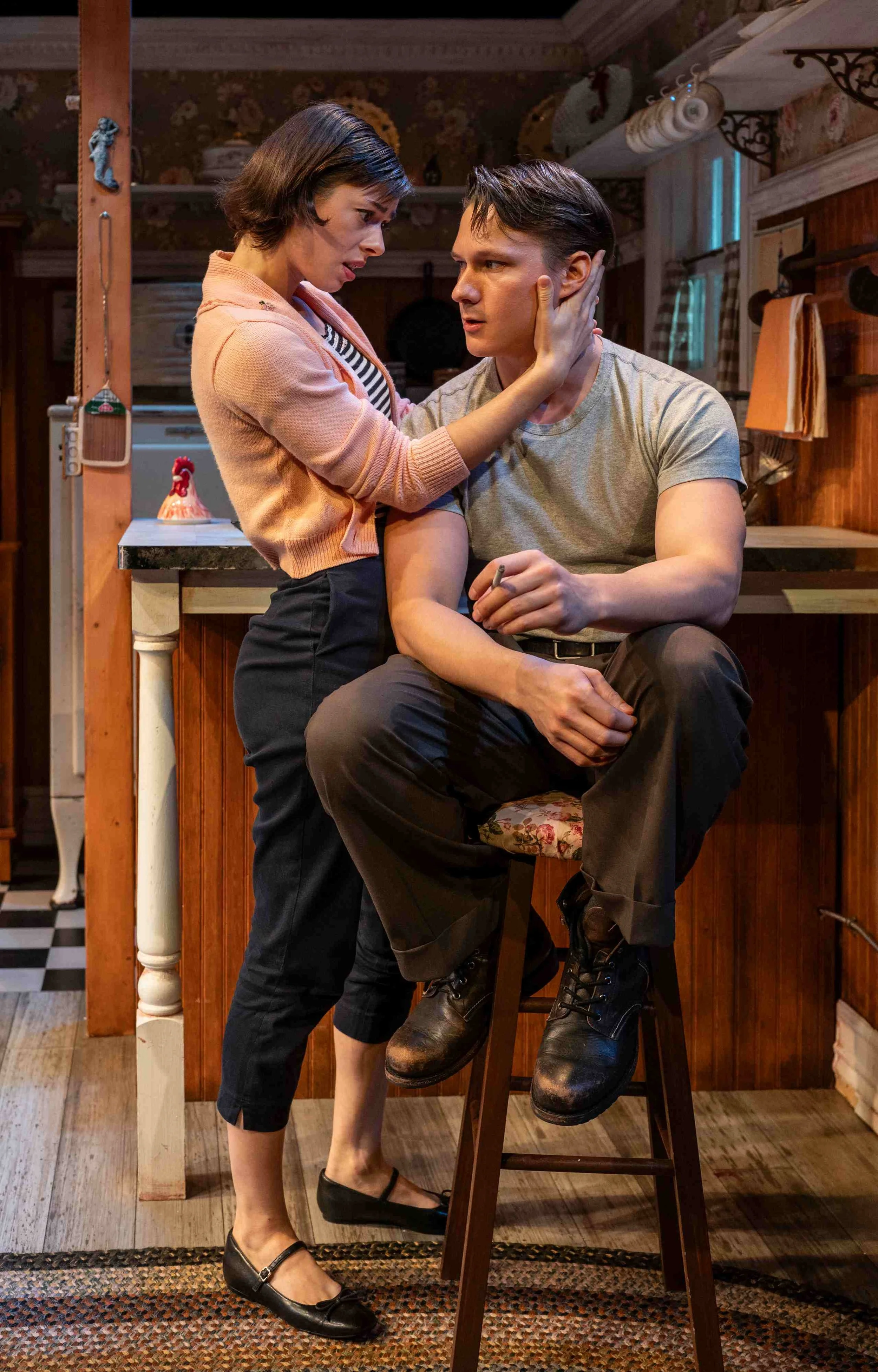
Brando arrives shortly after Margo and Pancho depart for an evening on the town and startles Williams, who had stepped out of the room briefly (the only time that Galecki leaves the stage over the course of the play). If a reading for the part was in the offing before, Brando’s blatant disrespect has soured Williams’ interest. Things escalate until Jo (Ellie Ricker), Brando’s girlfriend, joins them. Williams is quite taken by Jo and there are signs that his attention, and an excessive amount of alcohol, is having an impact on the couple in general and Brando in particular.

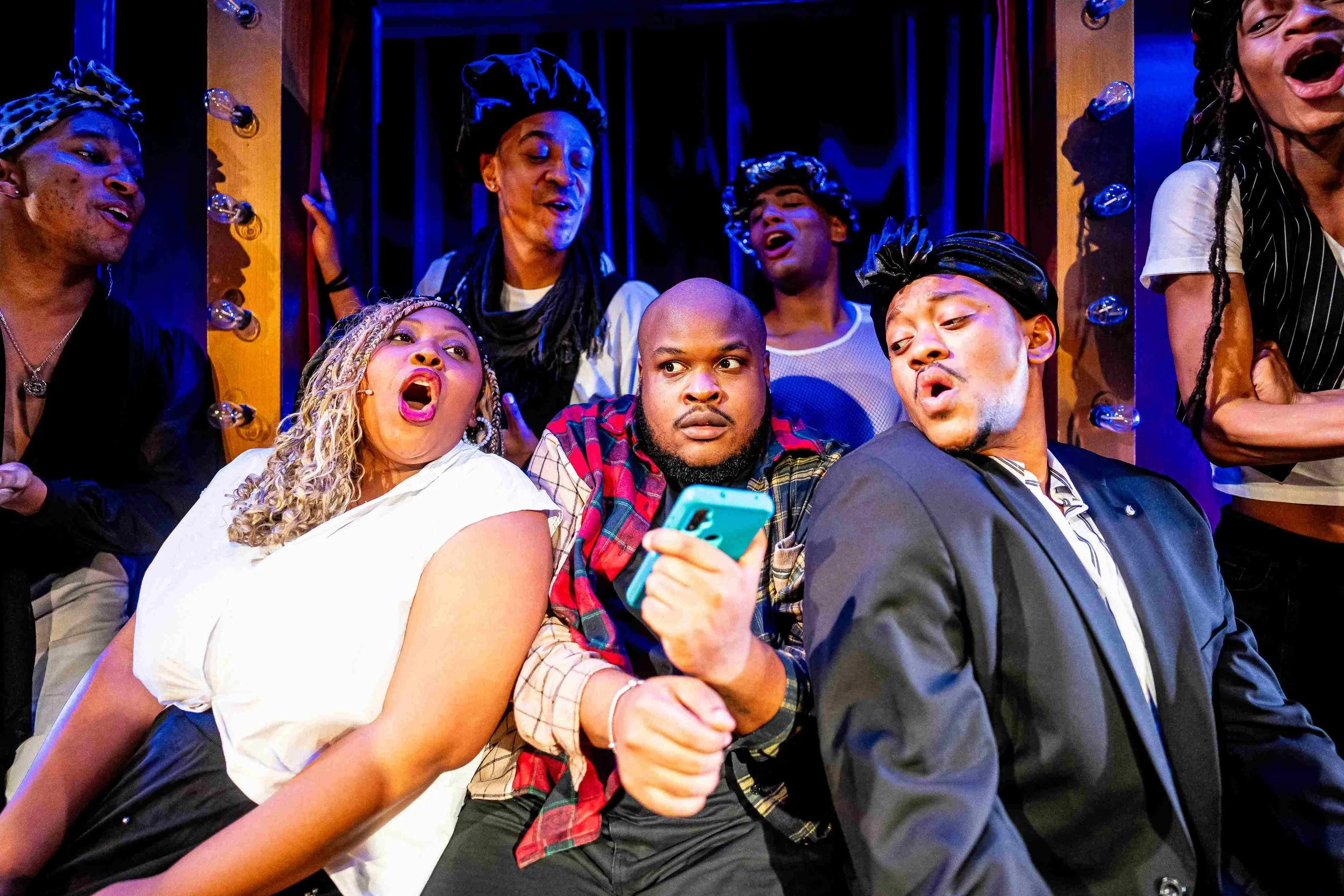
To be more specific at this juncture would jeopardize the powerful exchange that follows except to say that there are subtleties of the script that draw us in to Galecki’s insightful interpretation of the playwright, his profound arrogance and playful eroticism for both sexes. In Moskovitz’s Brando, we see the dawning of the star—a raw, brooding, unsettled powerhouse—whose stellar moment comes deep into the play and catches us completely off-guard.

The rustic interior scenic design by David Gallo features a modest 1947 living room framed in exterior seascape elements for Williams’ Provincetown Massachusetts home. With only a small portable typewriter on a coffee table to signify that one of our greatest playwrights lives and works here, it could be anyone’s coastal home. But for all of the captivating 90-minutes of the play, the quaint living room is the perfect setting for the first meeting between the legendary figures and makes “Kowalski” a fascinating study of Brando’s youthful bravado by Moskovitz and the wildly creative mind of Williams that Galecki so marvelously captures.

PHOTO| Michael Brosilow

Lookingglass Theatre Company
presents
a Brando Beginnings Production
KOWALSKI
Water Tower Waterworks
through October 25, 2026

WEBSITE

TICKETS

For more reviews, visit: Theatre In Chicago

ARCHIVE

PicksInSix® is a registered trademark of Roxbury Road Creative, LLC
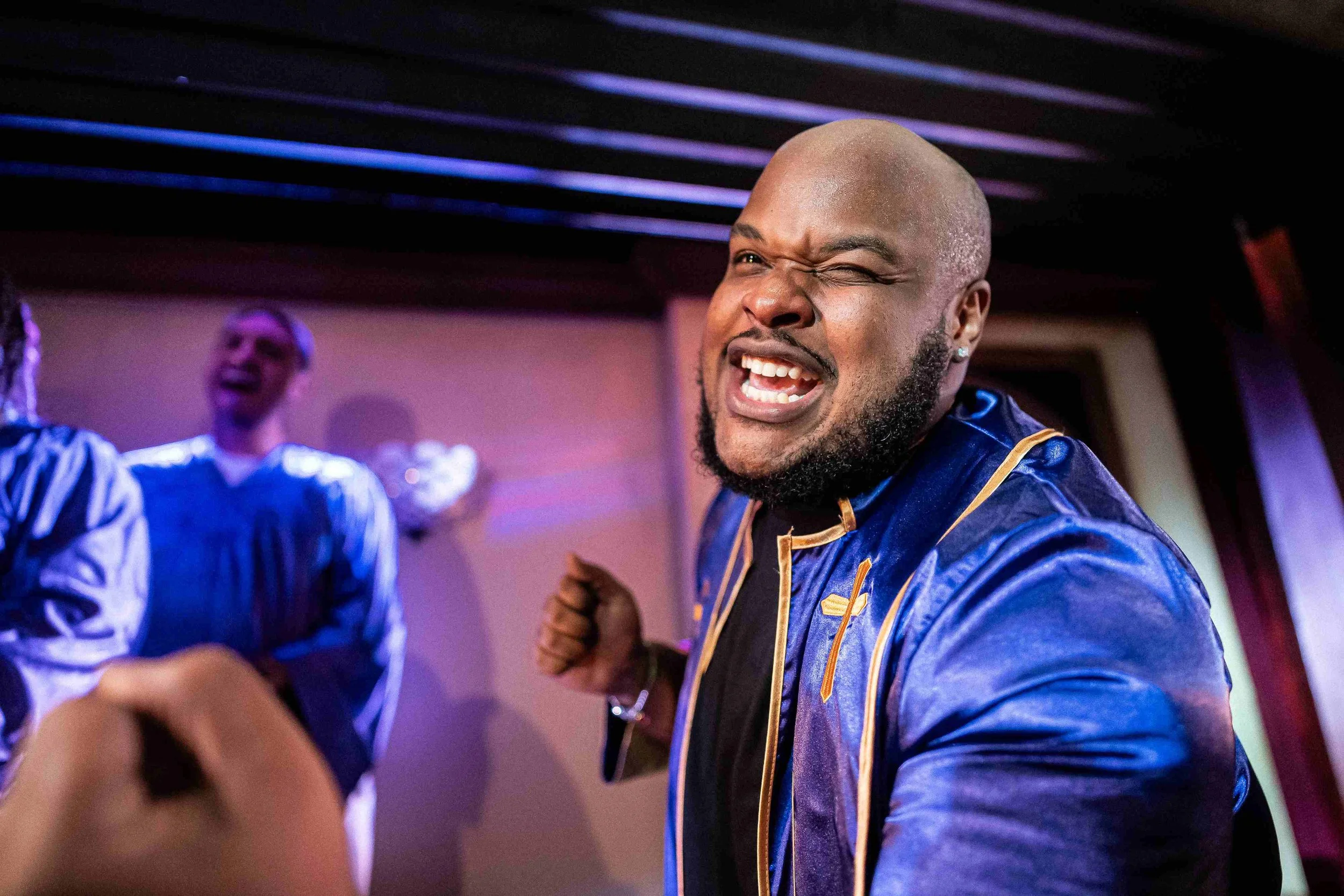
PicksInSix Review: The Front Page - Northlight Theatre


‘The Front Page’ - A Grand Slam!
PicksInSix® Review |
Ed Tracy

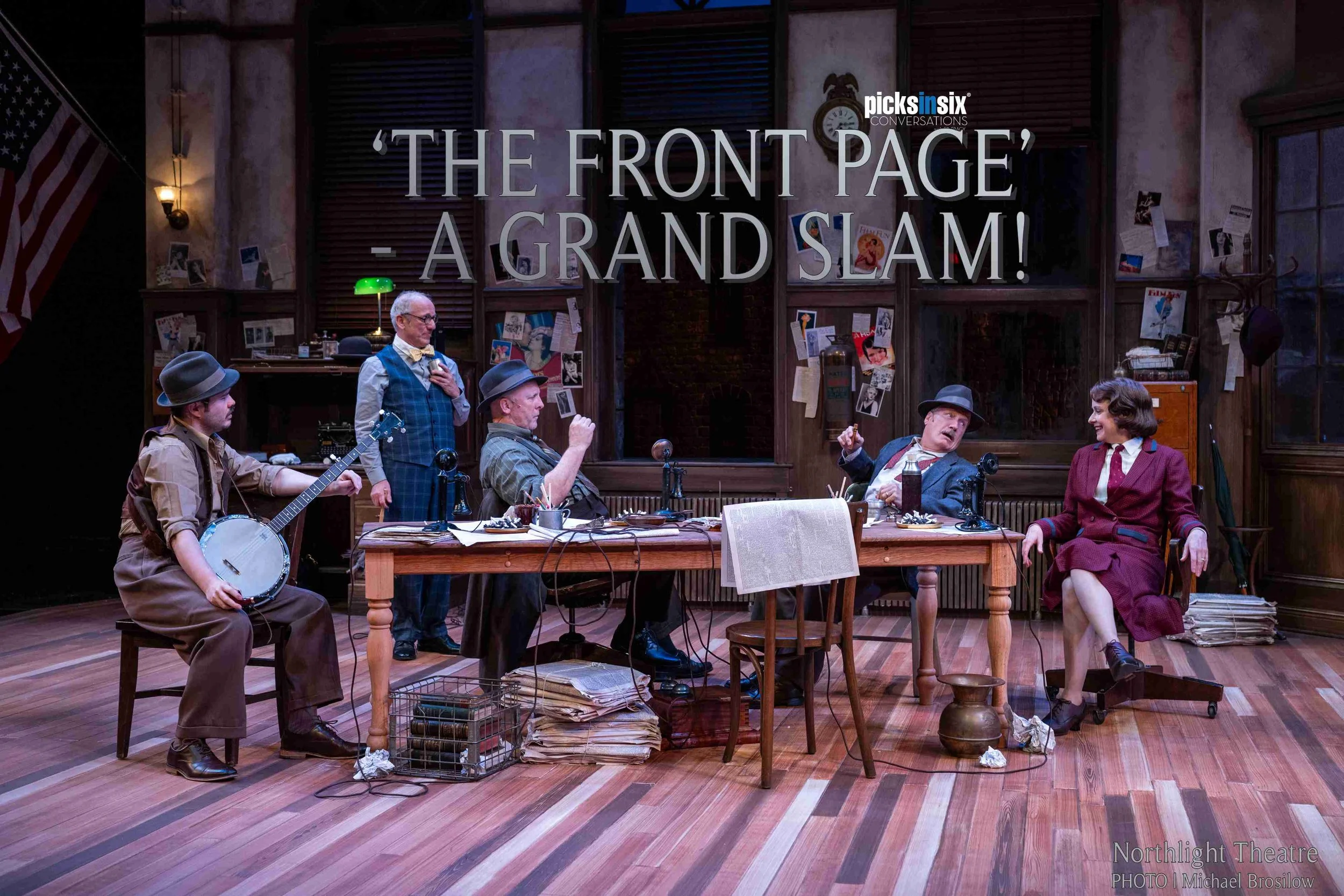
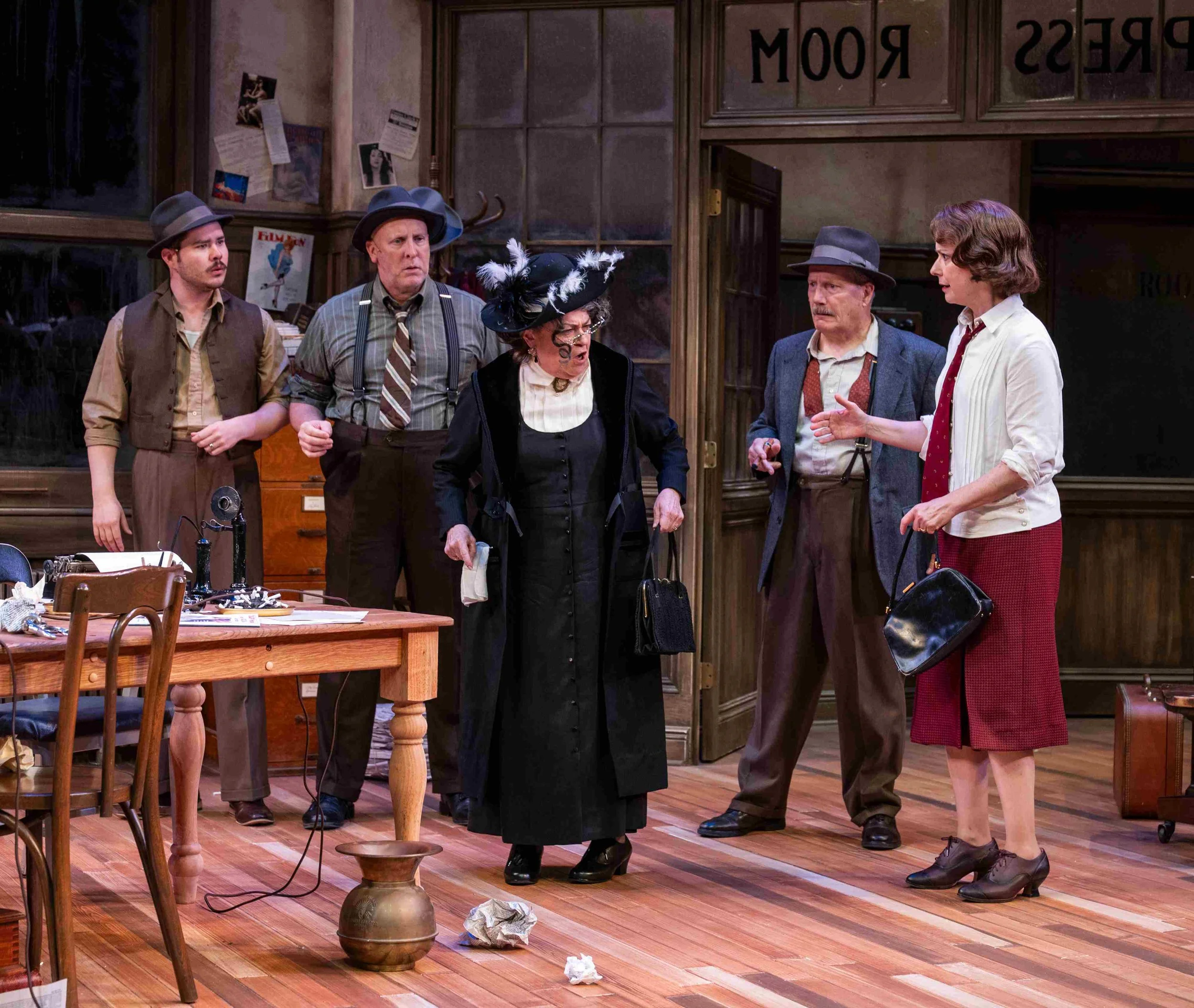
As if ripped from the headline of a major market daily, Northlight Theatre opened their sparkling new Evanston home on Friday night with a fast, fierce and uproariously funny production of “The Front Page” on the very day that the First Amendment is again under siege in Washington.

And even as life imitates art, and that other story is still playing out at our press time, the headline here is that BJ Jones, the Walter C. Greenough Artistic Director and the entire Northlight organization have checked every box for success. A new, state-of-the-art home. A terrific world premiere adaptation of the Ben Hecht|Charles Macarthur Chicago-based classic by Jeffrey Hatcher. A magnificent company of actors that reads like a who’s who of theatre royalty in town, and; a wildly appreciative audience soaking up every memorable moment. Simply put, Northlight’s “The Front Page” is a Grand Slam!

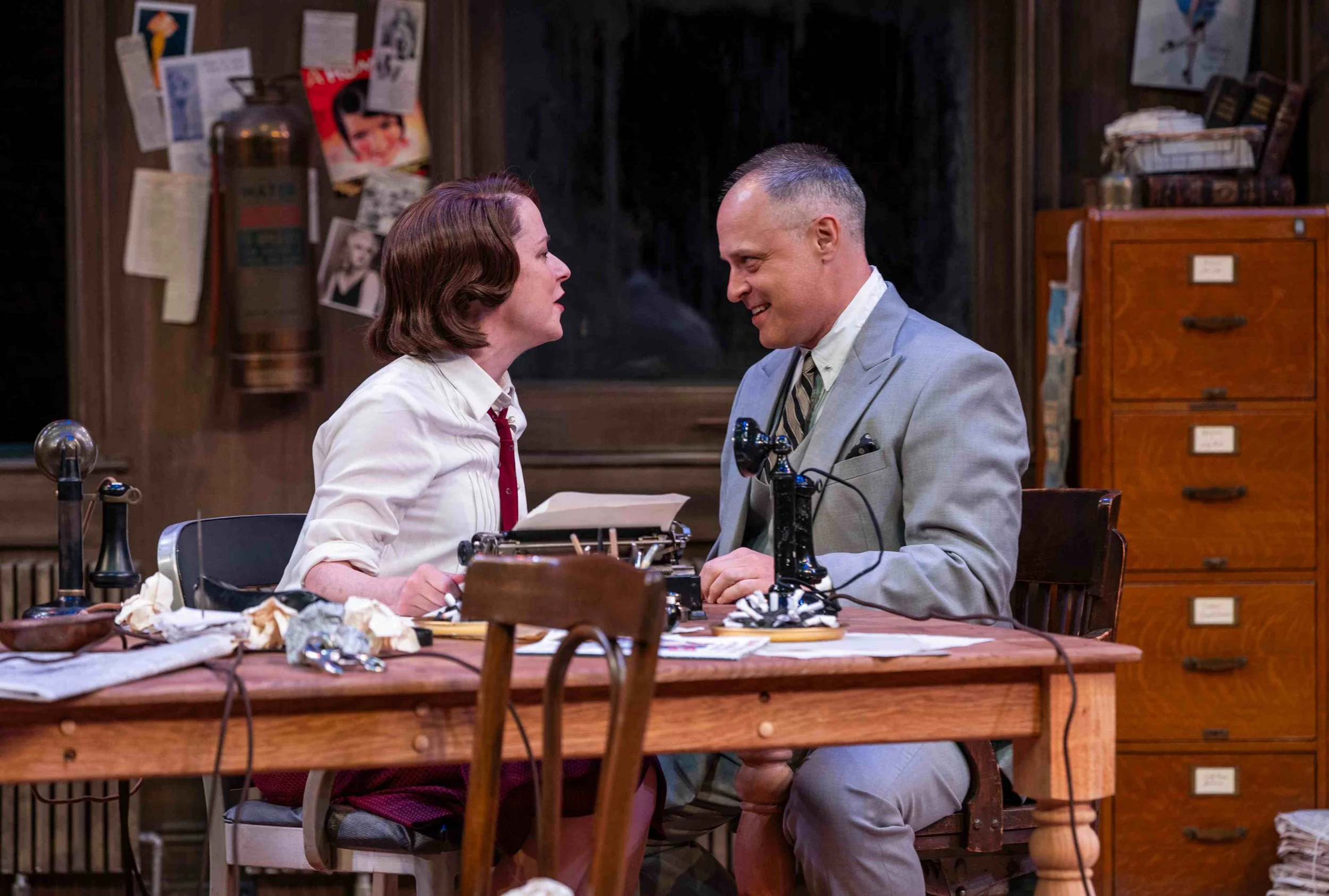
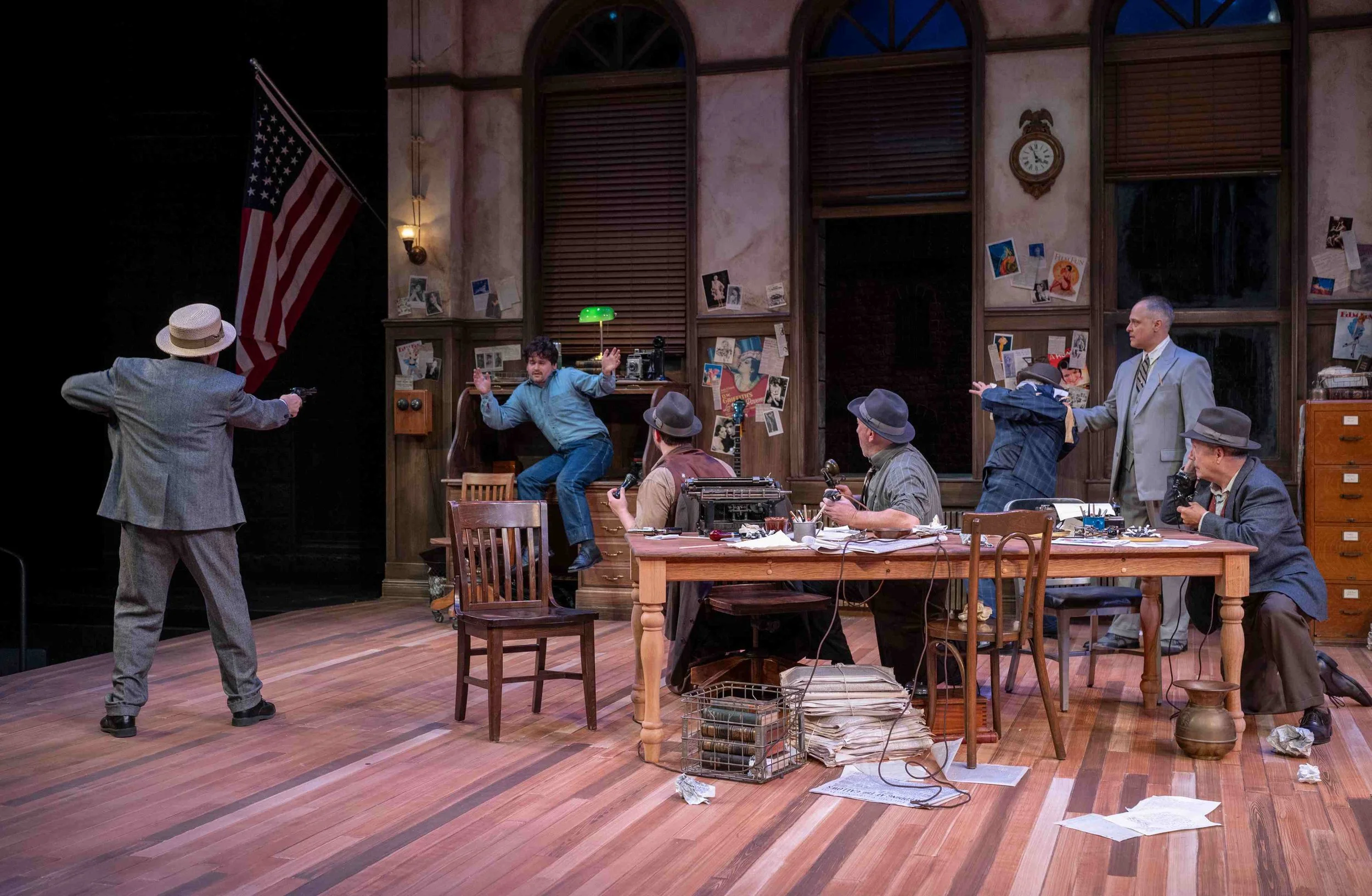
Without missing a beat, Hatcher has winnowed the original script down to two highly entertaining acts with a fast-paced run time of just over 100 minutes. The action flies by with the likes of the exquisite duo of Kate Fry as ace reporter Hildy Johnson and real-life husband Timothy Edward Kane as her dominating editor Walter Burns, and a press room that includes Guy Swearington (Endicott), Kelan M. Smith (Kruger), Joe Dempsey (McCue) and Mark David Kaplan (Bensinger) caught in the middle of an escalating crisis involving Earl Williams (John Drea), an escaped man convicted of murder and destined for the gallows the following day.

The political twist to the story is served up by the hilarious performances of William Dick as Sheriff Hartman, John Lister as The Mayor and Tim Kazurinsky, who all but steals the show as Pincus, the bearer of good news for Williams and bad news for the pending election only a few days away. As Hildy does all she can to follow through with her plans to run away to New York with her fiancé Brad Hefflefinger (Peter Moore), Burns lures her back to cover the story of the century. All the while, Brad, his staunchly suspicious mother, brilliantly played by Cindy Gold, and the sultry Rae Gray as Williams love interest, Mollie Maloy, are comically nibbling around the action.

It all takes place in and around a gritty and artfully detailed set of the Chicago Criminal Courts Building Press Room by Jeffrey D. Kmiec, enhanced by Izumi Inaba’s era-appropriate costumes and the slick, stark lighting of JR Lederle. Andre Pluess’s superb soundscape is key here as the dialogue flies effortlessly to everyone in the new 287-seat space.

It all harkens back to the day when print headlines in the morning edition decisively ruled the news cycle. More than any other profession, the newspapermen—and newspaperwomen—of legacy publications depicted in Northlight’s terrific production of “The Front Page” lived by the phrase: “If your mother says she loves you, check it out!” The lesson learned is that, then as now, there exists a highly competitive atmosphere where dedicated, hardworking reporters are rewarded with a byline, where managing editors must continue to relentlessly push their organizations for all the facts with faith that publishers will stand firm and wield their great power and influence against corruption whenever and wherever it threatens our democracy and quality of life.

PHOTO | Michael Brosilow

Northlight Theatre
presents
World Premiere
The Front Page
1012 Church St,
Evanston, IL

through October 25, 2026


WEBSITE

TICKETS

For more reviews, visit: Theatre In Chicago

ARCHIVE

PicksInSix® is a registered trademark of Roxbury Road Creative, LLC
PicksInSix Review: Black Girl From A White Suburb - American Blues Theater


What’s Changed In Three Decades?
PicksInSix® Review | Guest Contributor |
Perse Grammer

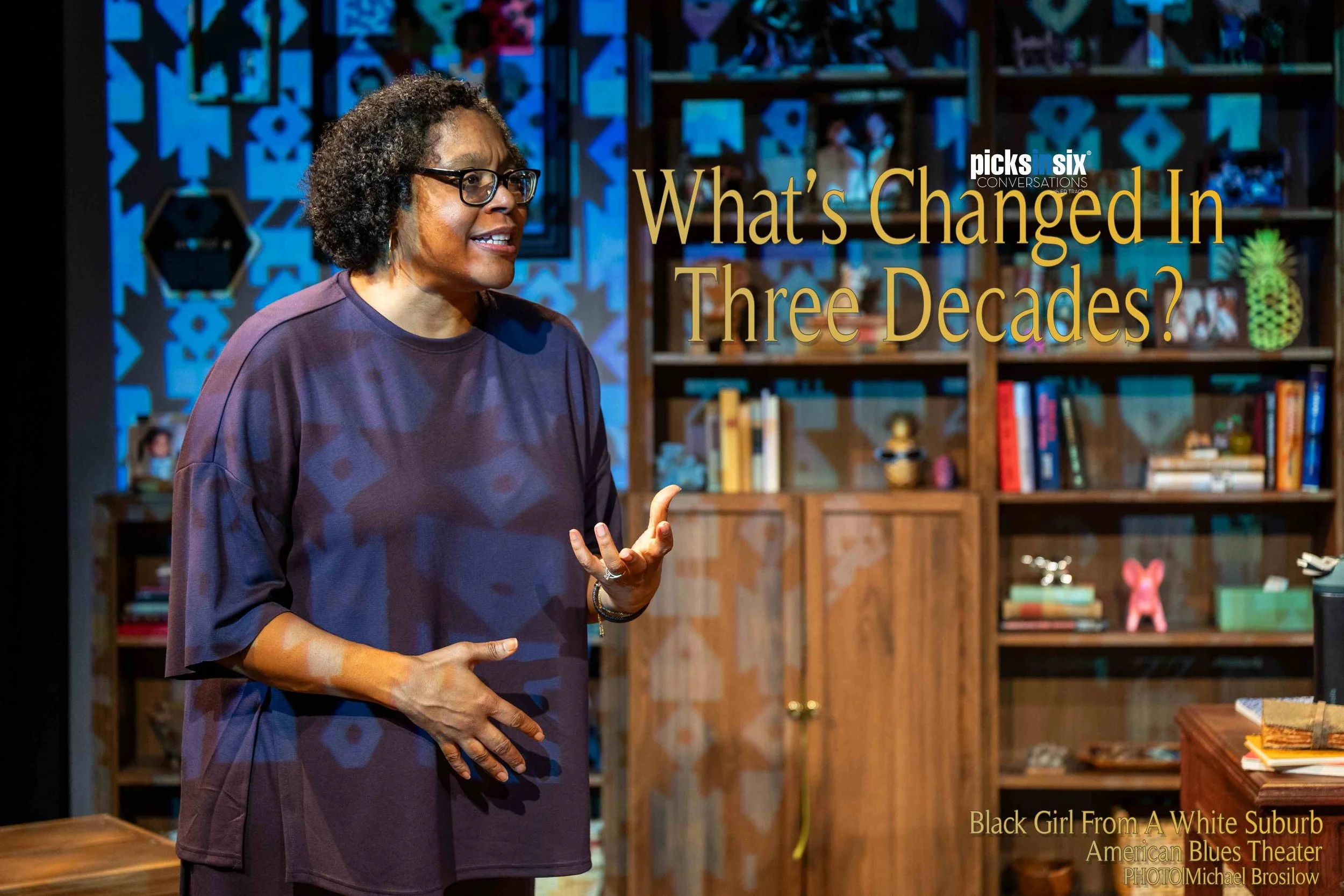
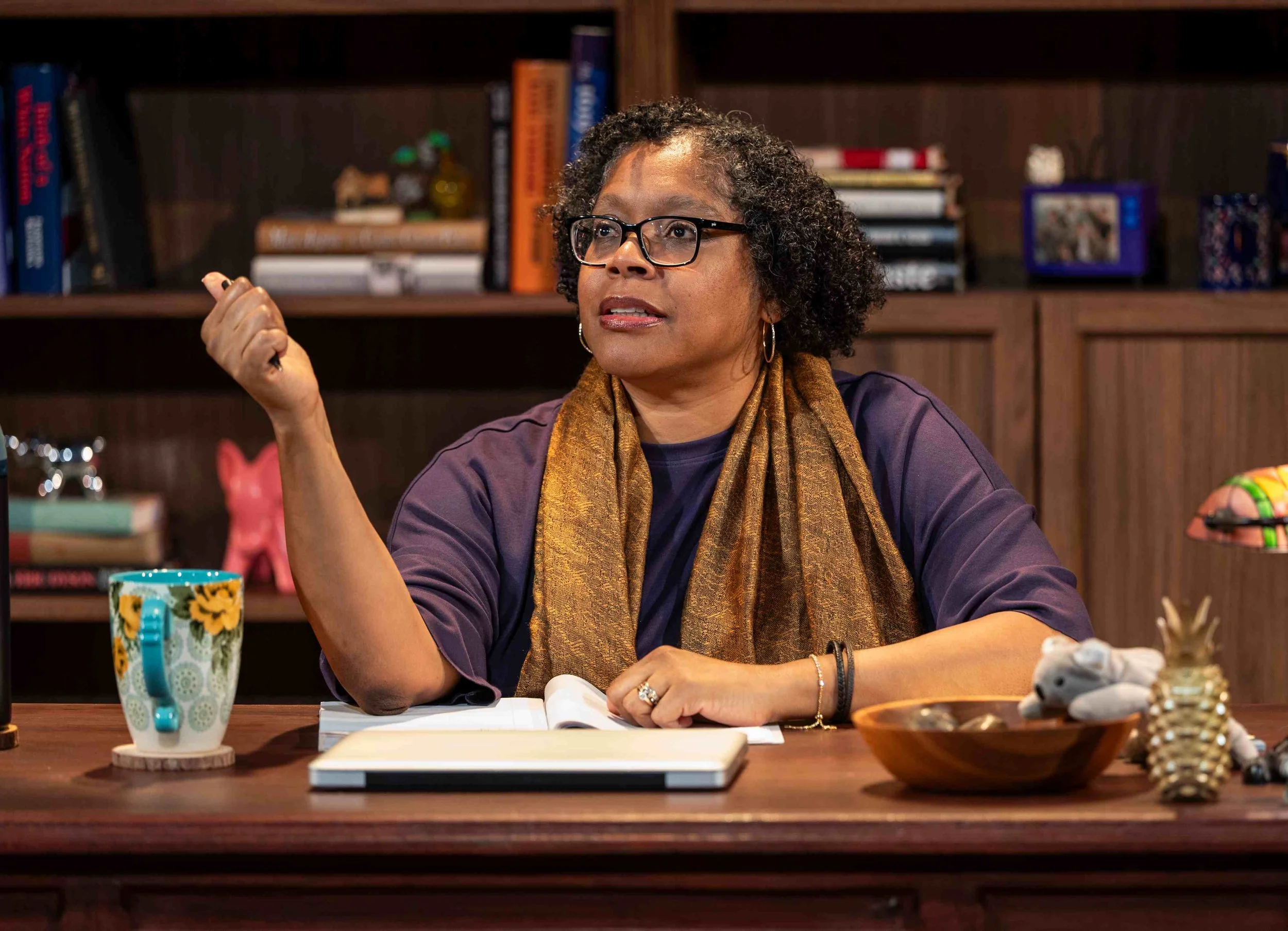
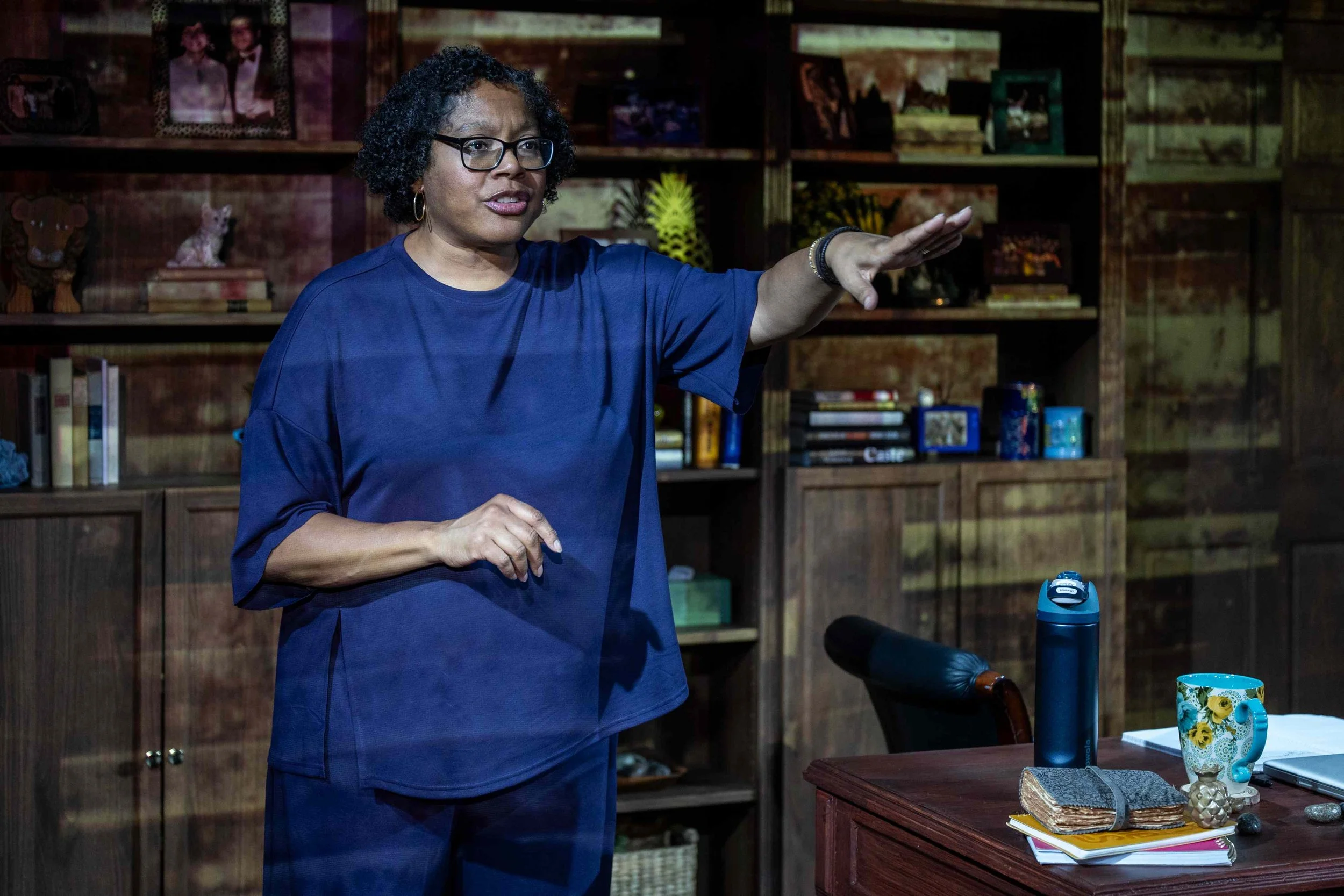
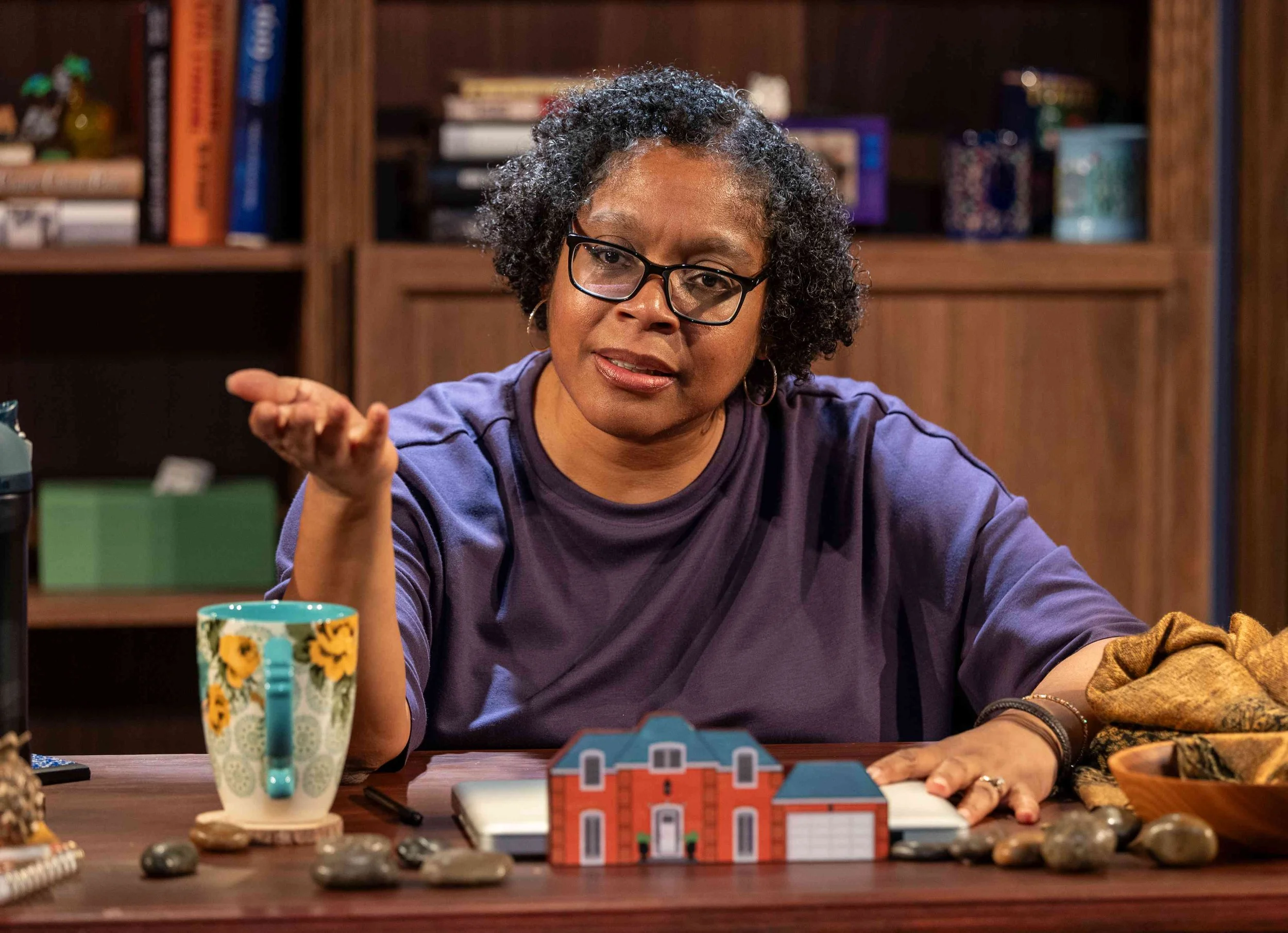
“Black Girl From A White Suburb” immerses us in schools and theaters alike but starts in a living room. This American Blues Theater’s black box space is intimate—ideal for such a personal show that speaks directly to its audience. Wooden shelves span our backdrop with an array of knickknacks and photographs placed upon them. A similarly designed desk sits in the center, framed by two windows. Shokie Tseumah’s overall design is subtle, but stylish, creating a set mutable enough to transform from a grade school to the Steppenwolf Theatre. Each time, this shift is heralded by playwright and actress Tania Richard. She starts off the show by slipping onstage and lying down on the rug, all while the pre-show music keeps playing.

After a brief rant on the broad nature of storytelling, Richard launches into the tale of her upbringing. She describes how her Haitian parents raised her in Western Springs, Illinois, the overwhelming whiteness of which is emphasized via dozens of school photographs being projected across the shelves and windows (courtesy of Paul Deziel). From early childhood, Richard’s love of theatre is strong and endearing, touting the familiar, awkward joy of middle school drama club members. That joy is repeatedly strangled by the pervasive racism sidelining her, punishing her, and in one production of “The Wizard of Oz,” literally erasing her Blackness with green body paint. Her transition from adolescence to adulthood is marked by her self-perception changing from “not white” to “Black”. For the first time, she speaks out against unfair criticism on her college’s production of “A Raisin In The Sun.” As part of the all-Black cast of “The Song of Jacob Zulu,” she finds joy in Zulu vocalizations and grief over the acquittal of police officers who assaulted Rodney King. Richard takes us on an emotional rollercoaster, ending with a call to tell our stories, as she has just told hers.

Whether acting as herself or stepping into someone else’s shoes, Richard is magnetic. Her audience interactions vary, sometimes asking us questions and insisting on an answer, and other times just allowing us to sit with our thoughts. Her humor ranges from soft to sharp, always pointedly in service of the greater story she’s telling. And, whether embodying her mother, a racist history teacher, or that dorky tweenage theatre kid whose enthusiasm was sound even if her logic wasn’t, Richard makes you believe she is who she says she is. She’s warm and personable, inviting you in to hear her stories. Even—and especially—the most harrowing ones.

The strength of “Black Girl From A White Suburb,” as directed by J. Nicole Brooks, is the specific personal experience it contains. When Richard is rattling off buzzwords for the audience to research, I’m not drawn in. But when she’s describing locking eyes with her grade school drama teacher who’s demanding to know whether her tears during an acting exercise are real, I’m enraptured. Richard presents us with many compelling moments, most notably, the ending. During the opening night of “School Girls; Or, The African Mean Girls Play,” after months of suffering through the despair and rage of Breonna Taylor and George Floyd’s murders, of battling lungs damaged by Covid and neglected by medical professionals, Richard finally breathes deeply enough to shout her line, “THAT’S ENOUGH!” It’s because of powerful moments like these that I’m left wanting more. Granted, it’s difficult to adapt a 300-page book into an hourlong one-woman show. But I felt, compared to how in depth Richard delved into her childhood, we didn’t get enough of her adulthood. How did she transition from having a parasocial relationship with the college cast of “A Raisin In The Sun” to having a professional and social relationship with the Steppenwolf cast of “The Song of Jacob Zulu?” What shifted her writing process from fanfiction of white characters to activism, Black joy, and memoir? After describing her first experience being in an all-Black cast, Richard states it would be another 32 years before experiencing her first all-Black women cast. That blunt time skip is effective, and sobering. But we miss so much of her life in this significant gap.

“Disappointed, but not surprised” is a phrase used in “Black Girl From a White Suburb,” and it’s how I felt hearing about Richard’s adolescent theatre experiences. Granted, being cast as the main villain in her high school’s otherwise all-white production of “The Wiz” was particularly egregious. But did the fact that an almost entirely white school decided to put on “The Wiz,” of all shows, shock me? No. Because in the decades since, colorblind casting for race-specific shows hasn’t stopped. In fact, it’s a common enough occurrence within predominantly white drama programs that I’ve heard fellow Gen Z thespians using alternate titles denoting these productions—such as In the Whites (“In the Heights”), White Side Story (“West Side Story”), and Whites On This Island (“Once On This Island”). I haven’t found a name for this one, but I have seen an elementary school production of “Hairspray” where Motormouth Mabel was played by an Asian girl in an Afro wig. And these weren’t the only familiar tales. I’ve heard several writers of color, both in-person peers and online strangers, talk about how they’d only recently realized that every character they wrote about was white. A brilliant Black actress I worked with once mentioned how, for her first decade of professional acting, she never got cast in a leading role in her predominantly white town. Her Chicago debut had her as the leading woman—reassuring her that it wasn't her lack of talent that had been inhibiting her. It had been others’ bias.

So, at the end of “Black Girl From A White Suburb,” when Richard encouraged the audience to tell their stories like she was, a part of me wondered—what would it do? What could it affect, when the racism a woman three decades my senior experienced is the same racism my peers are facing now? When the answer came to me, it was so simple, my prior confusion was laughable. One woman sharing her history isn’t going to change the world. But she can change someone’s mind. Maybe a writer of color in the audience realizes they can write more than just white characters. Maybe a high school teacher decides to push back against the drama department’s insensitive programming. Maybe another Black girl from a white suburb is watching her own experiences play out onstage, and it’s a reprieve from the isolation Richard suffered through for her entire adolescence. Everyone can take a message from “Black Girl from a White Suburb” and spend days mulling it over, questioning it, dissecting it, and learning from it. The thinking doesn’t stop once you exit the theater.

GUEST CONTRIBUTOR | PERSE GRAMMER is a multidisciplinary writer and theatre artist based in Chicago. Grammer is currently developing their latest play through a mentorship with Sandy Shinner at Shattered Globe Theatre. They hold a BFA in Playwriting from The Theatre School at DePaul University.  www.persegrammer.com

PHOTO|Michael Brosilow

American Blues Theater
presents
World Premiere
Black Girl From A White Suburb
5627 N Lincoln
through October 4, 2026

WEBSITE

TICKETS

PROGRAM

BACKSTAGE GUIDE

For more reviews, visit: Theatre In Chicago

ARCHIVE

PicksInSix® is a registered trademark of Roxbury Road Creative, LLC
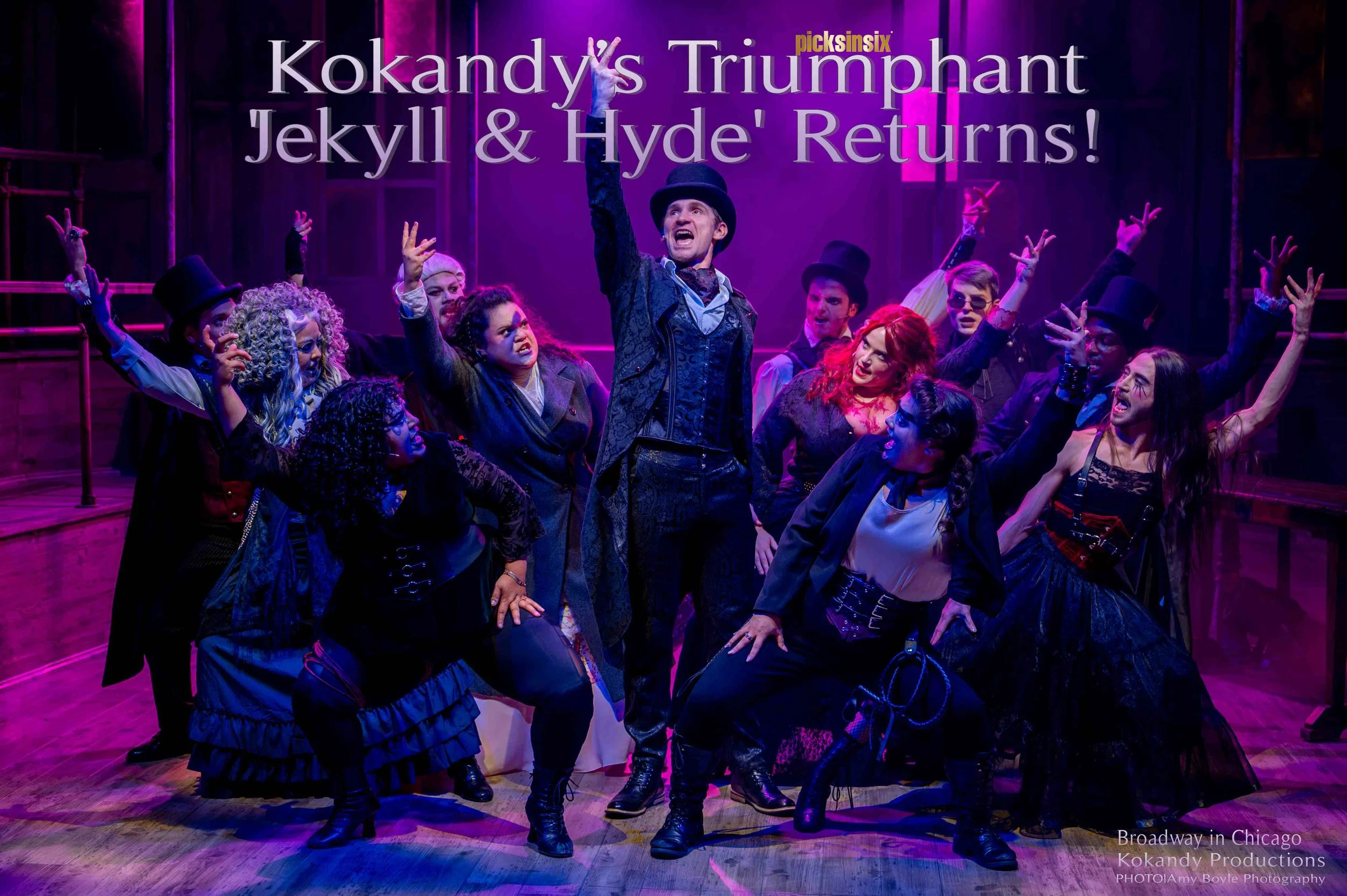
PicksInSix Review: Jekyll & Hyde - Kokandy Productions - Broadway in Chicago


Kokandy’s Triumphant “Jekyll & Hyde” Returns!
PicksInSix® Gold Review | Ronald Keaton

There really is a glorious triumph with all the signs of a runaway hit playing at Broadway in Chicago’s Broadway Playhouse at Water Tower Place already extended through November 8.

It's an impressive, heartfelt downtown transfer of the Kokandy Productions show from last fall of “Jekyll & Hyde,” the Frank Wildhorn/Leslie Bricusse telling of the legendary Robert Louis Stevenson novel that examines the dichotomy between good and evil. It is a magnificent production in professional demeanor, in quality talent both onstage and off, and, despite the original concept's best efforts to derail itself, in musical storytelling from this ascending organization.

So let us begin there.

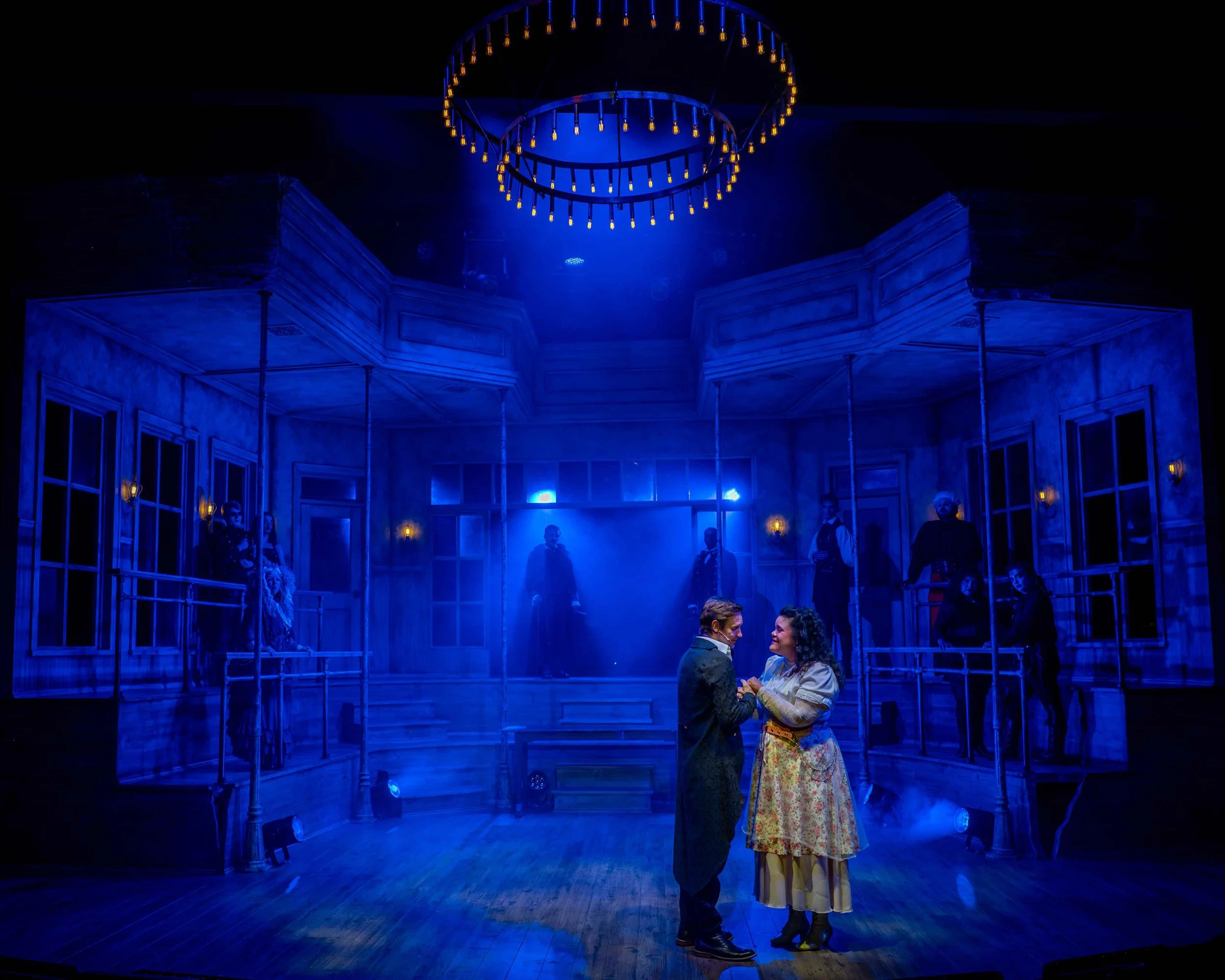
The real, overwhelming star of the evening appears in a large upstage open window with his back to the audience the entire performance. There is no way this giant monster of a musical score could have been guided for the cast in such an accessible, poetic way without the musical awareness and expertise of conductor and musical director Nick Sula. Mr. Sula has taken melodies that challenge opera singers in their length and constancy of motion and laid down a wonderfully eloquent path for the performer and the audience to follow. His sense of dramatic impact and empathy in working with those onstage overcomes the constant walls that arise in the score, and his musicianship is second to none now in Chicago these days. He leads a robust 15-piece orchestra that works with him at that same high level.

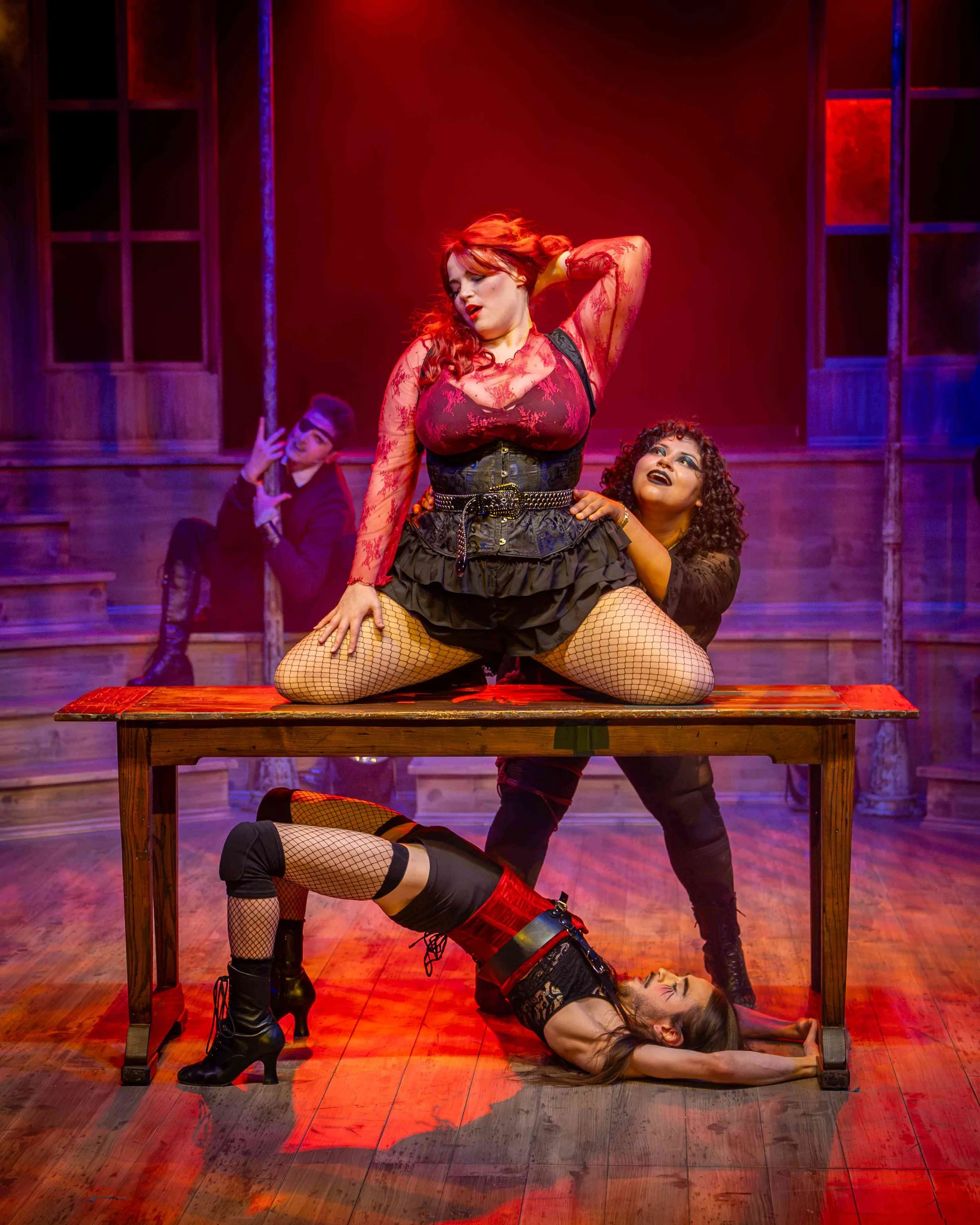
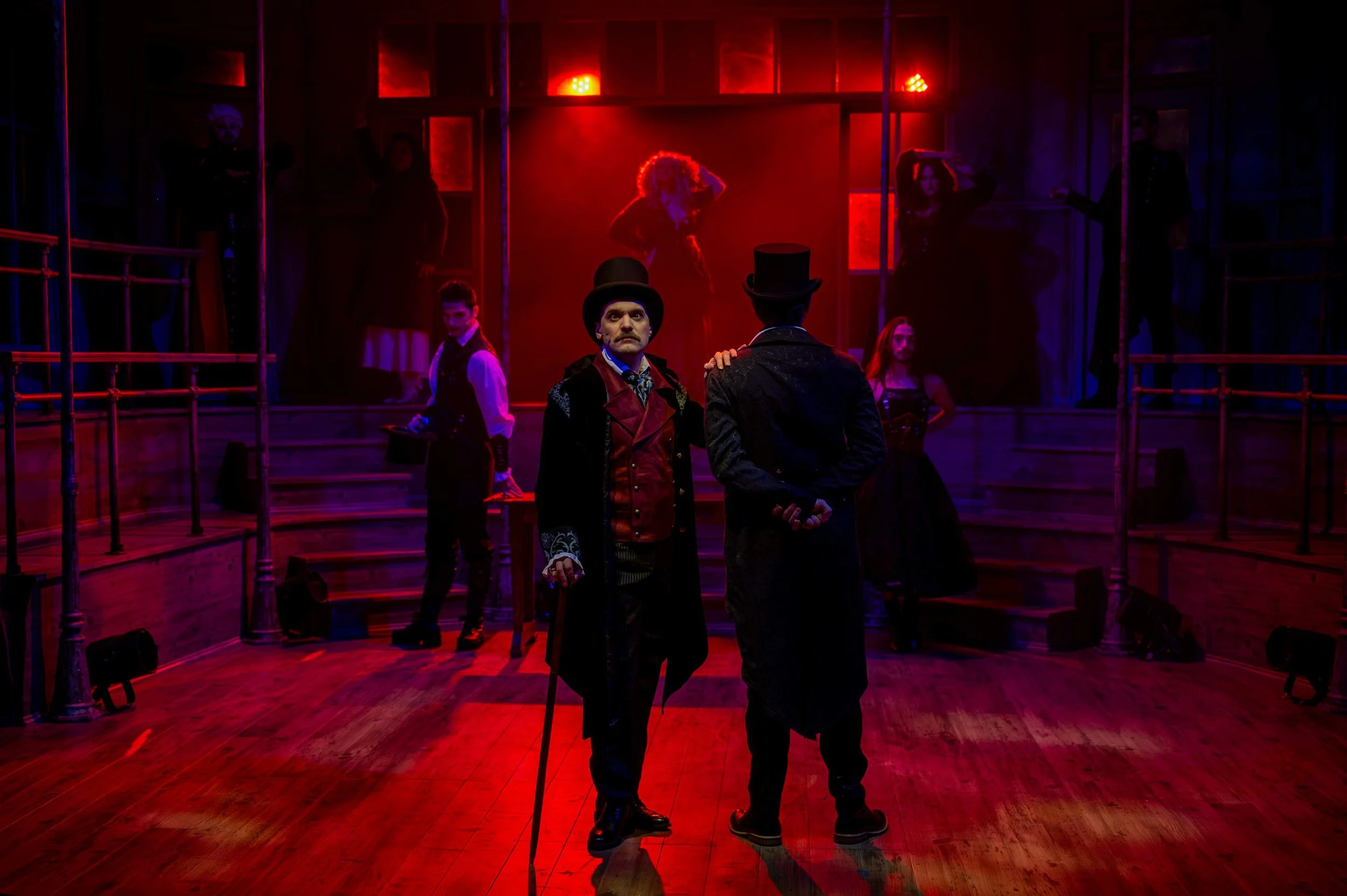
The multi-level scenic creation with a bit of steampunk influence by Tony Award-winning artist Sotirios Livaditis is a kind of tribute to old Shakespearean design, holding stairs and doors and ramps of varying degrees. Choreographer extraordinaire Brenda Didier always has a magic in accepting such challenges, as her charges seem to effortlessly move and move again in providing a constant visual variety. The sharp shafts of light, coupled with a moody sense of time and place in its layout are thanks to G. "Max" Maxin's wonderful ideas in allowing the action to dictate the shading—really great stuff to see.

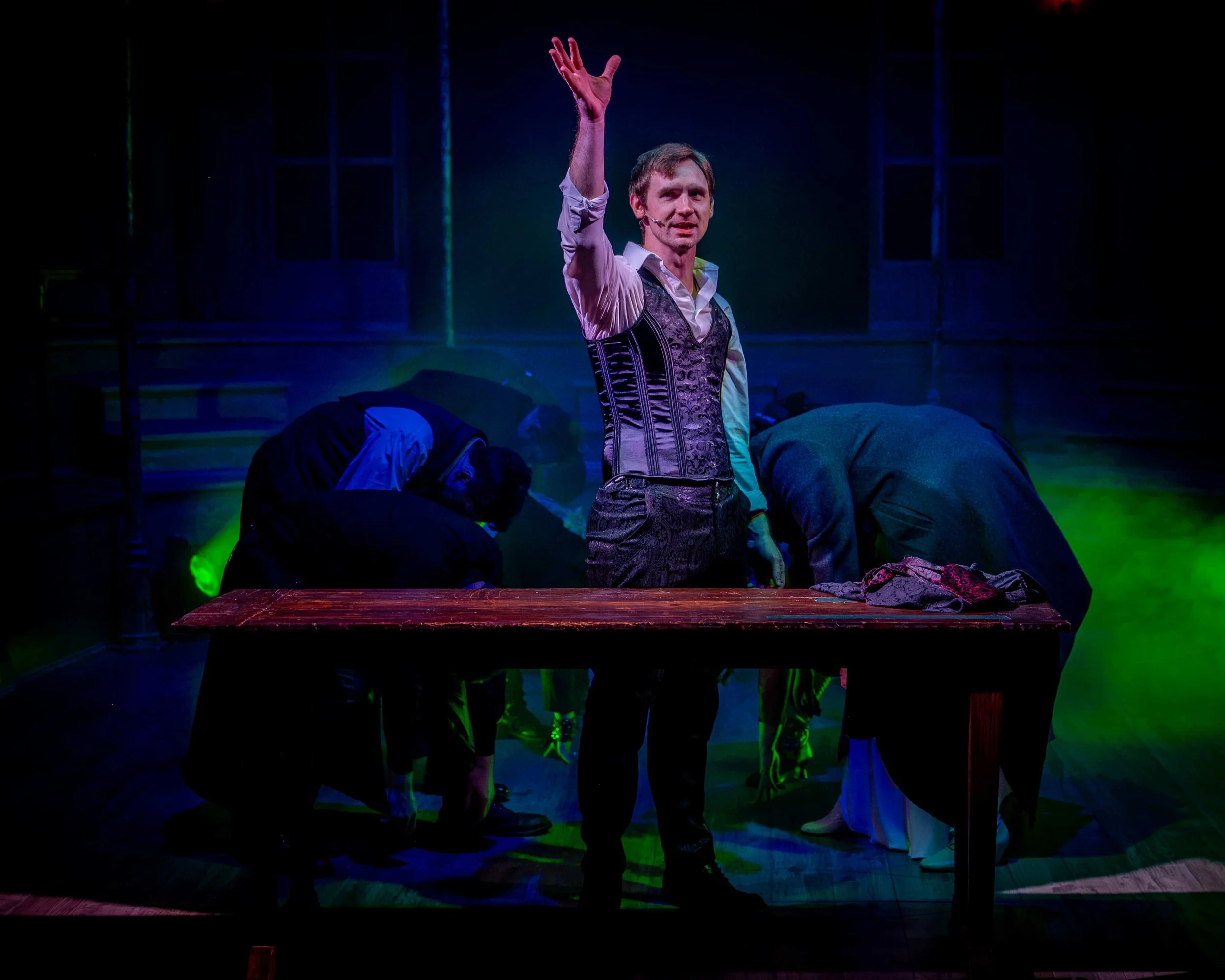
Producing Artistic Director Derek Van Barham has a way of creating stage pictures, whether in tandem with Ms. Didier or in intimate scenes of two people, that become a kind of storytelling layer in themselves. And he has guided, along with Mr. Sula, this story of a man who has worked for years on the idea that humanity has contained inside each person two entities—one good, one evil. Mr. Van Barham has done two really nice things here. One is allowing his Jekyll/Hyde actor David Moreland—whose work here is full and accomplished—to seemingly improvise his growing change from the studious-minded Henry Jekyll to the murderous monster Edward Hyde in small increments. It was a marvelous thing to see the subtlety in Mr. Moreland's conversion. And the man has a fabulous singing voice.

Speaking of... If there is anyone else whose star rapidly ascends in this production, it's the golden voice of Ava Lane Stovall. She has vocal range galore. She has her own unique sense of dramatic realism and purposeful character in her scene work that overcomes any book challenges presented here. Her work in "A New Life" is a proper Act II showstopper.

The rest of the cast is first-rate and deserve recognition. Emily McCormick as Jekyll's fiancée Emma owns a voice of operatic stature. There is yeoman work from Nathan Calaranan as Emma's father Sir Danvers. As Jekyll's peer and best friend Utterson, Kevin Webb is a solid, reassuring supporter of Jekyll's dangerous work. This outstanding ensemble becomes the literal creative building block for the audience to lean on in understanding the actions onstage. Bravo to all!

GUEST CONTRIBUTOR | RONALD KEATON received an Equity Jeff Award for the performance of his one-man show CHURCHILL. Coming soon, his new solo play about Ben Franklin, THE FIRST EMBASSY. www.solochicagotheatre.com.

PHOTO | Amy Boyle Photography

Broadway in Chicago
Kokandy Productions
present
JEKYLL & HYDE
Broadway Playhouse
Water Tower Place
EXTENDED through November 8, 2026


WEBSITE

TICKETS

For more reviews, visit: Theatre In Chicago

ARCHIVE

PicksInSix® is a registered trademark of Roxbury Road Creative, LLC
PicksInSix Review: The Attic - Goodman Theatre


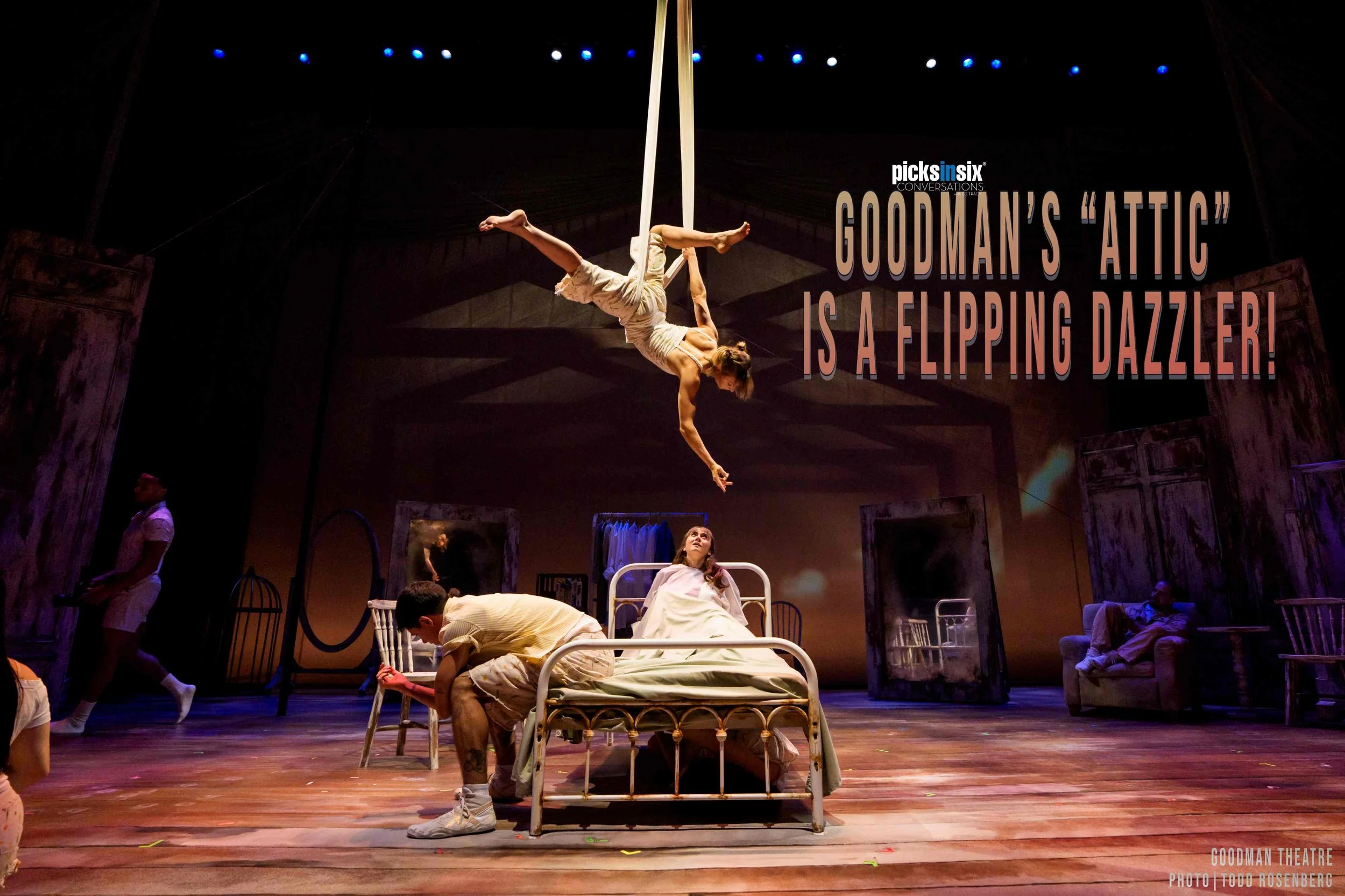
Goodman’s “Attic” Is A Flipping Dazzler!
PicksInSix® Review | Guest Contributor | Catey Sullivan

I’ve seen hundreds of circus acts over the past 30ish years; everything from massive Las Vegas spectaculars to three-ring arena extravaganzas to acrobats flinging themselves across Daley Plaza at midnight to dinner-and-circus shows in boutique hotels.

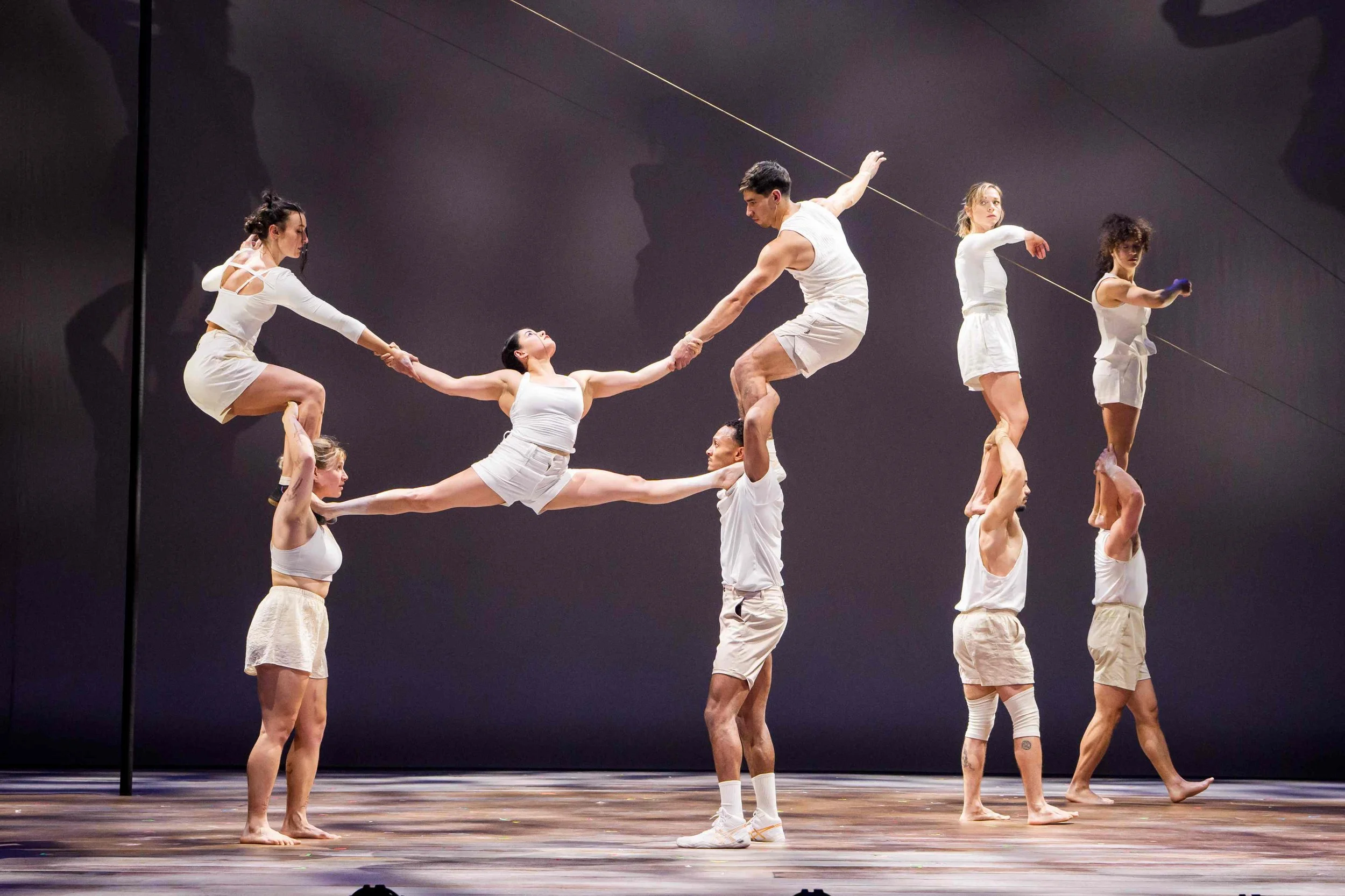
Les 7 Doigts de la Main’s (The 7 Fingers) “The Attic: Things I’ve Seen While Lying on My Back,” has something I’ve yet to encounter at any previous circus-centered production. It provides all the thrills and jaw-dropping feats of derring-do one expects from the intensely physical art form. But “The Attic” is more than thrilling. It is also deeply moving, unsettling and profound. In about 100 minutes and 28 scenes, it tells a story that is at once heart-wrenching and exquisitely beautiful with an emotional arc that covers the journey of a lifetime.

Written, directed and choreographed by former Cirque du Soleil soloist Shana Carroll, “The Attic” asks the audience to confront mortality while immersed in a glorious, gravity-defying celebration of life. Carroll’s autobiographical story moves from infancy through adolescence, to career and childbirth and ultimately to a medical diagnosis of staggering implications. The narrative is as breathtaking as the extraordinary aerialists, hoop divers, acrobats, jugglers and contortionists telling it.

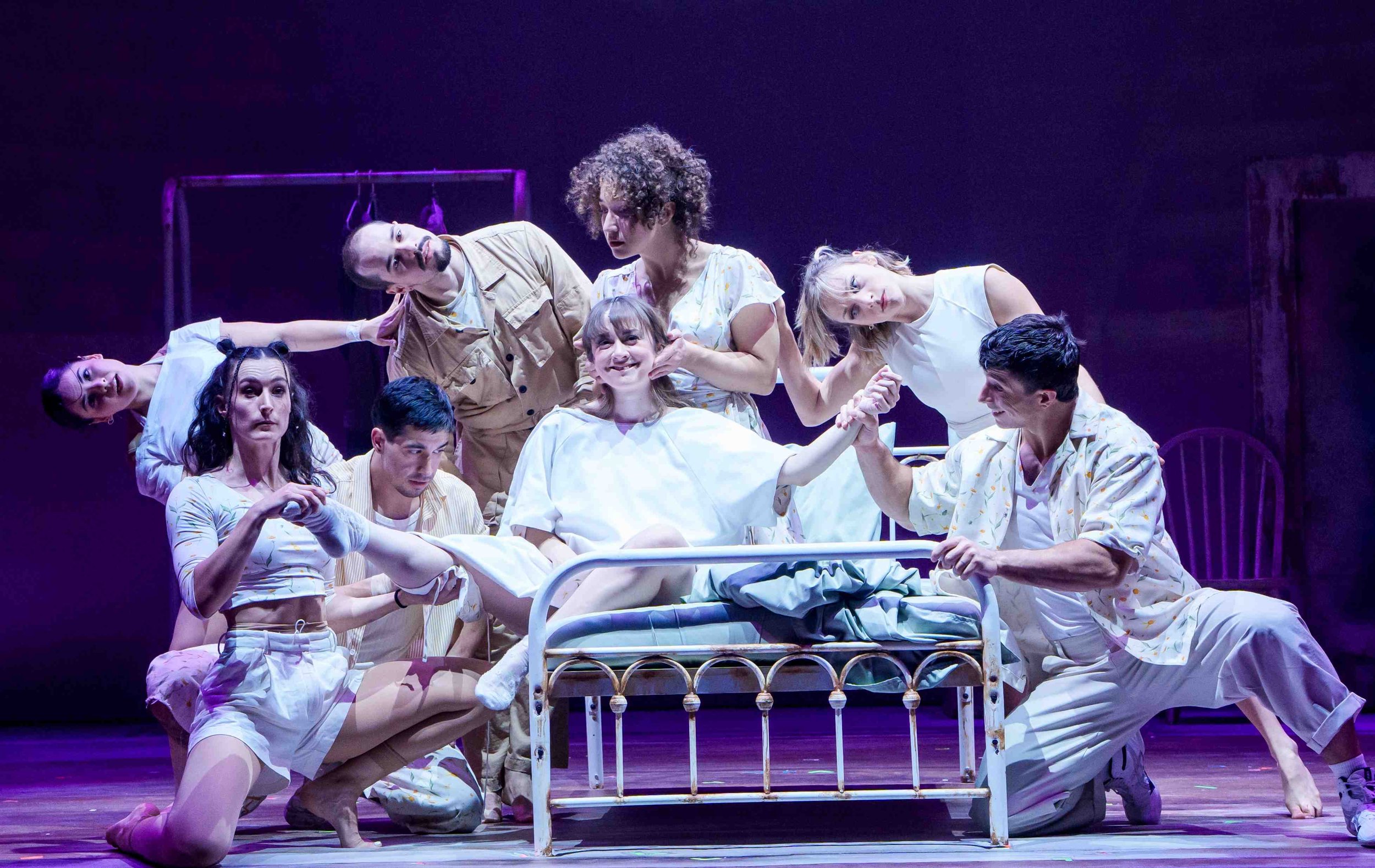
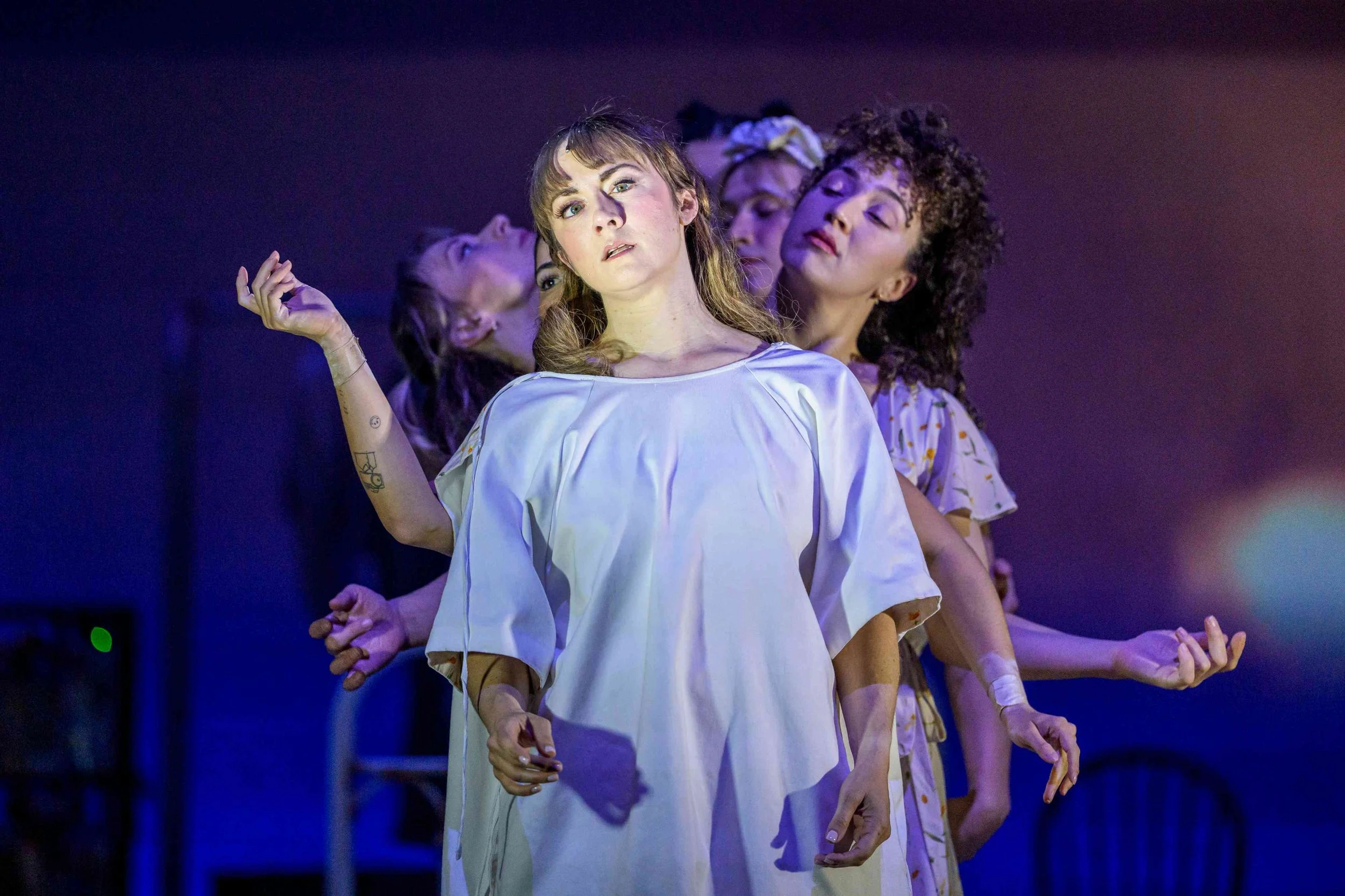
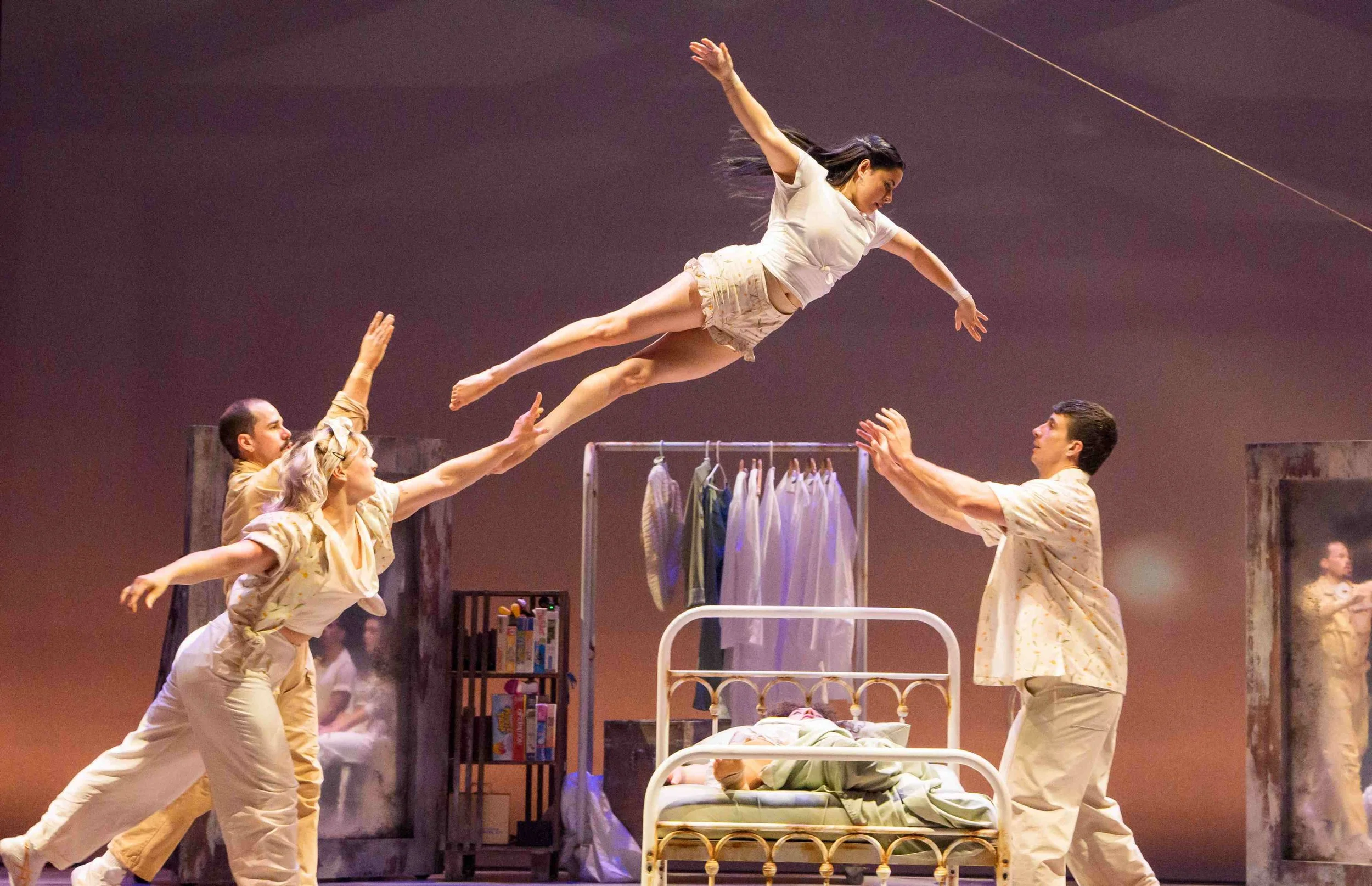
The opening reveal is gasp-inducing: A lone actor slips into a patient gown as a diaphanous, ghostly hospital room materializes on stage in a dreamscape of pale luminosity.  (Lighting designer Alexander Nichols paints the stage like Caravaggio throughout.) This is the jumping off point for the cast of ten. Backed by Colin Gagne’s haunting, percussive score, “The Attic” flies through pivotal moments in Carroll’s life: her fascination as a toddler with motes dancing in sunbeams; her adolescent surrender to epic yearning, hormones and newly discovered sexuality; her adult years as a globe-trotting Cirque star, a nomad whose only true home is in the air. Gleaming hoops morph into CT scanners, an anaesthesiologist’s countdown becomes a portal to a world of seemingly weightless wonder, as grasping hands reach from inside a hospital bed, pushing and pulling its occupant into dire exhaustion.

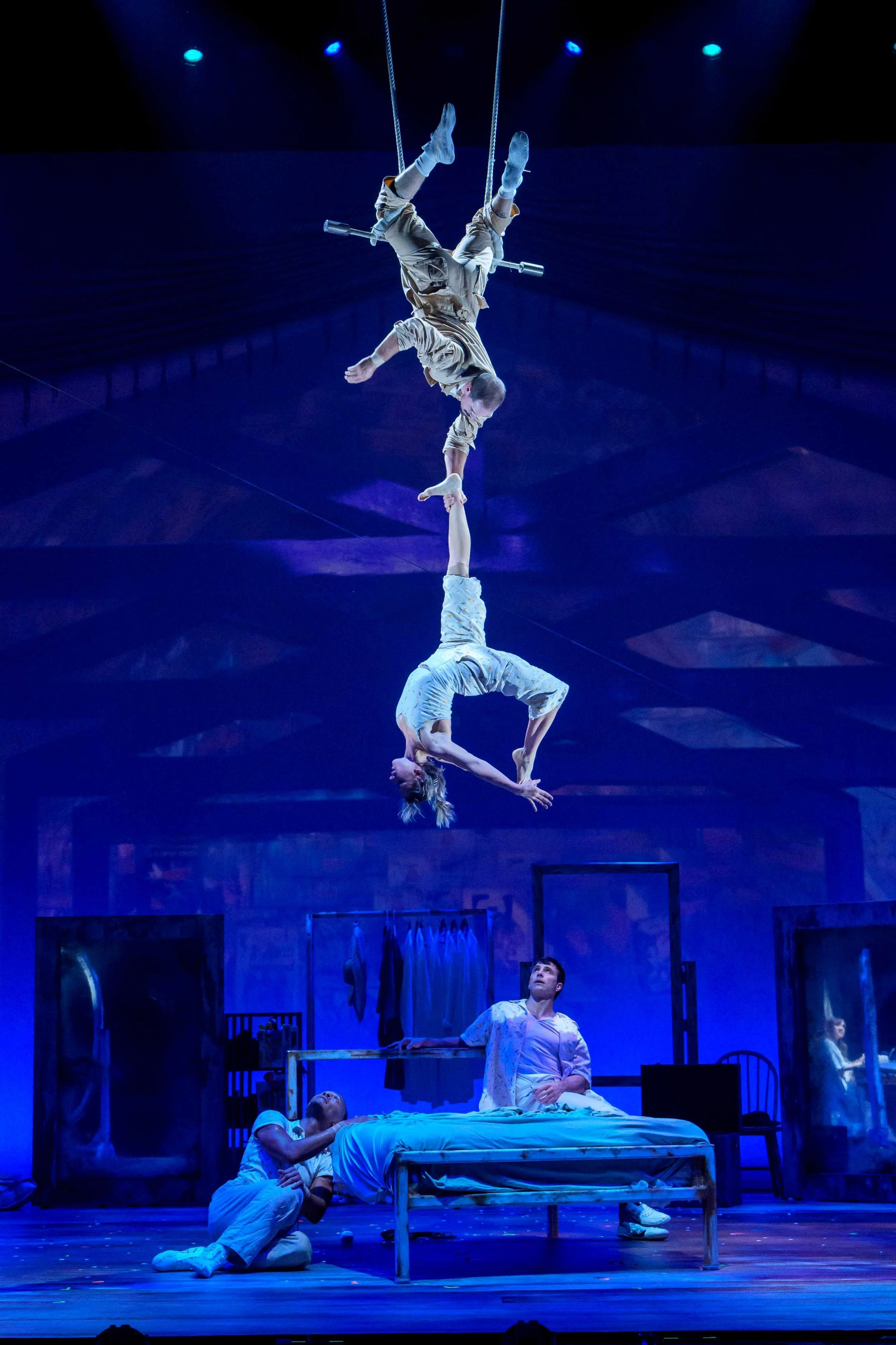
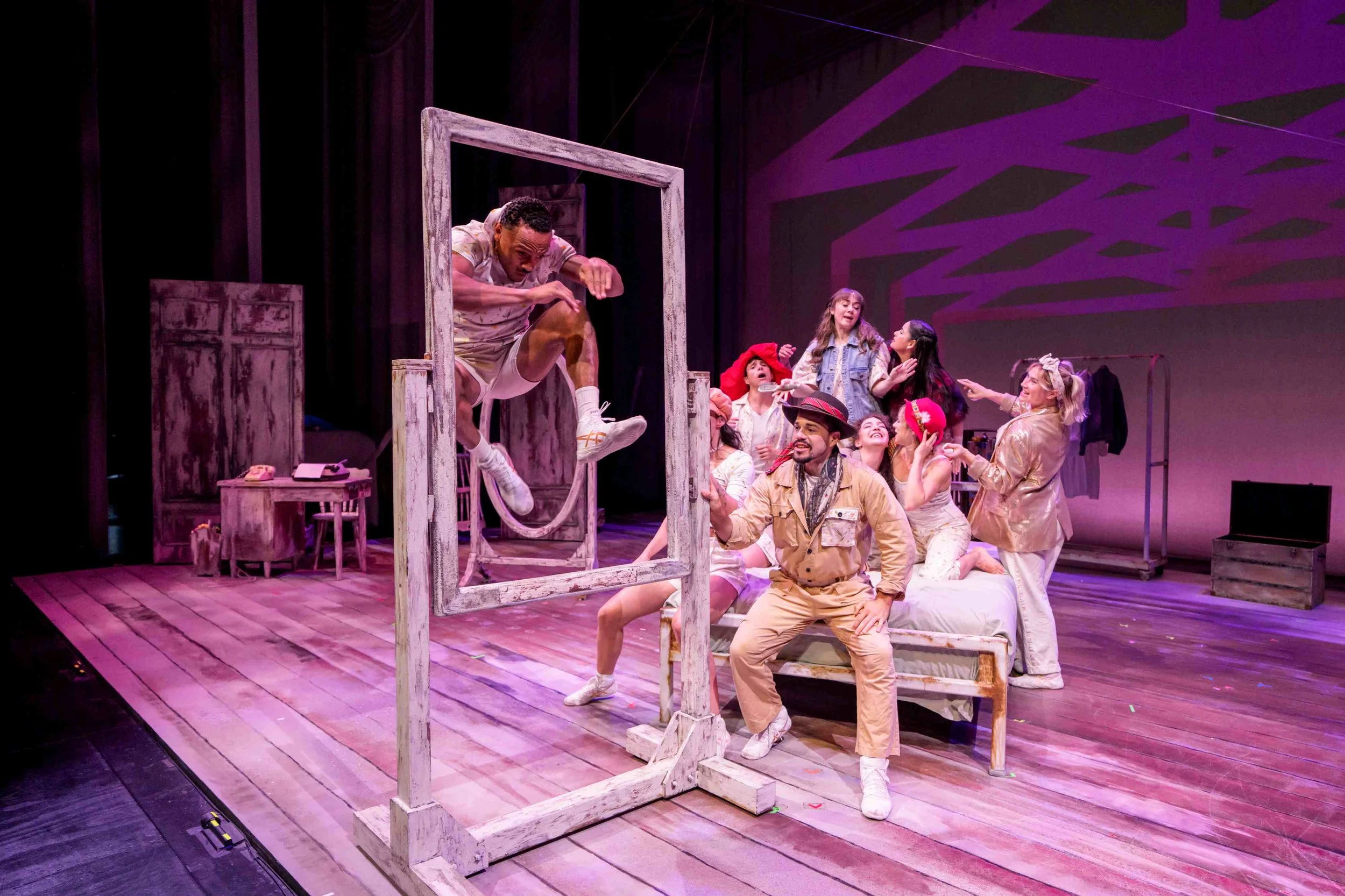
The circus acts are astonishing, especially when the entire cast is in motion, swinging the body electric. At times, it’s difficult to know where to look. High above the stage, trapeze artists soar and silk spinners weave a mesmerizing web with their bodies. Below, tumblers and gymnasts create pas de deux that combine elite athleticism with ballet, contortionism and shows of boggling strength. Carroll’s choreo is a distinct blend of balletic grace and softness, and harsh, jutting angles—all in the service of evocative storytelling.

“The Attic” flies by, literally and figuratively. Some of the non-circus pacing needs tightening. The vocals and the snatches of dialogue aren’t quite seamlessly woven into the story. The latter is almost unnecessary—the movement on stage makes every development crystalline clear. Still, the metaphors that run like a river throughout are beautifully specific and universal, especially with the story explores the art and inevitably of falling. This show is a flipping dazzler!

GUEST CONTRIBUTOR | CATEY SULLIVAN has been covering Chicago theater for more than 30 years. Her work has been published in the Chicago Sun-Times, Chicago Reader, Windy City Times, Playbill, Chicago Magazine, Chicago Tribune and New City, among others. She has an MFA in creative writing from the University of Illinois. 

PHOTO|Todd Rosenberg

Goodman Theatre
presents
The 7 Fingers’
The Attic: Things I’ve Seen While Lying on My Back
170 N Dearborn Street
through October 4, 2026


WEBSITE

TICKETS

For more reviews, visit: Theatre In Chicago

ARCHIVE

PicksInSix® is a registered trademark of Roxbury Road Creative, LLC
PicksInSix Review: The Humanities - Victory Gardens Theater


Culture War Erupts In “The Humanities”
PicksInSix® Review | Guest Contributor | Ronald Keaton

One of the most difficult things, I believe, for any dramatist to do is to look at an event in history and, in telling the story, put their own spin on its reality and its results. In watching “The Humanities,” the first production of Victory Gardens Theater in quite a while, it becomes even more apparent that they want to leave a mark, to mark a special moment—indeed, to make even a small difference in today's cultural heritage.

In this world premiere that runs through October 4, the playwright/historian Zayd Ayers Dohrn comes by his historical choices honestly, being the offspring of Weather Underground icons Bill Ayers and Bernadette Dohrn. His "on-the-run" history with his parents becomes potentially fascinating. Now in his own middle-aged place in life, Mr. Dohrn has chosen for this piece a college campus that experiences vast upheaval and dichotomy from a faculty choice of a speaker whose reputation is, to put it mildly, controversial. If we look at recent headlines in the United States, this story could have used the Berkeley disruption of far-right influencer Milo Yiannopoulos nearly a decade ago as a model in being guided through sociological touchstones. Whether there are solutions proposed as a result depends, it would seem, on one's own sense of social history and regard for protest culture.

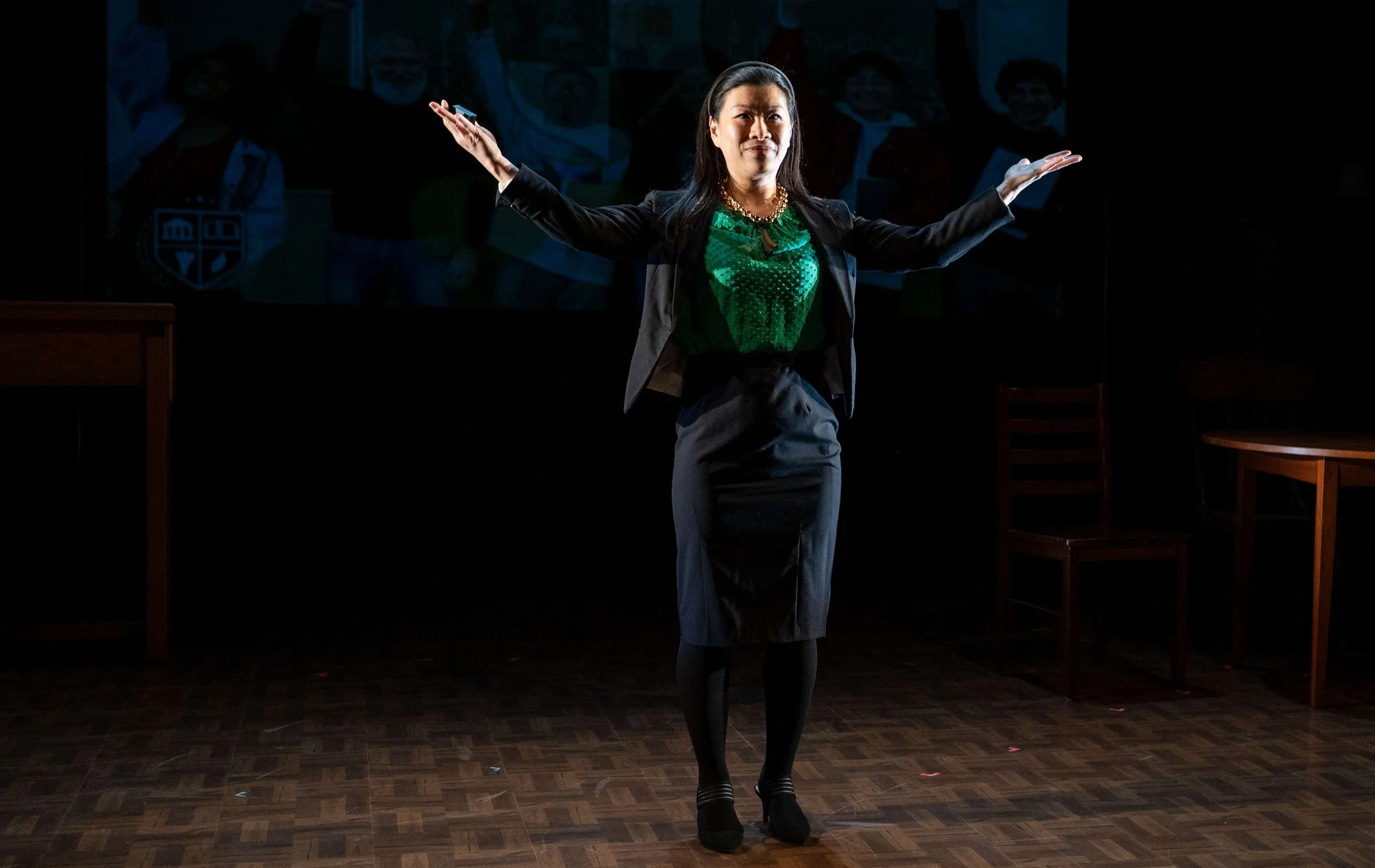
The eclectic plot has a departmental debate brewing between the dean of cultural studies Carole (Sabine Wan deftly opens the play with a difficult and challenging lecture on sexual mores in America), the departmental chair Martin (Steve Pickering in an expert, sensitive underplaying of a recovering alcoholic), and Milta, the sole faculty member (Isa Arciniegas compellingly represents the protesting side on campus) who has signed a petition that objects to the booking of a radical right-wing speaker at Lincoln University, the name of the institution. Martin and Milta hotly debate the speaker's right to speak vs. his subject matter and representation. Carole, on the other hand, wants no part of controversy to sideline the new work she's begun, a capital campaign to raise $2B—yes, you read that correctly—for various and sundry projects and improvements that the university fathers have in mind. It's a quandary of epic proportions.

Meanwhile, Jonas, a new assistant professor (a fascinating role given strong, articulate shrift by Ernest Bentley) has just arrived on campus, trying to simply fit in. In short order, he is asked by an anxious student representative Hampton (smooth work by Derrick Sanders III) to sign the aforementioned petition; propositioned by Martin's wife Margot (an alluring and articulate Naomi Evans) to be a part of an intimate threesome; and asked almost immediately by the dean Carole to introduce the speaker Luka (Danill Krimer, both intellectually and physically imposing) at his appointed speech date, because he's the 'right person' to do so. This is all while Jonas has been on campus for only a short time, hardly having time to unpack his things in his office.

To give more challenge to the story, Milta sits in a bar one evening and finds herself being 'hit on' by Xander (Piper Murphy, appropriately and abruptly aggressive), a former student of hers whose obvious motivation is more than sexual as one of the leaders of the protest against Luka.  Then there is Anthony (an impressive portrait by Devaughn Asante Loman), a young man caught in the clash between poverty and ambition who ends up being the fall guy for the entire protest movement—all when he simply wanted to learn at a university that was beyond his financial capability. Finally, with Anthony's burgeoning friendship with Hampton yet another layer to absorb in this conundrum, the entire world onstage explodes during Luka's speech.

As one might gather, there are many intricate layers to this play. It is a real triumph that Artistic Director Edward Torres has been able, in part, to help reignite the creative fires that Victory Gardens founded in original plays with this creative stew he has prepared. The play has scope and range that is tricky and demanding to portray onstage. There are scenes that occur simultaneously. For instance, some partial nudity in an intimate moment between two women is coupled with a lecture about sexual attitudes over the years. That technique could have used more separation to establish visual and verbal clarity. There is a large projection screen located upstage center that helps guide us, which has its own unique influence—almost a Big Brother perspective. Every character seems ultimately to have some kind of ulterior motive, whether or not it was intended. And that becomes the final puzzle for the audience to solve.

CONTENT ADVISORY: The Humanities explores complex and challenging subject matter and contains strong language, sexual content, and partial nudity. Recommended for adult audiences.

GUEST CONTRIBUTOR | RONALD KEATON received an Equity Jeff Award for the performance of his one-man show CHURCHILL. Coming soon, his new solo play about Ben Franklin, THE FIRST EMBASSY. www.solochicagotheatre.com.

PHOTO|Michael Brosilow

Victory Gardens Theater
presents
World Premiere
The Humanities
2433 N Lincoln Ave
through October 4, 2026


WEBSITE

TICKETS

For more reviews, visit: Theatre In Chicago

ARCHIVE

PicksInSix® is a registered trademark of Roxbury Road Creative, LLC

PicksInSix Review: The Birth of the Pill - TimeLine Theatre Company


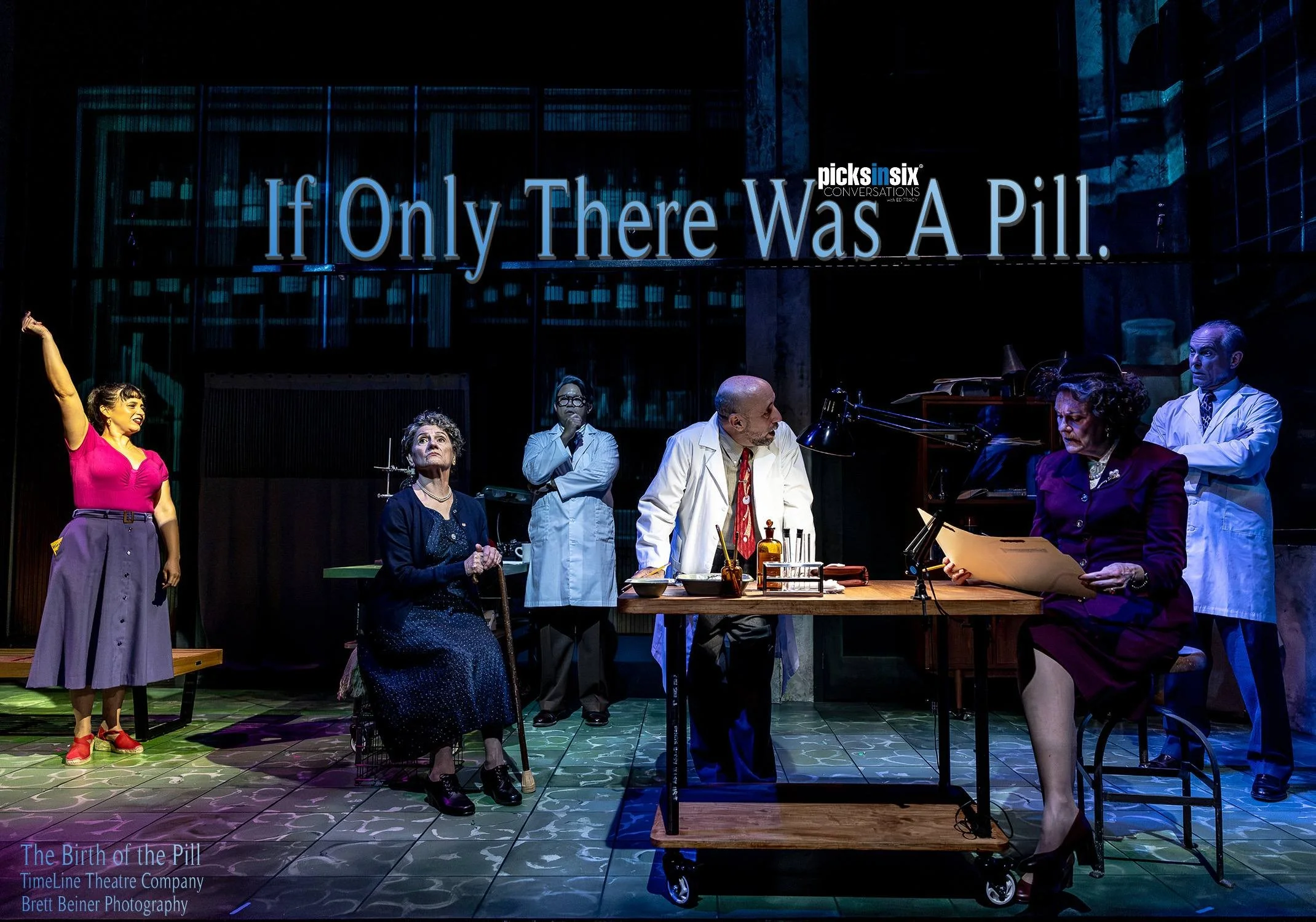
If Only There Was A Pill.
PicksInSix® Review |
Ed Tracy

Inside TimeLine Theatre’s comfortable and cozy first floor bar and café on opening night of Jessica Huang’s fascinating and informative play, “The Birth of the Pill” on Thursday night, there was a heightened air of anticipation. It has been only a few months since TimeLine moved into its new home at 5035 North Broadway and you can already feel the impact of the bustling arts hub and newest live theatrical anchor in the heart of Chicago’s Uptown neighborhood.

The world premiere production, now playing through October 4, is based on the book by Pulitzer Prize winner Jonathan Eig who collaborated with Huang on the project. Both Eig and Huang were present for the opening which has received brisk advance sales and impressive promotion, including an opinion piece about the play by Eig that appeared in the New York Times.

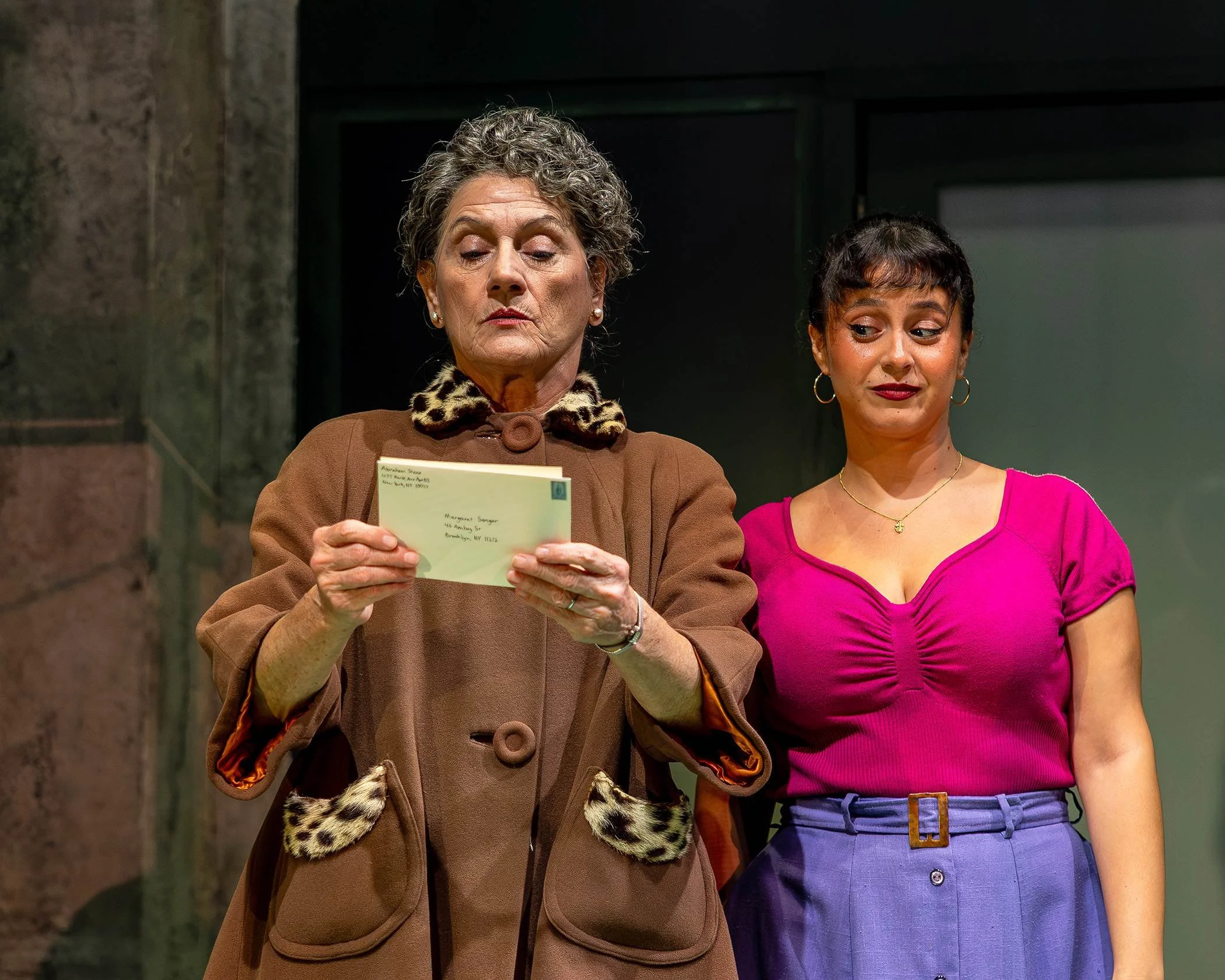
Smartly directed by Sandra Marquez with a top drawer cast that includes the outstanding talents of Janet Ulrich Brooks as Margaret Sanger, Mary Beth Fisher as Katharine McCormick and Mitchell J. Fain, playing both Dr. Gregory Goodwin “Goody” Pincus and the author Eig, you can imagine that there is a fantastical twist to the stage telling of the funding, research, clinical testing and development of the Pill that forever changed the course of women’s lives.

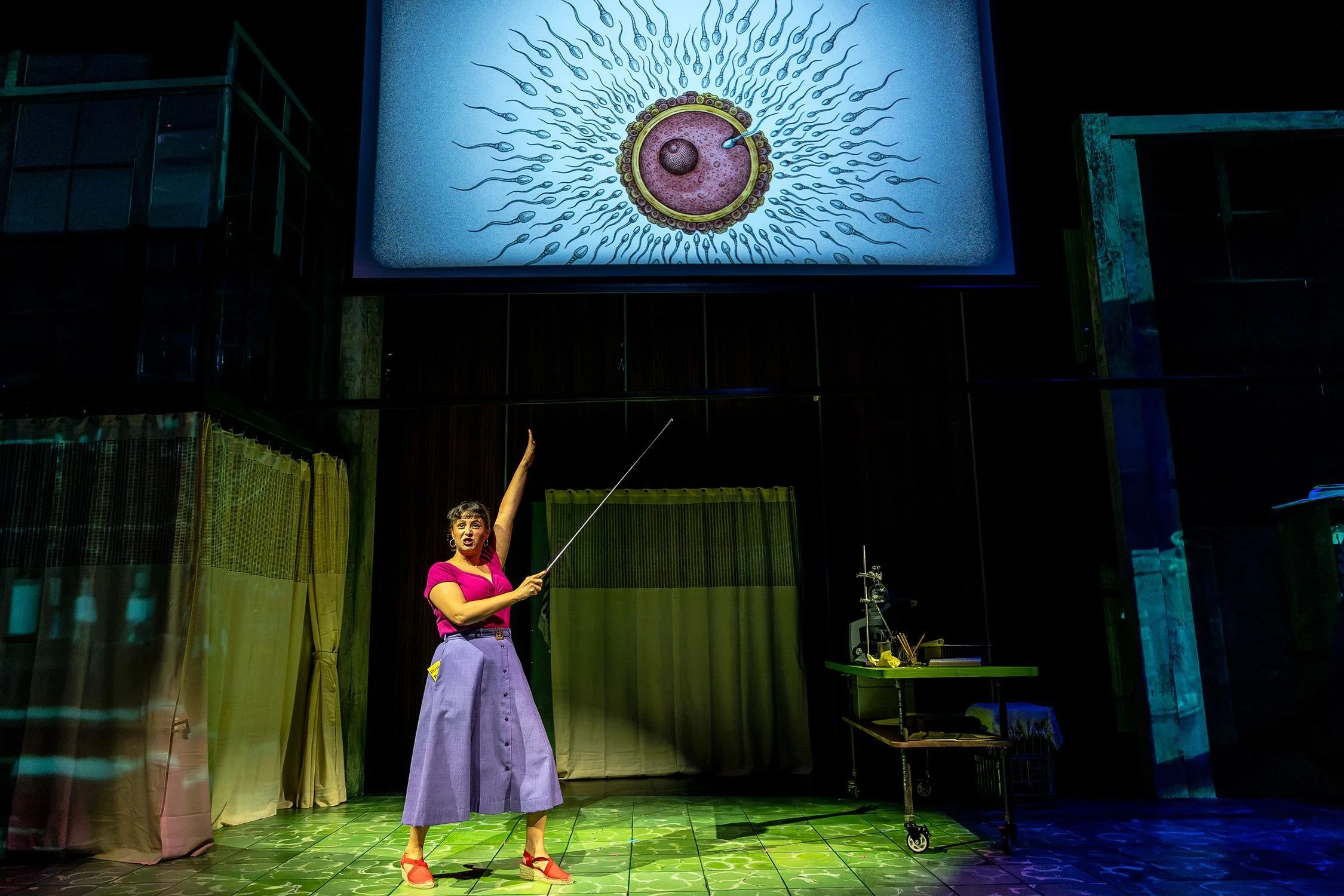
That twist comes in the exhilarating, multi-faceted performance of María Victoria Martinez as Ramona Delgado, a narrator of sorts whose refreshing comedic sense keeps things moving at a rapid pace. Assuming a variety of characters, Martinez, who is rarely out of the action, poignantly represents the lost voices of a vast number of Puerto Rican women at the heart of the story who were unknowing participants in early clinical trials and therefore unaware of the potential health risks. It is a wide-ranging and challenging role that Martinez, a newcomer to Chicago, handles effortlessly, evoking a warm and robust charm all her own.

“The Birth of the Pill” leaves it to us to ponder the difficult questions surrounding the moral and ethical choices made by Sanger, McCormick, Pincus, Dr. John Rock (David Parkes) and Dr. Min Chuen Chang (Rammel Chan) in an era when birth control of any kind was illegal are worth the human cost.

The overall subject matter has depth to it, but you do not need to be a biologist to understand what is going on. If you have any doubts, come early to peruse the superb 2nd floor exhibit. But don’t delay. This will be a big hit for TimeLine and a tough ticket in the weeks ahead.

NOTE: The Birth of the Pill contains brief nudity. Content Advisory.

PHOTO | Brett Beiner Photography

TimeLine Theatre Company
presents
World Premiere
The Birth of the Pill
5035 North Broadway
through October 4, 2026


WEBSITE

TICKETS

BACKSTORY

For more reviews, visit: Theatre In Chicago

ARCHIVE

PicksInSix® is a registered trademark of Roxbury Road Creative, LLC
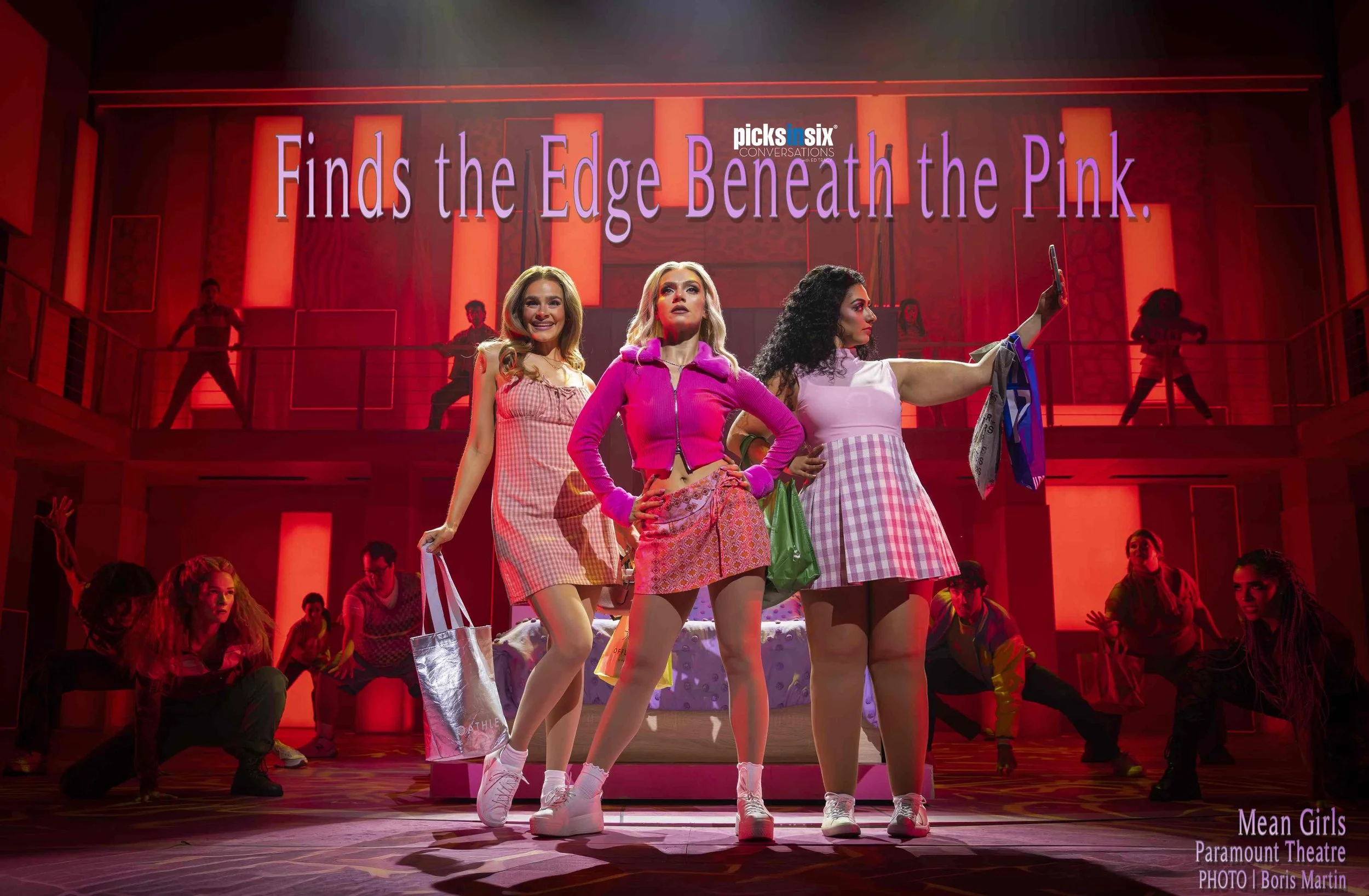
PicksInSix Review: Mean Girls - Paramount Aurora


Finds the Edge Beneath the Pink.
PicksInSix® Review | Guest Contributor | Joan Curto


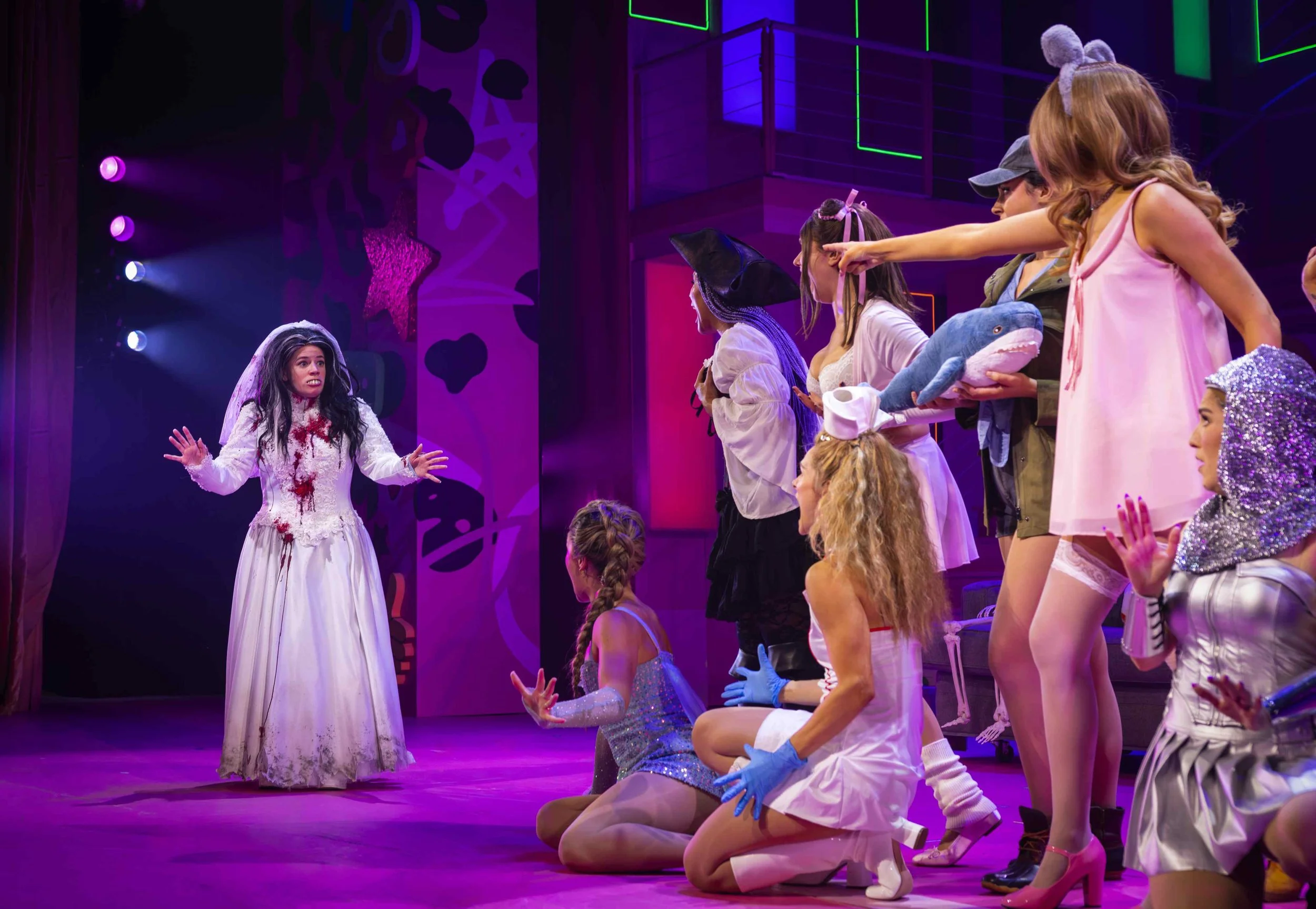
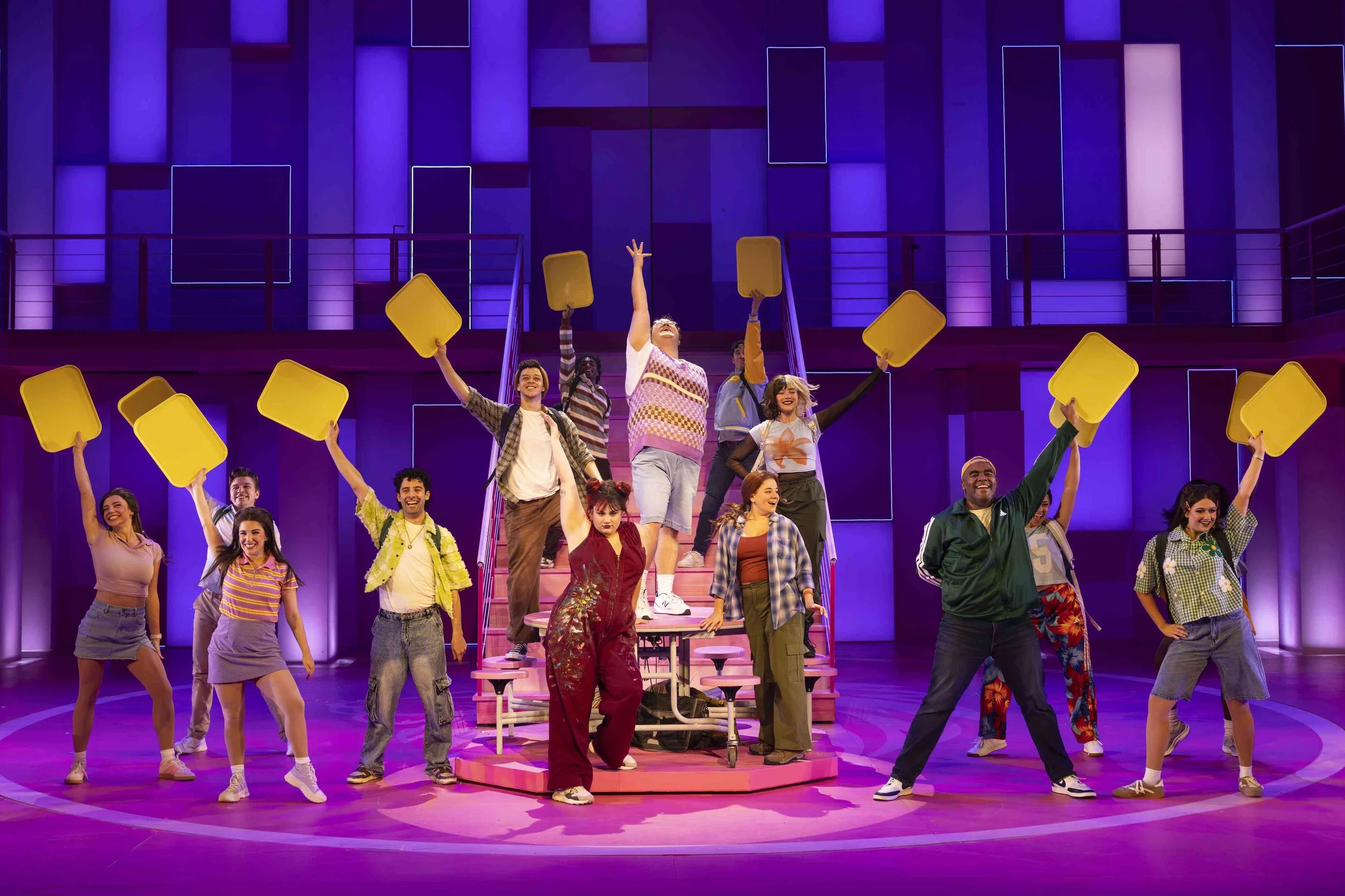
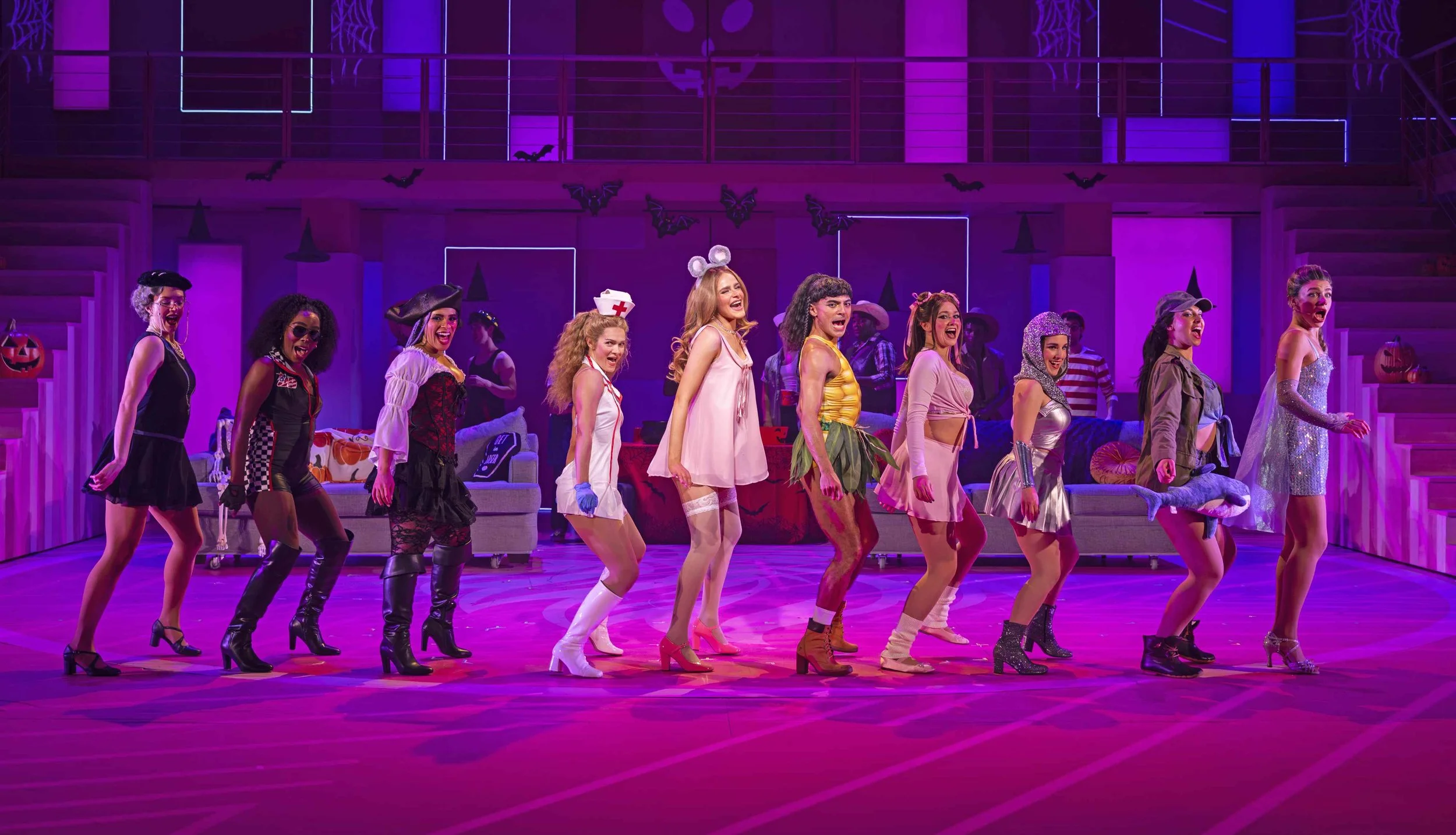
There is a reason “Mean Girls” has endured. Beneath the pink, the catchphrases and the perfectly calibrated teenage cruelty, lies a story about something far less frivolous: the complicated business of figuring out who you are when everyone around you seems determined to tell you who you should be. Based on the 2004 film with a book by Tina Fey, the musical retains the movie’s rapid-fire wit while giving its characters room to explore the insecurities, ambitions and social hierarchies of adolescence. At Paramount Theatre in Aurora, director Devon Hayakawa keeps the production brisk, energetic and surprisingly heartfelt.

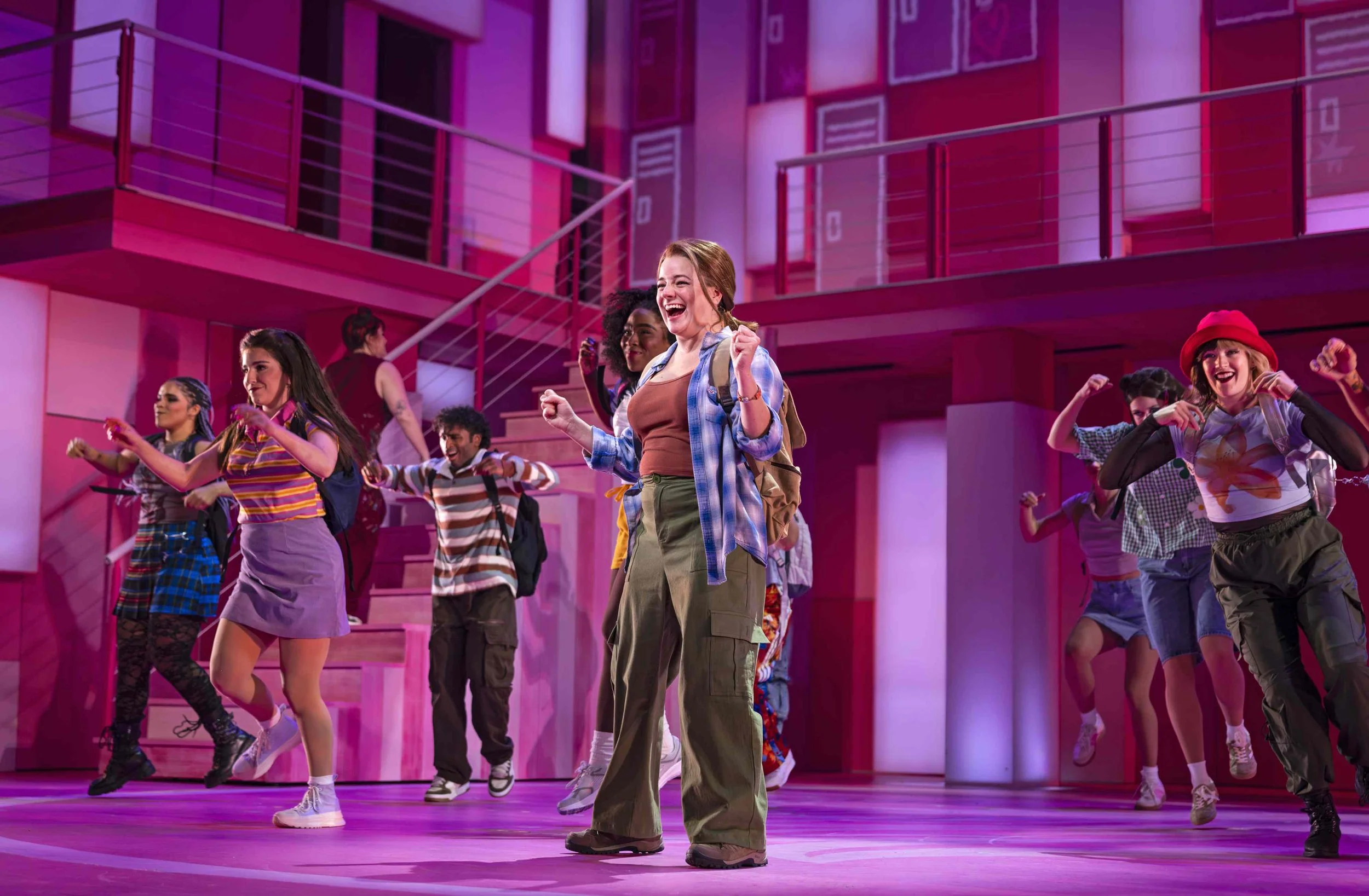
At the center are Janis and Damian, played by Lucy Godinez and Steven Klenk, who serve as our guides—and occasional co-conspirators—at North Shore High. Both are terrific. Godinez brings a powerful vocal presence to Janis, particularly in “I’d Rather Be Me,” while Klenk delivers Damian’s comic timing with precision. Together, they provide the production with an appealing combination of wit and heart. But this is very much an ensemble show and Paramount has assembled a cast that knows how to make even the broadest comedy land.

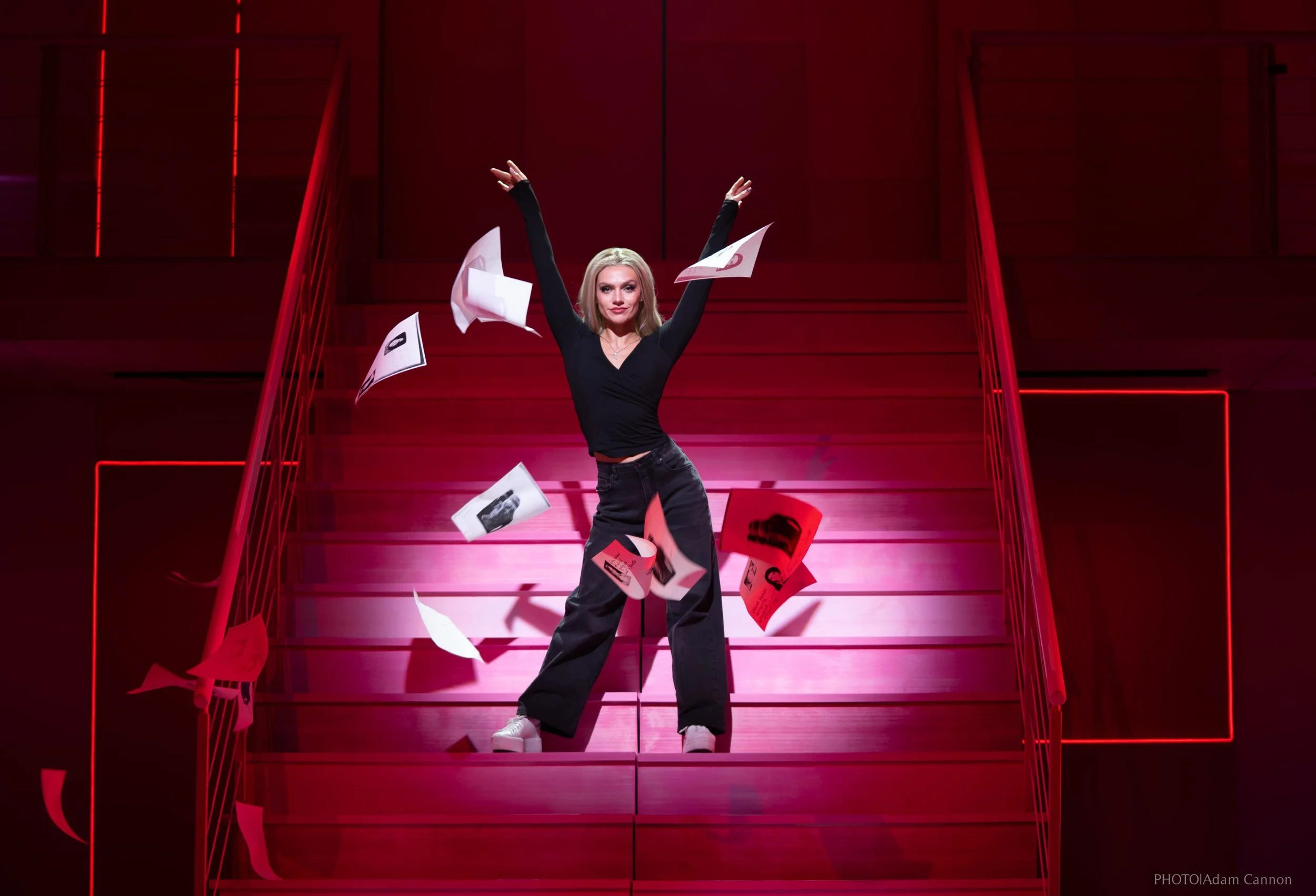
The Plastics—Regina George, Gretchen Wieners and Karen Smith—are played by Dariana Mullen, Angel Alzeidan and Julia Hope Budd, respectively. Each brings her character’s distinctive personality and vulnerability to life, particularly in song. Mullen’s massive deal-Regina is especially formidable. She understands that Regina’s power comes not simply from being mean, but from knowing exactly how much everyone else wants her approval. As Cady Heron, Elizabeth Stenholt carries much of the show’s emotional weight. Her Cady is neither entirely innocent nor entirely culpable, making her transformation—and eventual reckoning—more compelling. Vocally, Stenholt is impressive, particularly in the soaring “I See Stars.”

Veronica Garza deserves special mention for her work in three roles: Mrs. Heron, Ms. Norbury and Mrs. George. Each is sharply drawn, but it is Mrs. George, Regina’s gloriously inappropriate mother, who delivers some of the evening’s biggest laughs. And then there is the ensemble, which rarely gets a chance to catch its breath. Choreographer Kasey Alfonso keeps the movement crisp and energetic, while the clever use of desks on wheels turns the architecture of high school into part of the choreography. The Mathletes, naturally, get their moment in the spotlight.

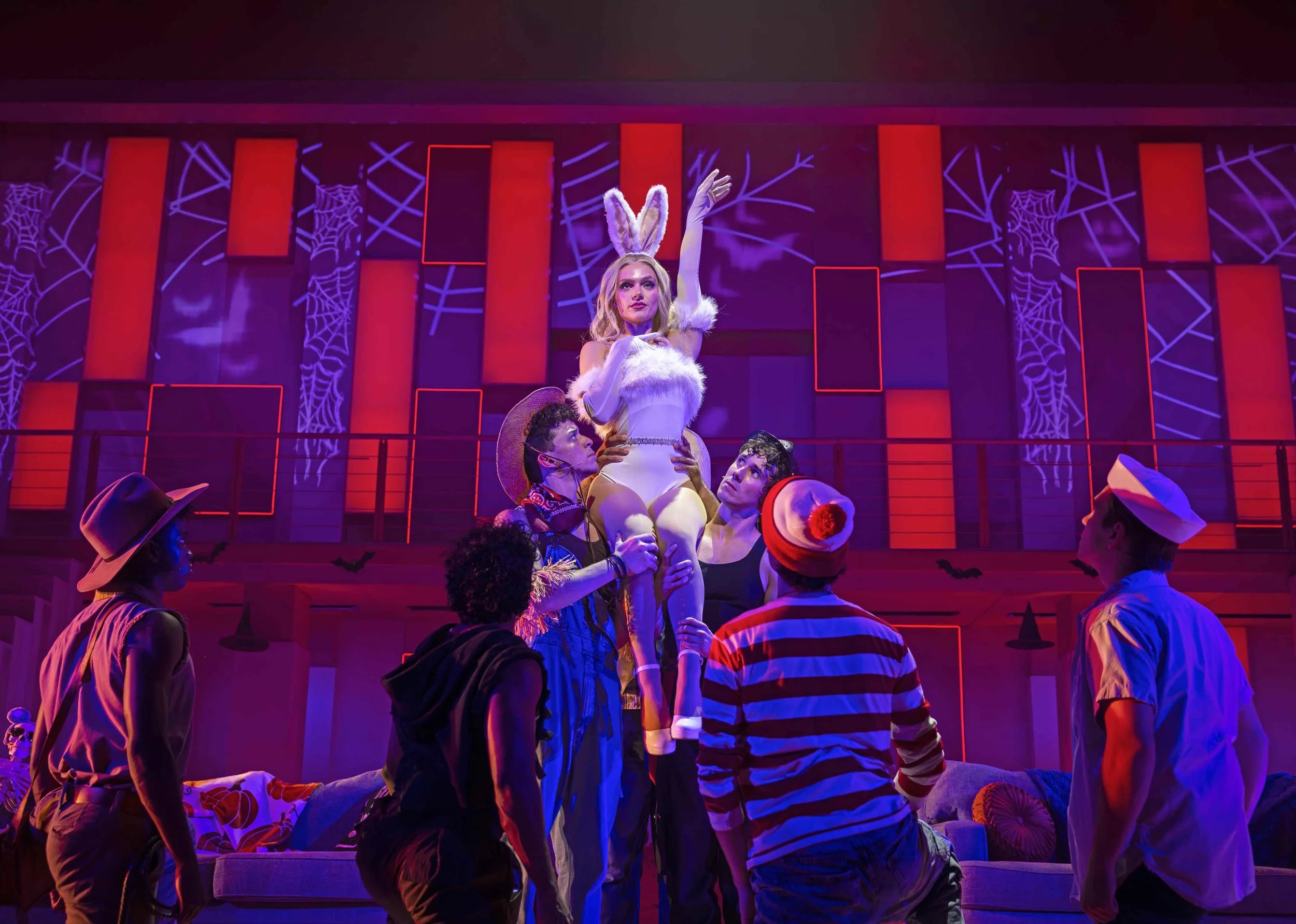
Paramount’s production itself is another star. Milo Bue’s scenic design with a stage revolve, mobile desks and fluid transitions together with Greg Hofmann’s effective lighting and Kotryna Hilo’s teen-era appropriate costumes, create a surprisingly cinematic sense of movement, allowing classrooms and hallways to materialize and disappear around the characters. The rain curtain used for projections is an ambitious touch, although from my vantage point some of the images were difficult to decipher. Still, the production succeeds in creating a vibrant theatrical world that matches the show’s pop sensibility without losing sight of its darker themes.

What makes this “Mean Girls” particularly enjoyable is its willingness to embrace both the exuberance and the vulnerability of the material. Bullying, belonging, identity and the intoxicating power of popularity may be timeless subjects, but Fey’s observations still have plenty of bite. The enthusiastic opening-night audience on Friday certainly seemed to agree. The film’s devoted following may bring audiences to Aurora, but this production gives them plenty of reasons to stay: strong performances, energetic choreography, clever staging and a cast that understands the human being hiding beneath the stereotype. And yes, there is pink. Lots of pink. For a few hours, at least, it is perfectly acceptable to call something “fetch.”

GUEST CONTRIBUTOR | JOAN CURTO is a Chicago-based, award-winning vocalist, director and producer. Most recently, she has collaborated with The Auditorium Theatre of Roosevelt University, directing and producing several acclaimed productions.

PHOTO|Boris Martin

Paramount Theatre
presents
Mean Girls
23 East Galena Boulevard
Aurora, IL
through October 11, 2026


WEBSITE

TICKETS

For more reviews, visit: Theatre In Chicago

ARCHIVE

PicksInSix® is a registered trademark of Roxbury Road Creative, LLC
PicksInSix Review: Sunday in the Park with George - Kokandy Productions


Marry Art: With Life As Mistress.
PicksInSix® Review | Guest Contributor |
Sarah Frances Fiorello

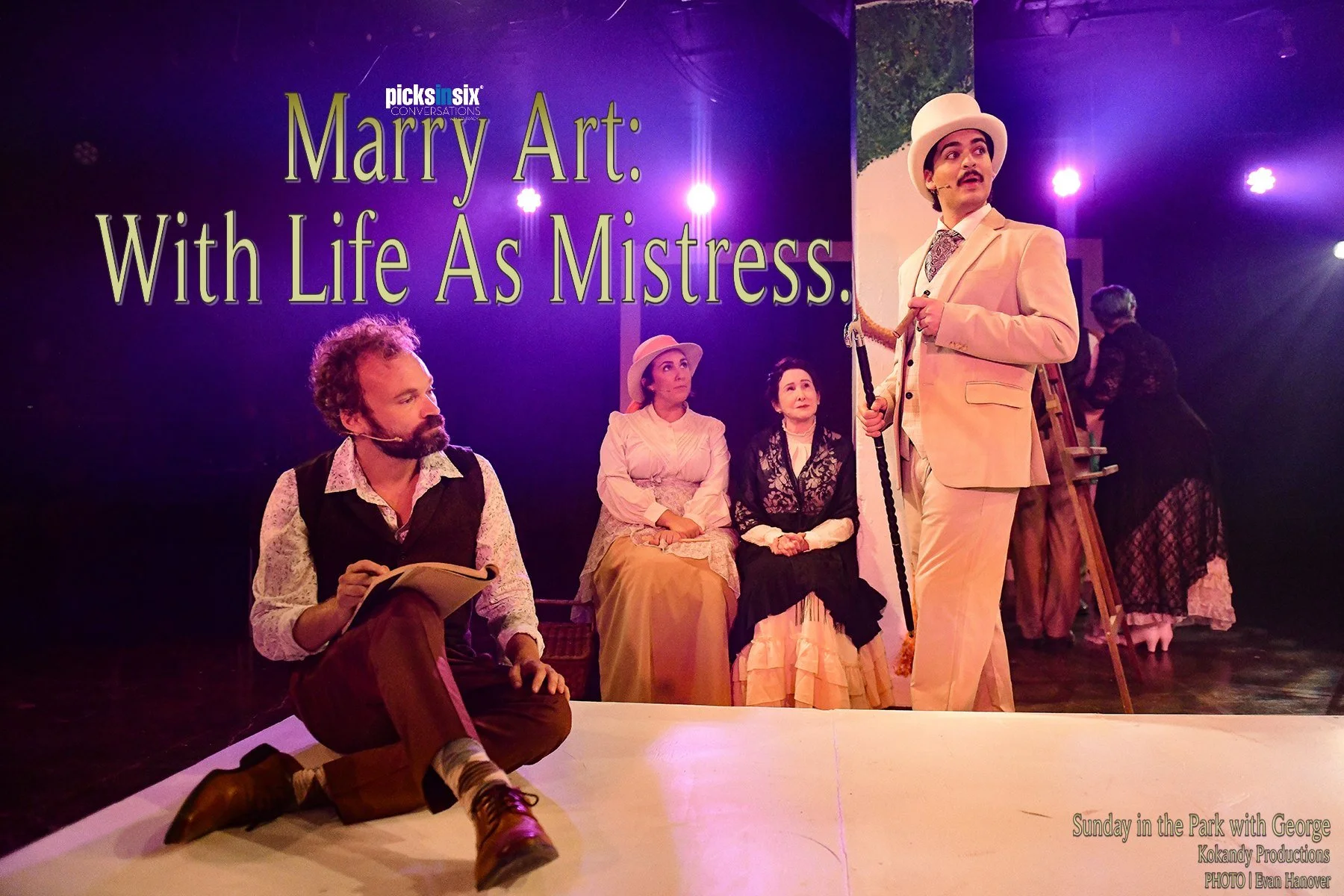
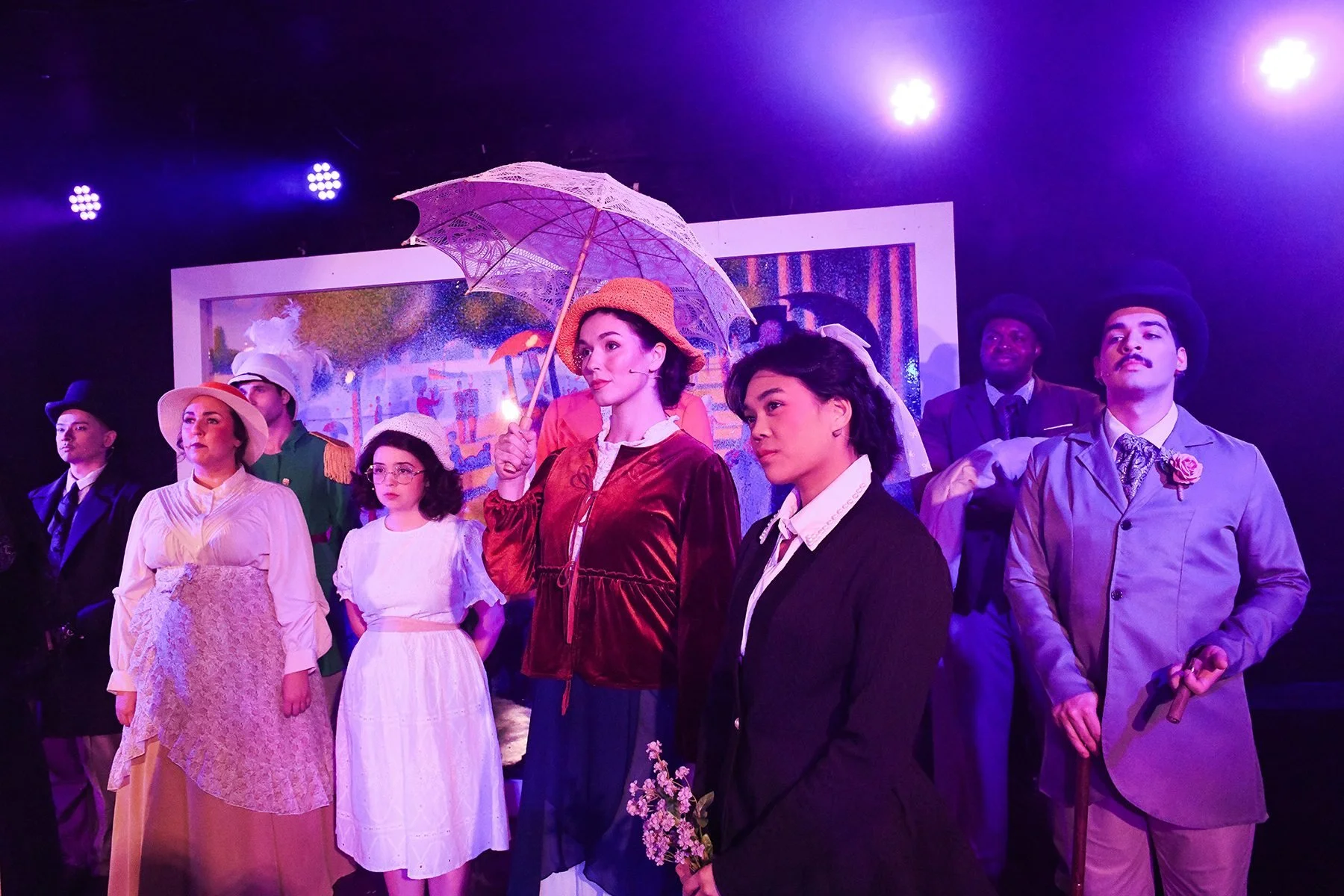
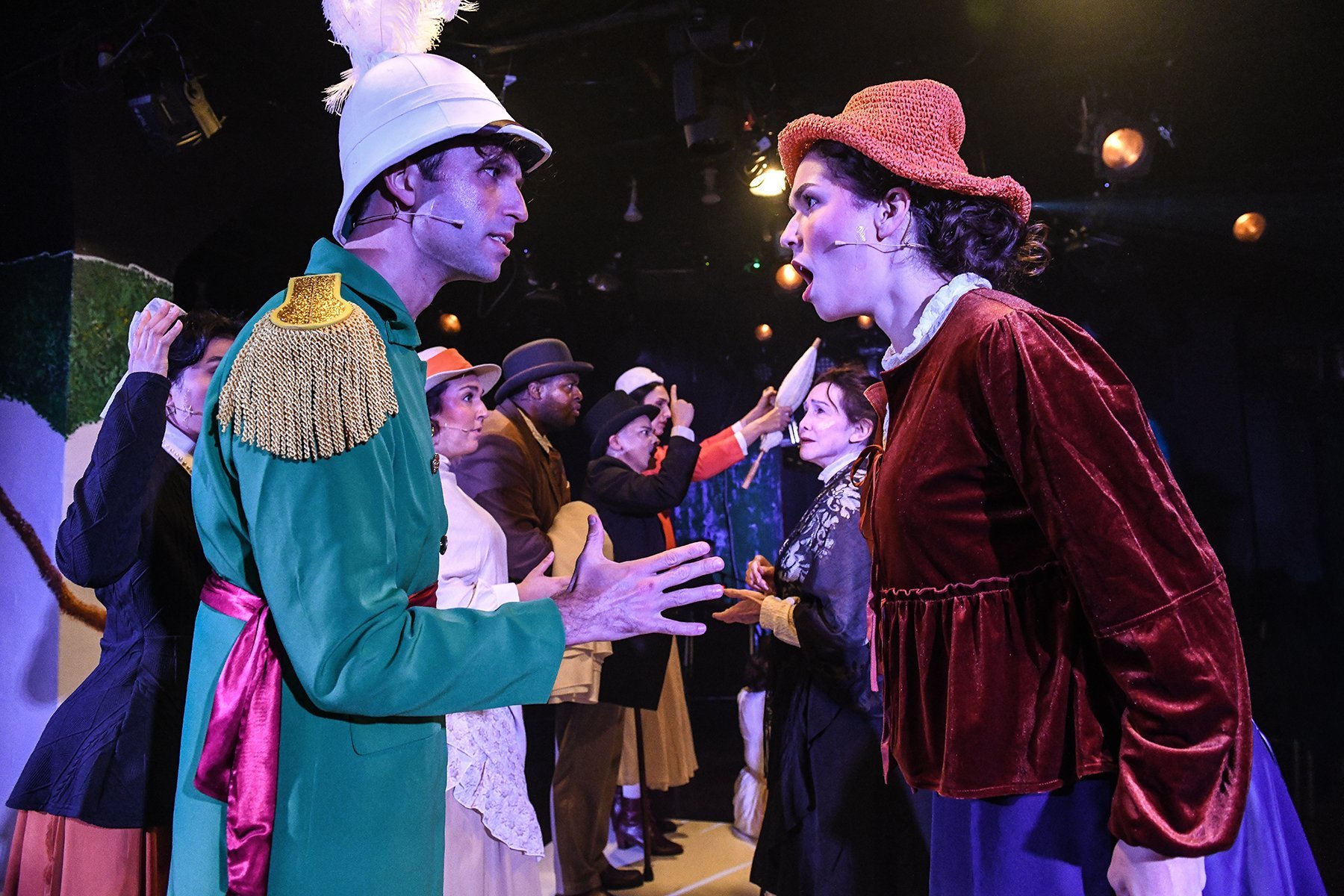
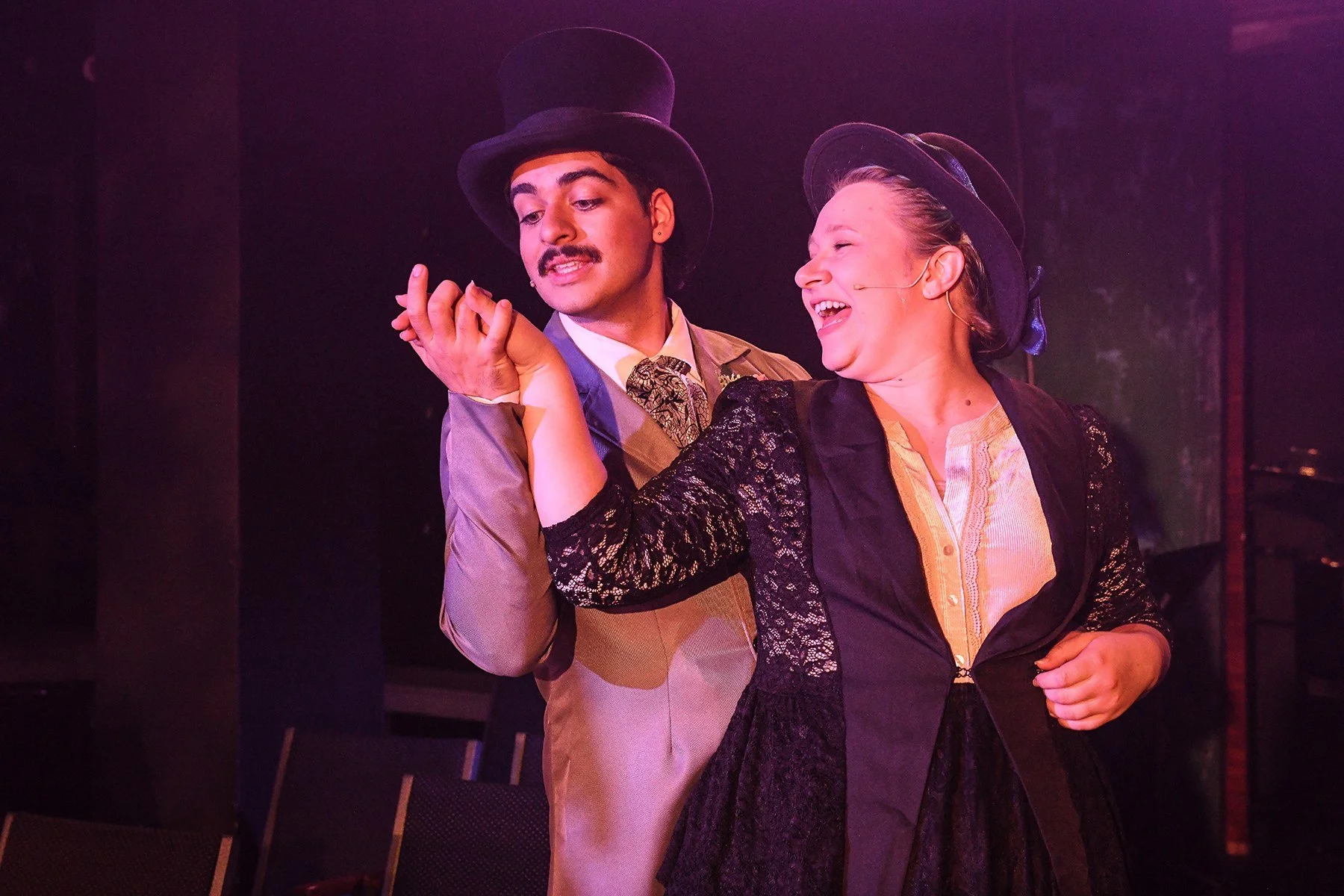
“Sunday in the Park with George” returns to the Chicago stage this season, through a set of street front double doors on Division Street. Kokandy Productions tackles this beloved musical in Chopin Theatre’s Downstairs Studio, an intimate black box in the round. With book by James Lapine and music and lyrics by Stephen Sondheim, “Sunday” took home the 1985 Pulitzer Prize for Drama—one of only 10 musicals to win the esteemed prize—and amassed a whopping 10 Tony Award nominations, including Best Musical. It’s also said that 1 in 3 music theatre majors have at least one lyric discreetly tattooed somewhere, easily covered by a character shoe or mic pack.

“Sunday in the Park with George” tells a fictional story about the life of French Neo-Impressionist painter George Suerat, who lived in the late 1800s and painted A Sunday Afternoon on the Island of La Grande Jatte. The first act follows George during his time creating the famous painting, at odds with his obsessive need to create something new on the canvas (Seurat is generally considered to be the father of Pointillism) and his failing desire to connect to those around him, including his ailing mother and whimsical muse, Dot. The second act flashes forward roughly 100 years, where George—the great grandson of our first act painter—fights the same battles, and journeys to Île de la Grande Jatte for answers.

There is much to love about this production. Most impressive is Derek Van Barham’s directorial staging, which takes bold risks with music theater’s golden child, quite literally turning it on its head. “Sunday” is presented here stripped of pointillistic scrims, characteristic cardboard cutouts, and nearly everything you may have known and come to love about Mandy and Bernadette’s turns as George and Dot, respectively. Instead, it deconstructs the story by reducing it to its most basic components—perhaps not so ironically akin to Seurat’s approach to painting. Van Barham’s staging is meticulous, with each choice rooted in the emotional life of the story—not the least of which is George, who has been trapped “on” his canvas, waiting to be freed, as well as the Act One ending which does just that.

The score of “Sunday” is sung beautifully by Missy Wise Vanderzee (Dot) and Kevin Webb (George) with stellar support by the company all under the expert musical direction of Nick Sula. Vanderzee’s vocal styling is imbued with warmth and a deep yearning that nearly tells the story so well, you’d understand it with your eyes closed. Webb skillfully handles one of Sondheim’s toughest scores, deftly pattering his way through artistic turmoil. Their interpretation of the characters differs from the original, an observation made mostly available from the cinematic pro-shot recording from 1986 Broadway cast. This production gives us a more emotionally realized George and Dot, both seemingly aware of their shortcomings in a way that creates dissonance with the Act One ending. Traditionally, we would reach the end of the (first) story with a gap so wide and entrenched between the would-be lovers, our hearts break for their incompatibility despite their obvious chemistry and desire. In this production we feel that tension dissipated, wondering if maybe they could make it work, if only they had a little more time. And a solid couple’s therapist.

Act Two, which is anecdotally known to be the tougher of the two stories, comes through stronger in this production with a truly delightful Chromolume experience and Vanderzee’s portrayal of Marie. The cast feels most comfortable in the modern day setting and, by comparison, stilted by the period requirements of Act One. The Act One book is difficult, written in a stylized language that lands somewhere between what feels like English translation and “pointillistic” text. A terrific challenge for the music theatre actor, one I’m sure these performers will embrace and explore through the rest of the run.

Go see it. Always see “Sunday in the Park with George” and always support storefront theatre. Theatre is a living, breathing thing and by that definition, we would benefit from more productions with a strong point of view that challenges our understanding of the text, the lyrics, and the meaning. The entire Kokandy Productions team should be proud of their work, and I am grateful to have had the opportunity to have seen it.

GUEST CONTRIBUTOR | SARAH FRANCES FIORELLO is a graduate of Shenandoah Conservatory with a BFA in Music Theatre and a Chicago-based poet, writer, and performer.  @writtenbysarahfrances

PHOTO| Evan Hanover

Kokandy Productions
presents
Sunday in the Park with George
Chopin Theatre
1543 W Division St
through November 1, 2026


CHOPIN WEBSITE | TICKETS

KOKANDY WEBSITE

For more reviews, visit: Theatre In Chicago

ARCHIVE

PicksInSix® is a registered trademark of Roxbury Road Creative, LLC
PicksInSix Review: Come From Away - Marriott Theatre


Where The River Meets The Sea …
PicksInSix® Gold Review |
Ed Tracy

It is startling to realize that twenty-five years have passed since a savage attack on America changed the world as we know it. Ask anyone born before 1996 and they can tell you where they were that fateful day, how shocked and saddened they felt in the weeks and months that followed, and how they grieved for the nearly 3,000 souls lost at the World Trade Center, the Pentagon and in a field near Shanksville, Pennsylvania.

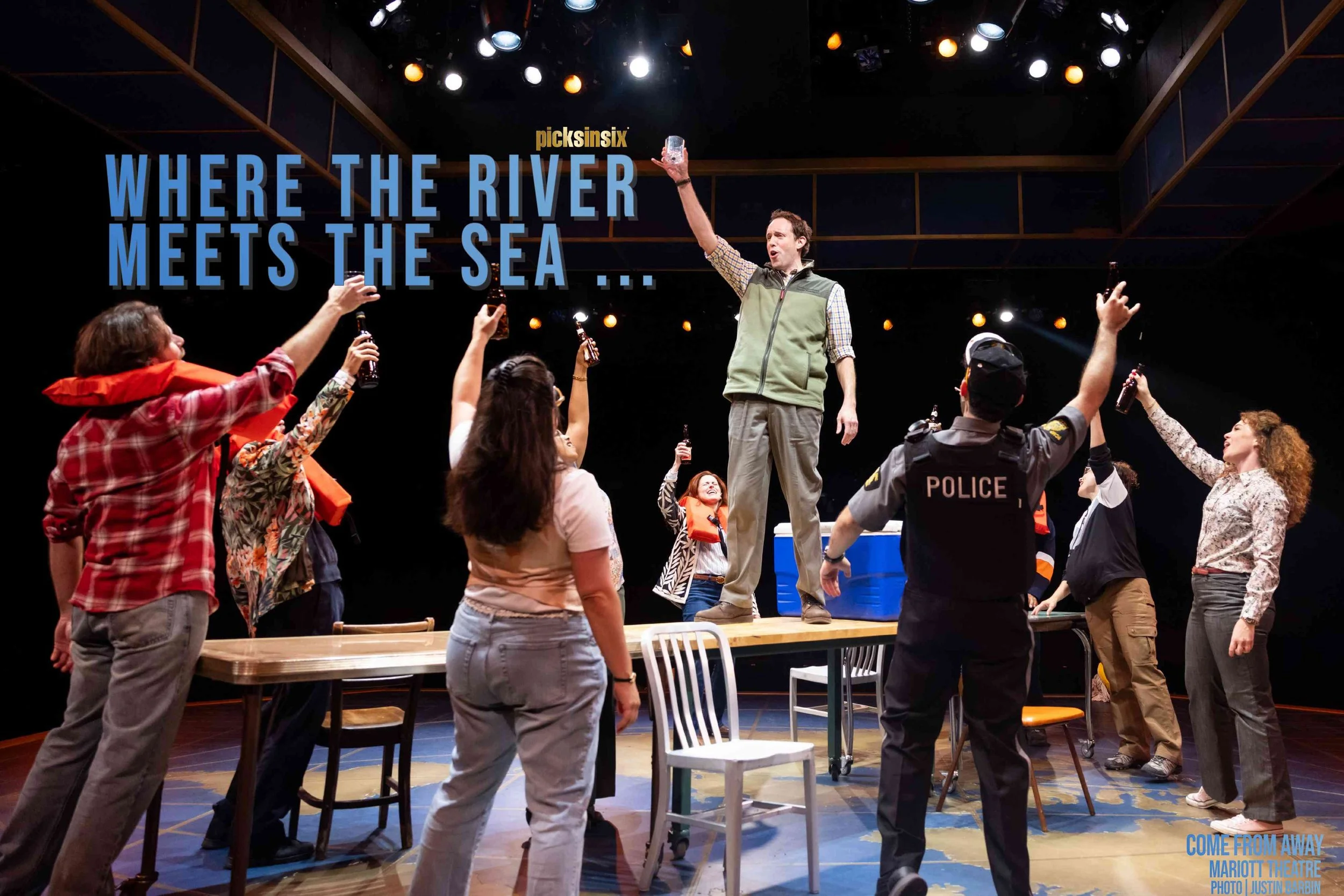
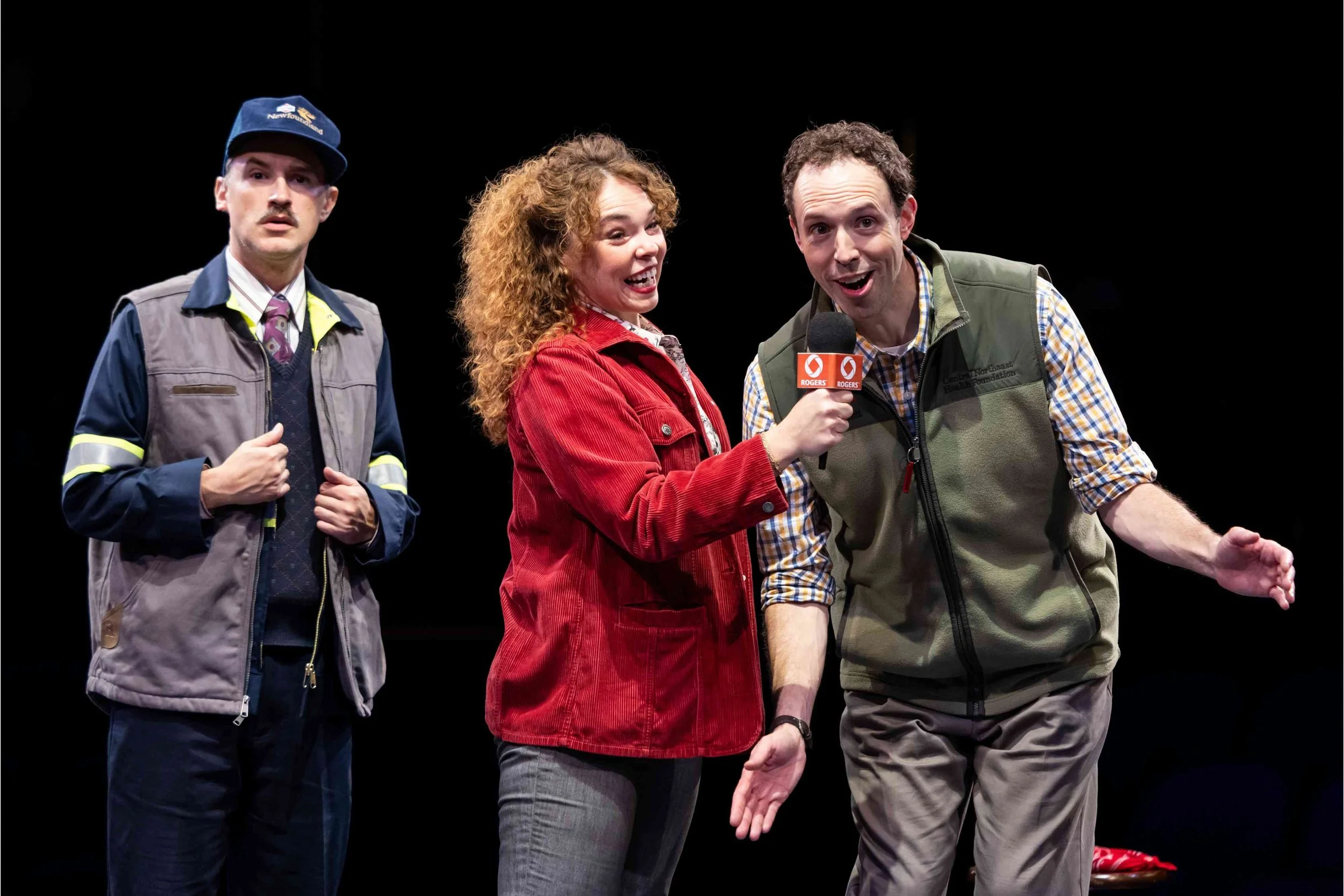
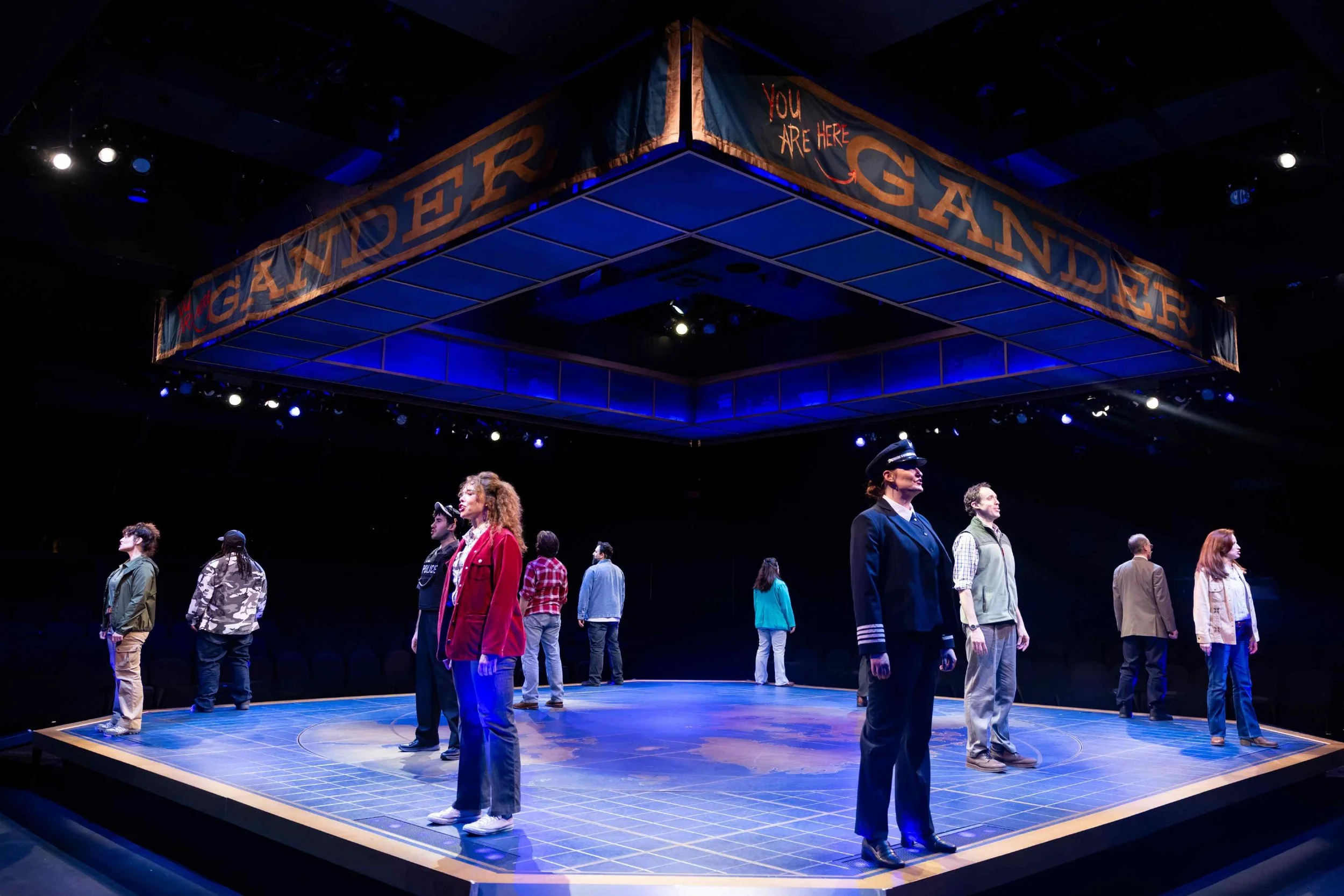
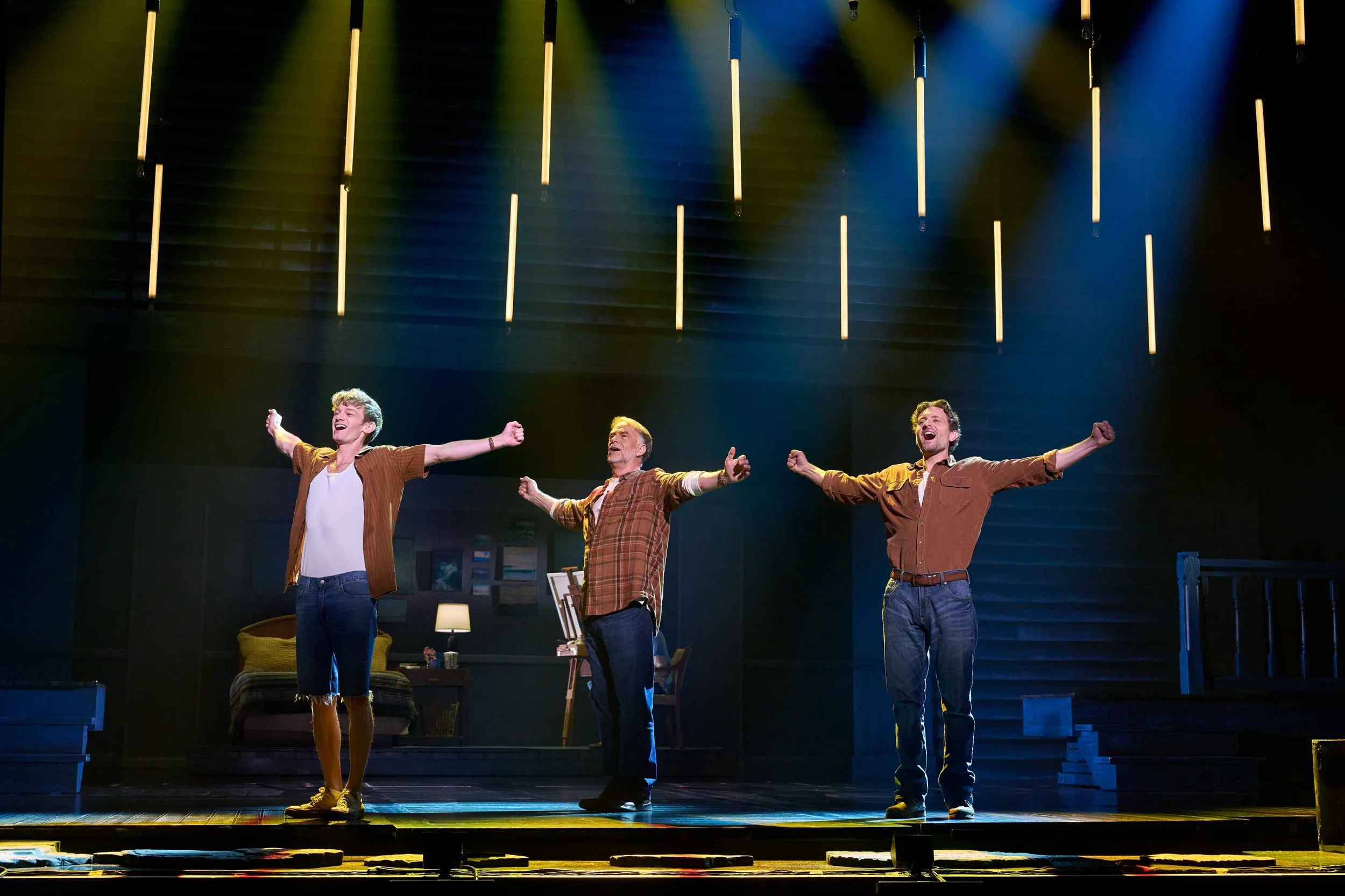
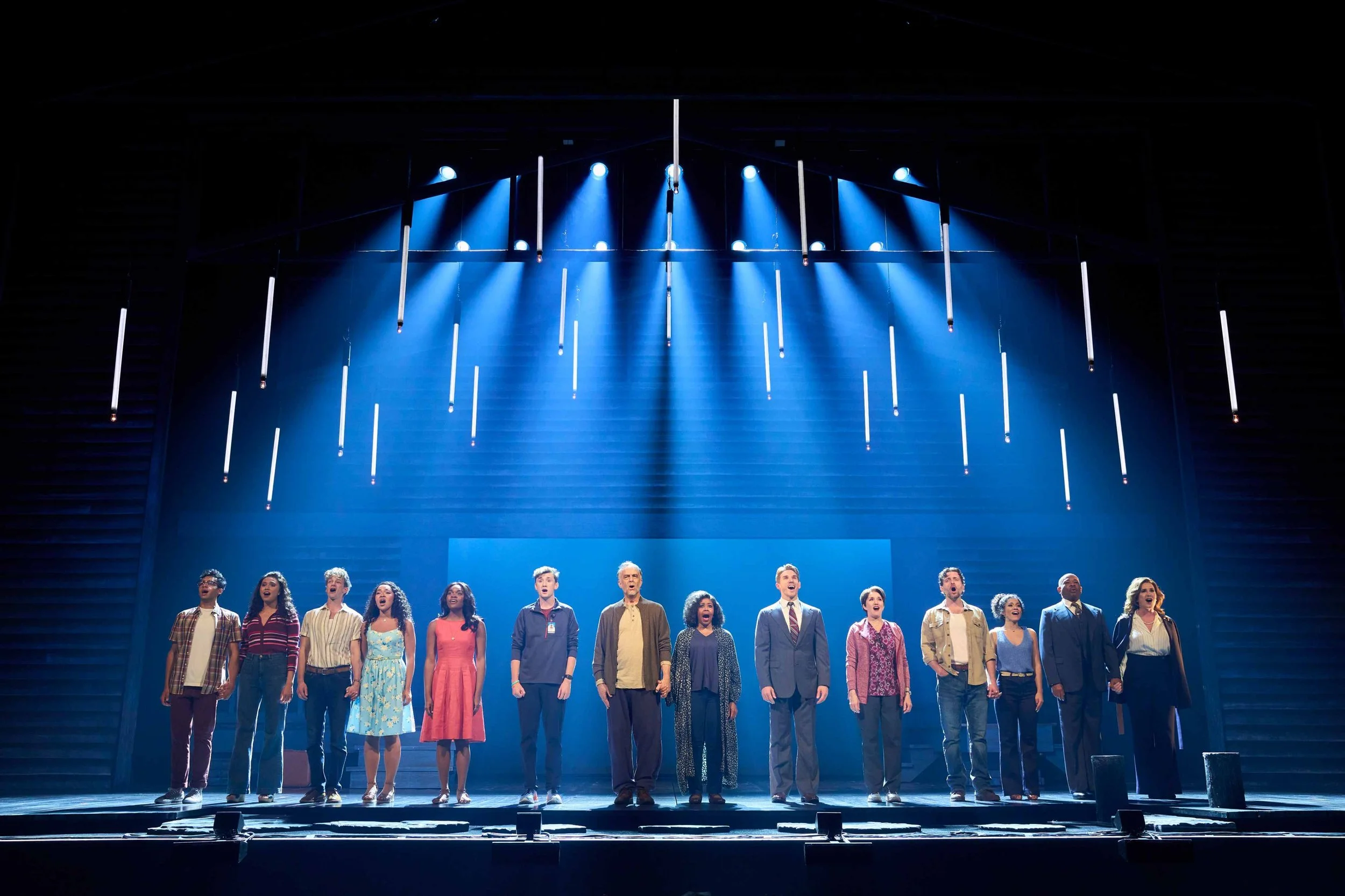
And on Wednesday evening, a truly stunning production of “Come From Away” opened at the Marriott Theatre in Lincolnshire. Director Jessica Fisch and choreographer Katie Spelman have assembled an unmatched Chicago-based ensemble of stage veterans presenting a tapestry of true stories of compassion and kinship in the days following the 9/11 attacks. This show is electric, inspiring and fits the Marriott Theatre’s in-the-round-stage like a glove.

In the moments following the terrorist attacks, life as we know it came to a full stop. All air traffic within the United States was grounded. International travel was immediately restricted and commercial passenger flights that had sufficient fuel to return to their city of origin in Europe or Asia did so. Those that could not were forced to land wherever they could.

Three locations in Canada—Halifax Stanfield International Airport in Nova Scotia, Vancouver International Airport in British Columbia, and Gander International Airport in Newfoundland— served as a safe haven for thousands of international travelers until operations could be restored.

Gander was a small provincial town of approximately 10,000 when 38 planes landed on September 11, 2001 with nearly 7,000 passengers aboard. As residents quickly mobilized resources, food, medical care and services, all of the passengers were not allowed to deplane for nearly 24 hours. In the days that followed, the “plane people” of all nationalities—known as “come from aways”—received an epic outpouring of support from the Newfoundlanders. Together, over the hours and days that followed, everyone learned the universal language of patience, compassion, and generosity.

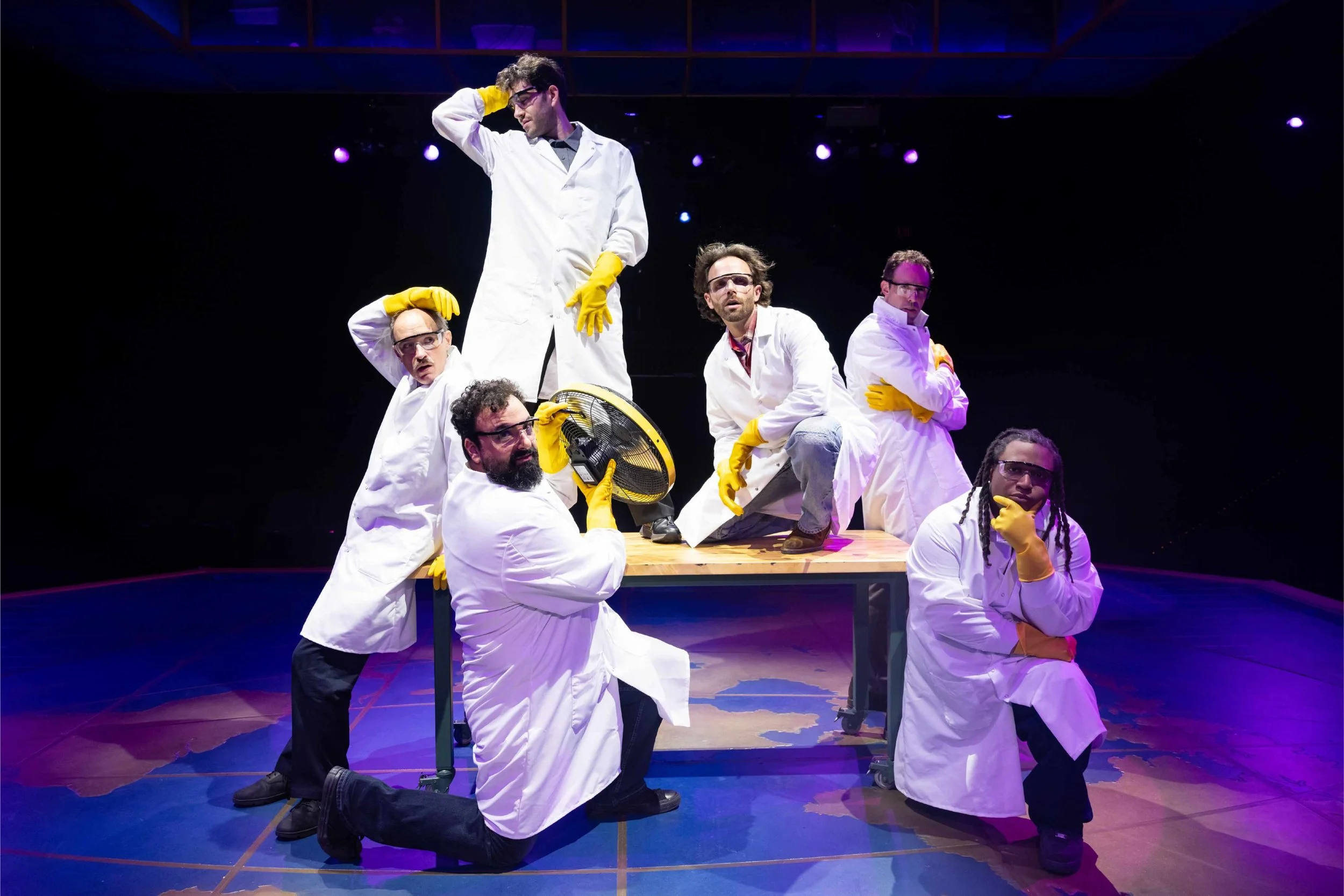
We might not know as much of this heartfelt story if the husband and wife team of Irene Sankoff and David Helm had not attended a reunion in 2011 and conducted hundreds of interviews. That source material forms the core of their brilliant 2017 Broadway musical “Come From Away,” distilled into dozens of composite characters of immense warmth and humor, each with a strong sense of resilience and pride. It is a substantial piece for 12 actors in a fast-paced 100-minute format which in the capable hands of Fisch and Spelman is quite literally a work of art.

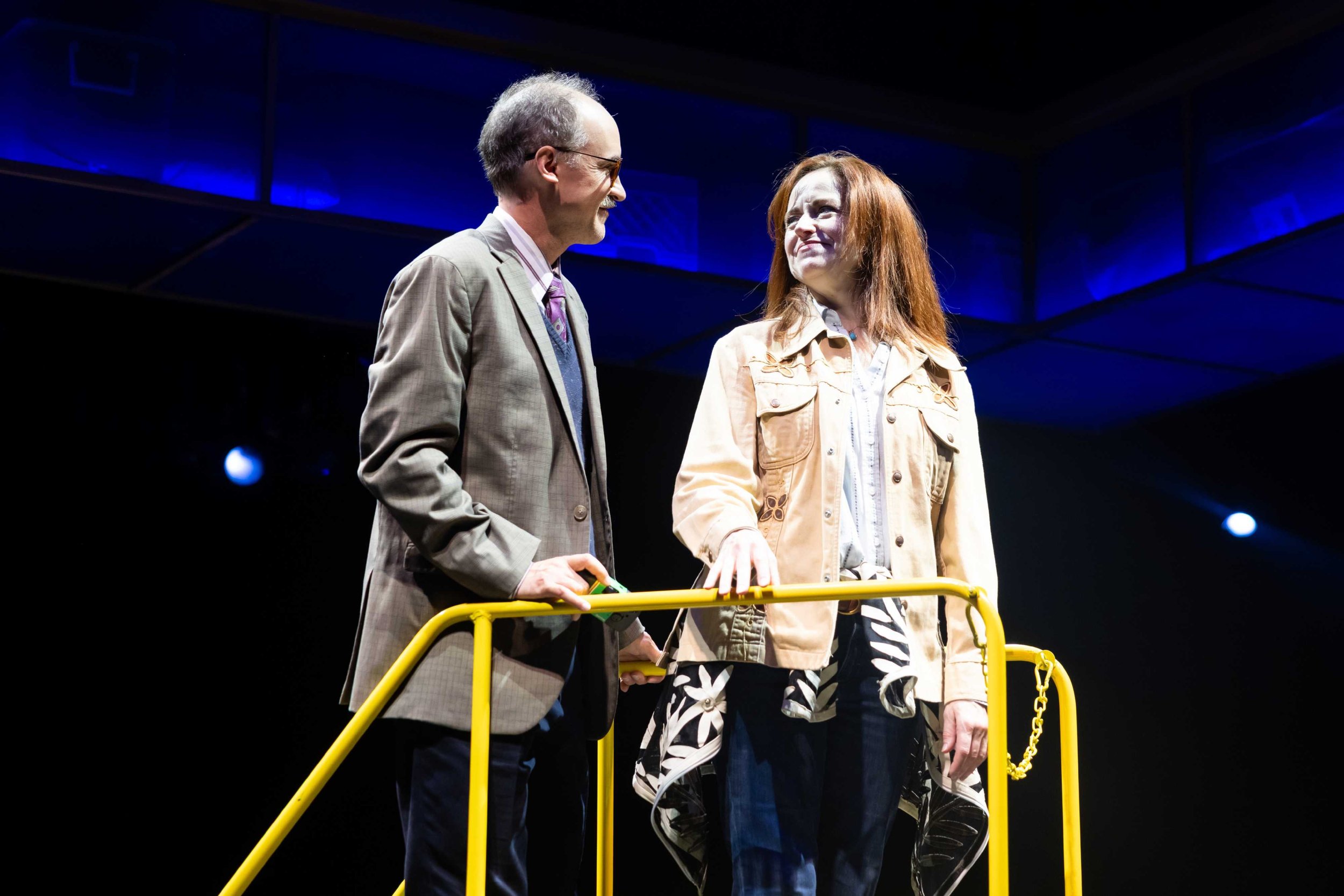
Marriott’s “Come From Away” is also a bit of a professional homecoming all its own. The key romantic storyline is the heartfelt relationship of Diane and Nick, served up perfectly by Heidi Kettenring and Matt Crowle, both returning to the Chicagoland stage after recent national tours. Sharriese Hamilton is marvelous reprising the role of Hannah that she played recently in the Australian touring production of the show. The extraordinary talent and wide-ranging stage skills—and dialects—of Alex Goodrich, Devin DeSantis and Sarah Bockel are on full display, as are Justin Allbinder, Denise Devlin, Madison Kauffman, Michael Earvin Martin and Jonathan Shaboo. Lexie Dorset Sharp shines in the role of Captain Beverley Bass, the first female commercial pilot.

The story develops organically on Scott Penner’s scenic design that incorporates a stage revolve, tables and industrial stair units that are all integrated seamlessly in the flow of the piece. From the rousing “Welcome To The Rock,”“38 Planes,”“Screech In,” and “On the Edge,” to the more contemplative “Stop the World,”“Prayer,” and “Me and the Sky,” this is musical emotion in motion under Music Director Ryan T. Nelson. Celia Villacres conducts nine musicians through a score that features nearly twenty instruments nested squarely in traditional themes and melodies.

“Come From Away” serves as a vivid reminder that even in the grip of an international tragedy, ordinary people from all walks of life are capable of acts of kindness and generosity well beyond our imagination. It also speaks to our own capacity to overcome adversity for the new life that awaits us and assurance that the newfound relationships forged during difficult times will give us comfort and hope for the future.

PHOTO|Justin Barbin

Marriott Theatre
presents
Come From Away
Ten Marriott Drive
Lincolnshire, IL
through October 18, 2026


WEBSITE

TICKETS

PROGRAM

For more reviews, visit: Theatre In Chicago

ARCHIVE

PicksInSix® is a registered trademark of Roxbury Road Creative, LLC
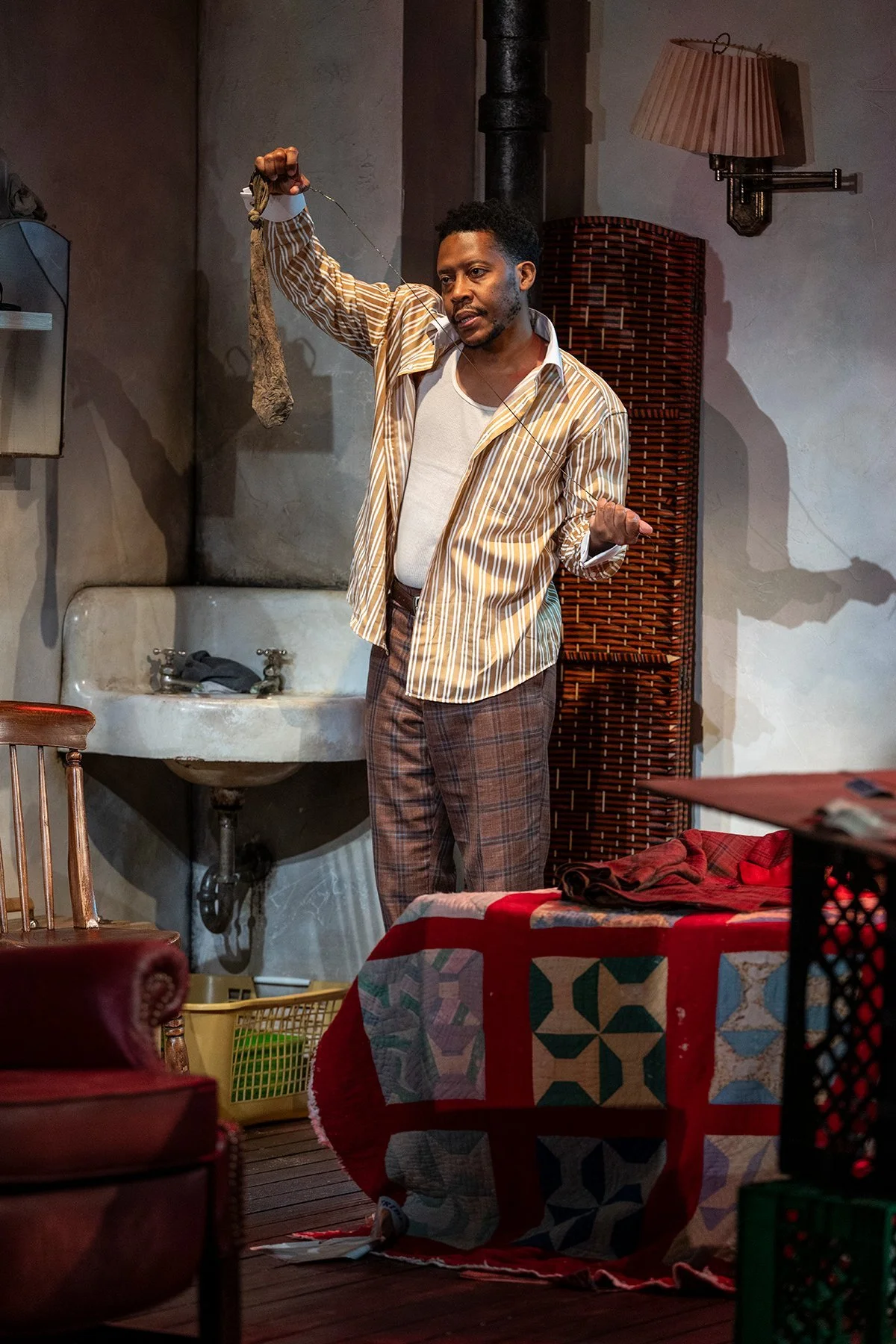
PicksInSix Review: Adolescent Salvation - Theater Wit


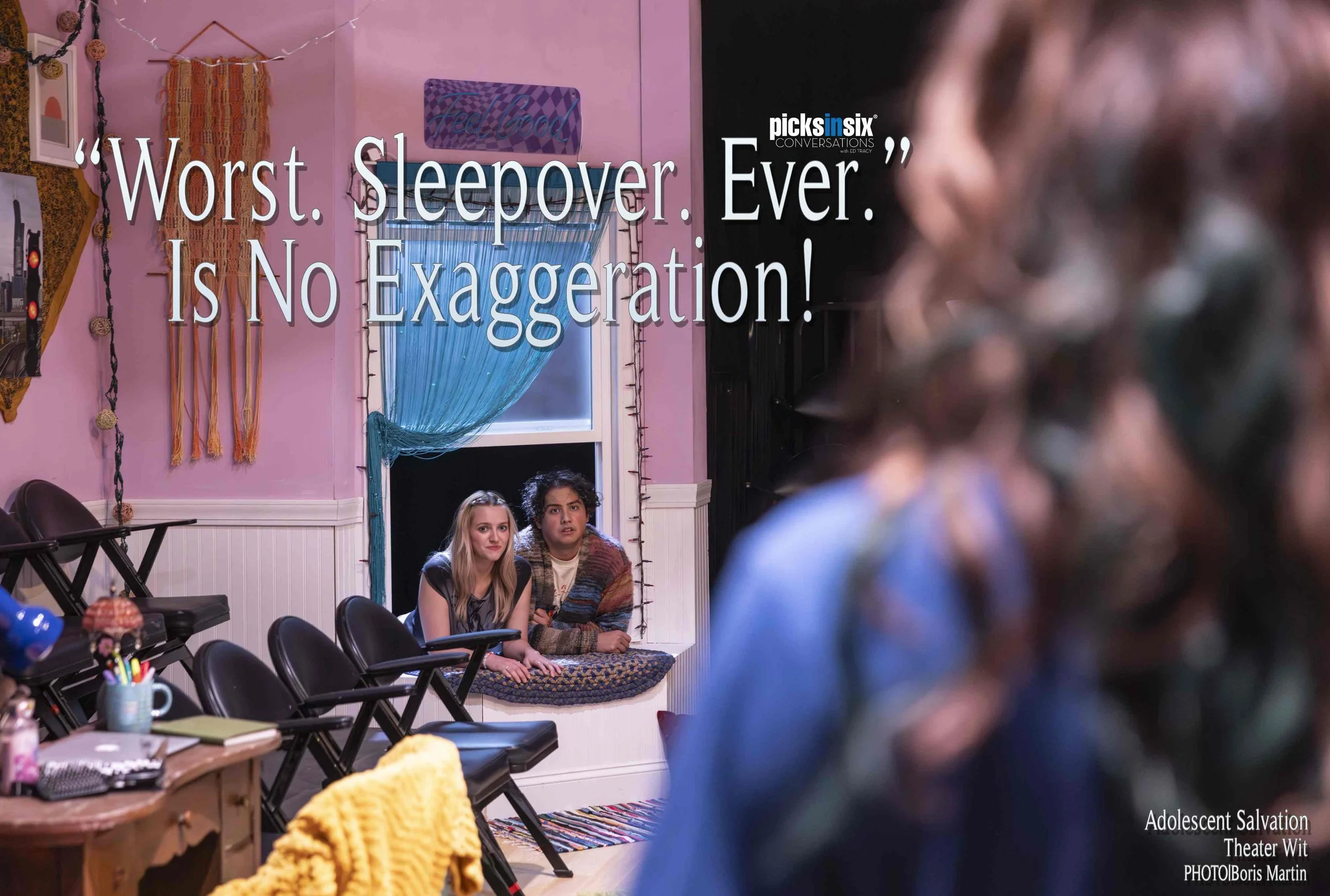
“Worst. Sleepover. Ever.” Is No Exaggeration!
PicksInSix® Review | Guest Contributor |
Perse Grammer

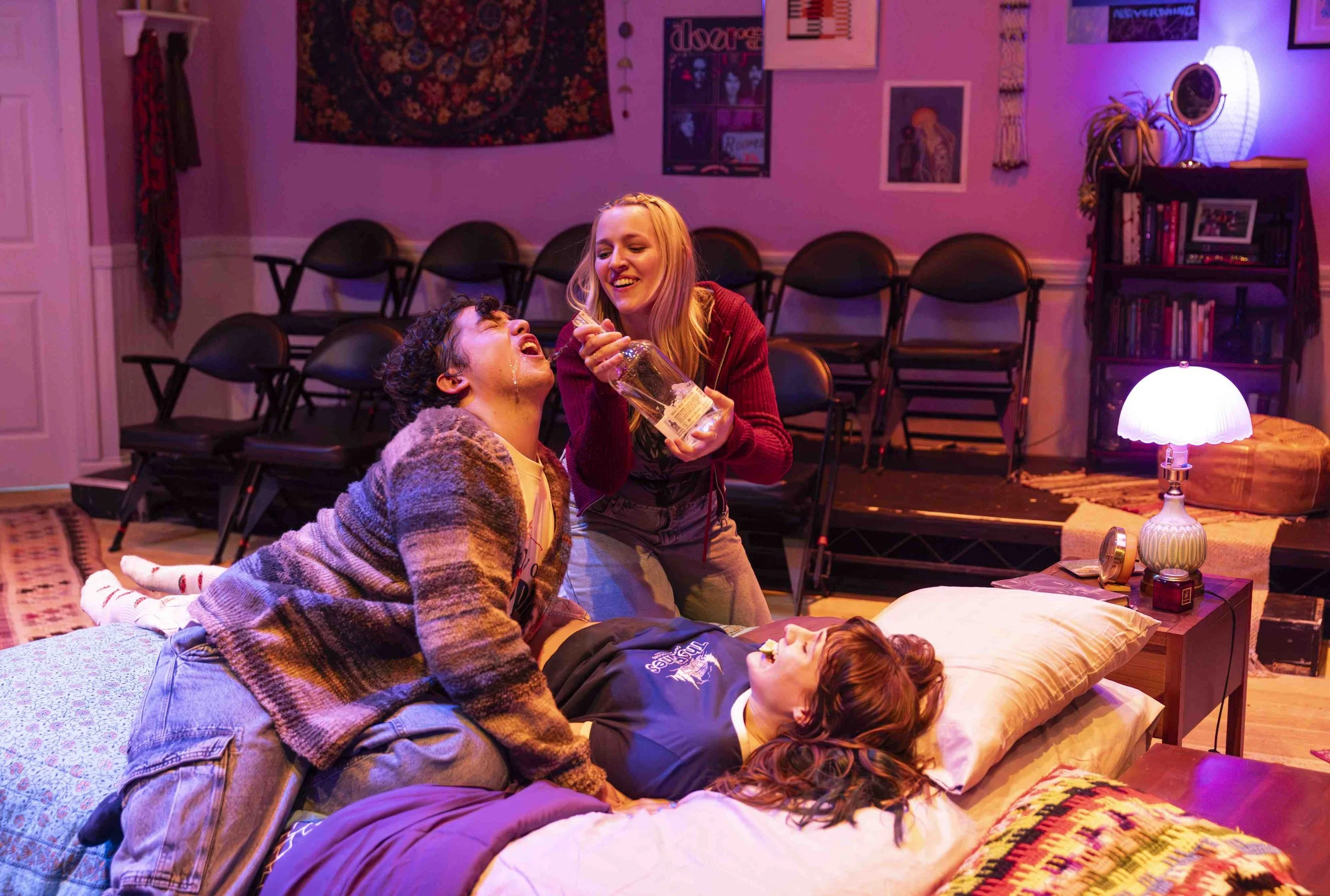
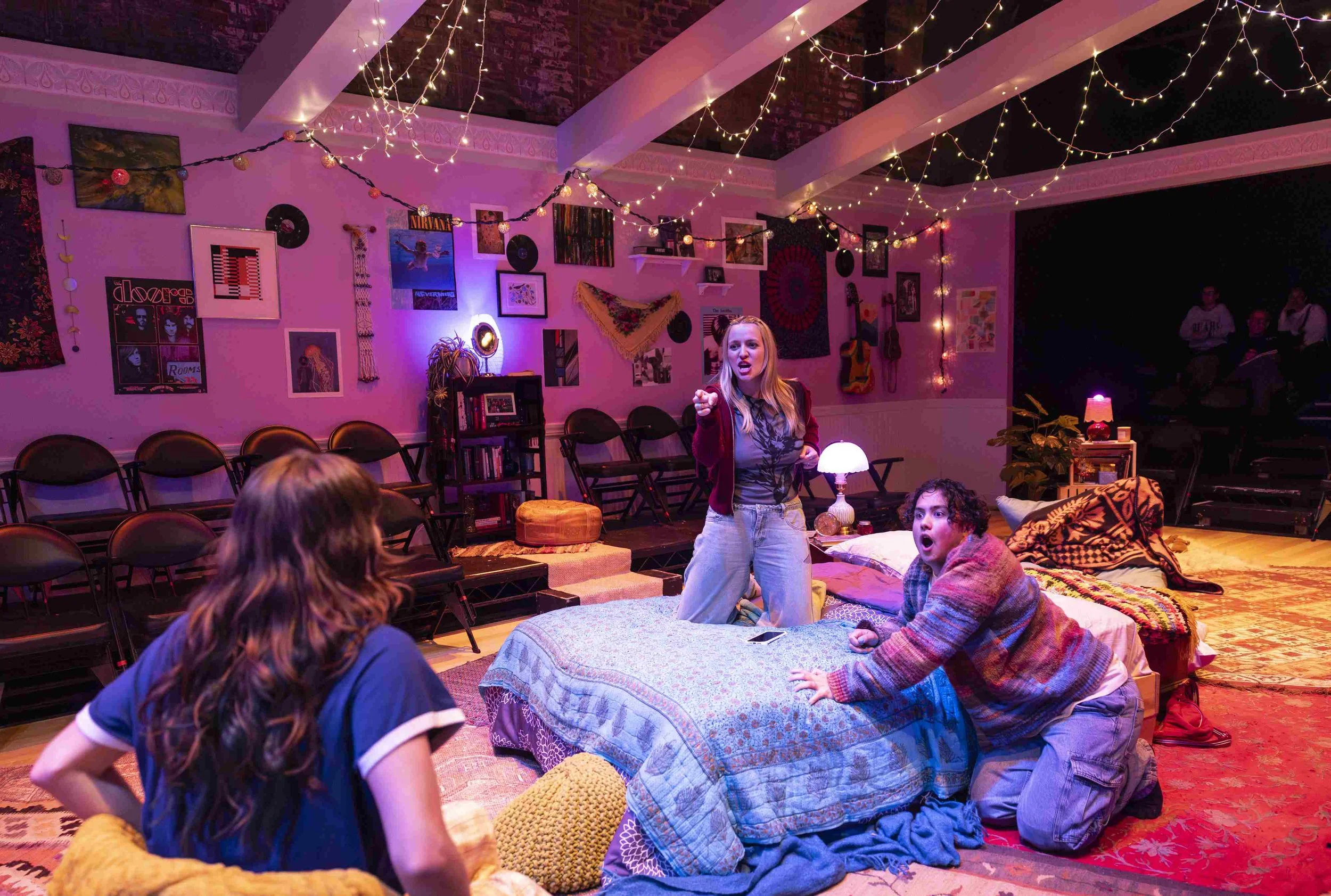
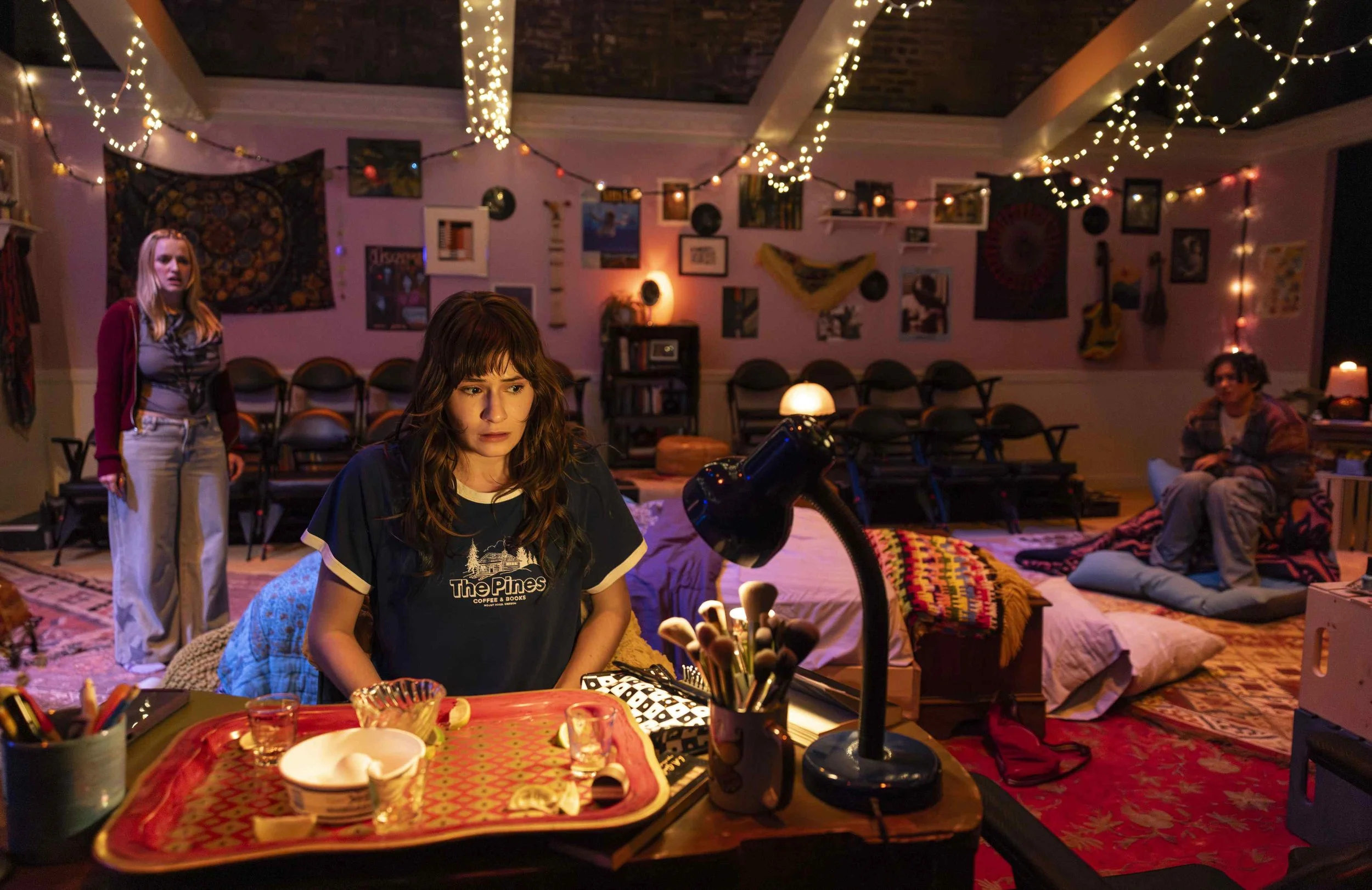
To enter Theater Wit’s production of “Adolescent Salvation,” I have to push through the clothes hanging in a teenage girl’s closet. Upon entering, I am immediately transported to the bedroom of every quirky rich girl I knew growing up. The walls are covered in posters and tapestries, color-changing lamps perch on various surfaces and a turquoise record player stands out amongst the knickknacks. Blasting songs like “Ignorance” by Paramore and “Not Strong Enough” by boygenius only enhance the teenage girl-dom of it all. Tying the space together are the fairy lights grandly draped from the high white rafters. Scenic designer Jonathan Berg-Einhorn has knocked it out of the park, immersing the audience in the show by making them part of the walls.

This room belongs to Natasha. And we’ll soon learn that her closet doesn’t just contain clothes and eager audience members. There is also at least one skeleton.

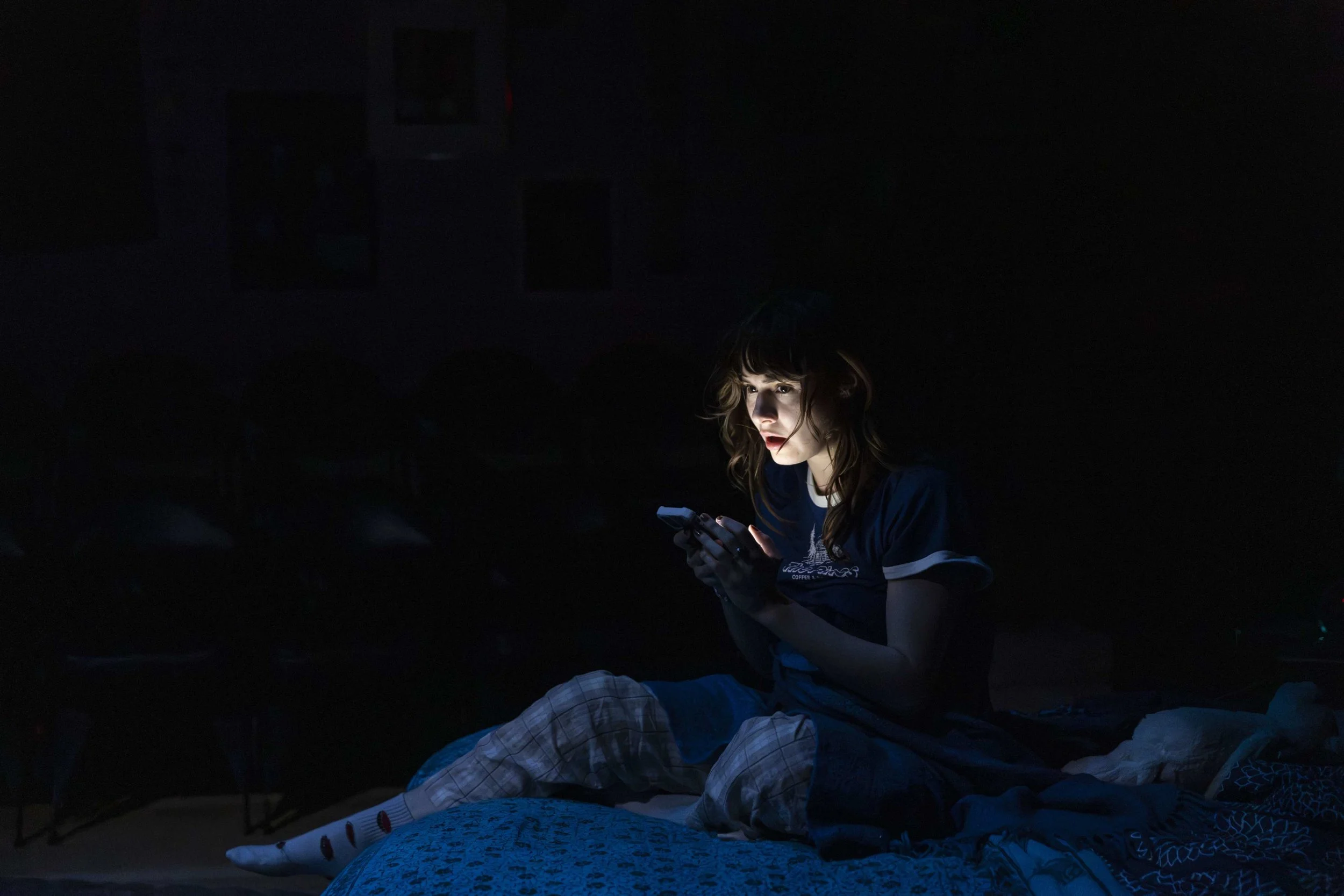
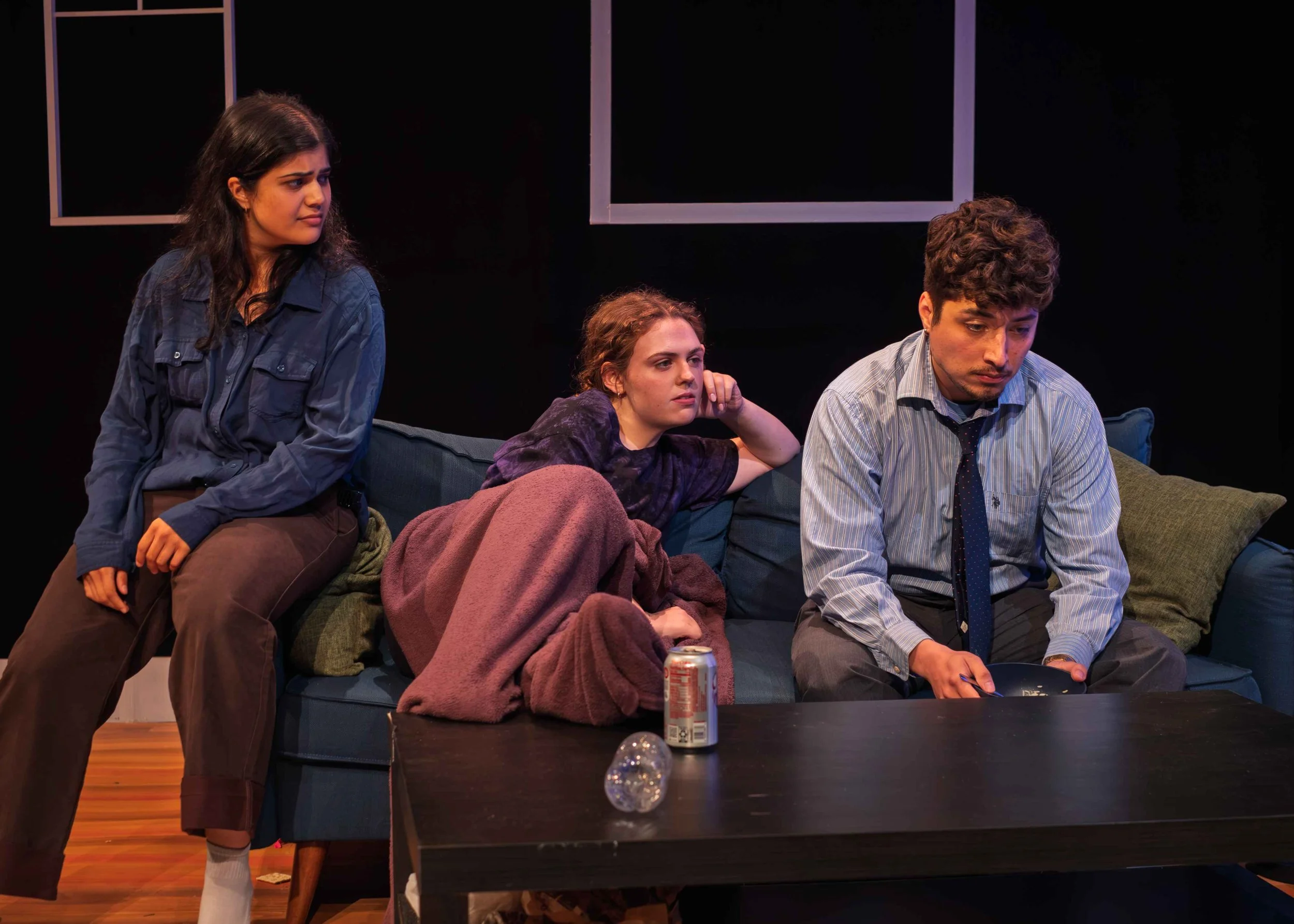
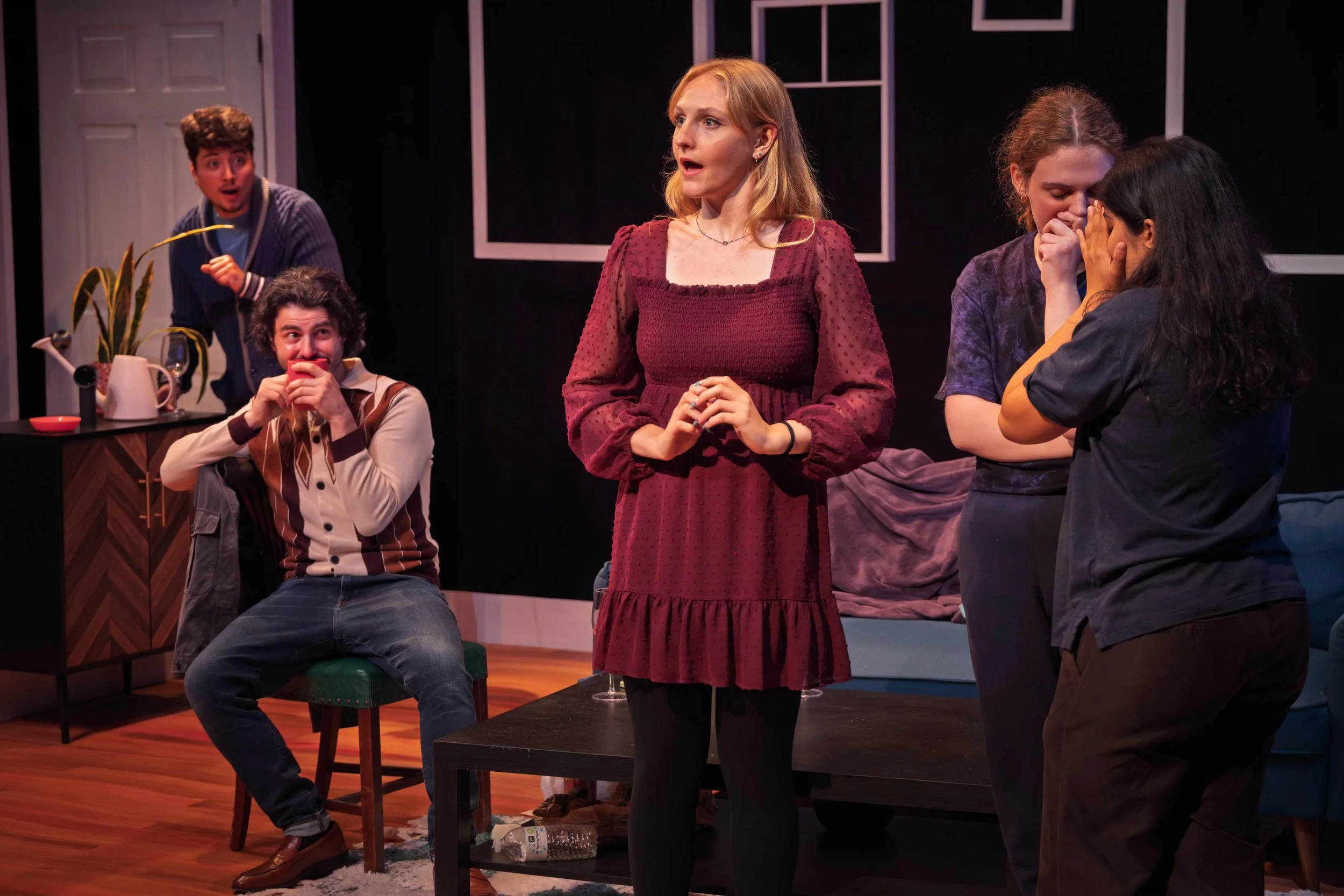
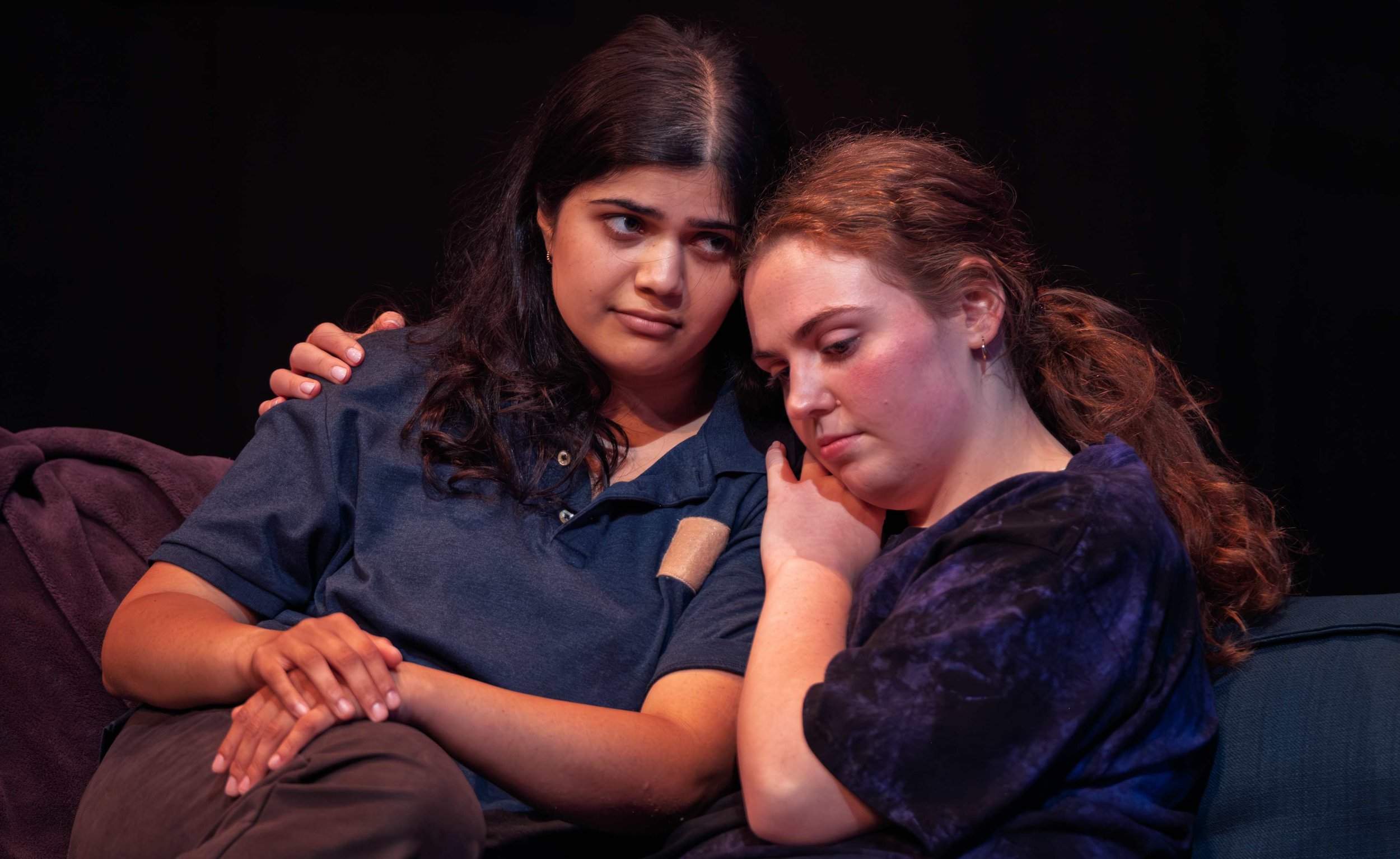
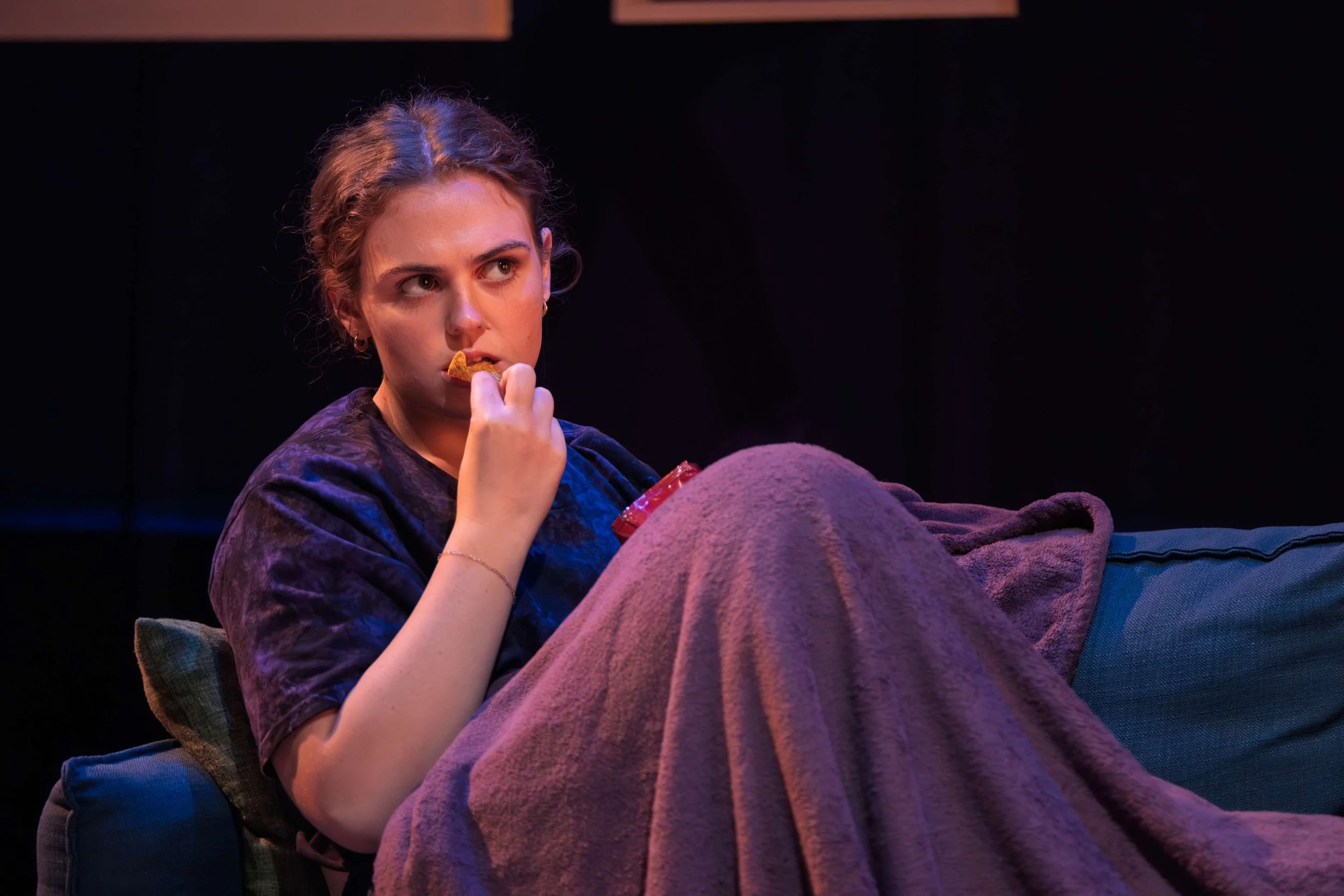
We begin in the dark, with nothing but screen light and TikTok audio blaring from the phones of three teens sprawled across the floor. Sweet, awkward Natasha (Piper Jean Bailey) and snarky, domineering Taylor (Jordan Levene) have nothing in common apart from moms insisting they have a sleepover. Taylor has dragged along her gay best friend, who is also named Taylor (Brandon Acosta). Let’s call them Taylor G. (for girl) and Taylor B. (for boy). While Taylor B. has some genuine interest in befriending Natasha, Taylor G.’s focus is on extracting her darkest secrets. But when she discovers something far worse than she expected, Taylor G. hatches a plan to save Natasha—a plan that will also put her in grave danger. While the play is a bit clunky at first, it finds its groove as the plot twists get crazier. And oh, do they get crazier!

As the night unravels, Natasha’s initially adorable distress morphs into a vicious breakdown. Bailey brings a kaleidoscopic approach to Natasha—she’s kind and innocent, manipulative and demanding, and above all else, intensely struggling. Acosta’s performance is steady and humorous, bridging the gap between the girls’ clashing perspectives. He’s also got a knack for physical comedy. Which, whether using props or bodies, is a delightful constant of “Adolescent Salvation.” As Victoria, Maura Kidwell’s physicality is eye-catching—all sharp angles and dramatic leaning. She entirely embodies Natasha’s mom and former hero, a woman who used to be in a feminist band called The Late Term Abortions. Levene’s Taylor G. is apathetic one moment, passionate the next, all wrapped in a layer of deeply teenage snark. She’s the mean girl who’s funny enough that you don’t quite want her to stop talking.

While playwright Tim Venable delves deep into every character, I wish we got to explore more of Taylor G.’s nuances within the text. There are a few mentions of her difficult home life—her mom cheating on her dad with a younger man—and Levene’s performance alludes to Taylor G.’s desperation to control the room. But she starts “Adolescent Salvation” declaring she will never disclose vulnerability, and in a play where everything gets turned on its head, that remains true to the end. While Taylor B. and Natasha bond with relative ease, Taylor G. is Natasha’s tormentor and her white knight. The push-and-pull between them is the driving force for much of the play’s action. But unlike Natasha, we just don’t know why Taylor G. behaves the way that she does. Knowing that could make a touching moment near the end—the Taylors crawling through Natasha’s window to help her like true friends should—more impactful. Even so, that scene is strong. Strong enough to be the final moment of the play, in my eyes.

Director Guillermo Cienfuegos and his team have developed a thrilling play that shines a light on the dark realities of being a teenager with nobody’s support but unlikely friends. “Adolescent Salvation” has engineered moments that will make you cackle and cringe, often at the same time. The theatre in the round setup—with great attention paid to sightlines—means whenever you can’t bear to look at the action on stage, you’ve got plenty of fellow audience members writhing in discomfort to watch. I won’t say what exactly causes these audible groans and full body cringes—you’ll just have to experience that for yourself. Because the shock factor is crucial to ensure “Adolescent Salvation” is abruptly funny and intoxicatingly uncomfortable.

GUEST CONTRIBUTOR | PERSE GRAMMER is a multidisciplinary writer and theatre artist based in Chicago. Grammer is currently developing their latest play through a mentorship with Sandy Shinner at Shattered Globe Theatre. They hold a BFA in Playwriting from The Theatre School at DePaul University.  www.persegrammer.com

PHOTO|Boris Martin

Theater Wit
presents
Adolescent Salvation
1229 Belmont Avenue
through October 3, 2026


WEBSITE

TICKETS

For more reviews, visit: Theatre In Chicago

ARCHIVE

PicksInSix® is a registered trademark of Roxbury Road Creative, LLC
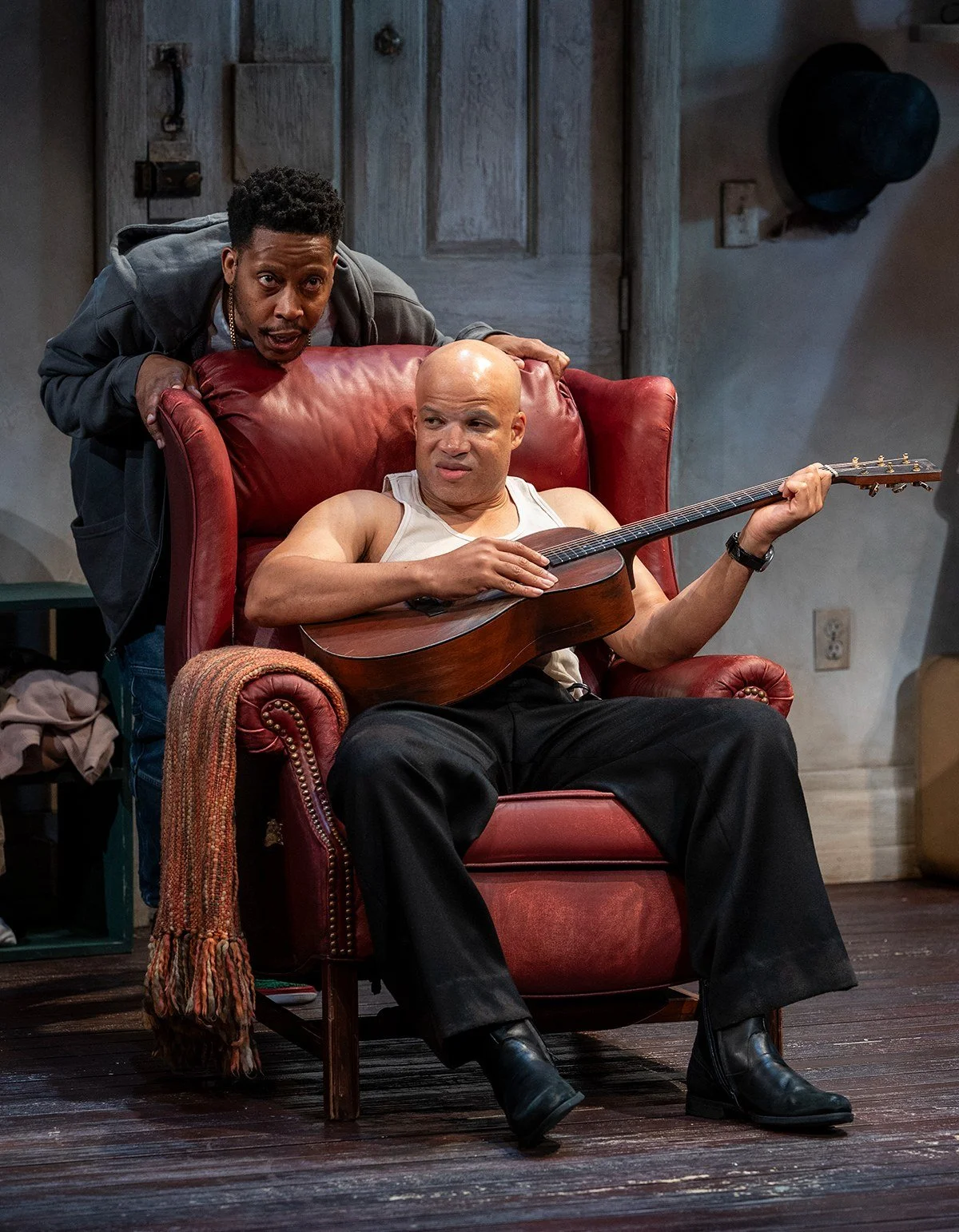
PicksInSix Review: Sisters - Writers Theatre


‘Sisters’ Story Has Bugs, Still Connects.
PicksInSix® Review | Guest Contributor | Catey Sullivan

Artificial Intelligence has been around for at least 70 years, but pop culture has been obsessed with it for millennia (See: “The Sorcerer’s Apprentice,” circa 150 AD). From the friendly, protective robot of “Lost in Space” to the husband-worshipping femmebots of “The Stepford Wives” to the synthetic companions of “Ex Machina,” “M3GAN,” AI is a Pandora’s Box of limitless, fascinating mutations. Its place in storytelling is as vast as the data it collects.

Matthew Libby’s “Sisters,” running through November 8 at Glencoe’s Writers Theatre, depicts in harrowing terms the human cost that AI can exact on those who rely on it heavily for companionship. Directed by Jessica Thebus, “Sisters” is punctuated by intensely powerful moments that will leave your brain in a twist, grappling with Gordian Knot of moral complexities involved with creating eerily sentient-like life. AI could make Victor Frankensteins of us all.

Libby’s drama focuses on the human Matilda (Brenda Barrie) and Greta (Chloe Johnston), her AI “sister” who lives in a computer. There are flaws here, but Libby has a knack for distilling the essence of being human with rather brutal accuracy. Humans, notes Greta, infinitely complex souls who spend their lives trapped in decaying bodies while desperately seeking transcendence. No lies detected.

Greta’s own transcendence is a bit of a deux ex machina—something that seems to happen due to random magic because the plot demands it rather than earns it. The other issue is that “Sisters” slightly drags in its final third. Matilda is the only character on stage, which makes some of Greta’s dialogue-heavy passages less than fully engaging. Barrie covers 90 years in Matilda’s life (six to 96) with impressive effectiveness. Adults playing six-year-olds can be squeaky and weird, but there’s no such problem with Barrie, who is consistently believable and relatable as she moves from traumatized child to nonagenarian, Greta (mostly) by her side. Johnston has an arguably even more difficult assignment: Playing invisible software.

Yet Johnston makes Greta unnerving and mind-warpingly understandable. The synth’s desire to “take up space” in her world, her fear of being recoded or “wiped”—aka annihilated— will resonate with any human who has ever felt invisible or been bedevilled with fears of death or dementia.

 “Sisters” movingly explores the impact of loneliness in humans, and Barrie brings it to wrenching life. Greta is nothing but coding and circuitry, but her impact on Matilda’s life is massive, ultimately directing everything from Matilda’s career choice to her bank balance. The emotional cost is more profound yet. Among the most harrowing scenes arrives as Barry howls into an existential abyss, overwhelmed by the losses she’s endured and the choices she’s made. It’s a scene that’ll embed itself in your mind and make you seriously reflect on the long-term psychological effects of making a chatbot your closest confidante.

“Sisters” is provocative and intriguing. But while the two-person cast is excellent, the play itself needs tightening. The technology in the story it tells might be sci-fi. The story “Sisters” spins is one we humans have been grappling with since time immemorial.

GUEST CONTRIBUTOR | CATEY SULLIVAN has been covering Chicago theater for more than 30 years. Her work has been published in the Chicago Sun-Times, Chicago Reader, Windy City Times, Playbill, Chicago Magazine, Chicago Tribune and New City, among others. She has an MFA in creative writing from the University of Illinois. 

PHOTO | Hugo Hentoff

Writers Theatre
presents
Sisters
The Gillian Theatre
325 Tudor Court
Glencoe, IL


WEBSITE

TICKETS

For more reviews, visit: Theatre In Chicago

ARCHIVE

PicksInSix® is a registered trademark of Roxbury Road Creative, LLC

PicksInSix Review: West Side Story - Music Theater Works


Stellar Revival at Music Theater Works!  
PicksInSix® Review | Guest Contributor | Ronald Keaton

To borrow from the barrister, it is nowadays considered a kind of 'settled literature' that the pedigree of “West Side Story” is thick and heavy with legend and quality. It allowed Jerome Robbins—a one-of-a-kind director, creator, and choreographer—to push dance toward its now familiar dominance in storytelling mode. It inspired its still-young American composer Leonard Bernstein to create soaring melodies and rapid-fire musical passages steeped in both tradition and innovation. It pushed playwright Arthur Laurents to draw its story from the greatest of all playwrights—William Shakespeare—by writing dialogue that was both conventional and inventive. He borrowed from the Bard the tool of creating new words to fit this vision of the star-crossed story sparked by the erstwhile lovers Romeo and Juliet. And partially through Mr. Laurents, it launched the astounding career of a young Hammerstein protege in the theatre, initially as a lyricist, one Stephen Sondheim.

Music Theater Works is now offering its version of this timeless endeavor at the North Shore Center for the Performing Arts in Skokie through August 30. And this production team has created their own pedigree in a marvelous way. There is a full 22-piece orchestra directed by Linda Madonia, under the expert baton of Justin Kono. There is oh-so-smart, insightful direction by Sasha Gerritson. Clayton Cross and Isa Ramirez share choreography credit. The intimacy/violence choreographer Nick Sandys created sharp, well-paced gang fights between the Sharks and the Jets, while tenderly and deftly weaving the romantic moments between Maria and Tony.

Most people know now the plot points that surround two young lovers from different races and their plight to find a future. But the battle for gang turf stands in the way, exacerbated by the racial stances each gang possesses. “West Side Story,” because of this issue alone, will always be relevant—even more so in today's sociology. But as the man says, "Love is love is love..." and both these young lovers believe it wholeheartedly. The scenes between Tony (Luke Nowakowski, his eloquent singing belies a touching simplicity) and Maria (Isabella Ruono in a bravura vocal performance) are so well done. They are packed with an unhurried warmth and real emotion, bringing the romantics in the audience to swooning.

The Jets and Sharks are each one strong character in the play. Yes, there are wonderful individual personalities in each gang, but both sides create their unison from the outset. They remain of one attitude, each balanced by the other side. It's really fun to watch, tragic to realize and hard to stage. Connor Ripperger is a stout Riff—"Cool" was fabulous. The Bernardo of Emmanuel Ramirez was smooth and prodding in his insistence that his sister Maria accept Chino (Kameron Rojas-Schueneman, properly hapless and shy) as her lover.

The cops in the show—Lieutenant Schrank (Ivan James) and Officer Krupke (Eric Desnoyers)— nobly bring their brands of gravitas and humor, respectively. Anita (the marvelous Pauleth Jauregui) is a constant presence who reminds Maria of the dangers of her particular love and what it might cost. Ms. Jauregui leads a rousing version of "America" while her duet with Ms. Ruano warning of "A Boy Like That" is fierce and personal. Matt Rosin turns what could be a thankless role in Doc into a real, poignant influence. The entire ensemble of Jets and Sharks brought a creative energy and verve to a piece that demands it in every musical note.

With a striking scenic design by Bob Knuth and lush costumes by Bob Kuhn, the show is visually striking and easily one of the best and most complete productions this writer has seen from Music Theater Works. When we consider our present world in its own exacerbation of the racial stances these gangs possess, this story stands hard and firm. “West Side Story,” because of this issue alone, will always be relevant—both a blessing and a curse. Fortunately for us, it is the blessing part that remains stalwart in the endless creativity here.

GUEST CONTRIBUTOR | RONALD KEATON received an Equity Jeff Award for the performance of his one-man show CHURCHILL. www.solochicagotheatre.com.  Coming soon, his new solo play about Ben Franklin, THE FIRST EMBASSY.

PHOTO|Brett Beiner

Music Theater Works
presents
West Side Story

North Shore Center for the Performing Arts
through August 30, 2026


WEBSITE

TICKETS

PROGRAM

For more reviews, visit: Theatre In Chicago

ARCHIVE

PicksInSix® is a registered trademark of Roxbury Road Creative, LLC
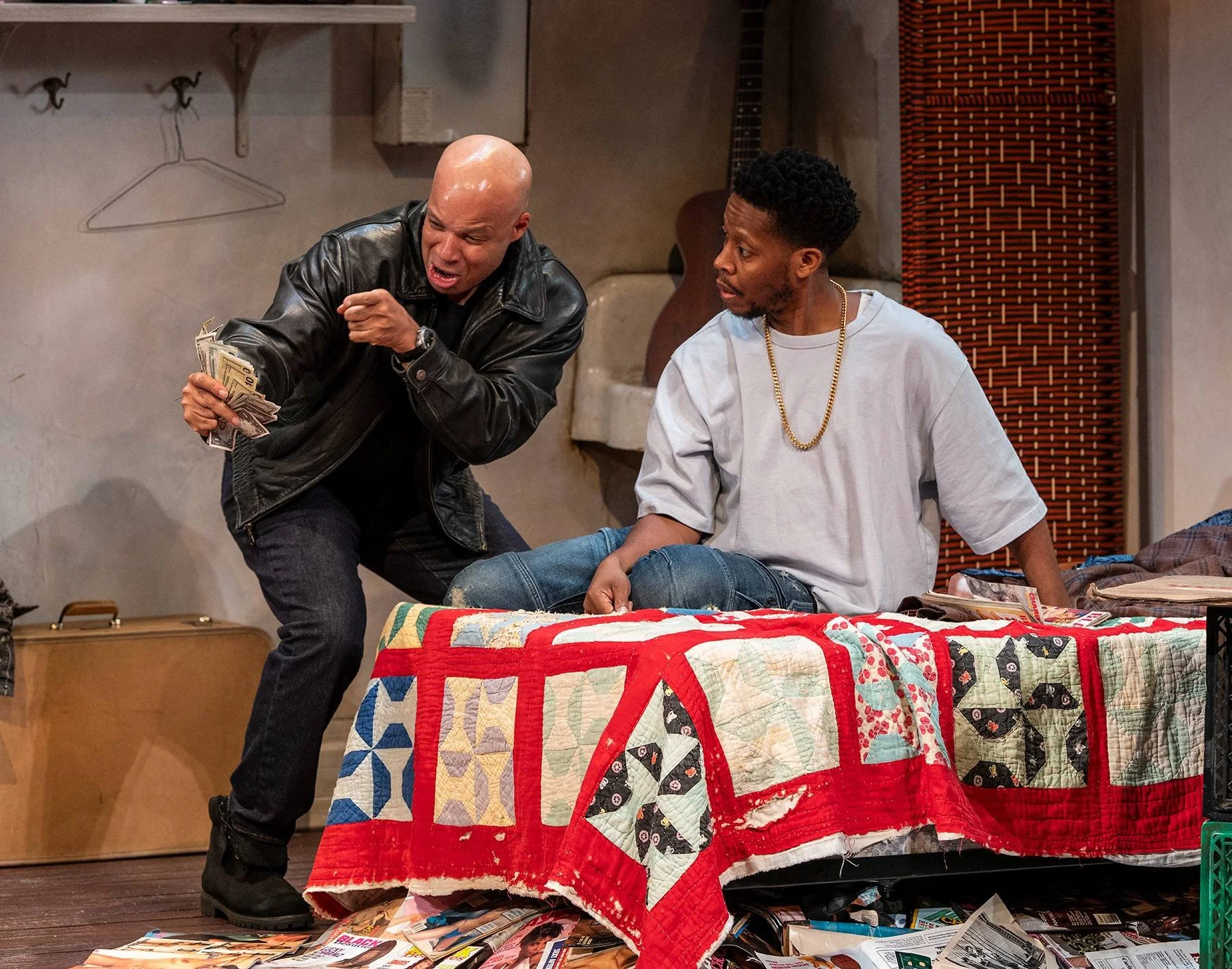
PicksInSix Review: Windows - PrideArts


Living Room Drama: Peeping Tom Edition
PicksInSix® Review | Guest Contributor |
Perse Grammer

From the moment we step into the Hoover-Leppen Theatre, the “Windows” world premiere—produced by PrideArts—has already begun. Olivia (Lucabella Sangin) lounges on the living room couch, staring at two colorfully lit windows. Behind her hang a dozen white window frames and a gauzy black drape, courtesy of Hayley Wallenfeldt’s scenic design. Behind those are the neighbors in 14E (David Lipshutz and Ashley Kramer) getting ready for the day. This is the quietest moment before the show begins—because once it starts, we’ll hardly have time to catch our breath.

“Windows” takes place in the apartment of old friends and roommates, Natalie (Vinita Dixit) and Clay (River Ruiz). Their living room has been invaded by Natalie’s girlfriend, Olivia, whose soccer career was ended by a life—and leg—shattering injury. While the roommates drown in work and relationship induced stress, Olivia adds to the growing pile of trash (designed by Maddi Waneka) and daydreams about tragedies befalling the 14E neighbors. Tensions rise as Clay’s toxic ex-boyfriend arrives, Olivia picks apart his life to avoid her own and Natalie spreads herself too thin to prevent the household from imploding.

The humor is consistent and strong. Director Taylor Pasche has successfully coalesced playwright Matt Schutz’s dialogue and the cast’s delivery into pure hilarity. The quips are bountiful, many with a subtle Gen Z flavor. Whether a character is attempting to hide a cereal bowl or perform a dramatic dance, choreographed by Mads Wren, the physical comedy isn’t to be ignored either. Every actor had the audience in stitches, but Kramer’s performance of Emily, Natalie’s supposedly quiet new friend, merited a round of applause upon her exit. She and Lipshutz are cartoon characters who come to life when acting out Olivia’s melodramatic fantasies of the 14E neighbors. Valerio Gardner’s sound design and Lea Davis’s lighting gel seamlessly to transport us into these silly daydreams. Slow moments are exceedingly rare, if not extinct altogether.

Though she initially enters raving emphatically about her flaky coworker, Dixit’s performance as Natalie grounds us in this chaotic household. She’s the glue that keeps Olivia from spiraling further and Clay from kicking her out. But unfortunately, “Windows” doesn’t allow Natalie to be more than that. We know she is hanging on by a string—rejected from medical school, working a stressful furniture sales job and caretaking for Olivia. But in a story about rebuilding futures, Natalie’s is left unexplored. Unlike Olivia and Clay, she has no grand outburst forcing others to acknowledge her struggles. Dixit is heart-wrenching when she bursts into Olivia’s daydream and confronts her about no longer being the woman she loves. But we never hear what the real Natalie thinks, just Olivia’s version. While the play recognizes Natalie’s difficult position, it doesn’t give her the opportunity to grow out of it as her own person. “Windows” ends with all three roommates looking toward a brighter future—but Natalie’s is only an extension of Olivia’s and Clay’s.

The character of Olivia, however, does an excellent job at capturing two coexisting truths, those being: what happened to Olivia is devastating, and, that she’s often awful to be around. Schutz doesn’t shy away from or sanitize the anger and depression prominent in recently-disabled people. Sangin slips easily between sweetness, snark, and a deep sadness. She pries into Clay’s personal life, refuses Natalie’s attempts to keep her healthy, and lies to both of them about cleaning her rising mountain of trash. But side by side with Olivia’s unbearable presence is her looming fear of the future. She can’t imagine being anyone worthy if she’s not a soccer player, and her window-watching daydreams are rife with tragedy to ignore the one haunting her own life. Emily Brink’s costume design only aids the sensation that Olivia is in stasis. Through most of the show, she’s stuck in the same dark shirt and sweatpants, while everyone else is in quick change city. Olivia’s eventual improvement doesn’t come from reinventing her future. It comes from knowing that she can. A lesson that is repeatedly presented to her by others, but in a very human fashion, it’s one she can’t internalize until she figures it out on her own time.

At first glance, “Windows” is a quippy play. But when you pull back the curtain and peer inside, it’s also a poignant reflection on transitioning from escaping your life, to changing it. Relentlessly funny and endearingly emotional, it is a play for anyone who’s been scared of an uncertain future—that is to say, everyone.

GUEST CONTRIBUTOR | PERSE GRAMMER is a multidisciplinary writer and theatre artist based in Chicago. Grammer is currently developing their latest play through a mentorship with Sandy Shinner at Shattered Globe Theatre. They hold a BFA in Playwriting from The Theatre School at DePaul University.  www.persegrammer.com

PHOTO | Logan and Candice Conner, Oomphotography

PrideArts
presents
World Premiere
Windows
3656 N. Halsted
through August 23, 2026


WEBSITE

TICKETS

For more reviews, visit: Theatre In Chicago

ARCHIVE

PicksInSix® is a registered trademark of Roxbury Road Creative, LLC
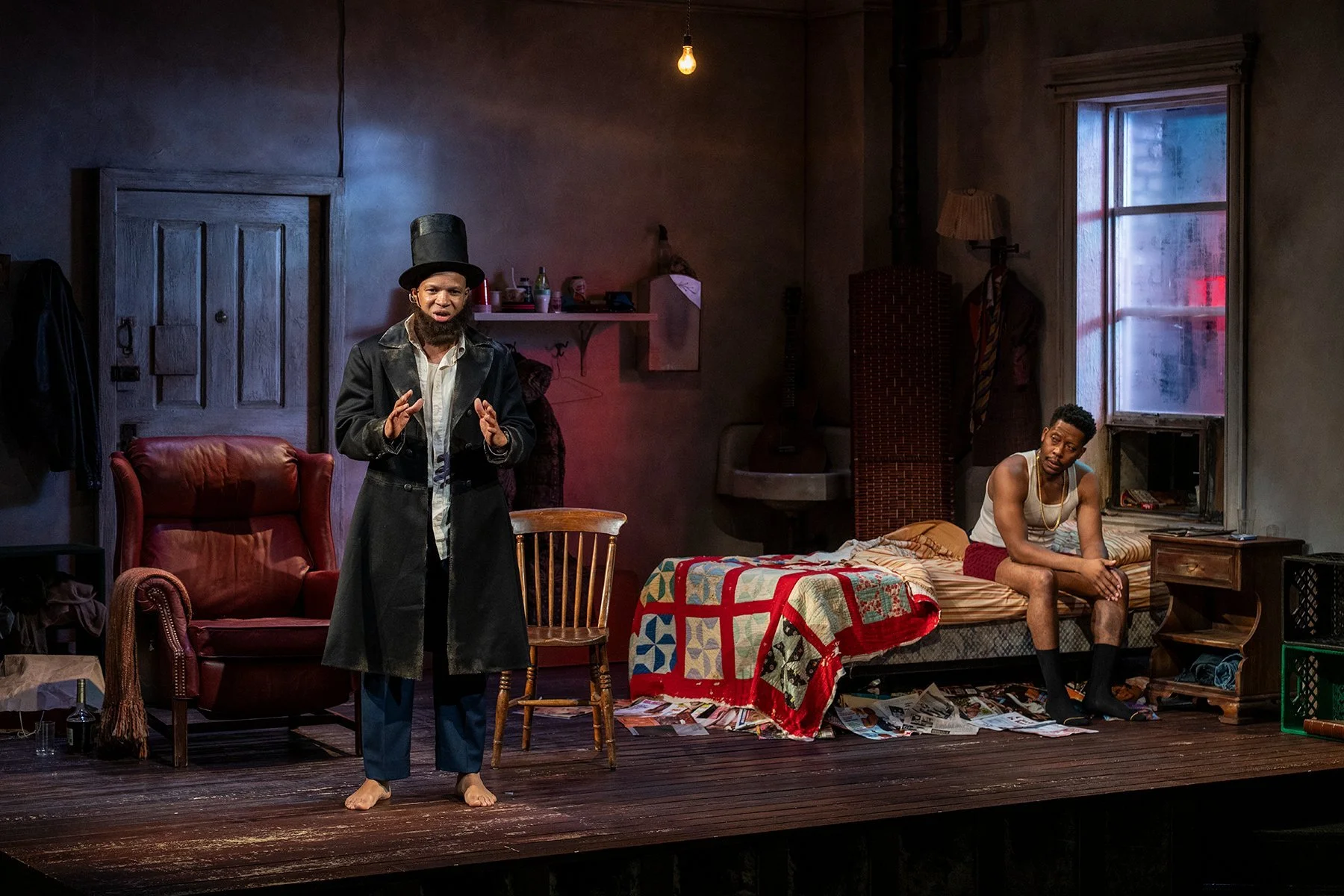
PicksInSix Review: The Notebook - Broadway in Chicago


Love Notes: For Better Or Worse.
PicksInSix® Review | Guest Contributor |
Sarah Frances Fiorello

The musical “The Notebook” has returned to Chicago, ready to meet all new audiences and be reacquainted—and reintroduced—with theatregoers who found themselves at Chicago Shakespeare Theatre’s pre-Broadway production in the fall of 2022.  The musical, based on the book by Nicholas Sparks and subsequent 2004 hit film, plays now through August 16th at the Nederlander Theatre at Broadway in Chicago.

The story weaves through the lives of star-crossed lovers Noah and Allie, played in the musical by three actors for each character—Younger, Middle, and Older—jumping from present day to their carefree youth and everywhere in between. Older Noah and Older Allie recall and revisit their love story through the center inanimate character, a notebook, read from Noah to Allie as she grasps and struggles with deteriorating dementia. “The Notebook” is a beautifully told story of fleeting time and fervent love, one that you have not seen told in the current format—the touring production has undergone changes from the Broadway production and, of course, from its pre-Broadway run. Easter eggs only here for those who have seen previous versions of the show; I encourage you to head to the Nederlander to see for yourself.

On to this production, which deserves a review in its own right. Directed by Schele Williams alongside Broadway juggernaut and five-time Tony Award nominee Michael Greif (“Rent”, “Next to Normal”, “Dear Evan Hansen”) with choreography by Katie Spelman, “The Notebook” serves a visual treat to audiences, with staging and storytelling that often feels like poetry in motion. Multiple versions of Noah and Allie exist simultaneously on stage throughout much of the musical; what transpires at the expert direction of Williams and Grief is a journey through time, memory, while taking honest stock of our relationship to our past and future selves.

“The Notebook” marks the theatrical and Broadway debut of singer/songwriter Ingrid Michaelson, alongside book writer Bekah Brunstetter (most notably television’s “This is Us” writer, story editor, and producer). The duo have created a musical that is as strikingly unique as it is true to the original book while also somehow capturing fan-favorite moments from the film starring Ryan Gosling and Rachel McAdams.

The cast is replete with Broadway veterans, each as fantastic as the next. Alysha Deslorieux as “Middle Allie” soars vocally in her full-throated 11 o’clock number “My Days” while Beau Gravitte as “Older Noah” delivers a sincere, earnest, and loving performance as the idyllic spouse any married person would be lucky to have. Connor Richardson as Johnny, the physical therapist to Older Allie and the Gen Z point-counterpoint to Baby Boomer Older Noah offers a delightful performance, highlighting the power of platonic love alongside the romantic love of our main characters.  Sharon Catherine Brown as Older Allie brings this story home with her devasting portrayal of life while suffering with dementia.  Brown brings both a gentleness and fierceness to the role and gives us a heartbreaking glimpse into what it feels like to navigate this disease—constantly searching for answers while also searching for yourself.

I never read the Sparks novel but when I saw the film all those years ago, I immediately fell in love with what it stood for: real love can persist and stand firm in the face of life’s hardest struggles and most difficult tests. All these years later, as I’m sure is true for most of us, life has a way of testing that belief. Perhaps that’s why we go to the theatre. To be reminded of what is possible in life and in love, and that what we see beyond the footlights, even on our most difficult days, might find its way across the threshold.

GUEST CONTRIBUTOR | SARAH FRANCES FIORELLO is a graduate of Shenandoah Conservatory with a BFA in Music Theatre and a Chicago-based poet, writer, and performer. 
Instagram: 
@writtenbysarahfrances

PHOTO | Roger Mastroianni

Broadway in Chicago
presents
National Tour
The Notebook

James N. Nederlander Theatre
24 W. Randolph St.

WEBSITE | TICKETS

TOUR WEBSITE

For more reviews, visit: Theatre In Chicago

ARCHIVE

PicksInSix® is a registered trademark of Roxbury Road Creative, LLC
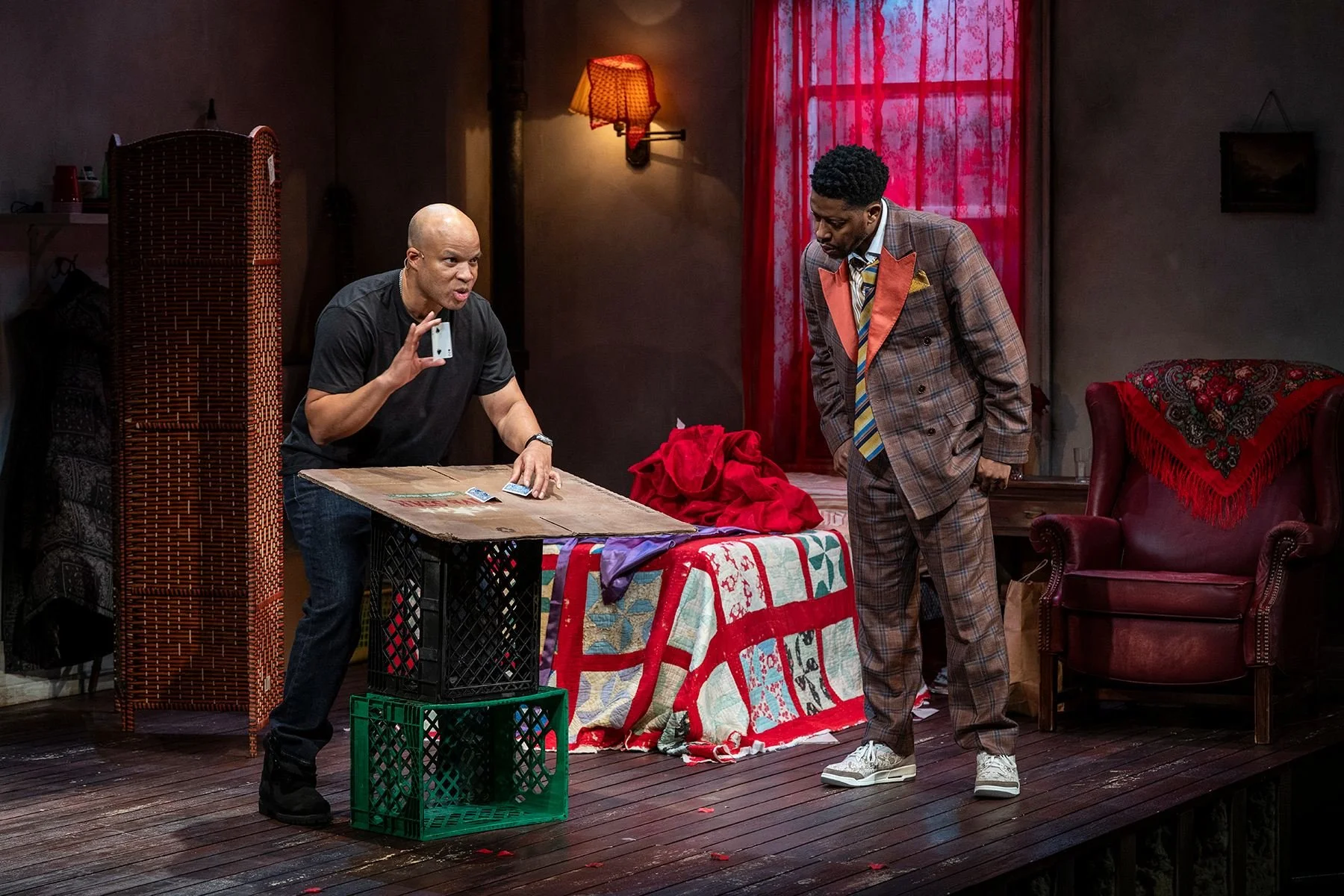
ALL RIGHTS RESERVED

Copyright 2014-2026

Roxbury Road Creative, LLC
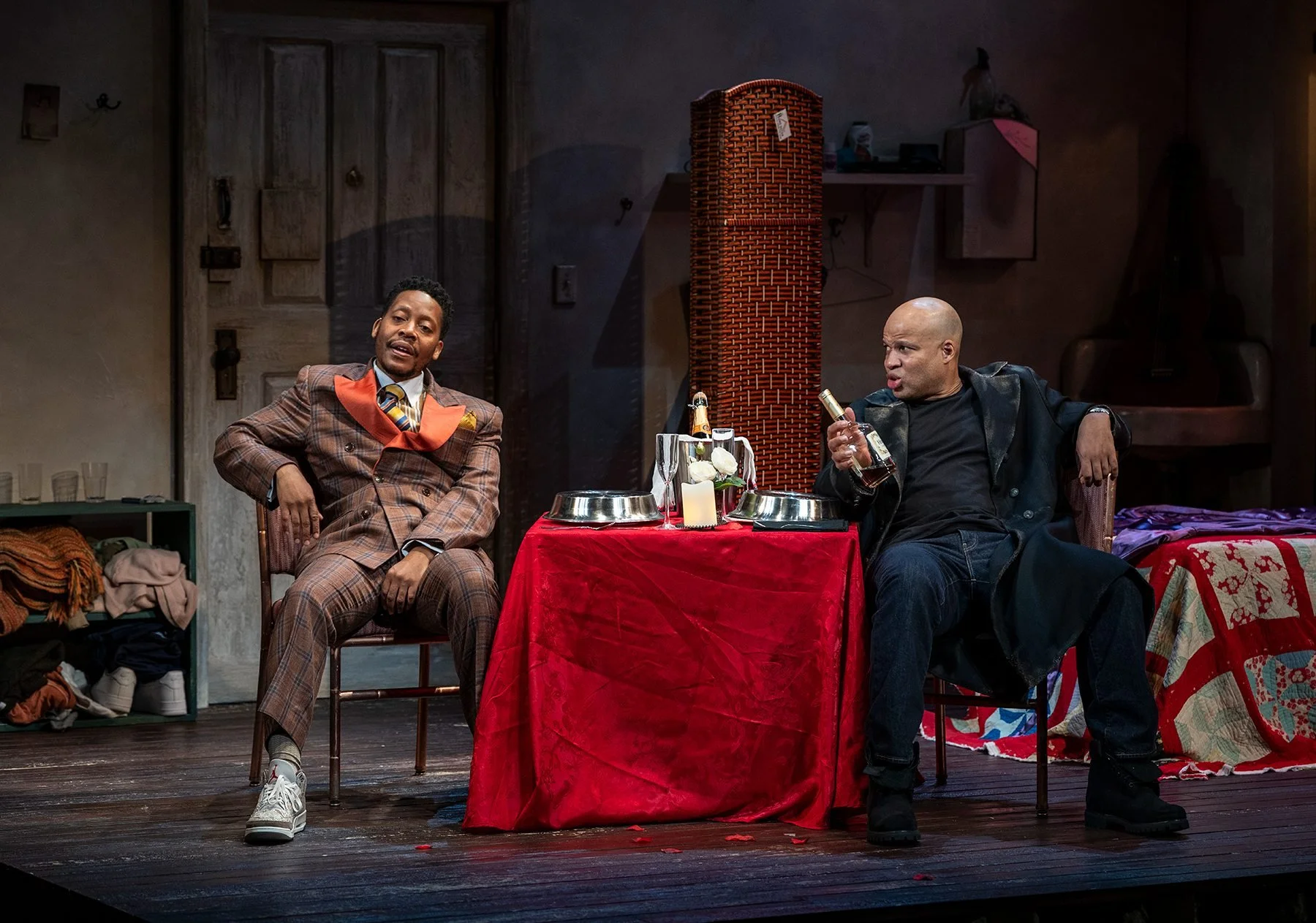
Powered by Squarespace