CONVERSATIONS with Ed Tracy

Inspire. Educate. Entertain.

CONVERSATIONS|PicksInSix®Reviews featuring short form critical reviews and podcasts with authors and influential leaders in the arts, media and business.

Filtering by Category: Chicago Premiere

PicksInSix Review: A Strange Loop - About Face Theatre and Raven Theatre


If Only It Really Looped Forever!
PicksInSix® Gold Review | Guest Contributor |
Perse Grammer

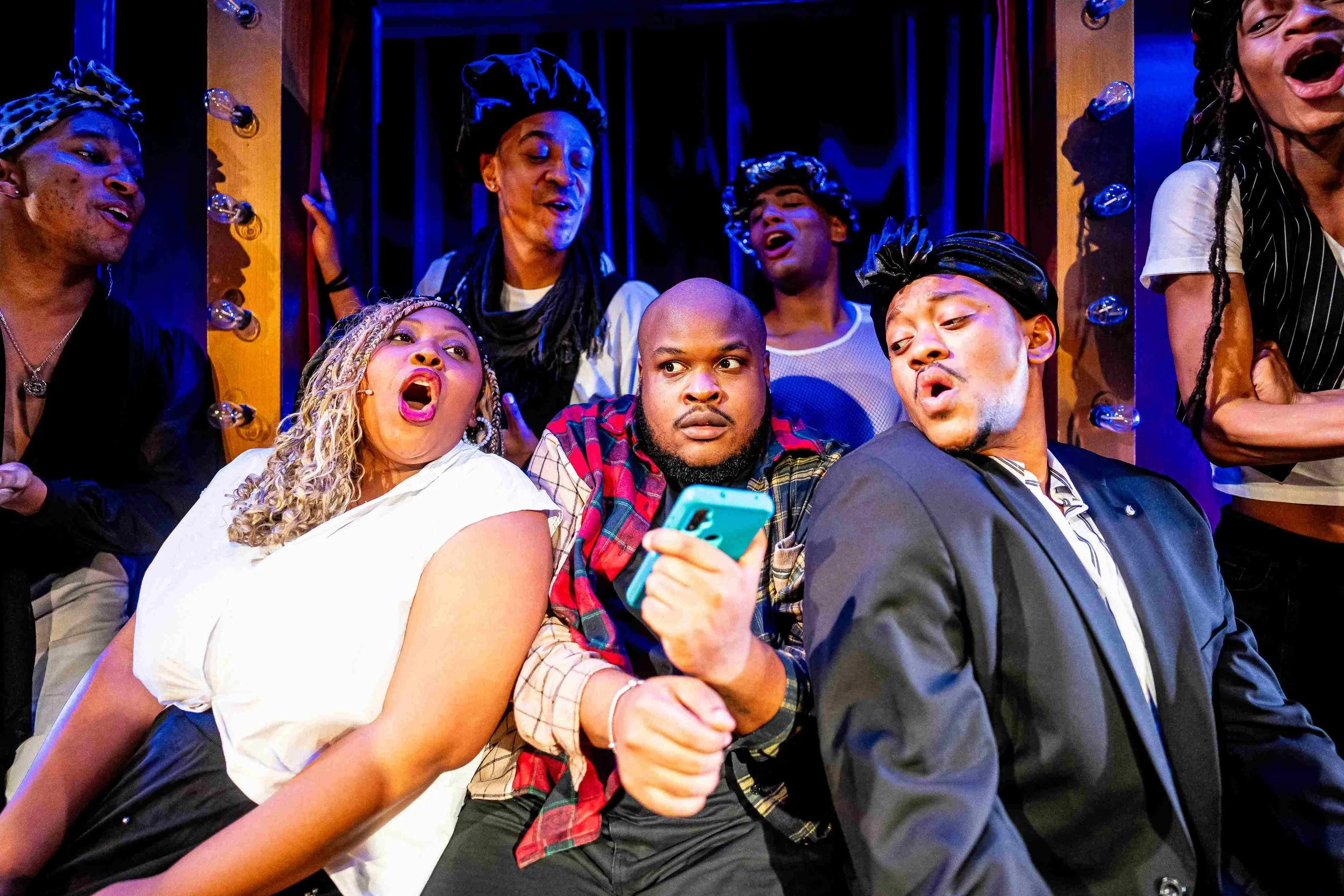
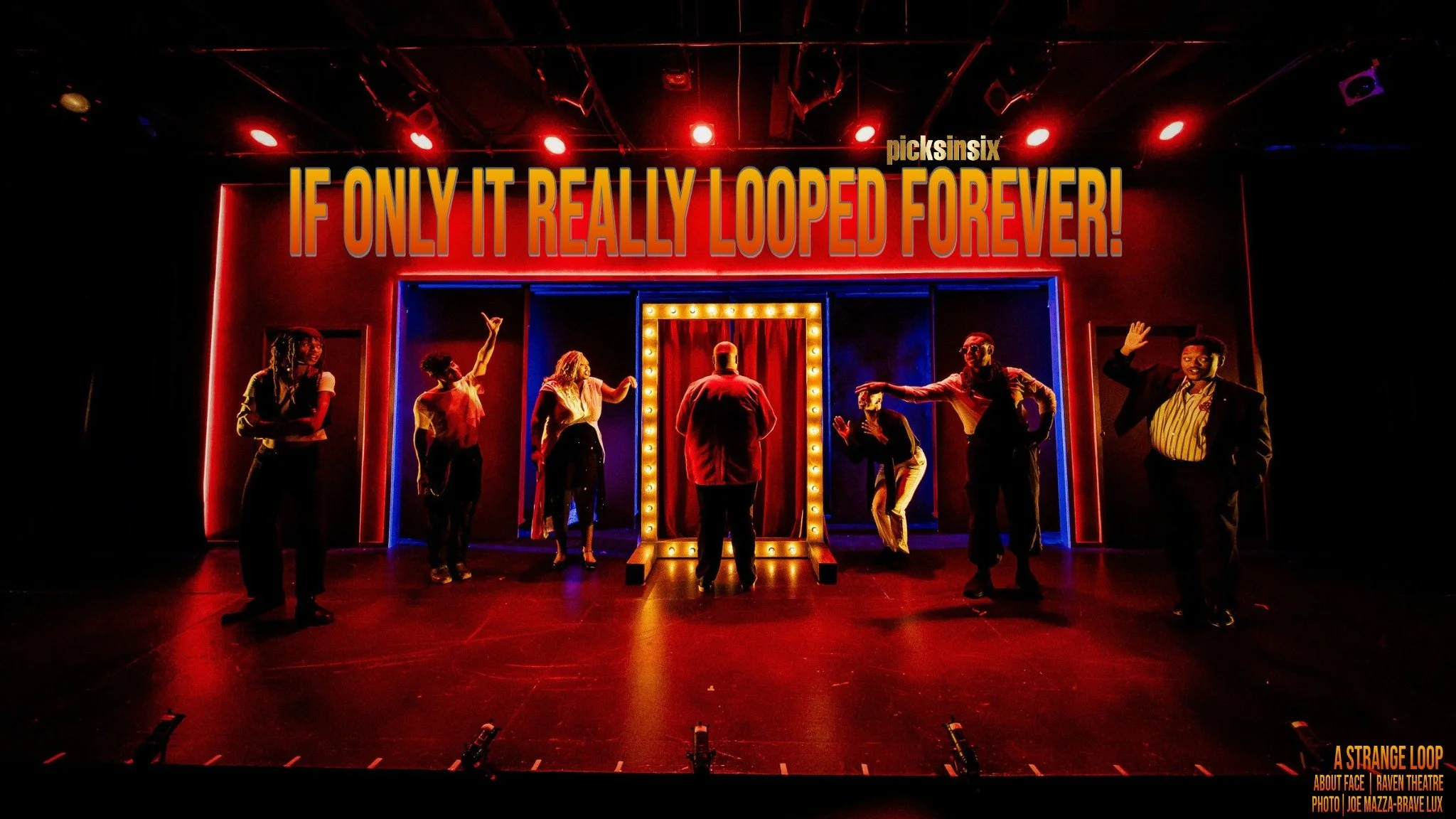
About Face Theatre and Raven Theatre’s co-production of Michael R. Jackson’s Pulitzer Prize and Tony Award–winning musical “A Strange Loop” begins with a pre-show playlist consisting entirely of “The Lion King” musical soundtrack. The set is minimal and striking. A strip of lights outlines the walls of the stage, which frame a series of blank sliding panels. Center stage contains a red curtain hanging in a doorframe ringed with lightbulbs.

For the majority of the show, we won’t see many more additions to what is already onstage. But scenic designer Sydney Lynne and lighting designer Brenden Marble’s versatile creativity have made maximalism wholly unnecessary, as their work will transport us to many new locations. As the rousing opening number begins—tight choreography courtesy of Breon Arzell—it’s clear that director Mikael Burke has engineered a night of astonished laughter, seamless transitions, and an utter celebration of theatrical talent.


“A Strange Loop” introduces us to Usher, an early career playwright working as an usher at “The Lion King” on Broadway. Usher is struggling to write the musical we’re currently watching, and his ensemble of criticizing Thoughts—as the characters are defined—aren’t helping. There’s little acceptance for Usher in the gay community, as he’s either rejected or fetishized for his Blackness. His religious parents don’t understand the dream he moved away to pursue, or how his homosexuality isn’t a hurtful choice he’s making. As Usher digs deeper into his musical, he realizes that he can’t write it without attempting to confront his parents with his true, artistic, queer self.

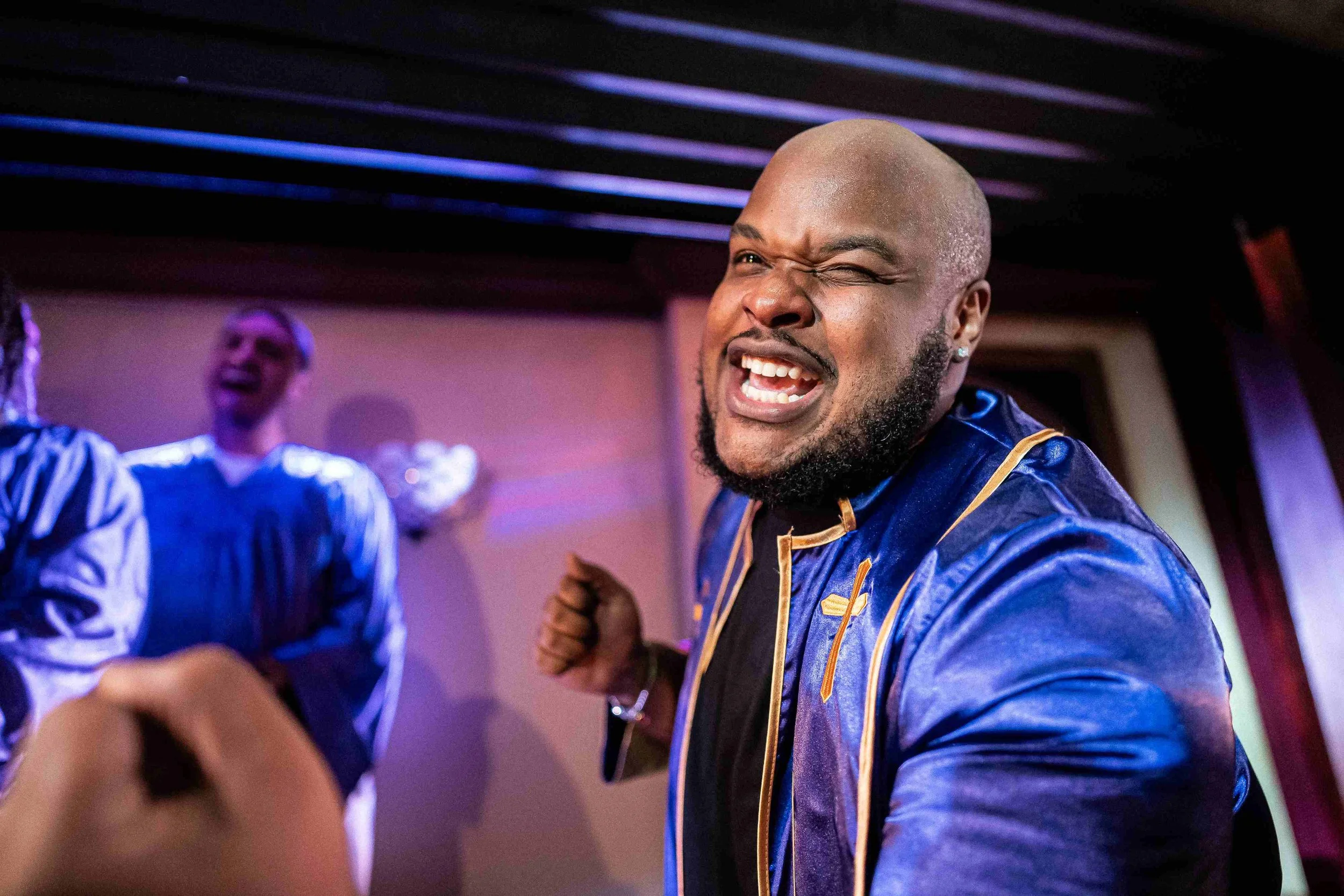
Jackson’s “A Strange Loop” is artfully structured. It starts strong and keeps ramping up. When we need a change from upbeat numbers, the show takes a sinister turn. When we need to catch our breath, we’ve already begun a sweet, simpler scene. And just when we think the performance can’t get any more outrageous, it’s been cranked up to an eleven with a gospel number and a wholly unexpected set reveal.

Burke’s exceptional ensemble has mastered the art of working perfectly in sync while still each bringing something unique and exciting to the table—theatrical chameleons shifting between wildly different characters, playing elegant in one scene and raunchy in the next. The wonderful Micah Mixon (Thought 1) is effortlessly charming. She stands out especially in the role of Usher’s Sympathetic Ear, bringing much-needed warmth to the stage. Whether he’s playing the sassy, influencer-like character of Usher’s self-loathing, or Harriet Tubman, Matheus Barbee (Thought 2) is boldly hilarious. Christopher Wayland (Thought 3) is also comedic in his many roles, but his style is subtler, drawing out laughs with a finely-tuned facial expression. Usher’s mother is embodied fully by Michael Turrentine (Thought 4) who deftly walks the fine line between portraying a caricature and a real woman who makes us believe she can change—and breaking our hearts when she doesn’t. John-Payne (Thought 5) utilizes their impressive bass, especially during their solo numbers as Usher’s father, dancing in the overlap of silly and sinister. And even as Naphtali Curry (Thought 6) is playing the sleazy, racist white man that sexually degrades Usher, his presence carries an undeniable air of refinement throughout the show.
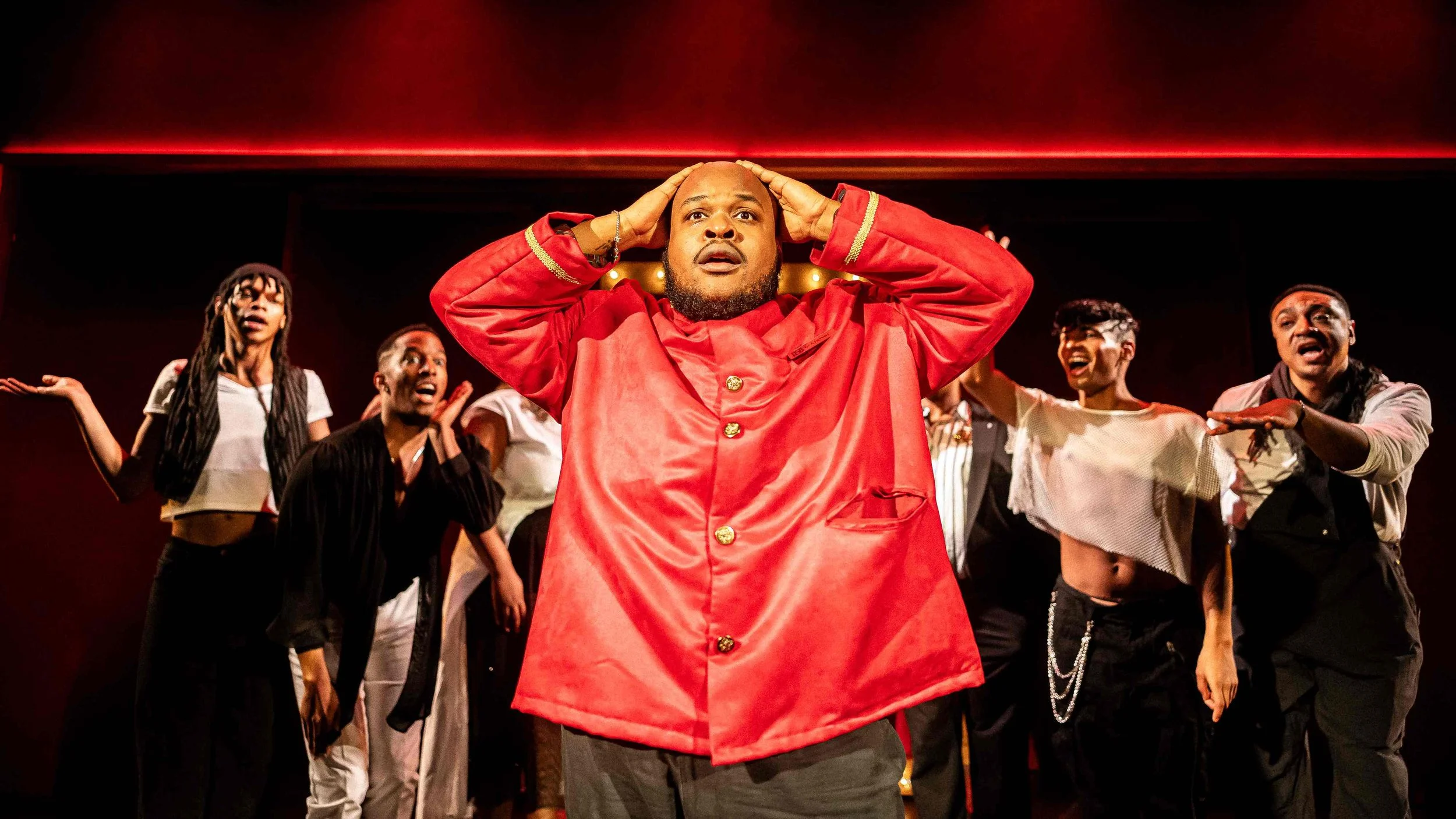
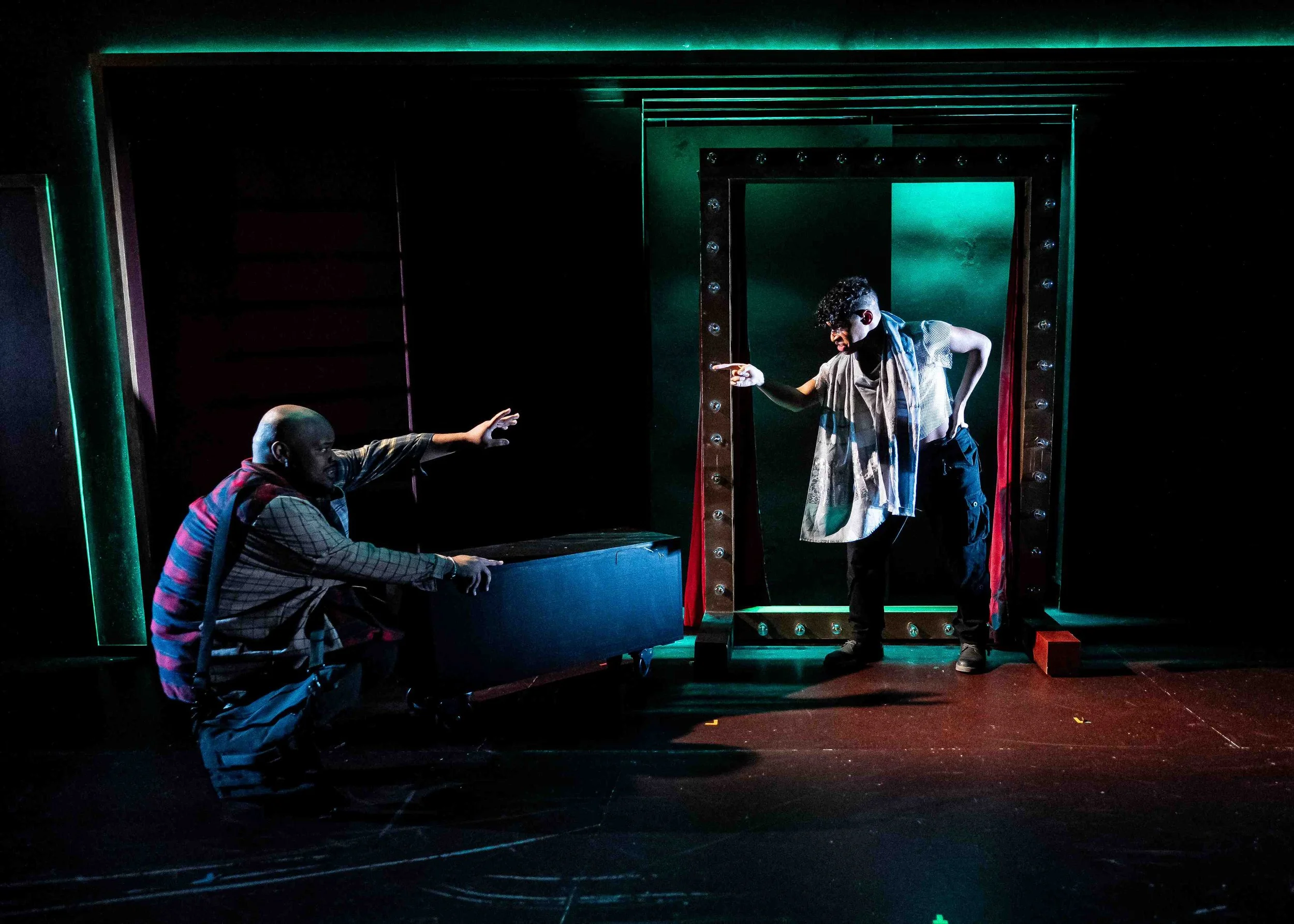
Every cast member is an utter powerhouse, but Eddie Weaver takes Usher to a new level. From the very beginning, he wears his heart on his sleeve, with an eagerness that instantly has us rooting for this underdog. His portrayal of Usher is complex, weaving together joy and insecurity, vulnerability and strength. Though Weaver doesn’t have the chance to rapidly morph from character to character like the Thoughts do, he still gets a chance to show off his flexibility when acting out every character in a Tyler Perry show. His repeated bids for connection with his mother are heartbreaking, and Weaver absolutely nails the monologue about Black love and lust’s place in the world. One could easily lose the sincerity and nuance of Usher’s character in how heightened “A Strange Loop” can get, but Weaver stays grounded in his performance throughout the show.

Janelle Smith’s costume design reflects the unity and individuality of this ensemble. Each actor bears a strikingly different assembly of layers, silhouettes, and fabrics, while still reading as a coherent unit dressed in black and white.

Playwrights writing themselves as characters is always a risky gamble. One can easily slip into self-indulgence, sugarcoating, and a lack of awareness as to why anyone who isn’t a writer in their very specific scenario would relate to or care about their character. Jackson not only gracefully avoids these pitfalls, but he utterly succeeds in the creation of Usher. “A Strange Loop” is a testament to the writing adage that the more specific you get, the more universal your play feels. Usher battles with self-loathing, a desire to be loved that outweighs his self-respect at times, and the expectations from his family that contradict his own dreams. His identity as an obese Black gay male playwright is the lens in which we view these struggles, which means belonging to any number of these demographics undoubtedly enhances one’s viewing experience. But you don’t have to be similar to Usher in order to connect with his achingly human story.

 “A Strange Loop” is a masterpiece, and Jackson is well-deserving of the 2020 Pulitzer Prize. Beyond the incredible writing and relentlessly talented production, what sets it apart is its pure honesty. The play is deeply vulnerable and refuses to pull any punches. There are no deadpan quips at the irony of such a meta show, no smug mocking of the audience or Jackson/Usher for creating what’s happening onstage. One might think this would come at the sacrifice of comedy, but “A Strange Loop” will make you howl with laughter without softening any of the deep sincerity. It fully embodies its line, “If you're not scared to write the truth, then it's probably not worth writing. And if you're not scared of living the truth, then it's probably not worth living.” Everyone should get the chance to see a show as brilliantly heartfelt as “A Strange Loop” and the sold out run has now been extended through November 22.

GUEST CONTRIBUTOR | PERSE GRAMMER is a multidisciplinary writer and theatre artist based in Chicago. Grammer is currently developing their latest play through a mentorship with Sandy Shinner at Shattered Globe Theatre. They hold a BFA in Playwriting from The Theatre School at DePaul University.  www.persegrammer.com

PHOTO | Joe Mazza-brave lux

About Face Theatre
and
Raven Theatre
presents
Chicago Premiere
A Strange Loop
6157 North Clark Street
EXTENDED through November 22, 2026

WEBSITE

TICKETS

For more reviews, visit: Theatre In Chicago

ARCHIVE

PicksInSix® is a registered trademark of Roxbury Road Creative, LLC
PicksInSix Review: Liliom - The Joffrey Ballet


‘Liliom’ - Striking, Surreal and Exceptionally Human!
PicksInSix® Review | Guest Contributor | Kaitlyn Linsner

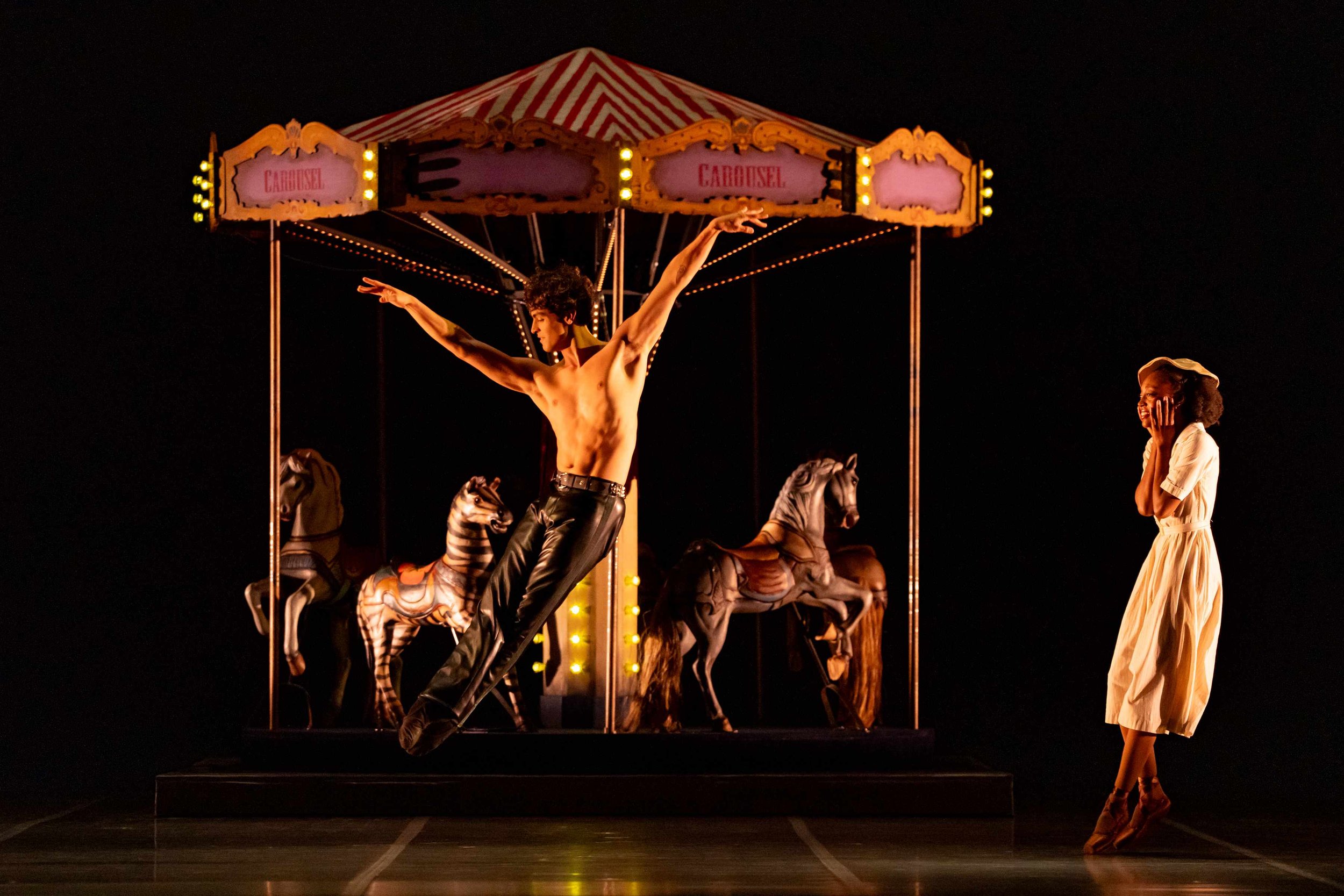
The Joffrey Ballet opened its 2026-2027 season on Thursday night with a captivating and evocative performance of John Neumeier’s “Liliom.” Known for its fantastical surrealism and emotional depth, Neumeier created this narrative ballet for the Hamburg Ballet in 2011 drawing inspiration from Hungarian playwright Ferenc Molnár’s 1909 play of the same title. “Liliom” also became the basis for Rodgers and Hammerstein’s second musical “Carousel.” Who knew such a tragic story of love, loss, redemption, generational trauma and domestic violence would fuel multiple theatrical adaptations!

The Joffrey Ballet’s ten-day run of “Liliom” marks both the Chicago premiere and the first time a North American ballet company has performed the full-length piece. While all aspects of the premiere dazzled at the Lyric Opera House on Thursday, the live music performed on stage by the 16-piece Rob Parton’s Jazztech Big Band in concert with the Lyric Opera Orchestra, conducted by Nicholas Koo, stood out as uniquely invigorating. Together the on-stage band and the orchestra create a layered interplay of classical, jazzy and almost circusy-type music that well suits the dramatics of a complex ballet staged at a Depression-era American amusement park. The sweeping score often feels cinematic which makes sense given French composer Michel Legrand, known for his work on film scores, composed the music.

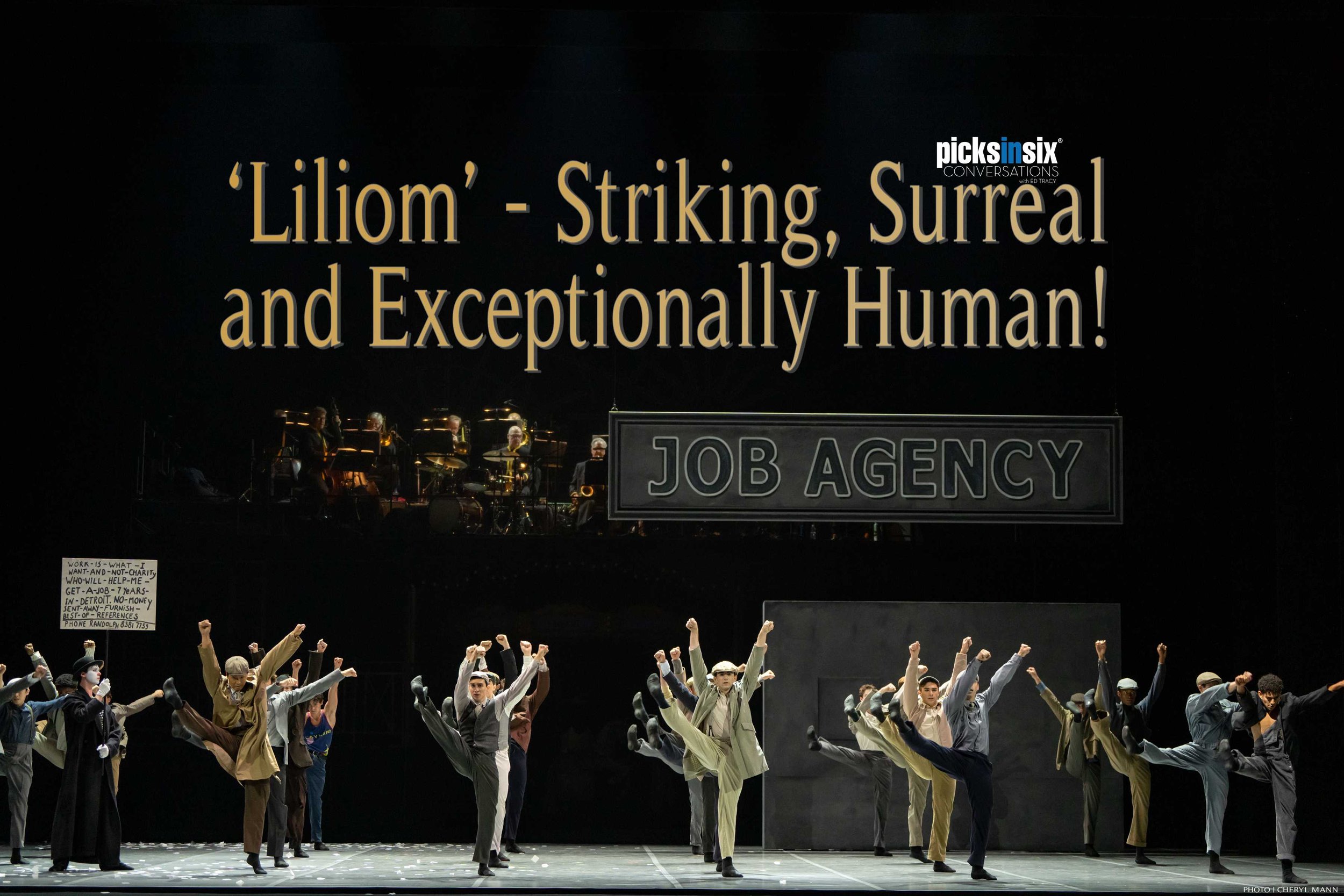
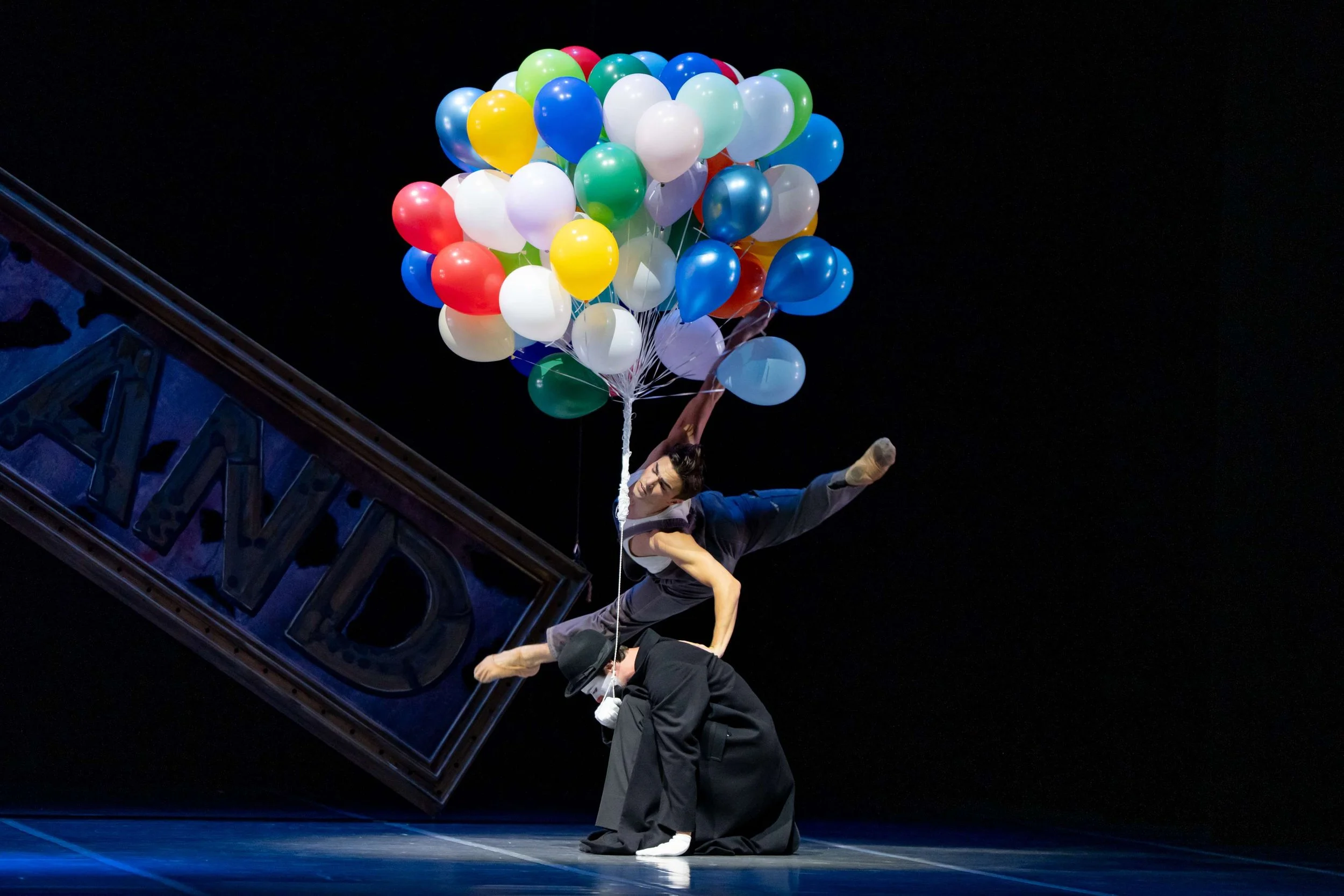
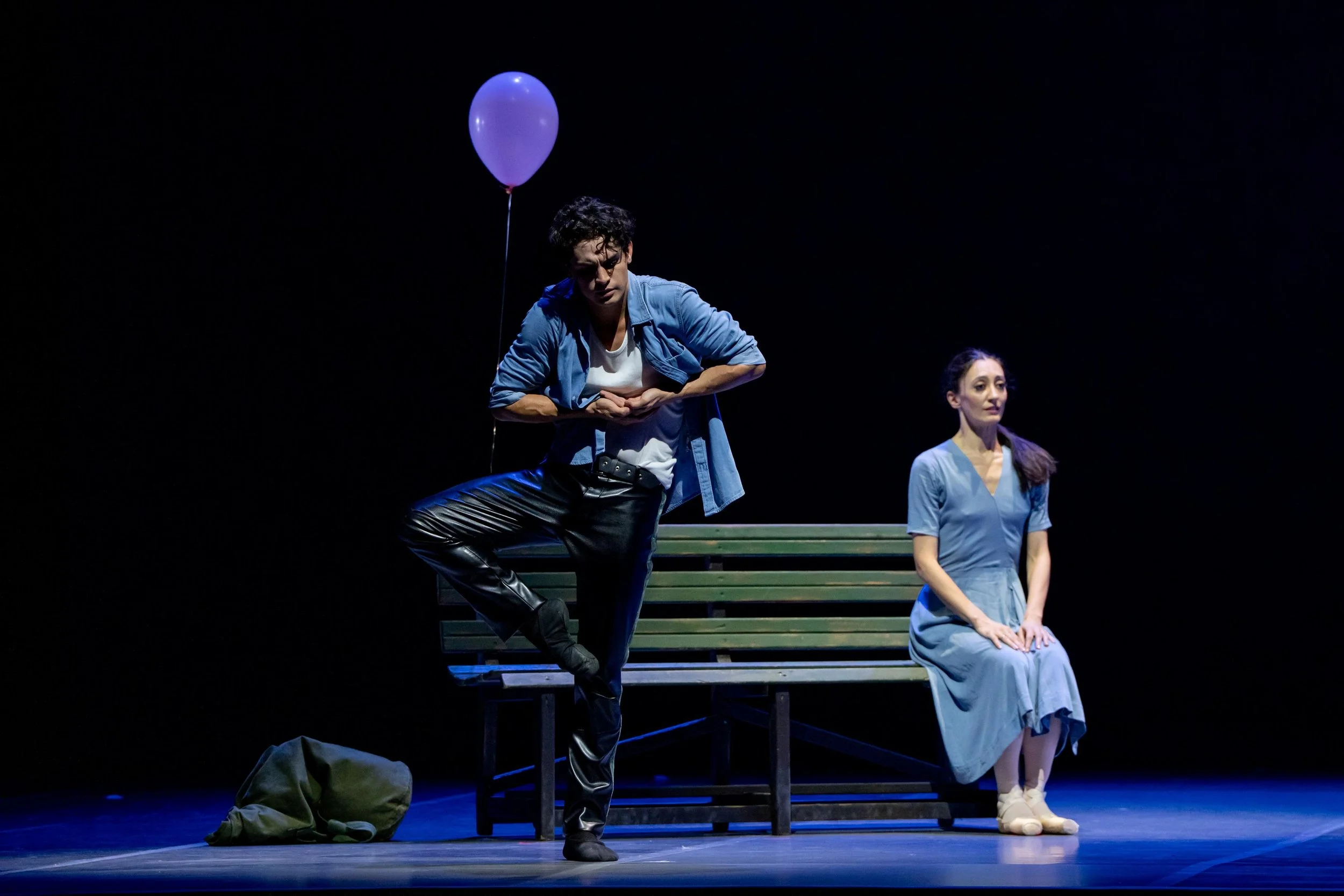
The set design by Ferdinand Wögerbauer and lighting design by Jim French and Neumeier also deserve high praise. At nearly every moment of the performance, one could snap a photo and capture a stunning visual conveying one of the many complicated themes of “Liliom.” Take for example lovers on an isolated bench with a single balloon, devils sitting at a long-table in heaven, a man with heaps of balloons slowly inching toward a framed cloudscape, and the coming and going of a star-lit sky. These visuals invite you to grapple with things like life’s purpose, moral ambivalence, grief and the courage of vulnerability. As the backdrop of a physically demanding and at-times confusing ballet, the set also provides an imaginative surrounding where the plot line matters less than the visceral experience.

And now, the dancing. What a brilliant performance by the Joffrey company that showcases such versatility in storytelling and the artform itself.  “Liliom” tells the story of a carnival barker and self-saboteur, Liliom (José Pablo Castro Cuevas), who falls in love with Julie (Victoria Jaiani) and ultimately meets his demise after turning to crime when he cannot obtain “good, honest work” during the Great Depression. Along this journey, he also abuses Julie, leaves her to raise their son alone and, in my opinion, totally botches his one chance of redemption when allowed to return to Earth. Castro Cuevas dances this title role with great charisma and strength spending nearly the entire runtime on stage. He performs with exquisite control, sensuality and grit to portray Liliom’s multifaceted character.

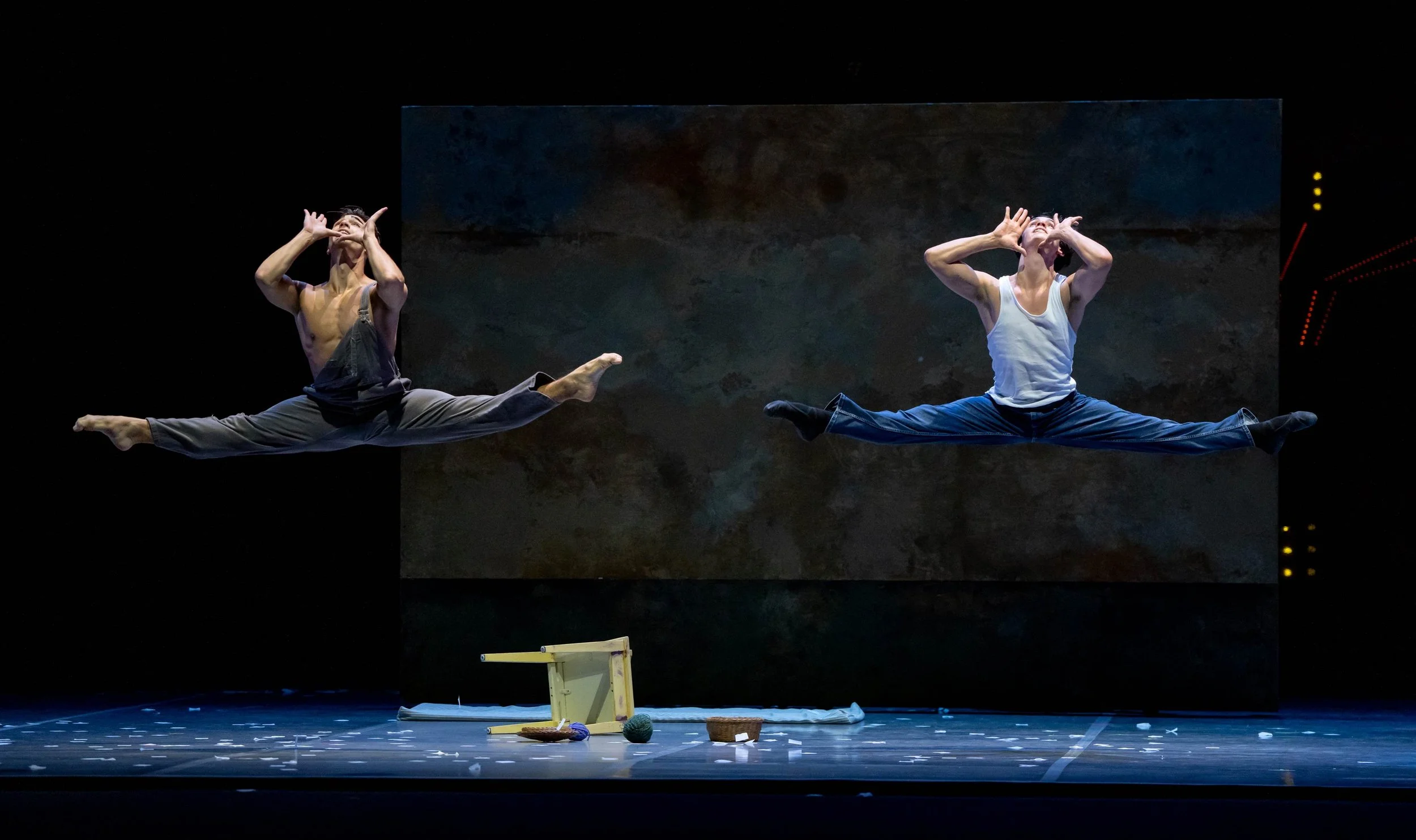
I also particularly enjoyed the sexy duets of Liliom and Mrs. Muskat (Amanda Assucena) because the artists conveyed so much passion, chemistry and heat in ways I have not seen before in a ballet. Relatedly, the choreography features sharp, sometimes unsettling movements, to portray struggles, manual labor and fighting along with more syncopated rhythms and Broadway-like flair to animate the carnival experience. The numbers feel a bit busy at times, but ultimately, this theatrical style, blended with classical ballet techniques, lends itself to a distinctive danced emotion in each scene and through each character. One of the best moments of “Liliom” features all the jobless men on stage dancing through their frustration. Jaiani’s beautifully poised and deeply poetic performance as Julie also embodies a vast array of feelings. Most notably, her magnificent portrayal of grief after Liliom dies. Through dance, Julie and Liliom’s son Louis (Reed Henry) act out with the same anger as Liliom, showing the devastating cycles of violence, and the Balloon Man’s (Evan Boersma) steadfast and expertly controlled movements guide us through it all.

One of the many draws of “Liliom” is that it effortlessly demonstrates how dance can communicate deep emotion. The company does a remarkable job with visual storytelling through leaps, gestures, postures and pairings. Dance, as a universal language, takes us places, and trust that wherever the Joffrey Ballet wants to take you through the exquisite movement, striking set design and lush soundtrack of “Liliom,” it will absolutely be worth it.

GUEST CONTRIBUTROR | KAITLYN LINSNER serves as an Assistant Attorney General in the Public Utilities Bureau of the Office of the Illinois Attorney General.

PHOTO|Cheryl Mann

The Joffrey Ballet
presents
Liliom
Lyric Opera House
20 N Wacker Drive
through September 27, 2026

WEBSITE

TICKETS

PROGRAM BOOK

For more reviews, visit: Theatre In Chicago

ARCHIVE

PicksInSix® is a registered trademark of Roxbury Road Creative, LLC

PicksInSix Review: Kowalski - Brando Beginnings - Lookingglass Theatre Company


Smoldering Performances Bring ‘Kowalski’ To Life.
PicksInSix® Review |
Ed Tracy

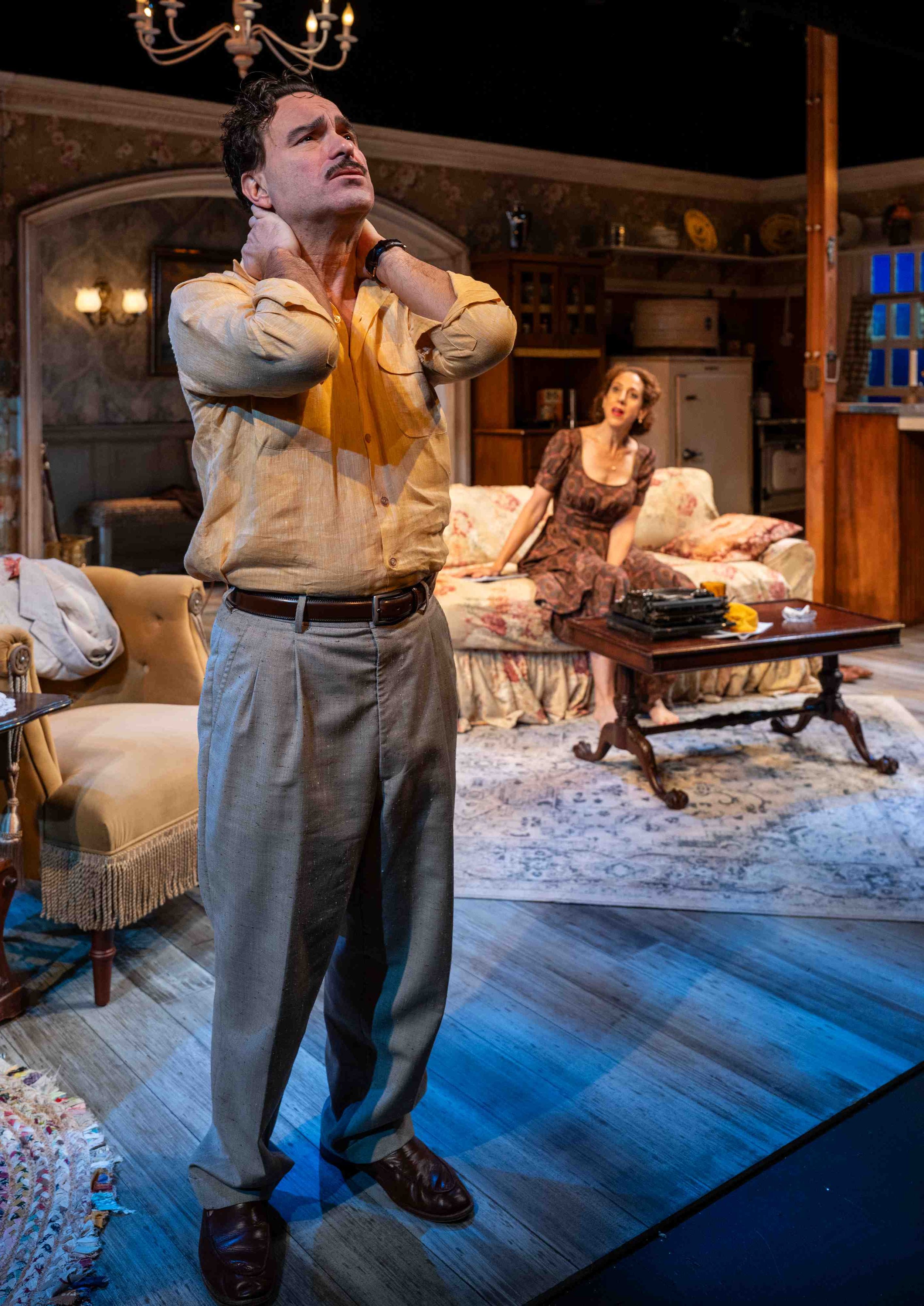
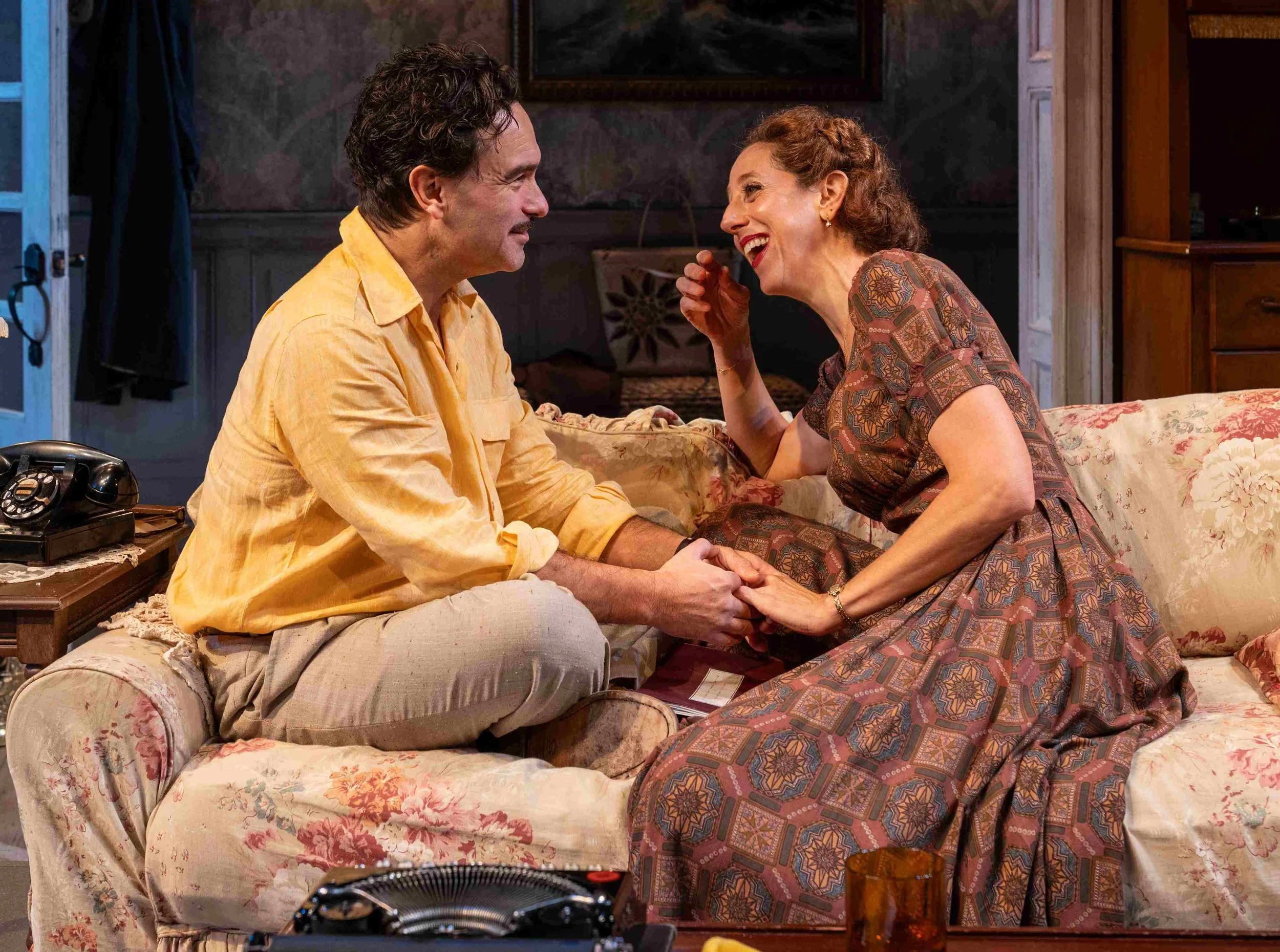
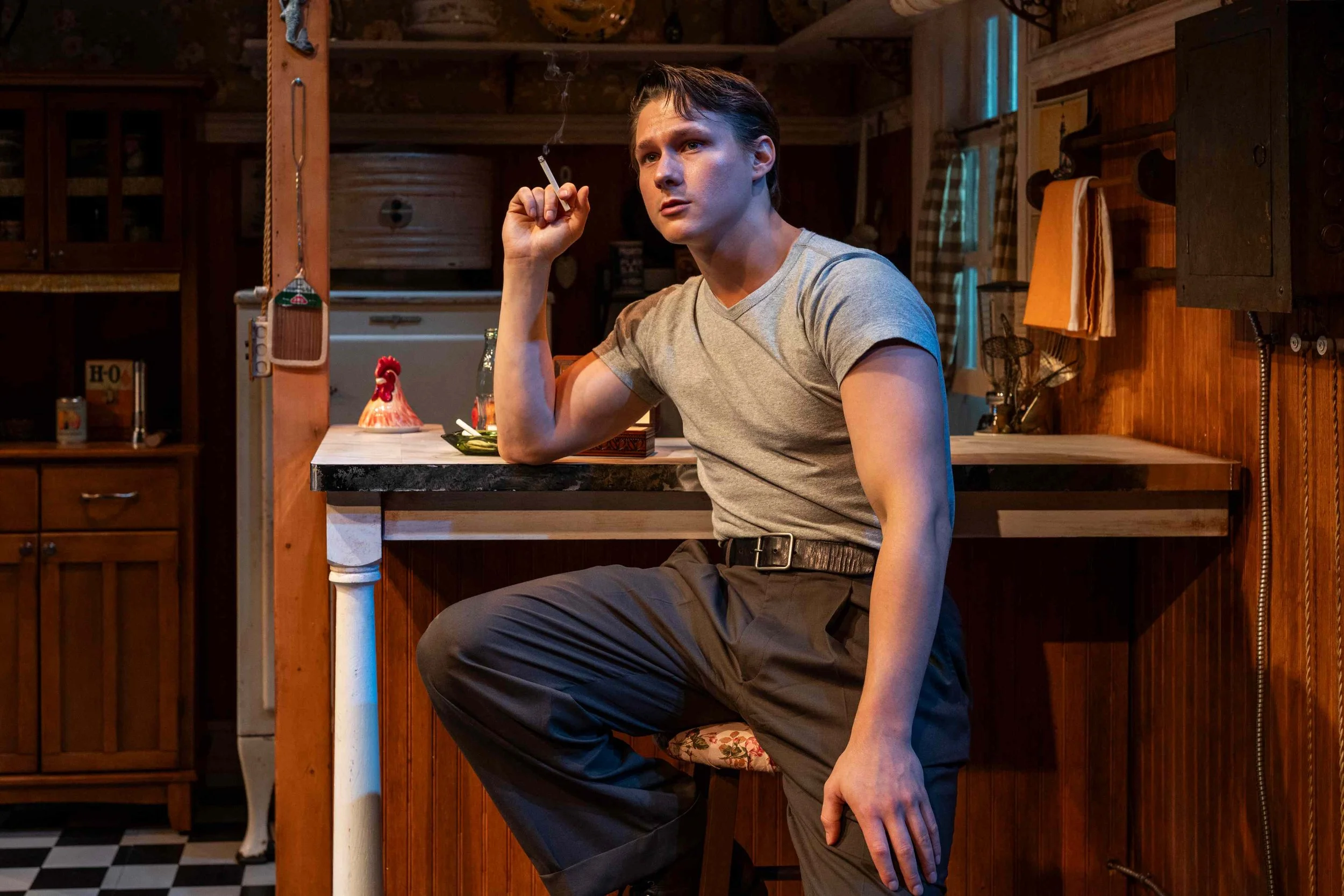
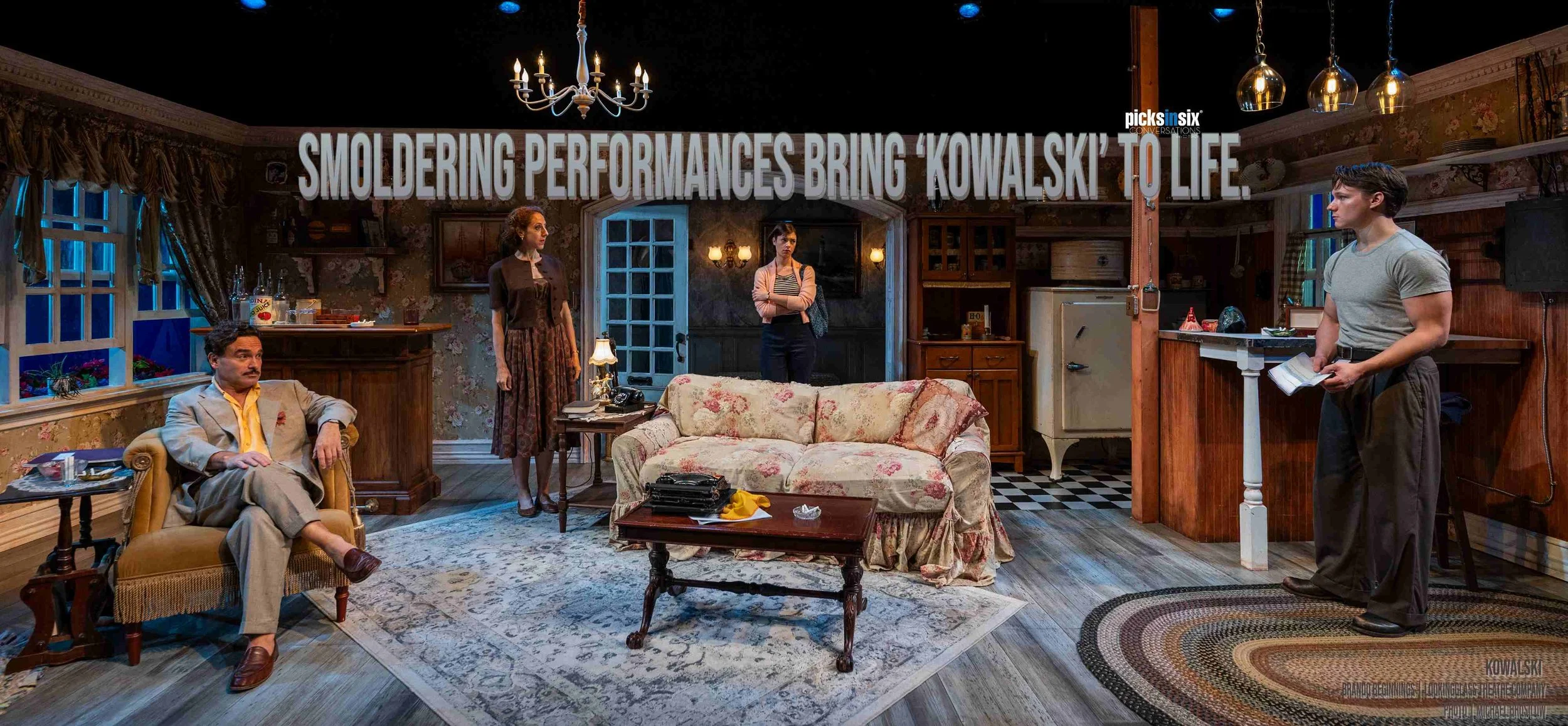
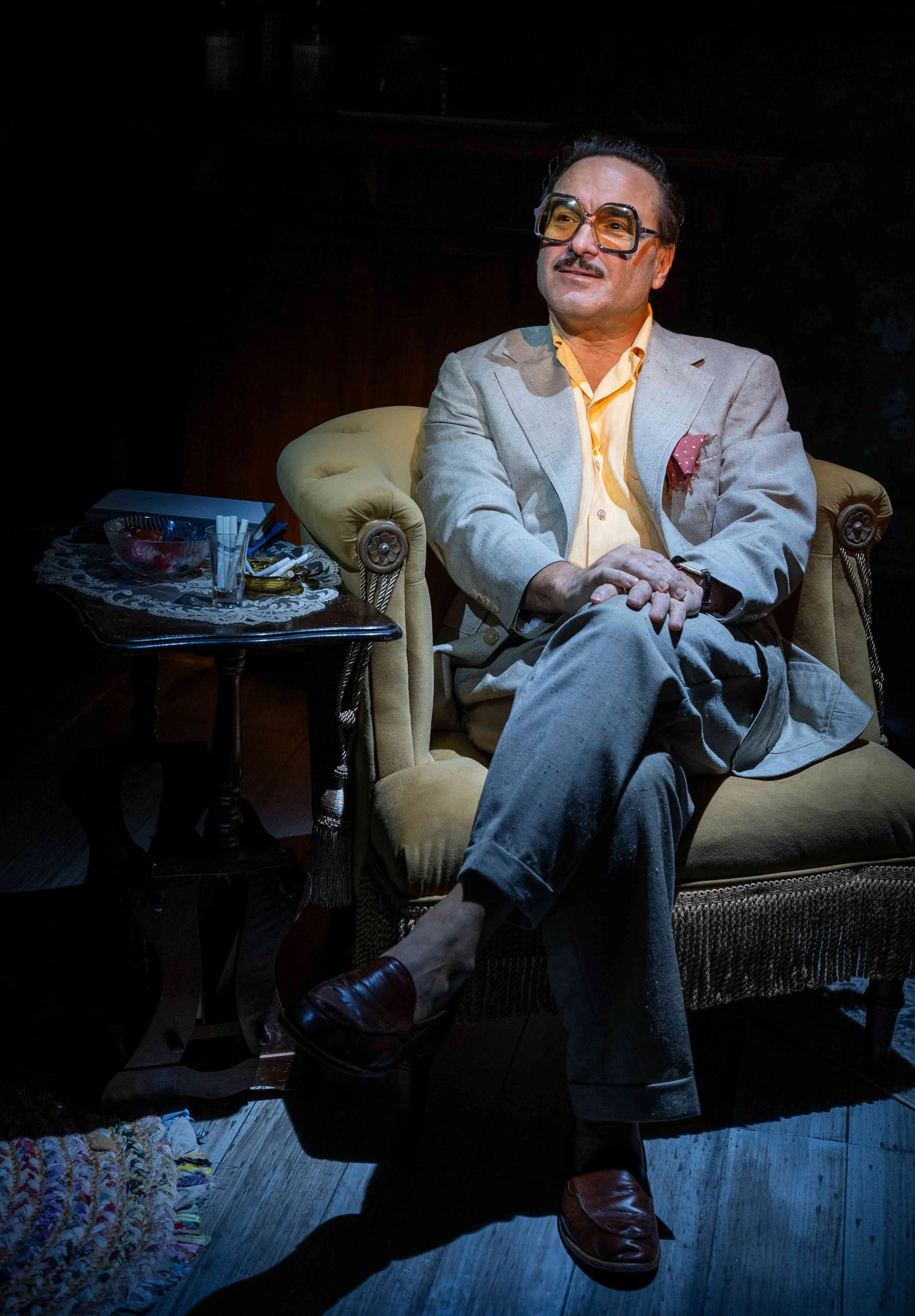
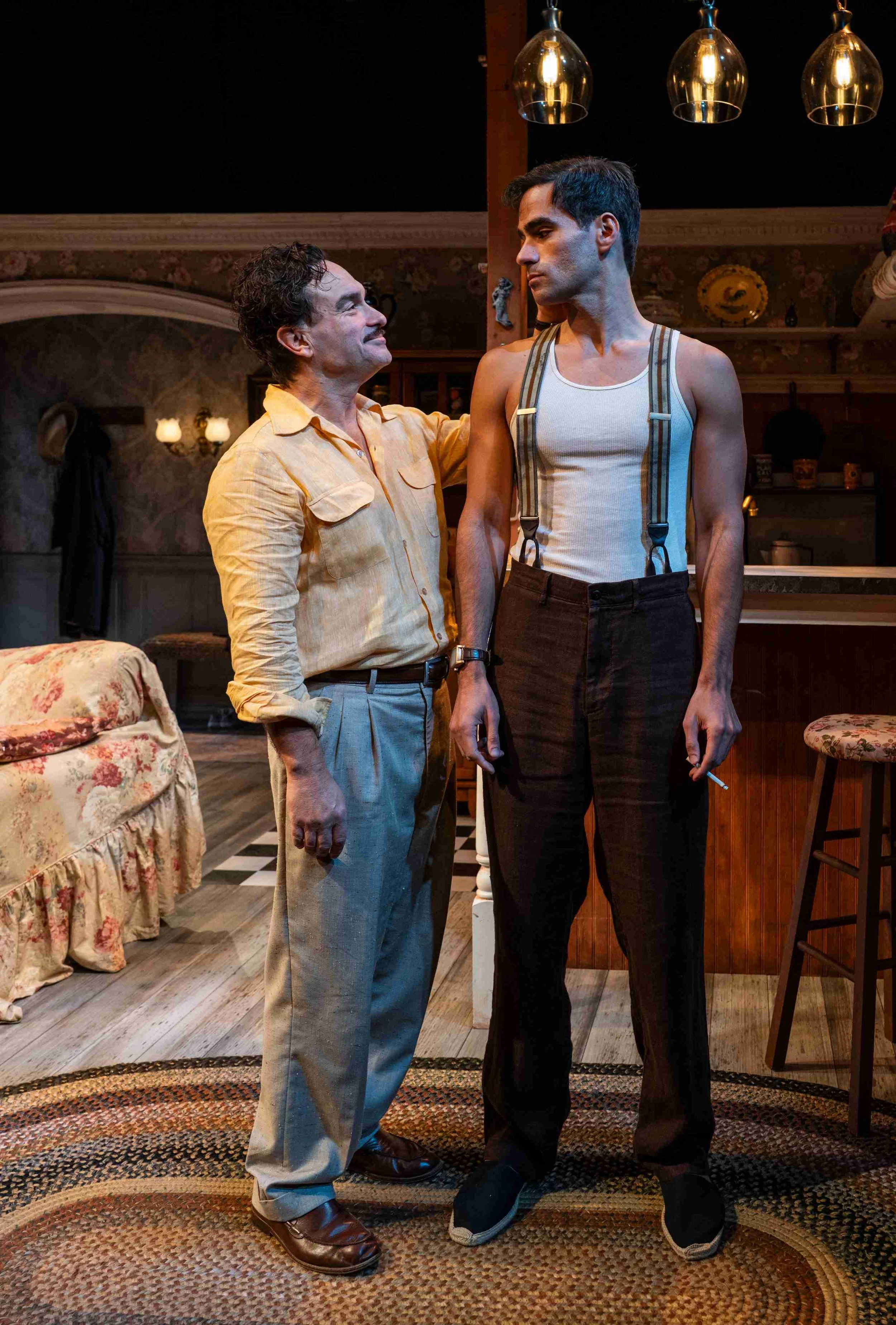
To get right to the point, the Chicago premiere of “Kowalski” that opened at the Lookingglass Theatre on Saturday night features a tour-de-force performance by Johnny Galecki as Tennessee Williams in a superb play written by Gregg Ostrin and directed by Colin Hanlon. The piece imagines the first meeting between Williams and a young Marlon Brando rendered by the equally compelling Jacob Moskovitz. Galecki, a hometown Chicagoan with numerous stage credits, is best known in films and for his television success on ‘The Big Bang Theory.” You will also recognize Moskovitz in the Amazon Prime series “Elle,” among others.

The play begins in 1977 with Williams ruminating to an unseen interviewer about the meeting with Brando to discuss the role of Stanley Kowalski in “A Streetcar Named Desire.” The new play, which followed Williams legendary success on Broadway with “The Glass Menagerie,” was already well along in preproduction, but the pivotal role of Kowalski was yet to be cast. At the urging of director Elia Kazan, Williams agreed to take a meeting with Brando, but, for unknown reasons at the time, Brando did not show.

Picking up in 1947, it is three days later and Williams’ confidant Margo Jones (Alison Cimmet) is reading the “Streetcar” script intently. There is a deep kinship between the two and the dialogue is crisp and saucy. So too is the interplay with his lover Pancho (Reece Dos Santos) who we realize is jaded and at odds with the flamboyant Williams. There is friction and things start to unravel.

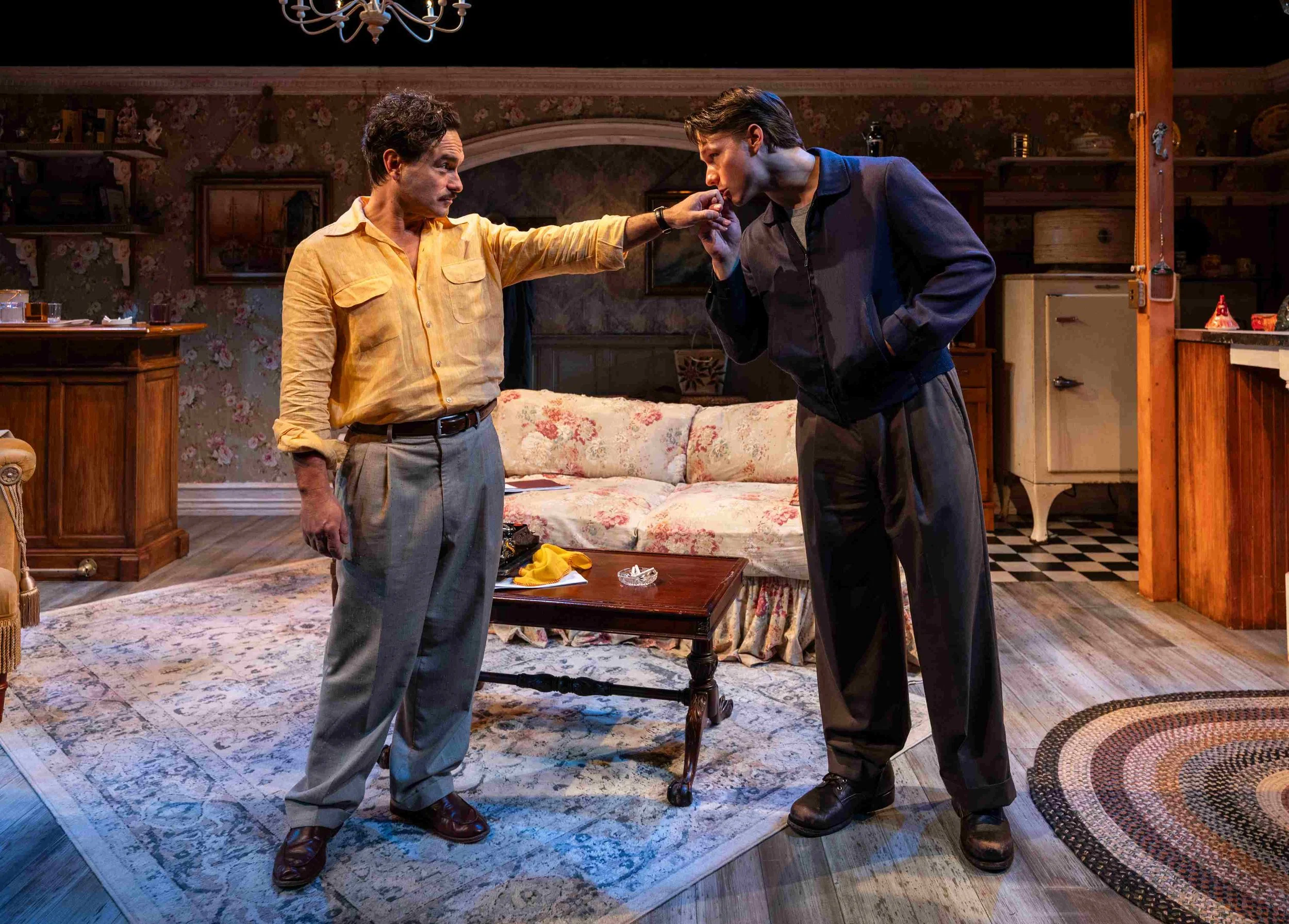
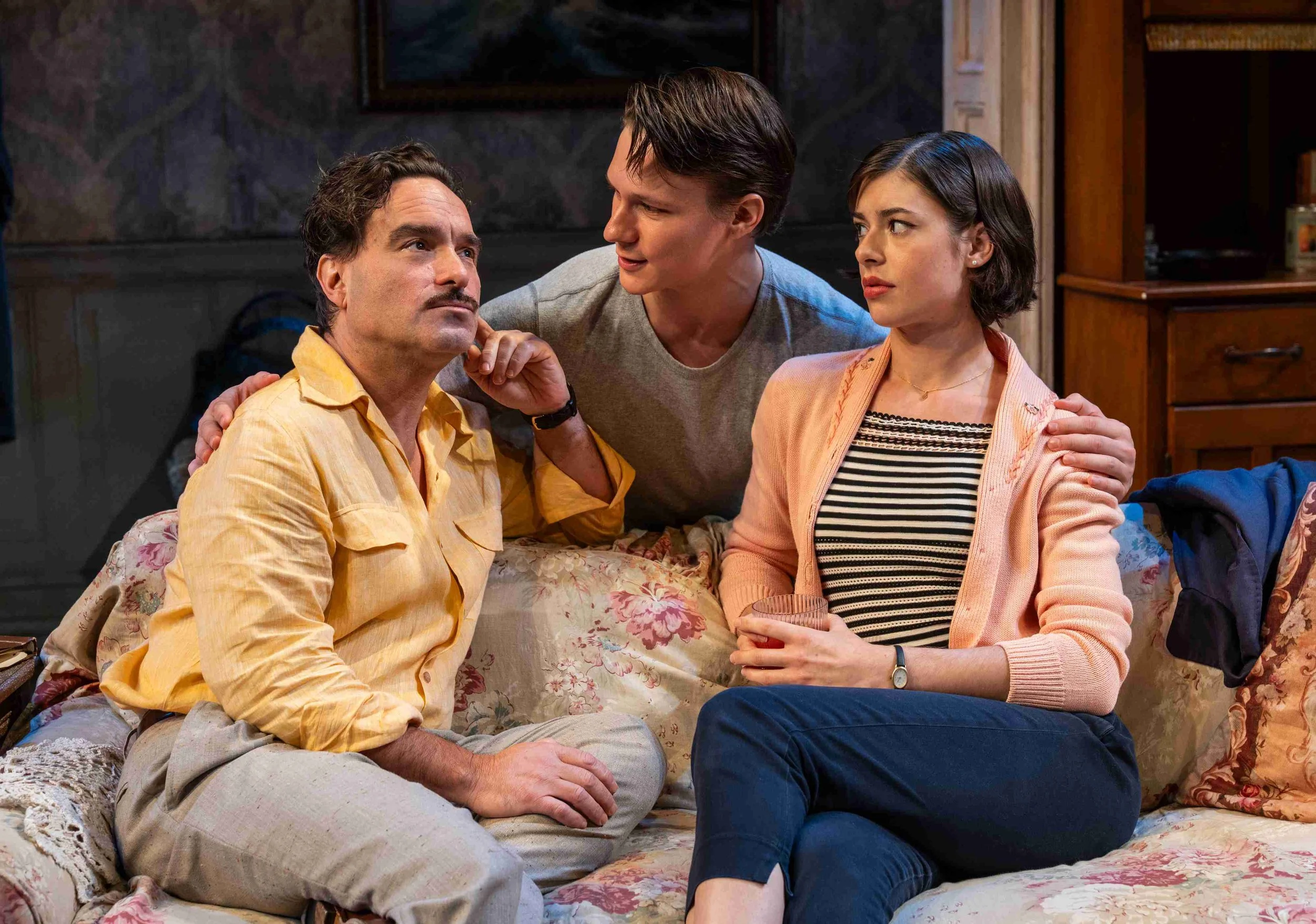
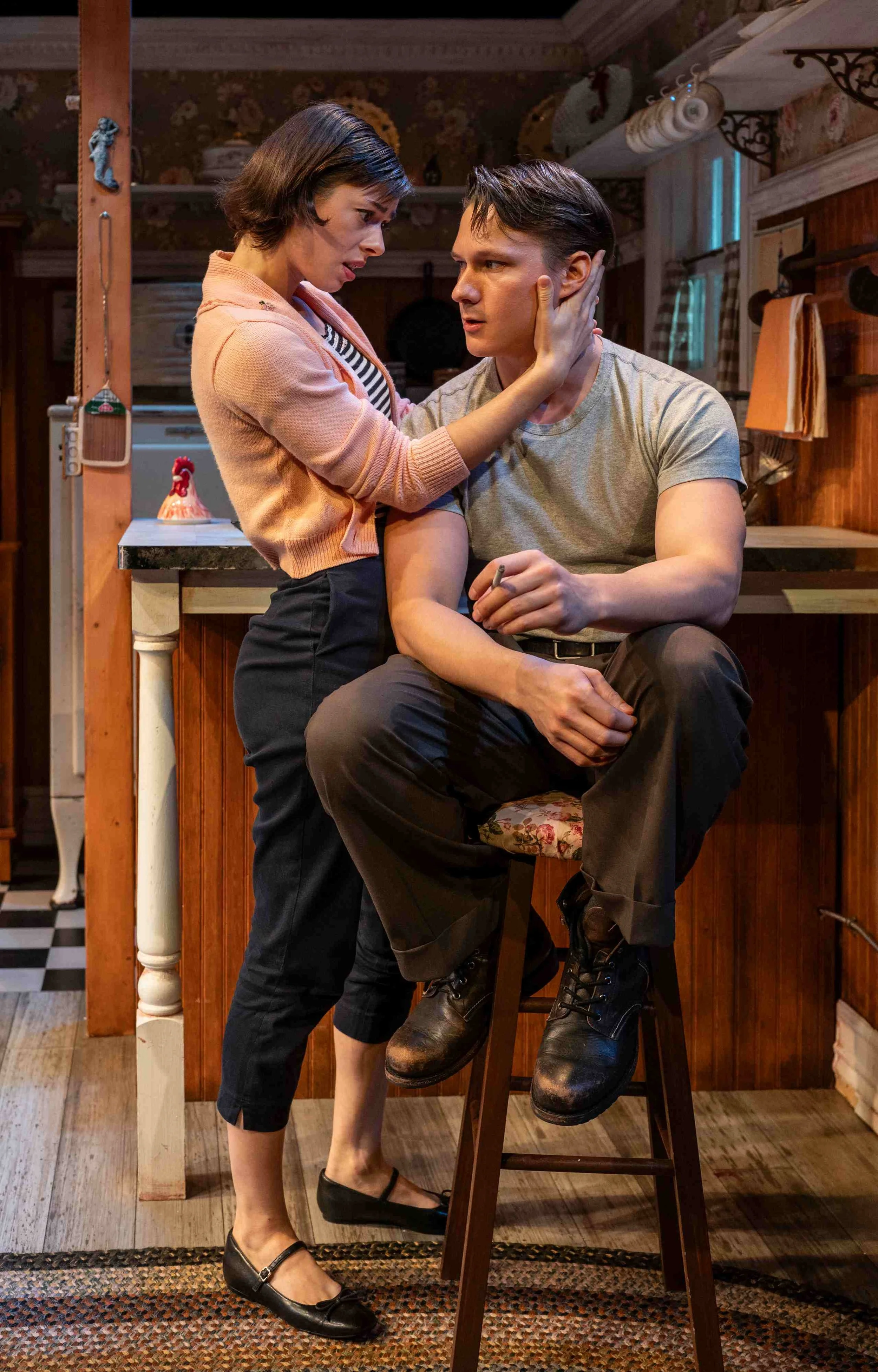
Brando arrives shortly after Margo and Pancho depart for an evening on the town and startles Williams, who had stepped out of the room briefly (the only time that Galecki leaves the stage over the course of the play). If a reading for the part was in the offing before, Brando’s blatant disrespect has soured Williams’ interest. Things escalate until Jo (Ellie Ricker), Brando’s girlfriend, joins them. Williams is quite taken by Jo and there are signs that his attention, and an excessive amount of alcohol, is having an impact on the couple in general and Brando in particular.

To be more specific at this juncture would jeopardize the powerful exchange that follows except to say that there are subtleties of the script that draw us in to Galecki’s insightful interpretation of the playwright, his profound arrogance and playful eroticism for both sexes. In Moskovitz’s Brando, we see the dawning of the star—a raw, brooding, unsettled powerhouse—whose stellar moment comes deep into the play and catches us completely off-guard.

The rustic interior scenic design by David Gallo features a modest 1947 living room framed in exterior seascape elements for Williams’ Provincetown Massachusetts home. With only a small portable typewriter on a coffee table to signify that one of our greatest playwrights lives and works here, it could be anyone’s coastal home. But for all of the captivating 90-minutes of the play, the quaint living room is the perfect setting for the first meeting between the legendary figures and makes “Kowalski” a fascinating study of Brando’s youthful bravado by Moskovitz and the wildly creative mind of Williams that Galecki so marvelously captures.

PHOTO| Michael Brosilow

Lookingglass Theatre Company
presents
a Brando Beginnings Production
KOWALSKI
Water Tower Waterworks
through October 25, 2026

WEBSITE

TICKETS

For more reviews, visit: Theatre In Chicago

ARCHIVE

PicksInSix® is a registered trademark of Roxbury Road Creative, LLC
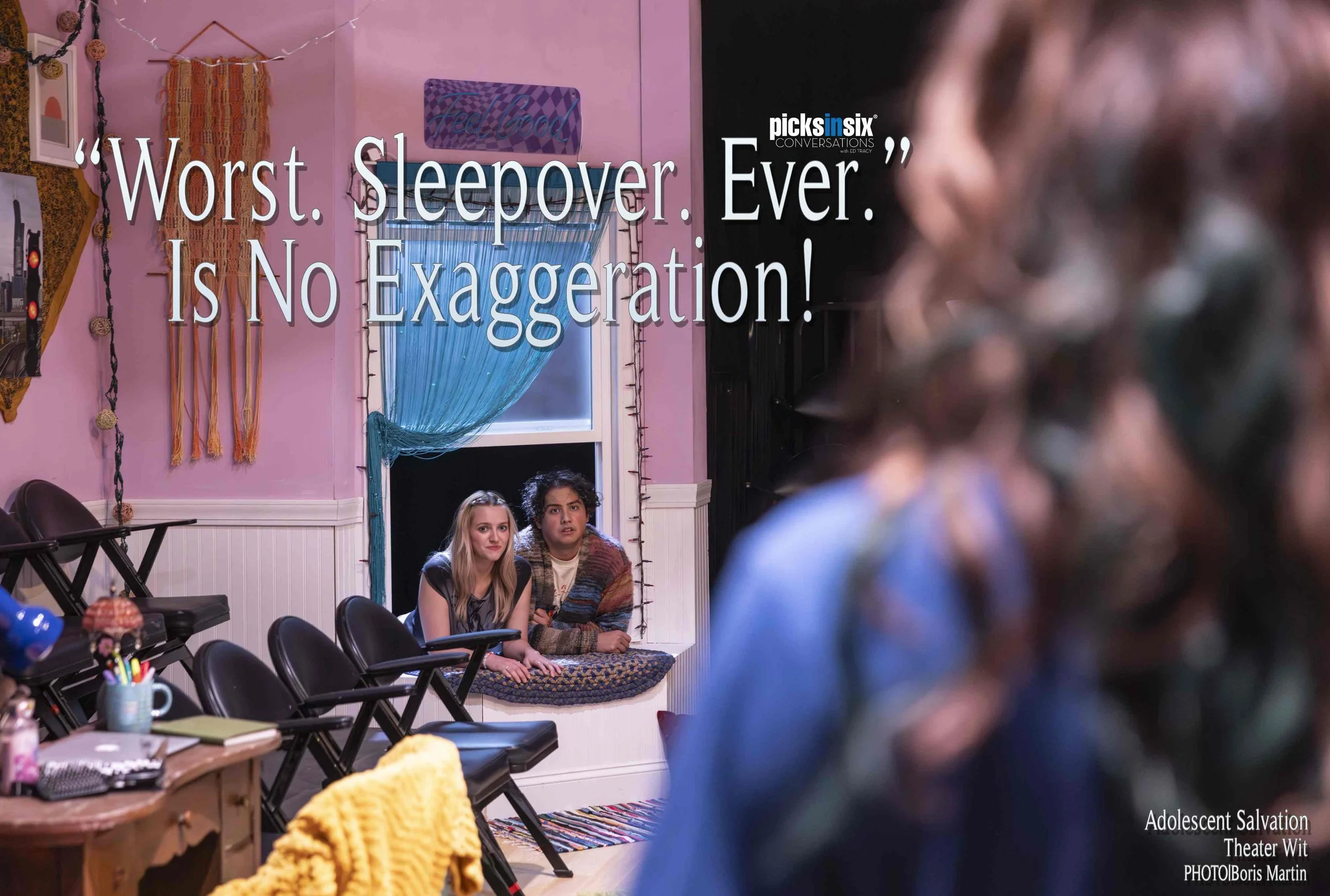
PicksInSix Review: Adolescent Salvation - Theater Wit


“Worst. Sleepover. Ever.” Is No Exaggeration!
PicksInSix® Review | Guest Contributor |
Perse Grammer

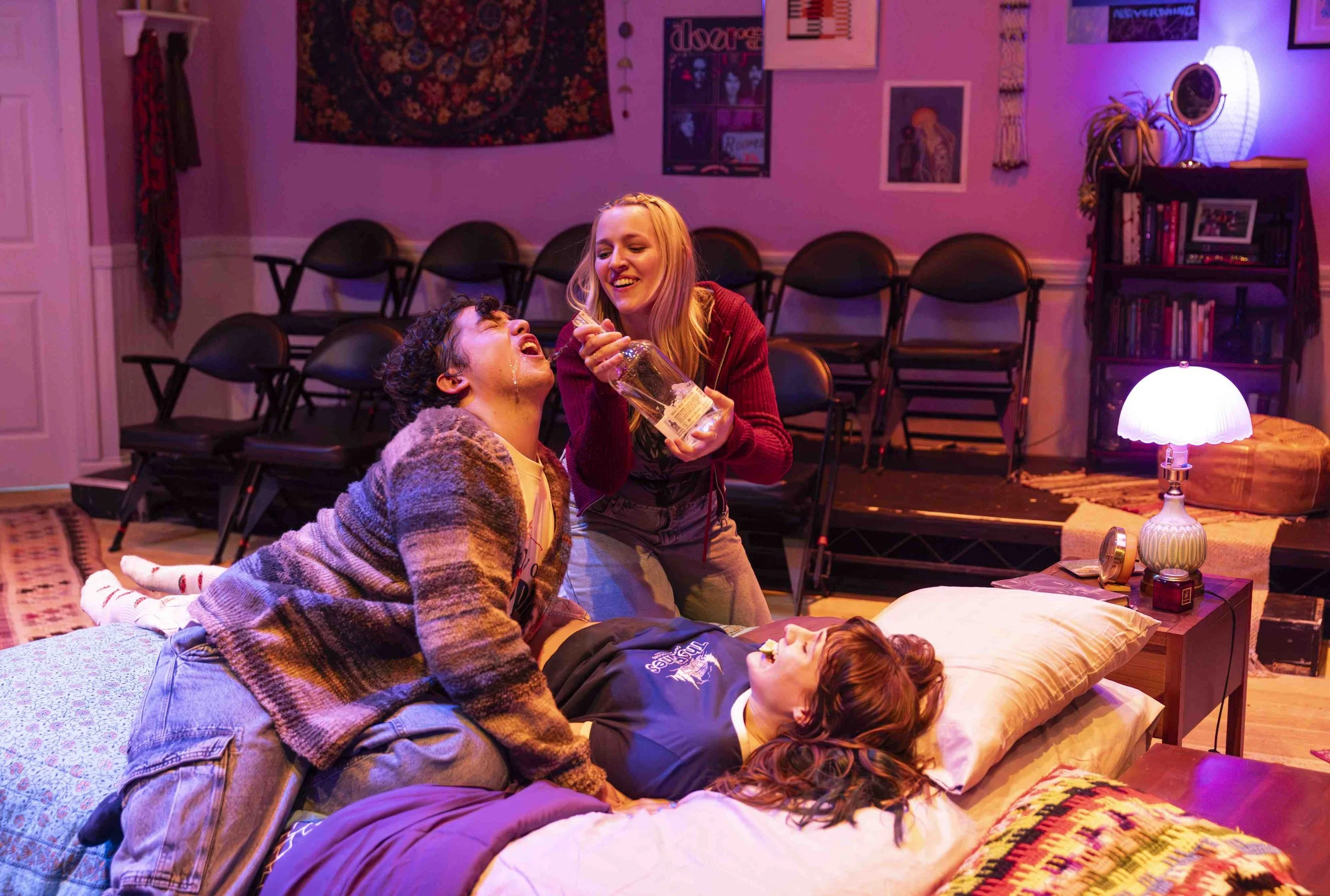
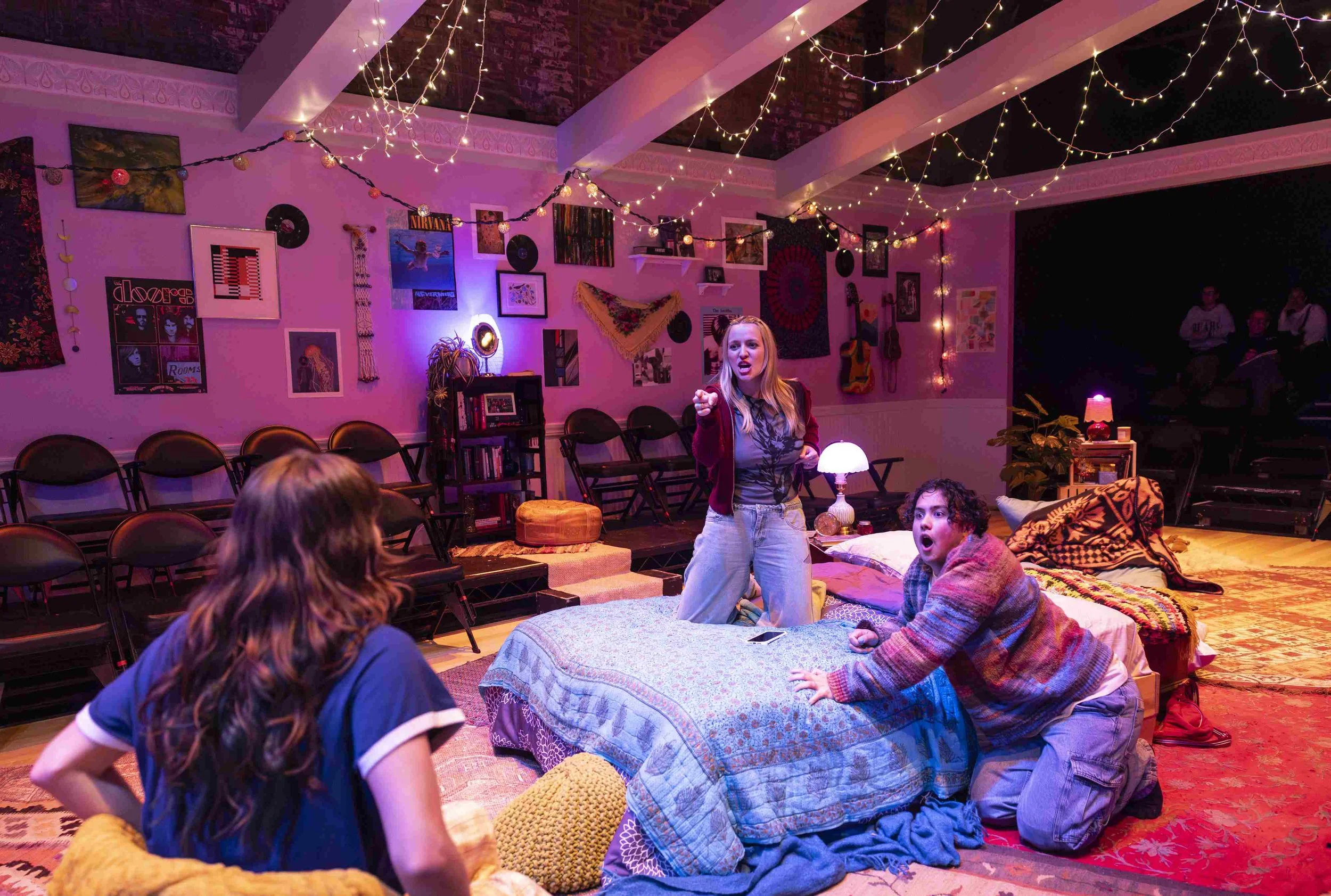
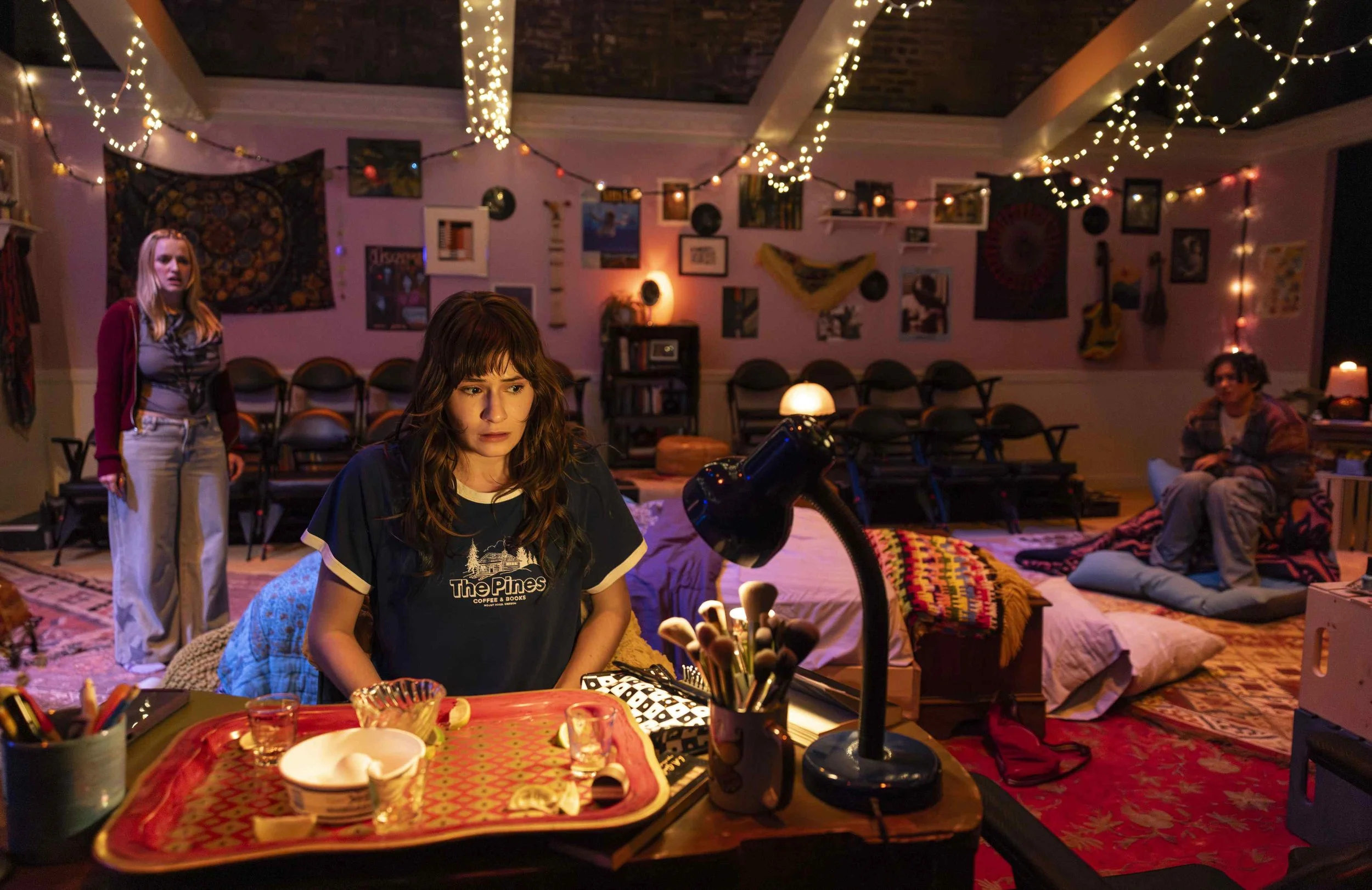
To enter Theater Wit’s production of “Adolescent Salvation,” I have to push through the clothes hanging in a teenage girl’s closet. Upon entering, I am immediately transported to the bedroom of every quirky rich girl I knew growing up. The walls are covered in posters and tapestries, color-changing lamps perch on various surfaces and a turquoise record player stands out amongst the knickknacks. Blasting songs like “Ignorance” by Paramore and “Not Strong Enough” by boygenius only enhance the teenage girl-dom of it all. Tying the space together are the fairy lights grandly draped from the high white rafters. Scenic designer Jonathan Berg-Einhorn has knocked it out of the park, immersing the audience in the show by making them part of the walls.

This room belongs to Natasha. And we’ll soon learn that her closet doesn’t just contain clothes and eager audience members. There is also at least one skeleton.

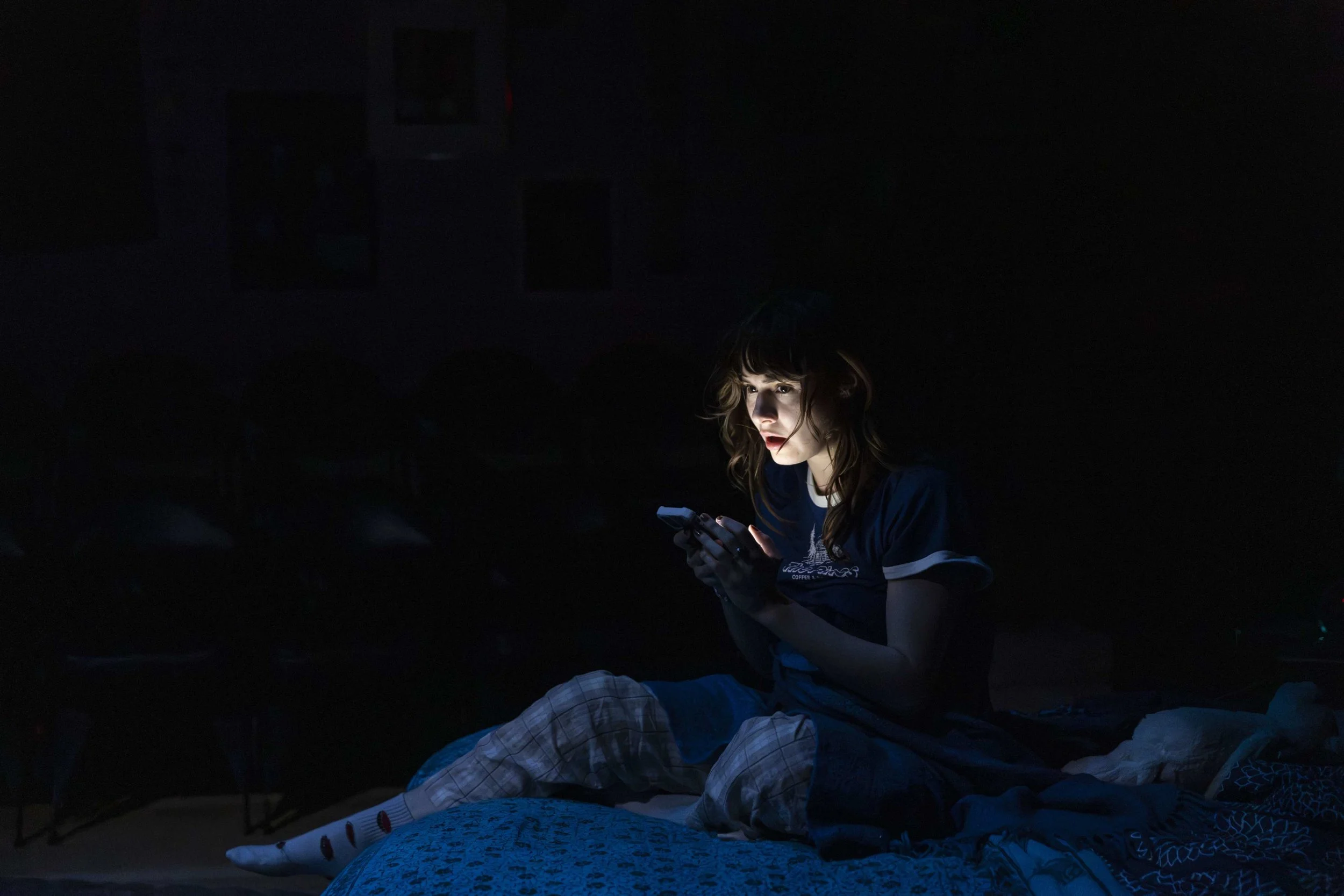
We begin in the dark, with nothing but screen light and TikTok audio blaring from the phones of three teens sprawled across the floor. Sweet, awkward Natasha (Piper Jean Bailey) and snarky, domineering Taylor (Jordan Levene) have nothing in common apart from moms insisting they have a sleepover. Taylor has dragged along her gay best friend, who is also named Taylor (Brandon Acosta). Let’s call them Taylor G. (for girl) and Taylor B. (for boy). While Taylor B. has some genuine interest in befriending Natasha, Taylor G.’s focus is on extracting her darkest secrets. But when she discovers something far worse than she expected, Taylor G. hatches a plan to save Natasha—a plan that will also put her in grave danger. While the play is a bit clunky at first, it finds its groove as the plot twists get crazier. And oh, do they get crazier!

As the night unravels, Natasha’s initially adorable distress morphs into a vicious breakdown. Bailey brings a kaleidoscopic approach to Natasha—she’s kind and innocent, manipulative and demanding, and above all else, intensely struggling. Acosta’s performance is steady and humorous, bridging the gap between the girls’ clashing perspectives. He’s also got a knack for physical comedy. Which, whether using props or bodies, is a delightful constant of “Adolescent Salvation.” As Victoria, Maura Kidwell’s physicality is eye-catching—all sharp angles and dramatic leaning. She entirely embodies Natasha’s mom and former hero, a woman who used to be in a feminist band called The Late Term Abortions. Levene’s Taylor G. is apathetic one moment, passionate the next, all wrapped in a layer of deeply teenage snark. She’s the mean girl who’s funny enough that you don’t quite want her to stop talking.

While playwright Tim Venable delves deep into every character, I wish we got to explore more of Taylor G.’s nuances within the text. There are a few mentions of her difficult home life—her mom cheating on her dad with a younger man—and Levene’s performance alludes to Taylor G.’s desperation to control the room. But she starts “Adolescent Salvation” declaring she will never disclose vulnerability, and in a play where everything gets turned on its head, that remains true to the end. While Taylor B. and Natasha bond with relative ease, Taylor G. is Natasha’s tormentor and her white knight. The push-and-pull between them is the driving force for much of the play’s action. But unlike Natasha, we just don’t know why Taylor G. behaves the way that she does. Knowing that could make a touching moment near the end—the Taylors crawling through Natasha’s window to help her like true friends should—more impactful. Even so, that scene is strong. Strong enough to be the final moment of the play, in my eyes.

Director Guillermo Cienfuegos and his team have developed a thrilling play that shines a light on the dark realities of being a teenager with nobody’s support but unlikely friends. “Adolescent Salvation” has engineered moments that will make you cackle and cringe, often at the same time. The theatre in the round setup—with great attention paid to sightlines—means whenever you can’t bear to look at the action on stage, you’ve got plenty of fellow audience members writhing in discomfort to watch. I won’t say what exactly causes these audible groans and full body cringes—you’ll just have to experience that for yourself. Because the shock factor is crucial to ensure “Adolescent Salvation” is abruptly funny and intoxicatingly uncomfortable.

GUEST CONTRIBUTOR | PERSE GRAMMER is a multidisciplinary writer and theatre artist based in Chicago. Grammer is currently developing their latest play through a mentorship with Sandy Shinner at Shattered Globe Theatre. They hold a BFA in Playwriting from The Theatre School at DePaul University.  www.persegrammer.com

PHOTO|Boris Martin

Theater Wit
presents
Adolescent Salvation
1229 Belmont Avenue
through October 3, 2026


WEBSITE

TICKETS

For more reviews, visit: Theatre In Chicago

ARCHIVE

PicksInSix® is a registered trademark of Roxbury Road Creative, LLC
PicksInSix Review: Catch as Catch Can - Steppenwolf Theatre Company


Diabolically Clever “Catch” Turns On Dime
PicksInSix® Review | Guest Contributor | Ronald Keaton

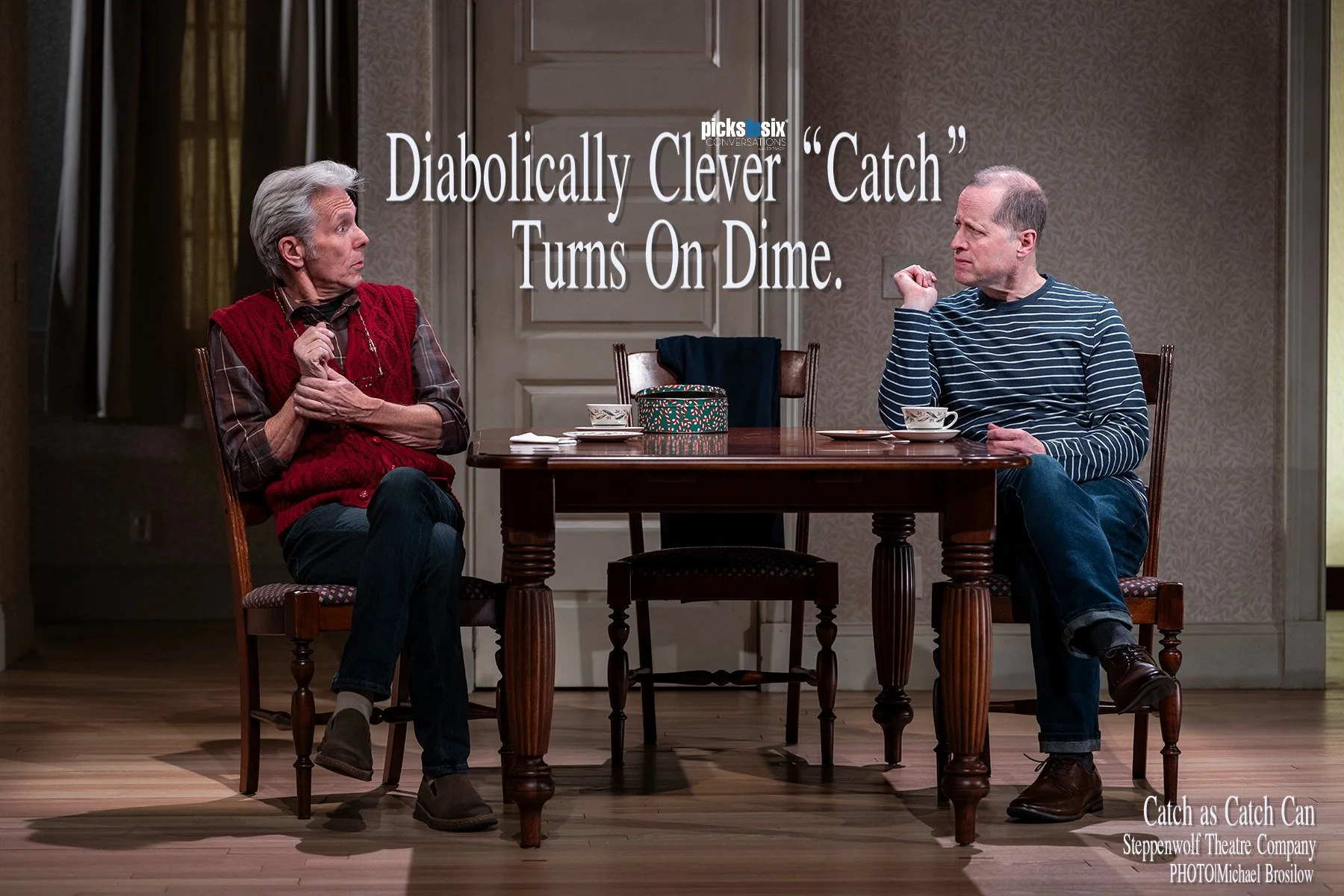
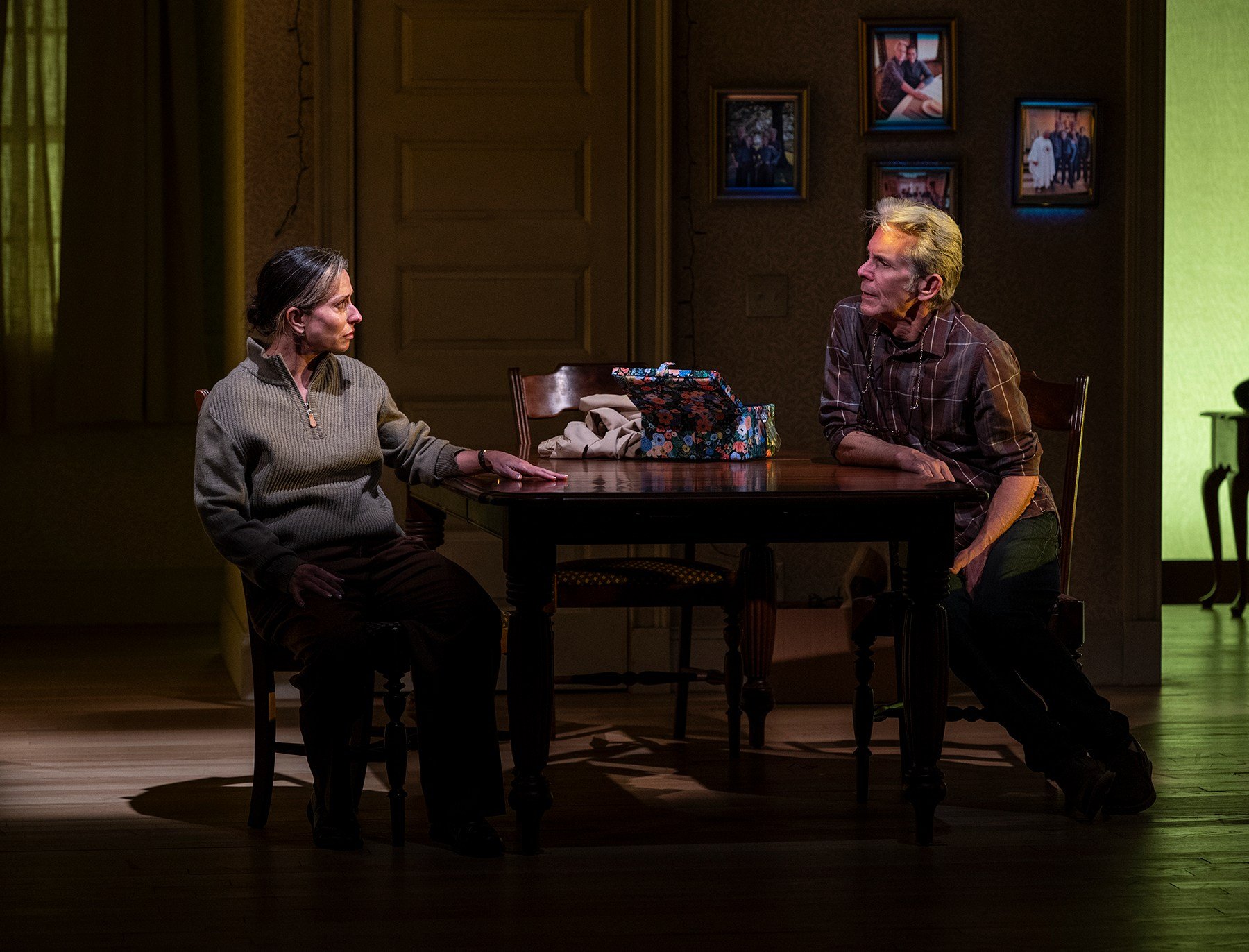
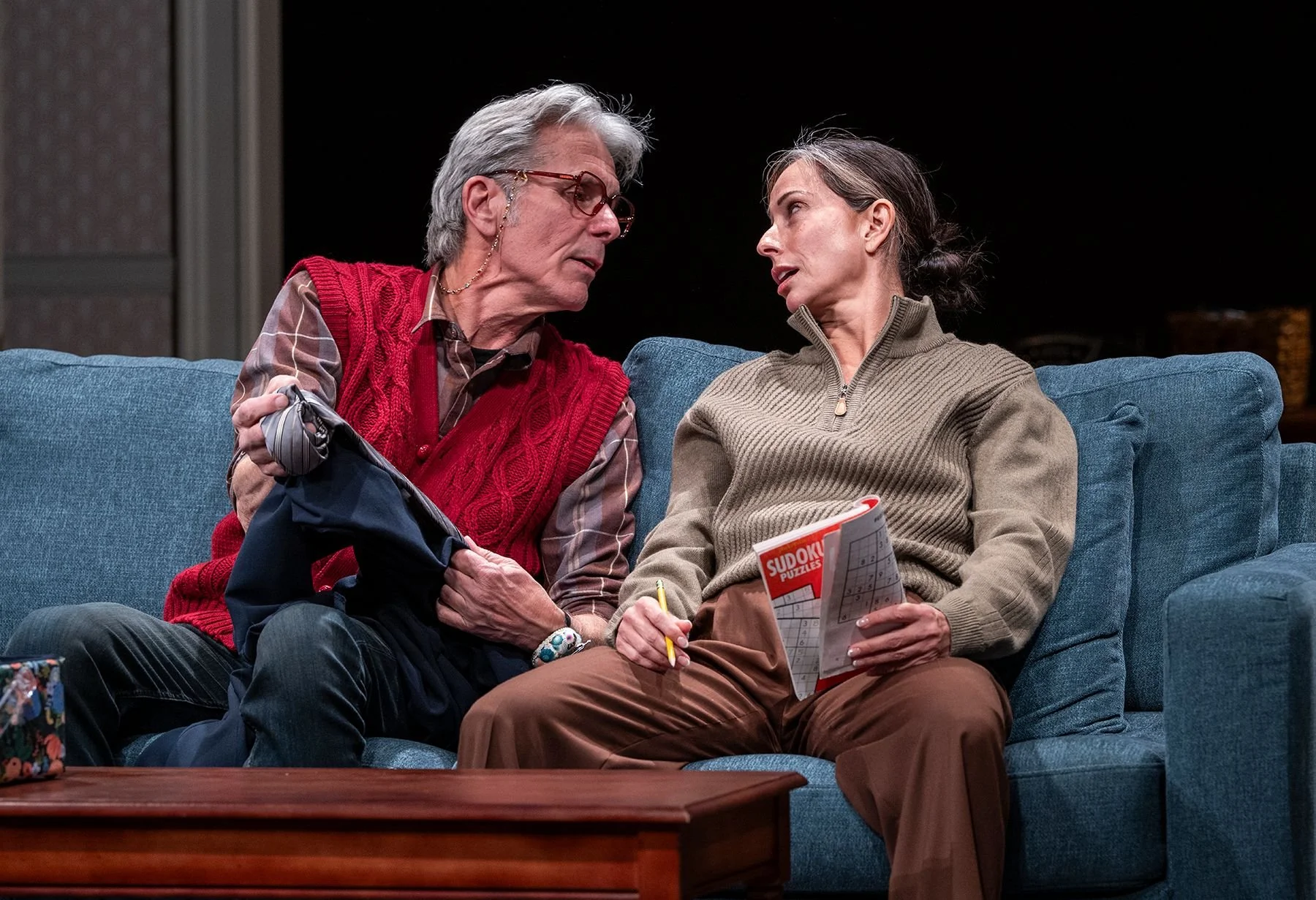
What a challenging piece of theatre this is. Three actors play six different characters in Mia Chung's diabolically clever play “Catch as Catch Can,” now playing at Steppenwolf's Downstairs Theatre through July 12. In director Amy Morton’s eloquent staging, the solid trio of actors play two characters each. They offer an adult child and a parent—a son to the mother or a daughter to the father. We jump genders and ages, even while standing alone.

There are two families, close friends and all, the Phelans and the Lavecchias. They welcome home a kind of prodigal son, setting off an evolving crisis that reshapes their lives and, as we discover, the play itself. In Mia Chung’s play, three actors perform across race, gender, and generation—a family drama that doubles as a theatrical tour-de-force. It's a fascinating stew of six disparate personalities who are a lot of fun to observe—until they cease to be.

A startling shift kicks into gear midway into this trip through a history of the families, when Tim shares an unnerving revelation about his fiancée Mingjin with Daniela that changes everything. It shades the play toward a much more sobering, sad realization. The family dynamics here intertwine and are as changeable as the weather. But as we discover the secret, we also witness this man's hellbent personal self-destruction and mental illness. It's uncomfortable to observe and hard to follow. The mental, emotional breakdown throws the entire story askew, and we are asked to live now in a different kind of reality.

What seems at first like a family comedy takes a sharp turn that rips apart not only the person who suffers from it, but the fabric of the play itself.  The sudden, emotional separation from the comedic turns is damned scary and often disorienting. Confusion does indeed reign, as the work of communicating a sense of chaos only makes blurry the lines of the dual identities the actors are asked to do.  And that double-casting, as utilized here, aspires to be more than a gimmick. It is, in fact, central to what the show wants to share about what people do or do not get from family.

When all is said and done, we wonder why. This is indeed challenging material that few theatres in existence would try so fully. There are three of the best onstage, too—Gary Cole, Tim Hopper and Audrey Francis. The stagecraft, the acting, the technical aspects, all of these are up to Steppenwolf's expected brilliance. Director Morton is a veritable genius in helping her actors delineate character, often in the same body playing two different people.

But the play itself—and from one of our great, innovative playwrights in the theatre—trips over such cleverness and innovation. “Catch as Catch Can” is well worth seeing. But what one takes from it might be as strange and difficult as the situation itself. Then again, maybe that's the point. Humanity is, after all, often a chaotic condition, which would then make such creativity here worthwhile.

GUEST CONTRIBUTOR | RONALD KEATON received an Equity Jeff Award for the performance of his one-man show CHURCHILL at: www.solochicagotheatre.com.  Coming soon, his new solo play about Ben Franklin, THE FIRST EMBASSY.

PHOTO|Michael Brosilow

Steppenwolf Theatre Company
presents
Catch as Catch Can
Downstairs Theater
1650 N. Halsted St.
through July 12


WEBSITE

TICKETS

PROGRAM

For more reviews, visit: Theatre In Chicago

ARCHIVE

PicksInSix® is a registered trademark of Roxbury Road Creative, LLC

PicksInSix Gold Review: An Enemy of the People - TimeLine Theatre Company


What Is The Price Of Truth?
PicksInSix® Gold Review |
Ed Tracy

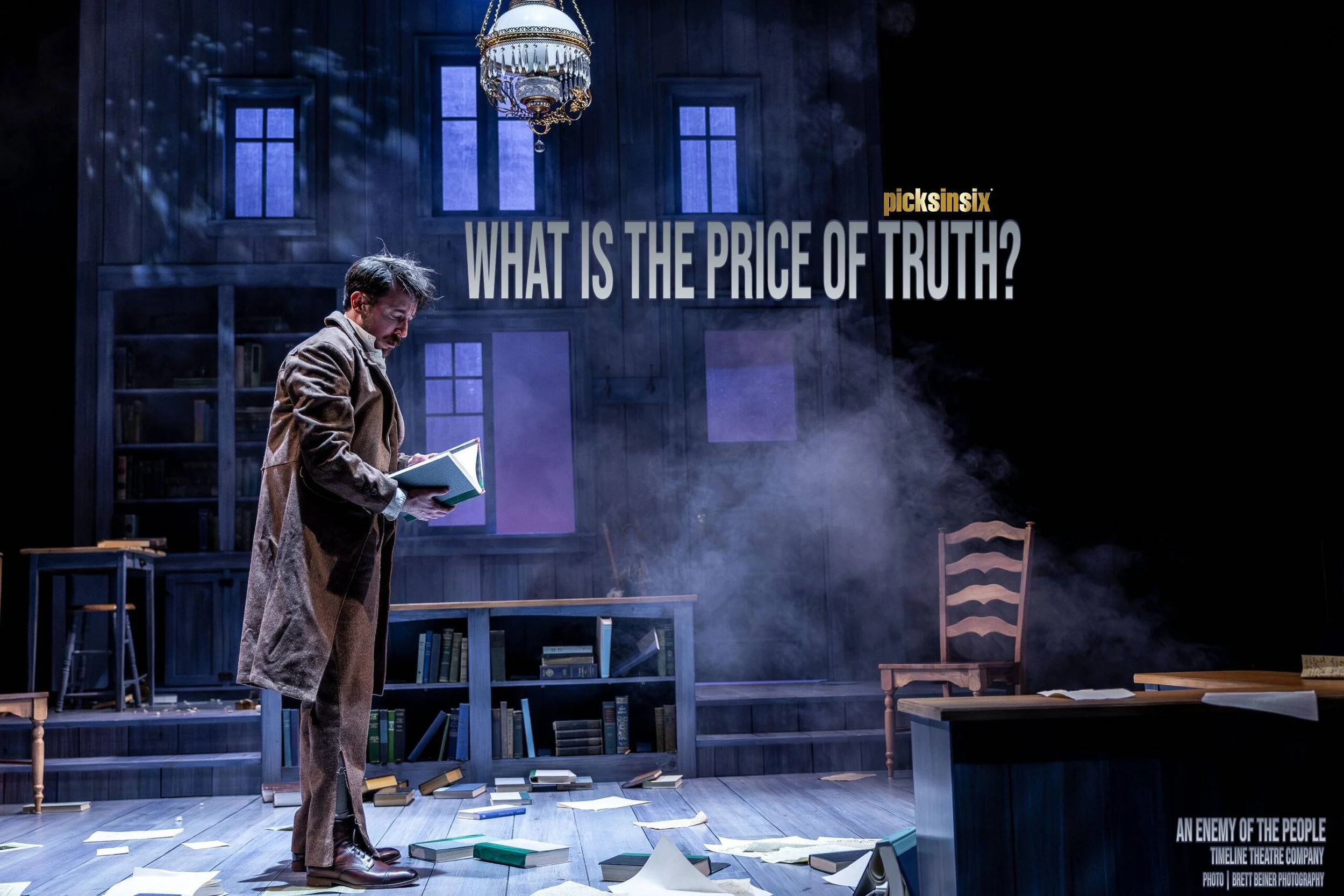
Precisely timed at an inflection point for the long-term stability of the performing arts in Chicago, TimeLine Theatre Company has accomplished the nearly impossible dream of planning, funding and opening a state-of-the-art black box theater that has all the makings of providing not only a sparkling, much-needed new venue for creative artists, but also a shimmering anchor for the Uptown neighborhood. It is an unqualified, stellar, multi-faceted achievement!

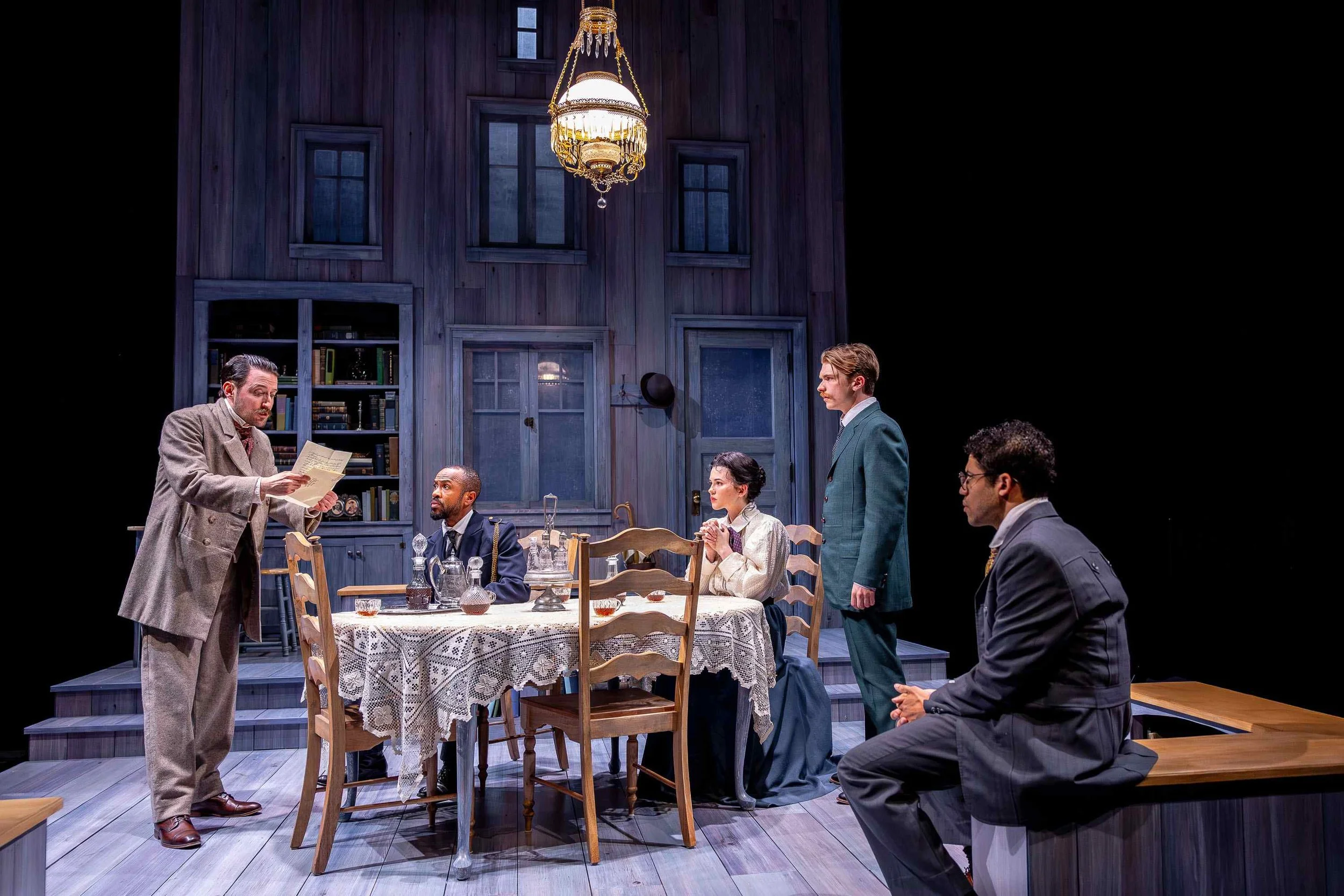
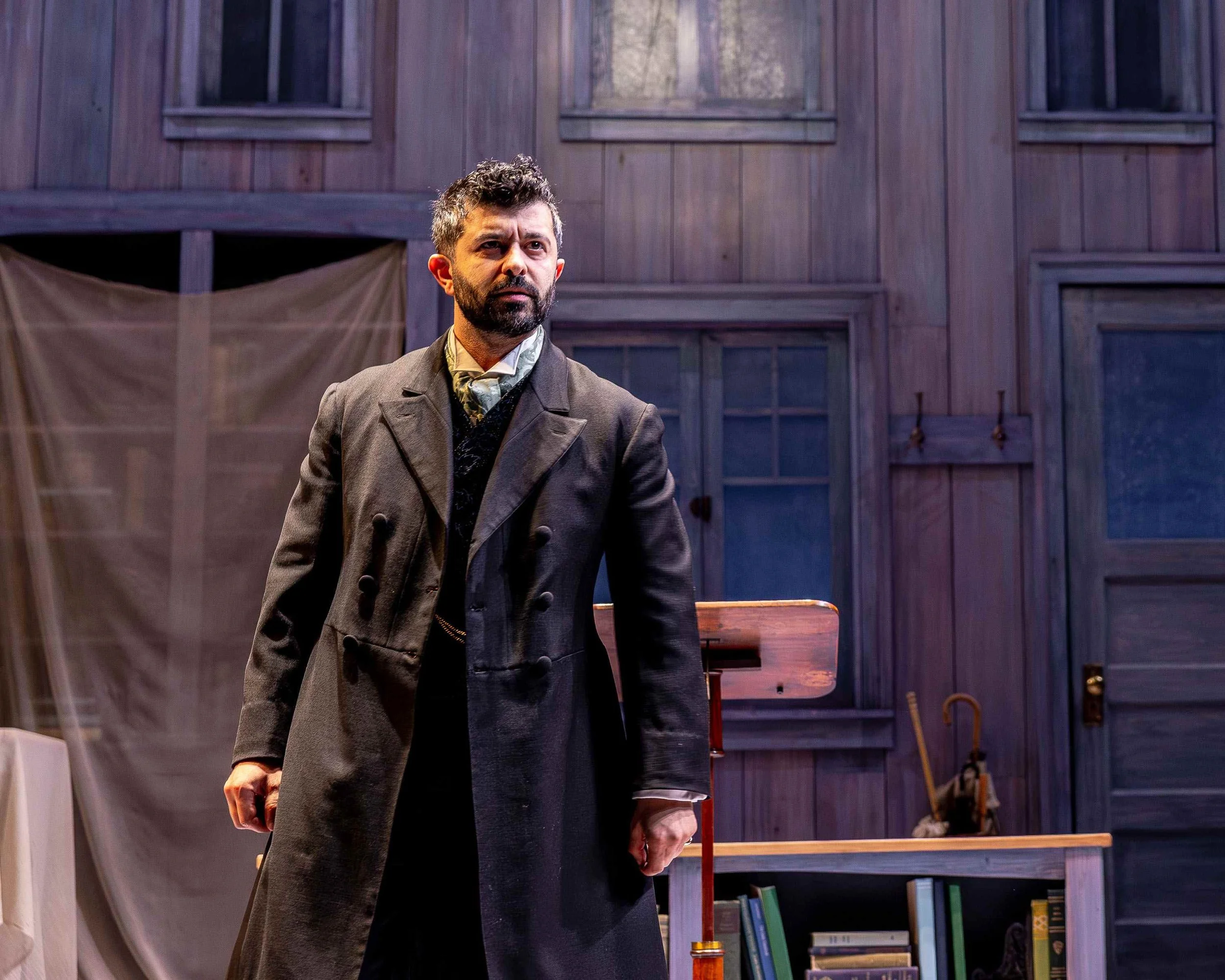
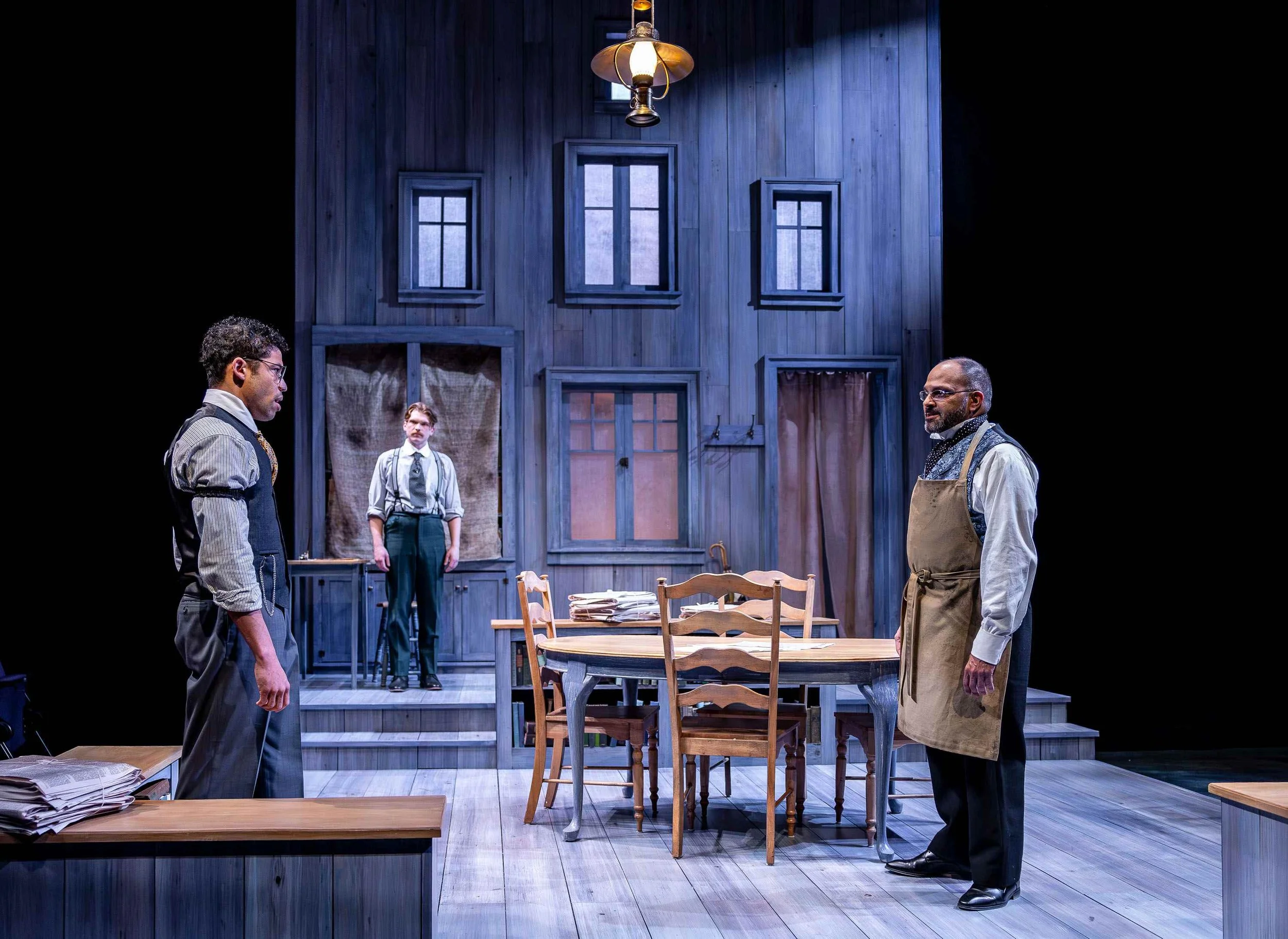
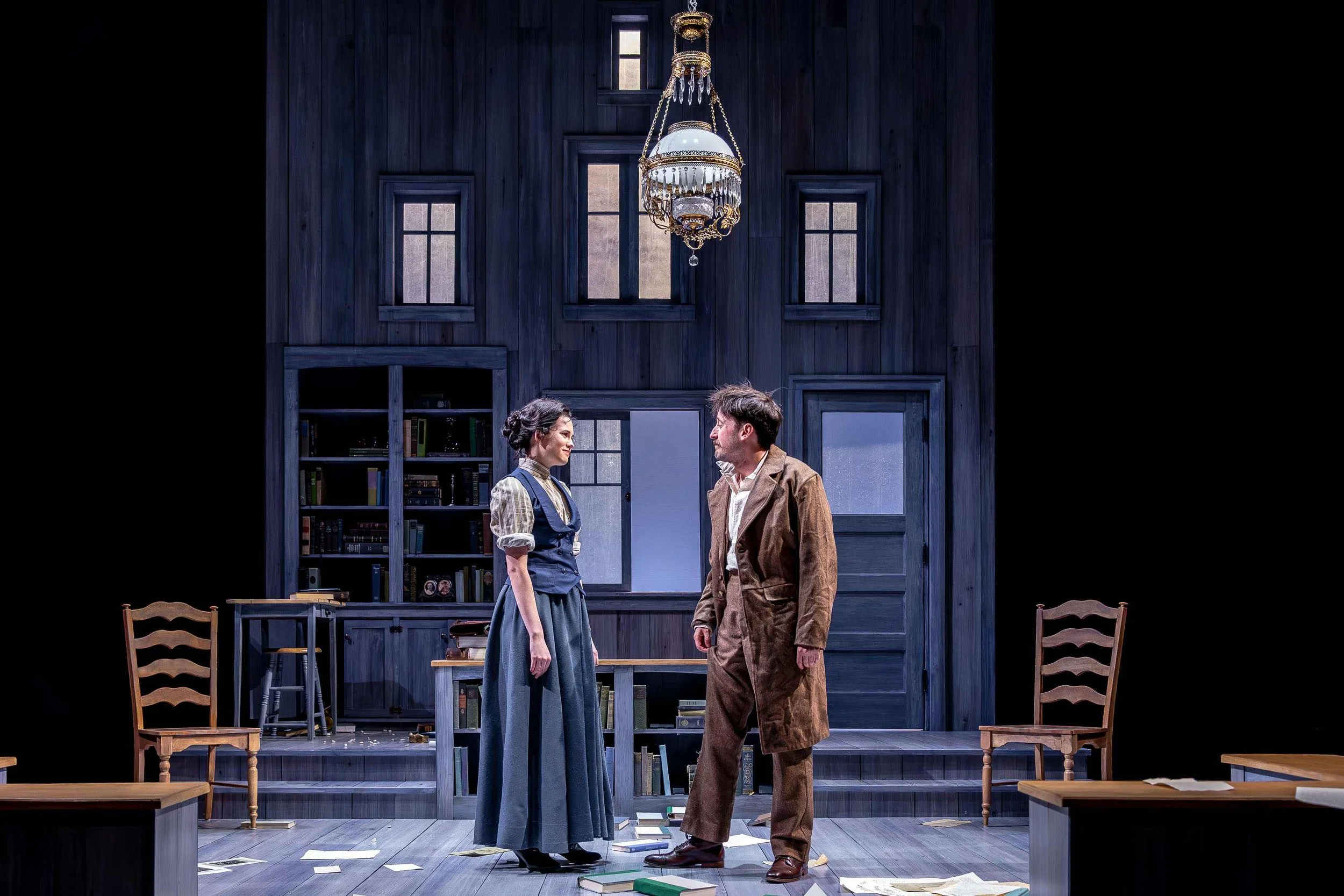
The opening production—the Chicago premiere of Amy Herzog’s new version of Henrik Ibsen’s “An Enemy of the People” superbly directed by TimeLine Company Member Ron OJ Parson—teams veteran TimeLine talent with exciting new actors to present a riveting drama that feels fresh, edgy and of-the-moment. And as much as the play is the thing, the aura throughout the building at last Thursday’s opening can only be described as electric long before the lights came up on John Culbert’s impressive set design—a versatile, bi-level interior that towers over the thrust stage configuration. Indeed, the black box itself, seating 250 and rising nearly three floors, provides an unmatched view for the audience of the action transpiring only feet away.

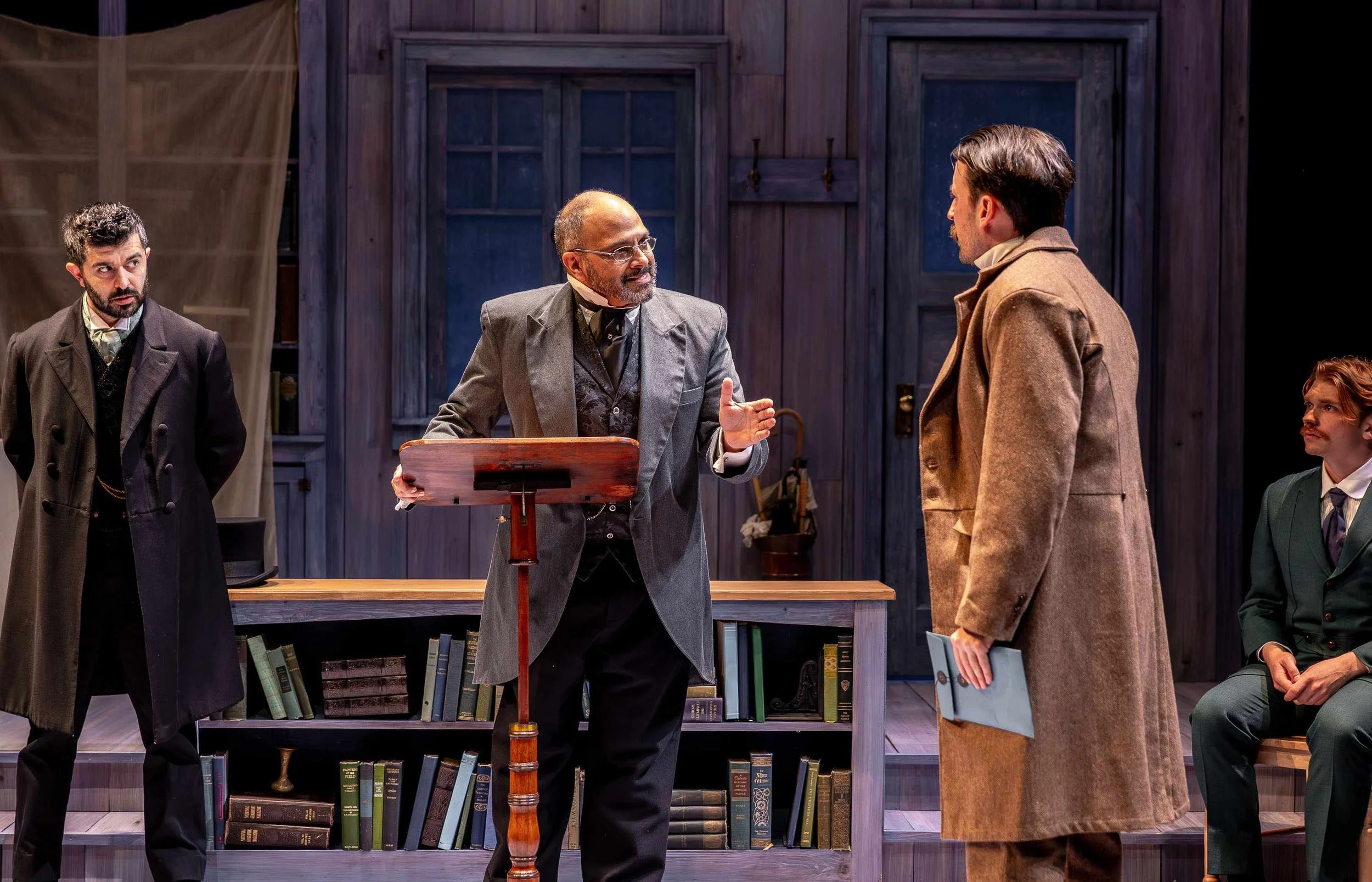
The Ibsen classic is high moral drama, raising the stakes for a small community in the late 1800s Norway trying to survive in the face of a health crisis that threatens the lives and livelihood of everyone involved, including the present and future generations of one family at the center of the story. Will Allan plays Herzog’s Dr. Thomas Stockmann whose research has concluded that the town’s baths, the lifeline of the tourist economy, have been dangerously contaminated. When word of his findings begin to emerge within a close-knit group that includes his daughter Petra (Campbell Krausen), a family friend, Captain Horster (Charles Andrew Gardner), and those responsible for the local paper, Billing (Kenneth Hamilton), Aslaksen (Anish Jethmalani) and Hovstad (Grayson Kennedy), a wave of righteous indignation initially sets in supporting Stockmann’s plan to present his findings. But when Stockmann’s brother and town mayor Peter (Behzard Dabu) gets wind of the story and raises doubts, support quickly evaporates and the tenor shifts radically away from full disclosure to hysteria and resentment. Stockmann’s case is further complicated by his father-in-law Morten Kill (David Parkes) who tips the scales on another level altogether.

Allan’s raw, passionate and finely nuanced portrayal of Stockmann brims with confidence and turns with powerful conviction, especially in his point-blank confrontations with Peter that Dabu effortlessly unravels as Herzog’s sinister, calculating opportunist who sacrifices all decency to undermine any point of view that he does not share. That familiar toppling of opinion rapidly washes over everyone except Krausen’s endearing and captivating turn as Petra and Gardner’s poised Horster, whose stalwartly loyal support holds the key to what may come next. It is a story for our time and in Parson’s expert hands, carves a wide path of fire and fury.

The creative team delivers a visually stunning palette of the period merging Christine Pascual’s exquisite costumes, evocative lighting by Brandon Wardell, a signature sound design by André Pluess and a flurry of ingenious properties of all sorts and sizes by Nicolas Bartleson.

As TimeLine meets this moment, all that has transpired before is merely the foundation—and excitement—for what is to come. The pride in accomplishment for a permanent home is richly deserved and can be seen and felt around every corner. What lies ahead is a new era for TimeLine and their unique interpretation of works, the next chapter of a theater company that has never compromised itself, pushing forward and executing at the highest level again and again. And we will have the enduring pleasure of watching, learning and enjoying that work for years to come.

PHOTO | Brett Beiner Photography

TimeLine Theatre Company
presents
Chicago Premiere
An Enemy of the People
5035 North Broadway
EXTENDED through June 27, 2026

WEBSITE

TICKETS

PROGRAM

For more reviews, visit: Theatre In Chicago

ARCHIVE

PicksInSix® is a registered trademark of Roxbury Road Creative, LLC
PicksInSix Review: Salome - Lyric Opera of Chicago


“A Dark and Enthralling Operatic Experience”
PicksInSix® Review | Guest Contributor | Kaitlyn Linsner

Richard Strauss’s “Salome” premiered in Chicago in 1910 and caused such uproar that after two performances, the opera was moved to Milwaukee. Soprano Mary Garden starred in the title role with a portrayal of the unsettling teenage princess that the president of the Chicago Law and Order League called “disgusting” in a letter to the Chief of Police. What a scandalous and iconic debut.

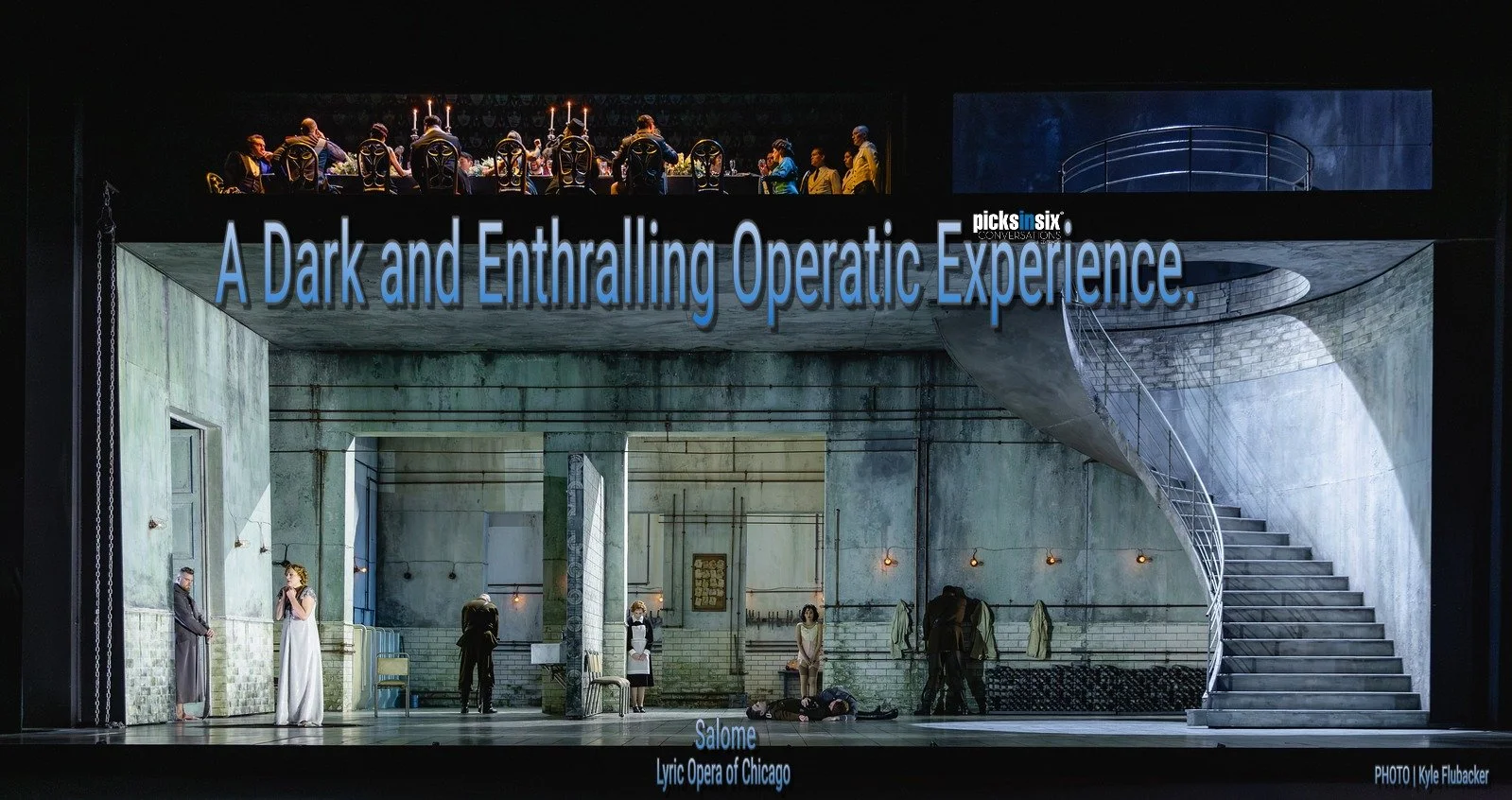
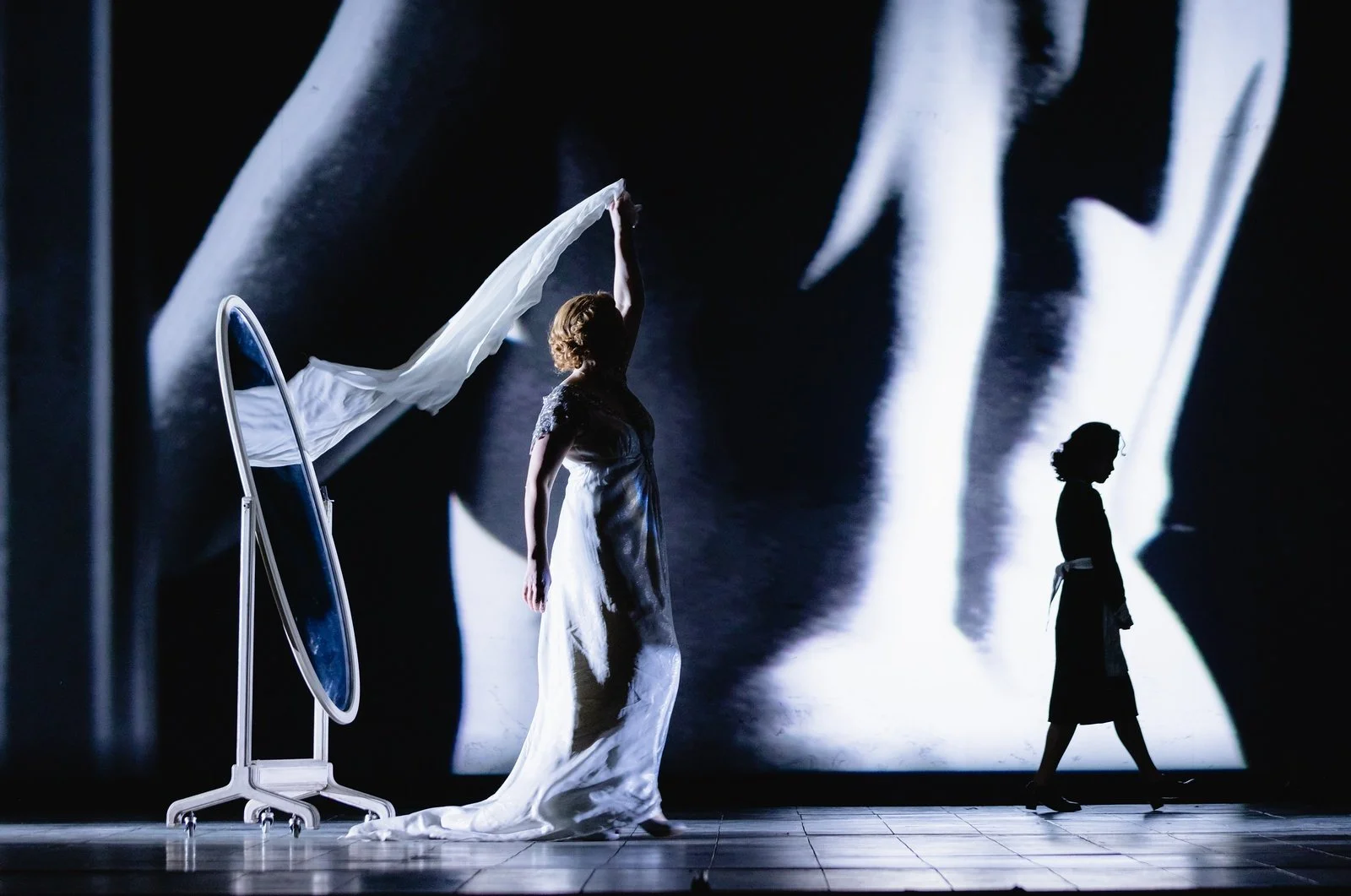
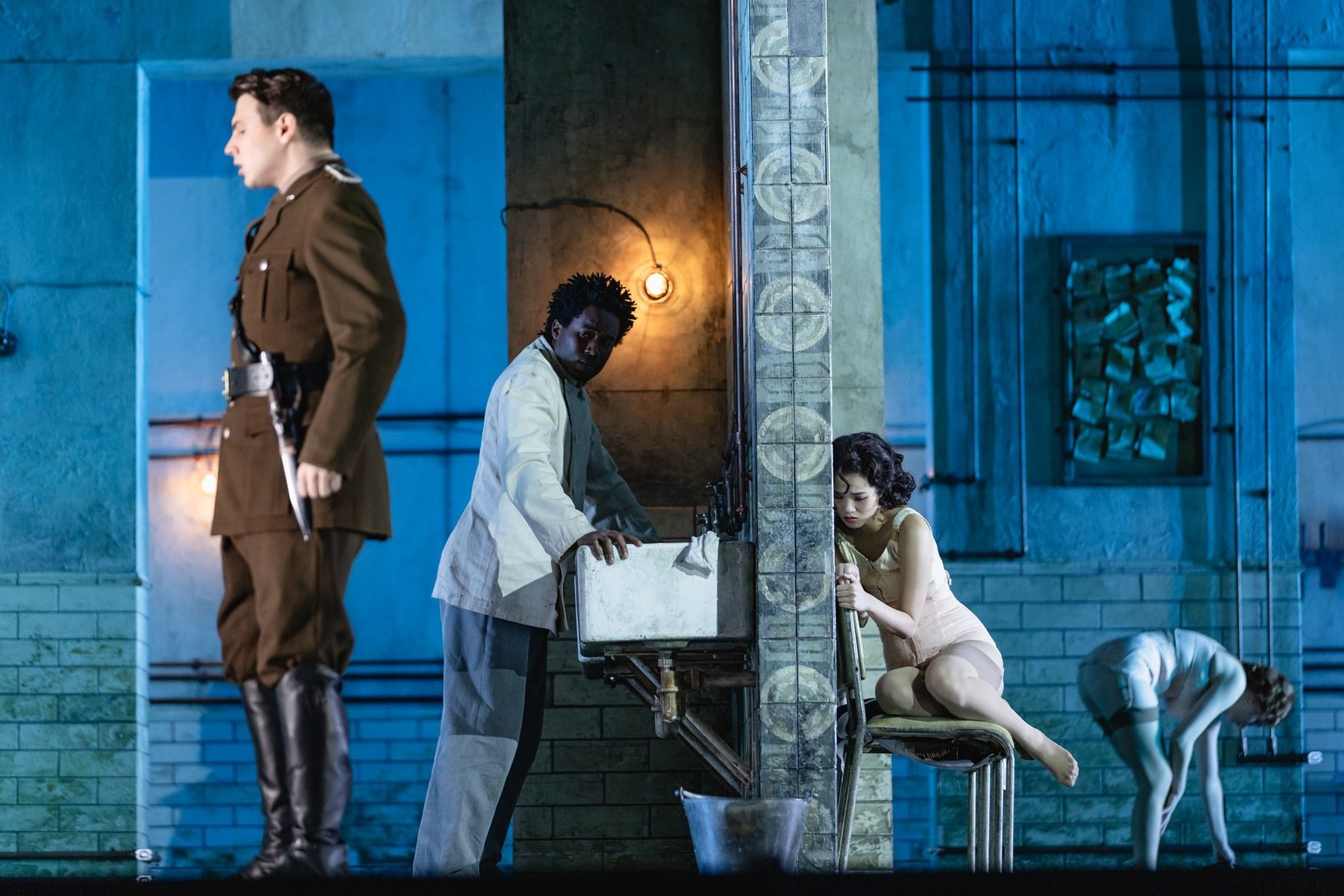
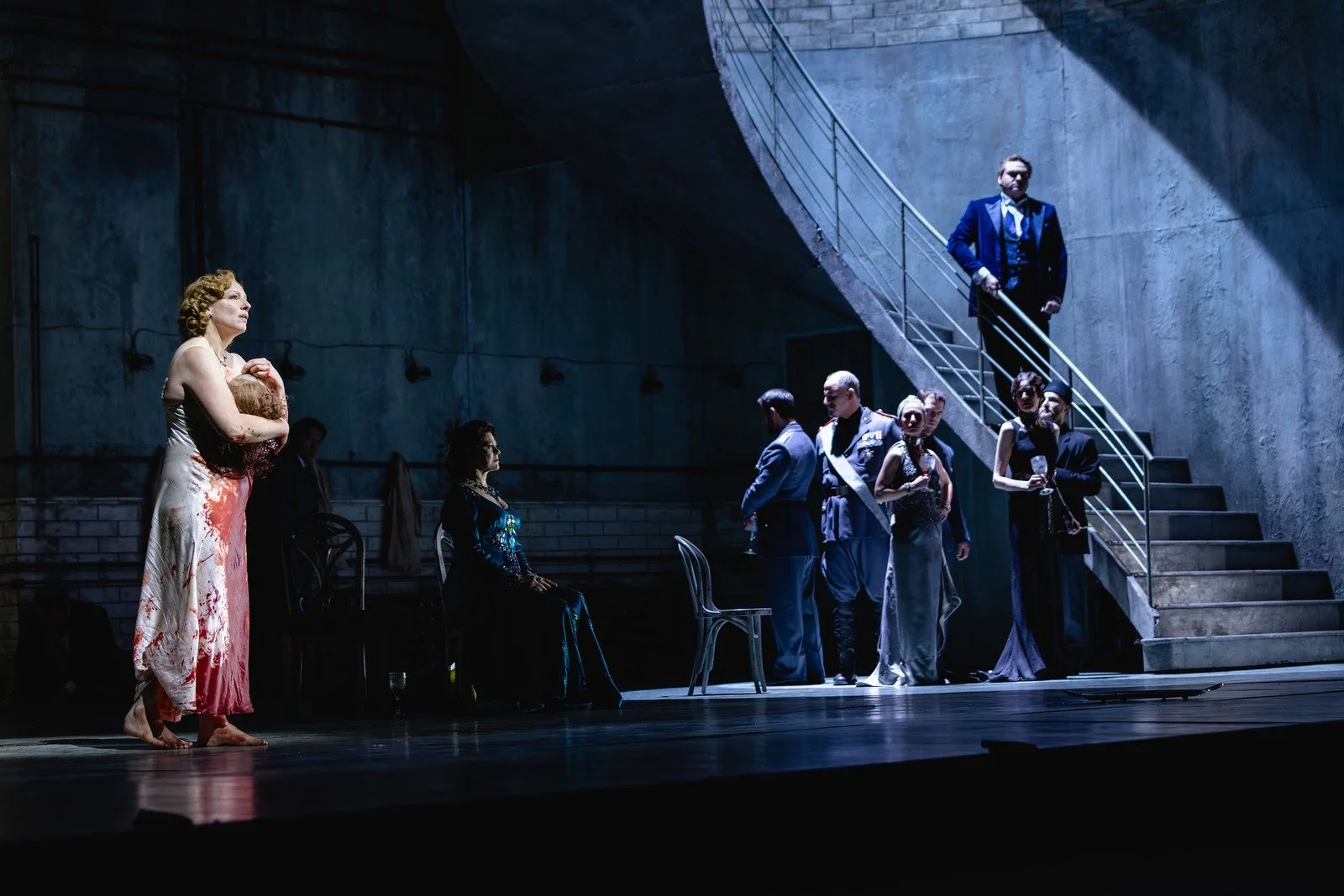
Now, after a twenty-year absence, “Salome” returns to the Lyric Opera of Chicago as provocative as ever. This North American premiere of Sir David McVicar’s production, directed by Julia Burbach, examines greed, lust, delusion, and obsession against a brutalist, raw concrete backdrop in 1930s fascist Italy. This production also marks my very first experience at the opera. What a thrilling and delightfully gory introduction to the art form.

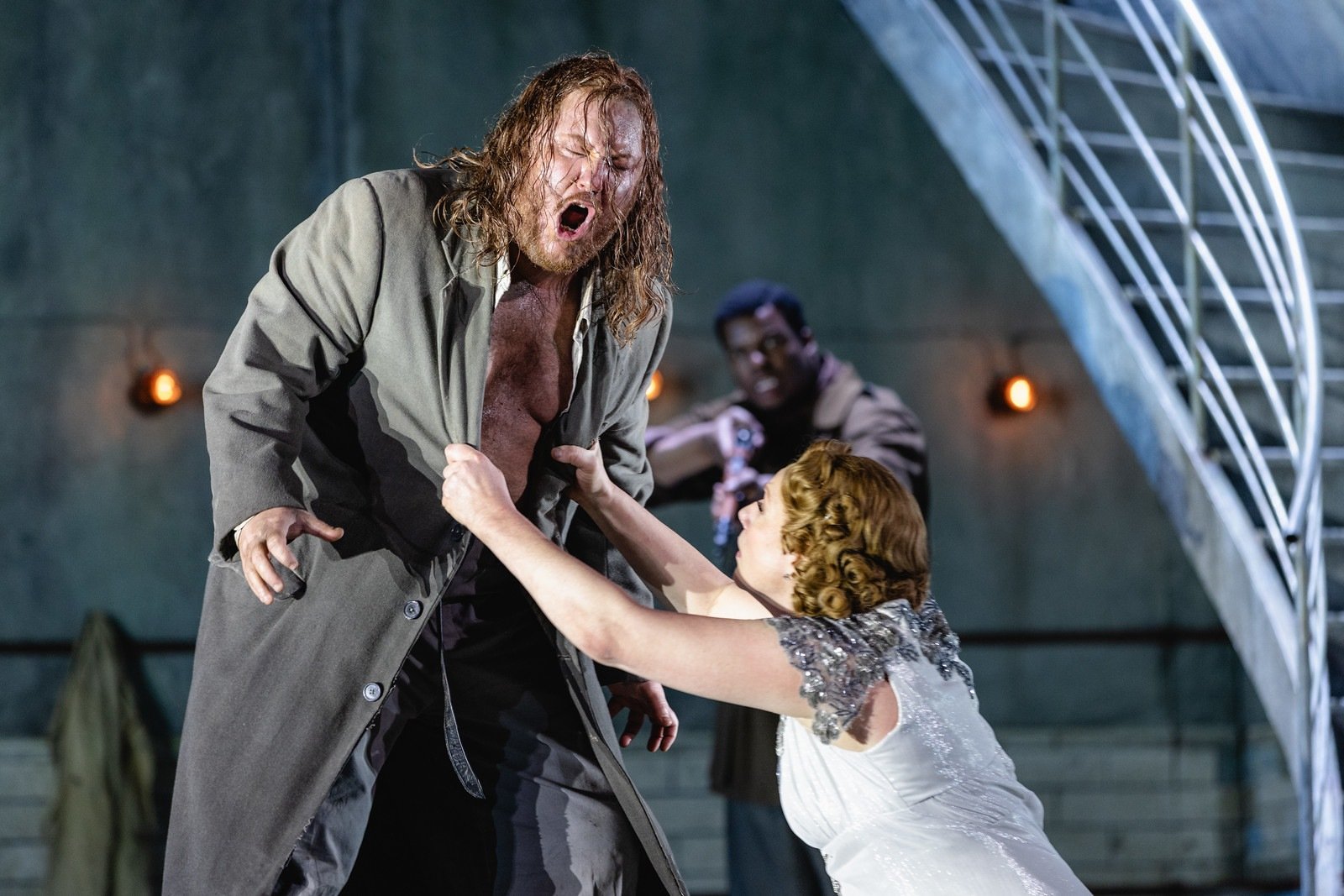
Based on Oscar Wilde’s one-act play, “Salome” beautifully captures a dark world of limitless power and entitlement. Salome (Jennifer Holloway) leaves a lavish dinner party to escape the lustful and predatory gaze of her stepfather Herod (Alex Boyer). She then discovers the mesmerizing voice of Jochanaan (Nicholas Brownlee) imprisoned below the basement and demands to see him. Salome convinces Narraboth (Ryan Capozzo), a man utterly infatuated with her, to release the prophet momentarily so she can promptly appease her fascinations. Feelings escalate for Salome, and she quickly descends into a ravenous obsession with Jochanaan which drives an unrelenting pursuit of his adoration and affection. Jochanaan, however, denies every single one of her advances. He remains steadfast in his repulsion, curses Salome, curses her mother, and then returns to the prison.

Following this haunting display, and brilliant vocal performance, of Salome’s desperation and the prophet’s rejection, Herod, Salome’s mother Herodias (Tanja Ariane Baumgartner) and the dinner guests enter the basement for more madness. Jochanaan continues his misogynistic railing against Herodias from the cistern. Dinner guests argue over theology. The powerful orchestra under Tomáš Netopil delivers drama and extravagance. Herod remains fixated on Salome and promises her anything she wants if she dances for him. Despite her mother’s protests, Salome accepts the offer and the infamous “Dance of the Seven Veils” begins. In this staging, Salome performs the dance for her stepfather with hesitation. She struggles with the power she yields over Herod, and the brooding set design (Es Devlin and revival lighting design by Chris Maravich) creates an undertone of distress, not eroticism. As they move through the changing environments, we too experience her inner turmoil, and for those who chose not to read the synopsis beforehand like myself, we wonder which of Salome’s desires pushes her to undergo such deep and twisted pain.

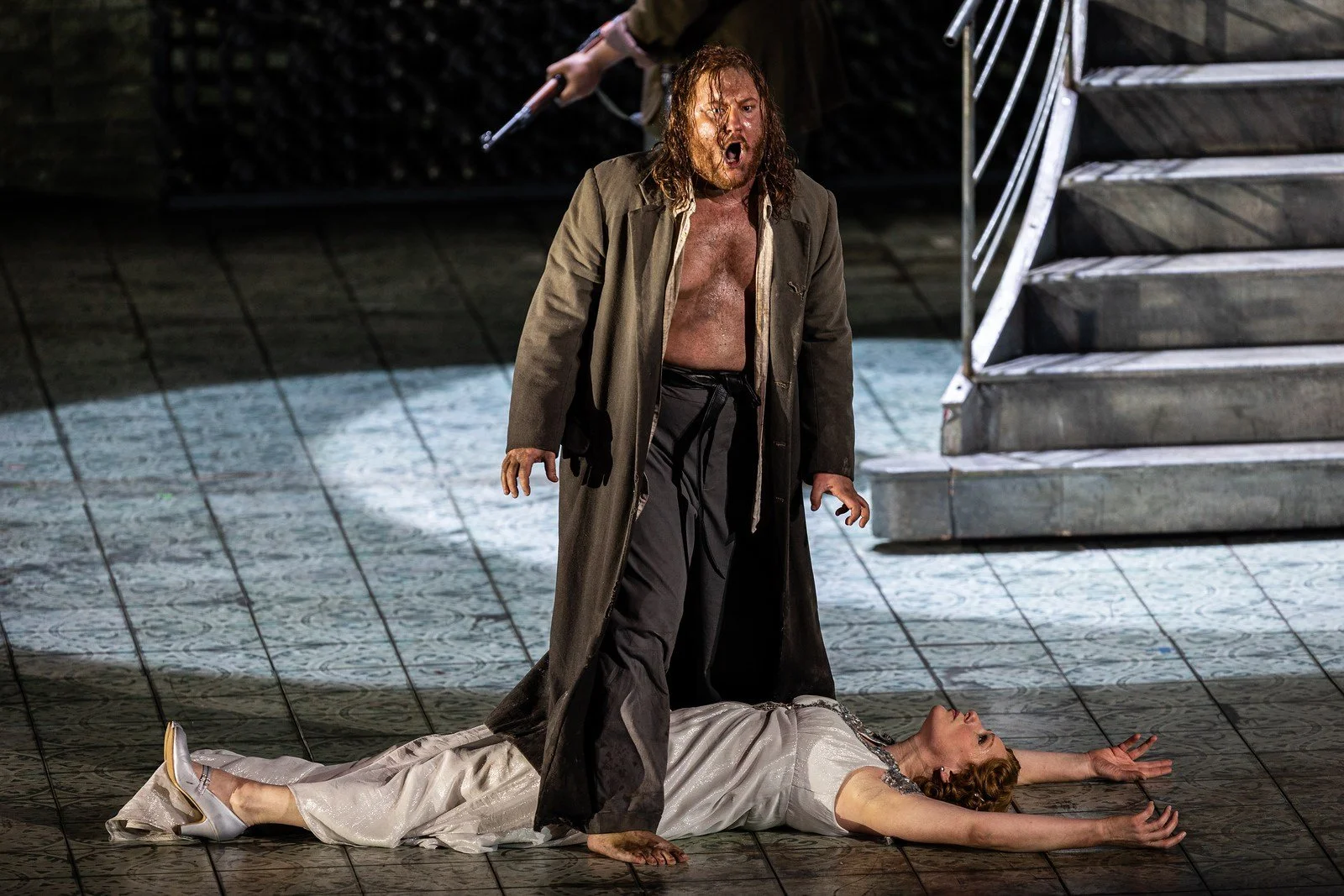
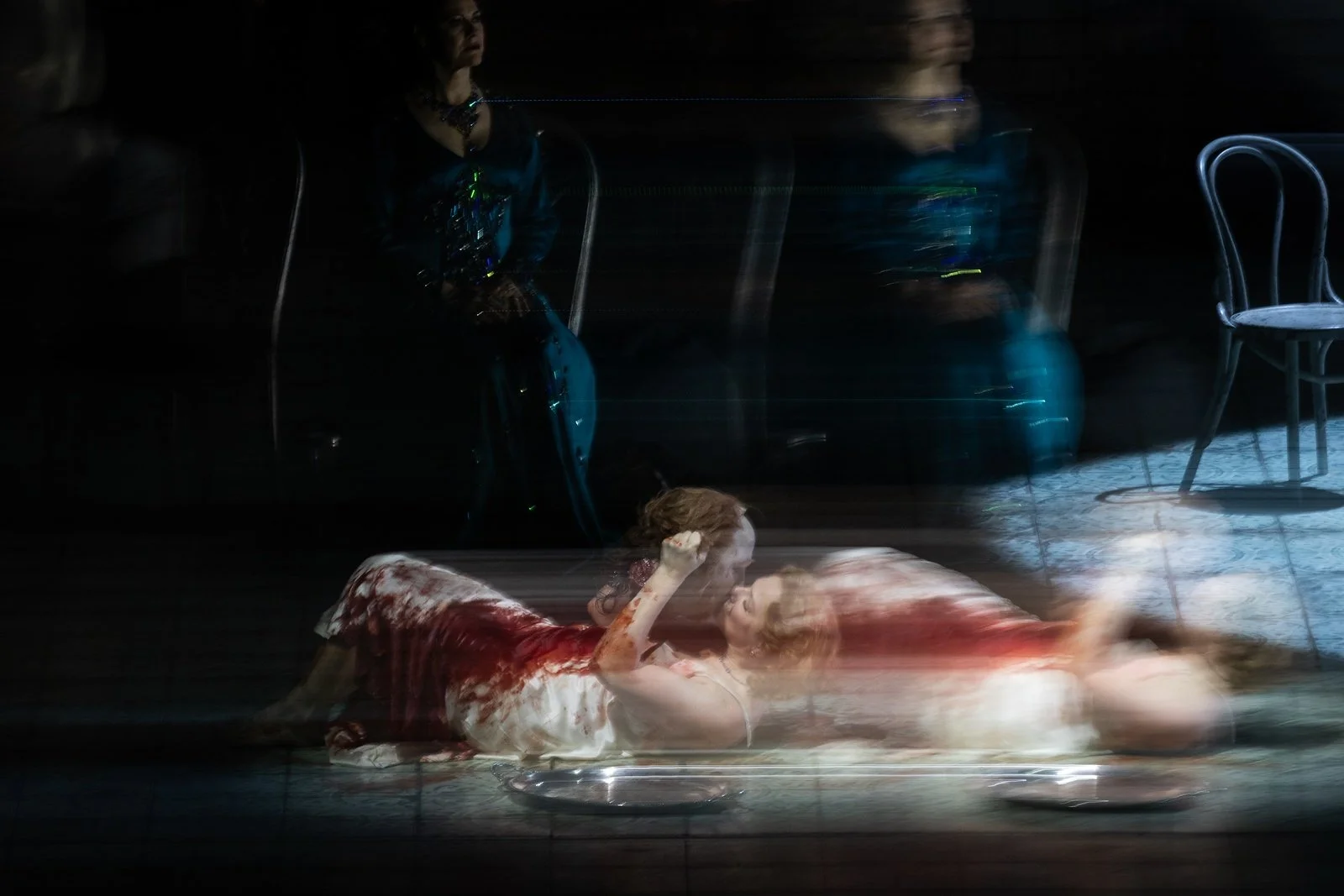
Is it love? Surely love cannot be what drives Salome to demand the prophet’s head on a silver platter in exchange for her dance. But what is love in a palace of egomania? To have? To hold? Herod offers Salome jewels, royalty, land, anything else, and yet, all Salome wants is the head of a man who denied her—the “scarlet viper” tongue that “spat its venom” upon her. She gets his head, of course, delivered by a naked executioner no less, and then begins a mesmerizing near 17-minute monologue completely detached from reality. Covered in his blood, she lays with Jochanaan’s head, toggling between boasting about how she can kiss him now and lamenting over how he still will not return her gaze. Holloway’s commanding, all-consuming performance and the shocking conclusion left me stunned in the best way.

Between the dark story, history, powerful vocalists, cold and jarring staging, and dramatic score, I have not seen anything quite like “Salome.” The production works well as an introduction to opera while also showcasing the high-level vocal artistry, raw emotion, beautiful music, and an epic set design that I am told veteran opera-goers love. I feel compelled to express my gratitude to the Lyric, the production team, and the company for this memorable experience. Brava! Bravo! Well done!

GUEST CONTRIBUTOR | KAITLYN LINSNER serves as an Assistant Attorney General in the Public Utilities Bureau of the Office of the Illinois Attorney General.

PHOTO CREDIT
Kyle Flubacker
Andrew Cioffi

Lyric Opera of Chicago
presents
Salome
20 North Wacker Drive
through February 14, 2026


TICKETS

WEBSITE

PROGRAM BOOK

For more reviews, visit: Theatre In Chicago

ARCHIVE

PicksInSix® is a registered trademark of Roxbury Road Creative, LLC
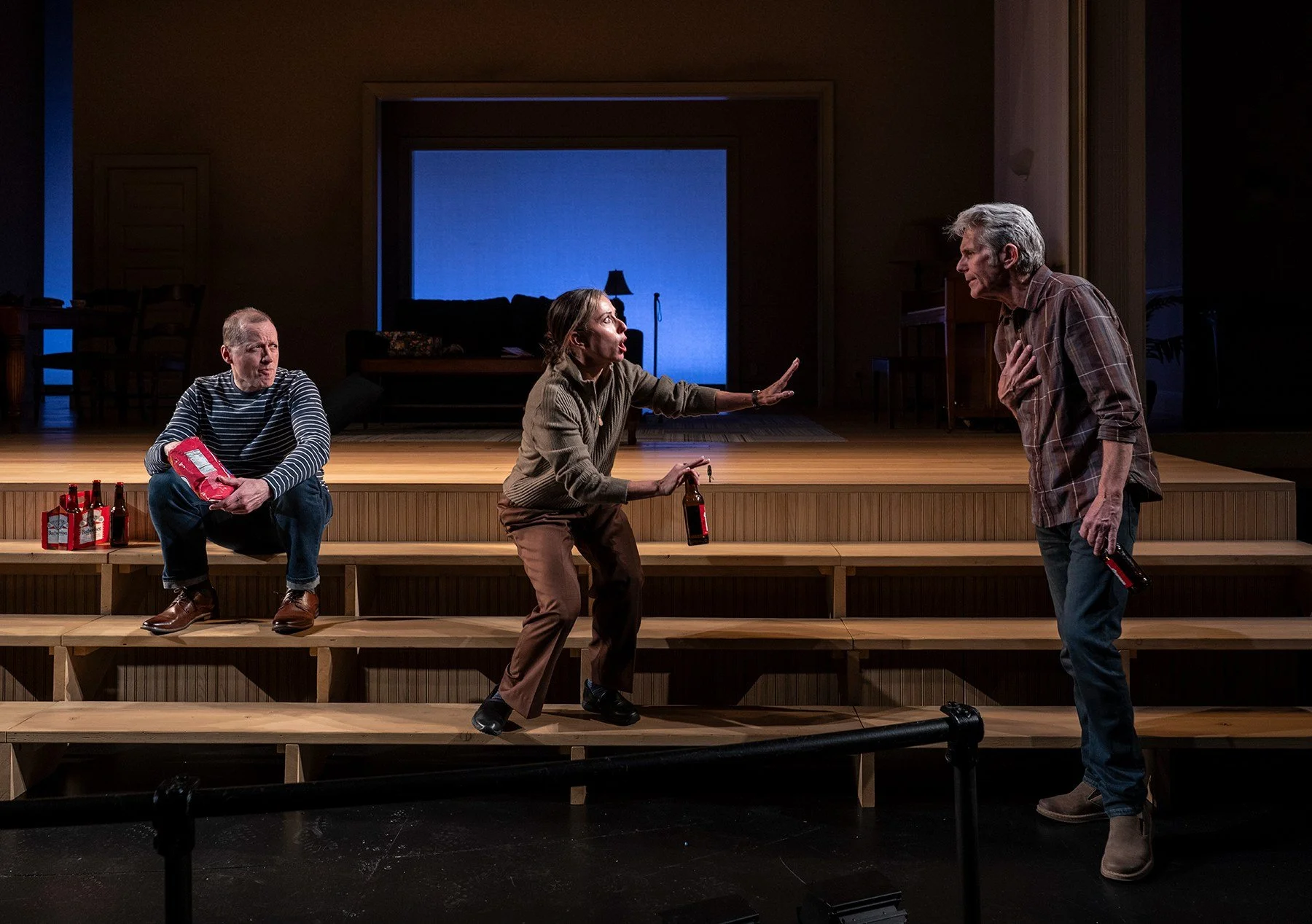
PicksInSix Review: Birds of North America - A Red Orchid Theatre


The Father-Daughter Emotional Field Guide.
PicksInSix® Review | Guest Contributor | Sarah Frances Fiorello

Nestled snugly in their intimate Old Town storefront performance space, A Red Orchid Theatre is lighting a slow, smoldering fire of generational drama with the Chicago Premiere of “Birds of North America” set to warm the coldest of Chicago winter nights.

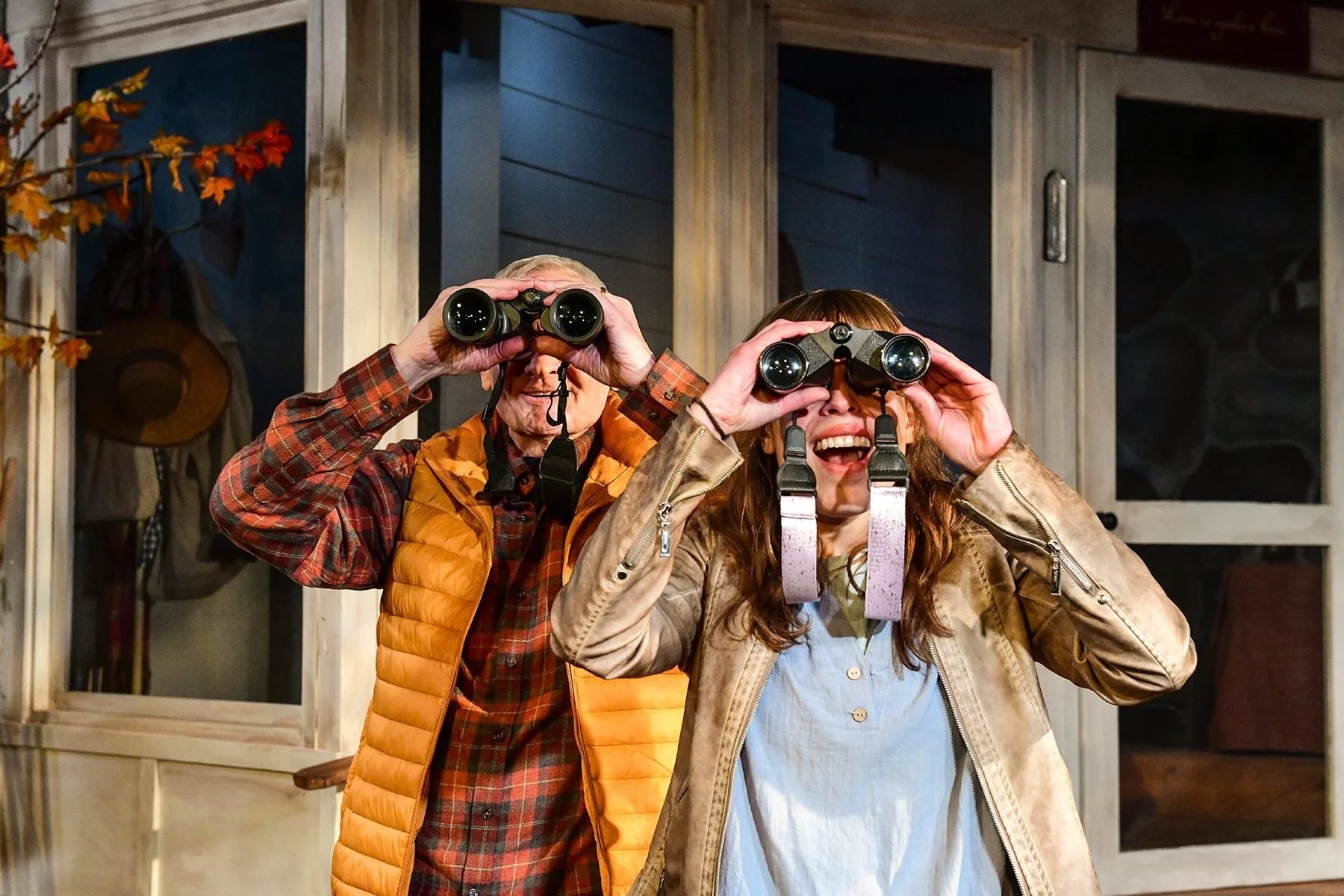
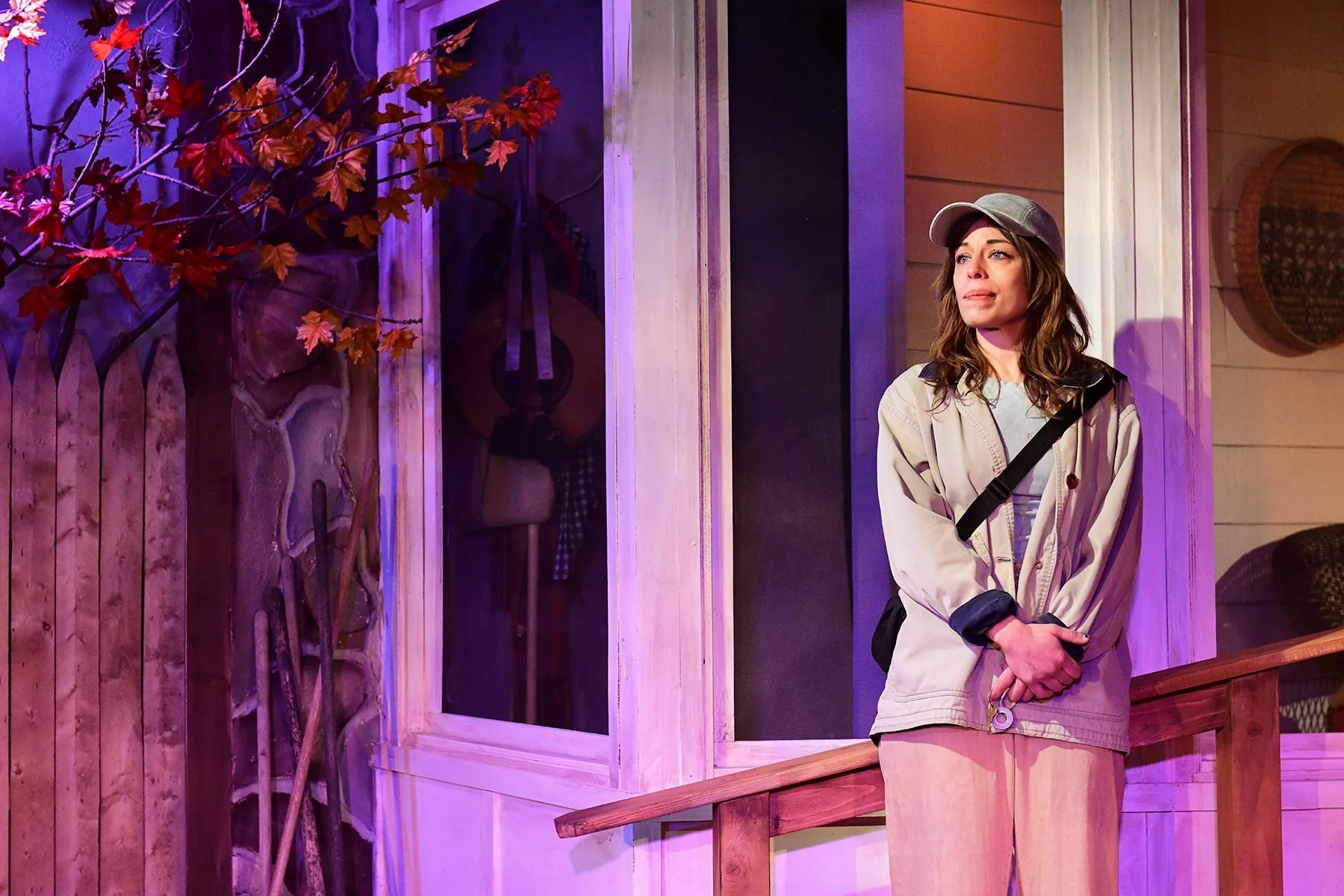
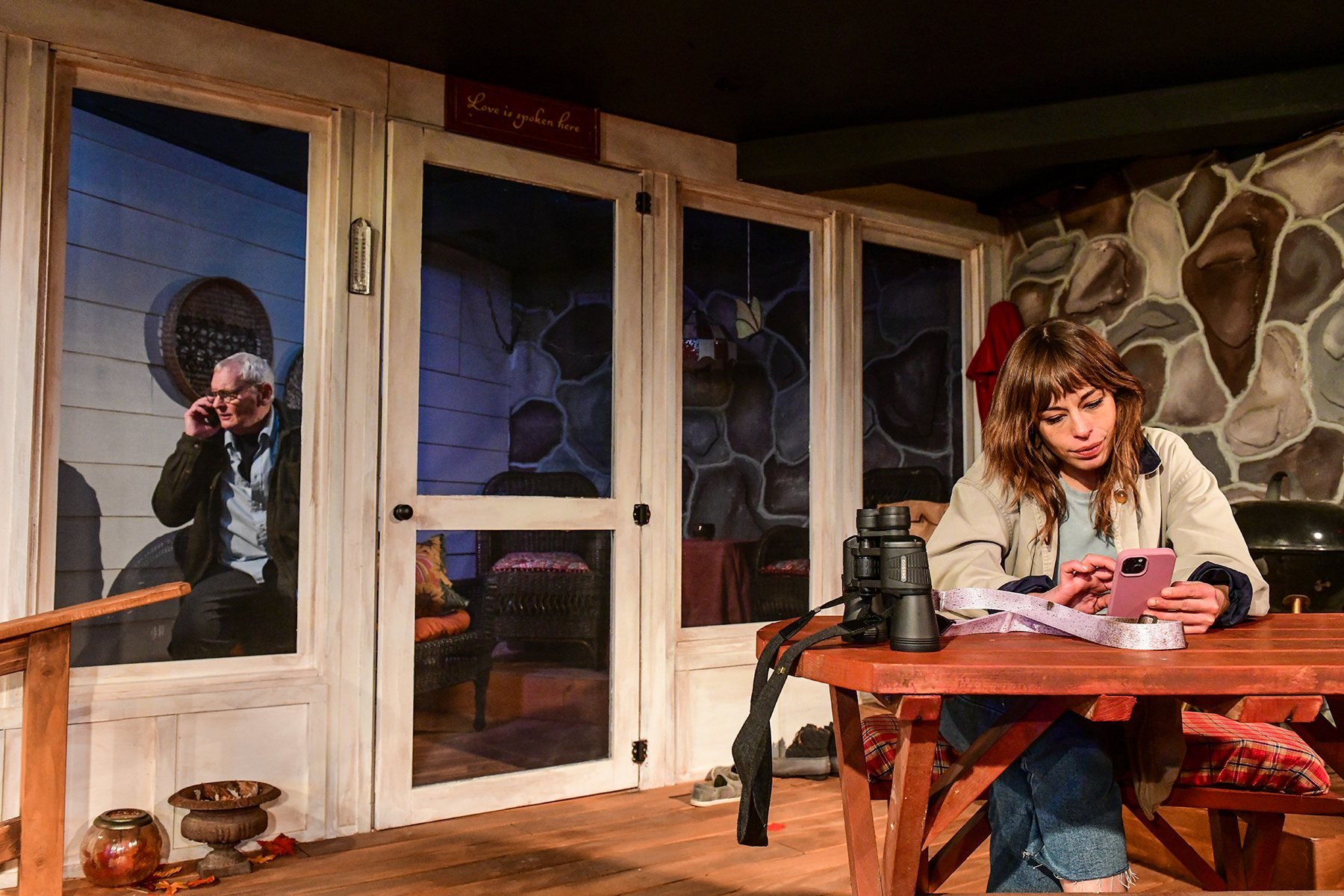
John and his daughter, Caitlyn, are birding from John’s backyard in suburban Maryland, while the two travel through a decade of relational touchpoints. Stage lights rise and fall on this father-daughter duo, marking the many seasons of their respective lives as well as demonstrating time’s ability to erode even the most certain of those seasons. John and Caitlyn peer through their binoculars searching for rare birds, while simultaneously searching for the missing connection within their relationship. Like those elusive winged creatures, they never quite seem to find each other, despite their love and obvious devotion. Their profound humanity in continuing to try will have you rooting for them until the final curtain.

What the ensemble of A Red Orchid Theatre manages to produce in what I’d affectionately call a “micro” theatre space is inspiring and invigorating with “Birds of North America” being no exception: there is nowhere to hide from the themes playwright Anna Ouyang Moench asks us to examine. Her writing nearly demands us to think with adequate complexity on “Us vs. Them” political and philosophical arguments, taking big swings at touchy ideologies: privilege of principle-based living and “working to live vs. living to work” chief among them. Her writing is compassionate while necessarily confrontational—pushing on that stubborn wall between our differing views, pulling on our shared humanity to connect in spite of it.

“Birds of North America” is directed by A Red Orchid Theatre Artistic Director Kirsten Fitzgerald and features standout original composition by Composer and Sound Designer Ethan Korvne. The play’s soundscape is contemplative, gentle, and stirring, offering a surprisingly moving touch to the feel of the story with Morgan Laszlo’s rustic scenic design matched by Seojung Jang’s lighting design. On a particularly blustery winter night, I was warmed to the core by this striking, original, powerful new work.

Equity Jeff-Award winner Cassidy Slaughter-Mason offers a composed and contemplative performance as Caitlyn. Deftly portraying the woes and realities of young adult life in the 21st Century, we share her hope against hope that her science-minded father might understand her, as a person first and a statistic second. A Red Orchid Theatre Ensemble Member John Judd expertly unravels the character of John, a committed conservationist and scientist who isn’t entirely wrong in his staunch pragmatism but often fails to see exactly why that matters. There are about as many iterations of father-daughter struggles as there are bird calls in the wild; this piece drills down to the essence of them all, managing to capture something deeply personal while being sweepingly universal and hauntingly specific.

“Birds of North America” is playing now through February 22nd at A Red Orchid Theatre and is worth braving whatever snow and cold may stand between you and their space on Wells St. There is no need to brush up on your North American Field Guide before attending, but you may find yourself wanting to dig it out on your way home. Before bundling up to attend the theatre, leave it on your nightstand as the second special treat of the evening.

CONTENT ADVISORY: This production includes discussion of miscarriage and brief violence.

GUEST CONTRIBUTOR | SARAH FRANCES FIORELLO is a graduate of Shenandoah Conservatory with a BFA in Music Theatre and a Chicago-based poet, writer, and performer. Instagram: @writtenbysarahfrances

PHOTO|Evan Hanover

A Red Orchid Theatre
presents
Chicago Premiere
Birds of North America
1531 North Wells Street

through February 22, 2026


WEBSITE

TICKETS

For more reviews, visit: Theatre In Chicago

ARCHIVE

PicksInSix® is a registered trademark of Roxbury Road Creative, LLC
PicksInSix Review - AVA: The Secret Conversations - Studebaker Theater


Stardom In and Out of Limelight
PicksInSix® Review | Guest Contributor | Ronald Keaton

Downtown at a jewel of a performance space, the renovated Studebaker Theater located in the Fine Arts Building, the latest bill of fare stars the elegant Elizabeth McGovern in “AVA: The Secret Conversations,” her adaptation of the book by Peter Evans, a character in the play portrayed by Aaron Costa Ganis. The show plays in Chicago through October 12, after runs at the Geffen Theatre in Los Angeles and then at New York's City Center.

In 1988, Ava Gardner has summoned the British journalist to ask him to ghostwrite a memoir or a full autobiography. At first Evans hesitates, being quite experienced in writing unauthorized biographies in real life. In fact, it's interesting that the first character we see onstage is not Ava Gardner, but Peter Evans. He nevertheless conceives an idea of a North Carolina girl picking herself up by the proverbial bootstraps of her upbringing and moving to Hollywood. Indeed, she was 18 in her first film in 1941. In fact, Ava wants to concentrate on sharing her views on her film career, thinking that the stories behind the making of such work would be entertaining for an audience. Evans, with constant pressure from his agent ("Get her to talk about the penis story!"), relents and walks a very difficult tightrope between making sure his agent is satisfied and adhering to what she wishes to talk about.

As the story progresses, we see a rather unique dramatic device that playwright McGovern utilizes in making the writer also stand in for her three husbands—Mickey Rooney, jazz legend Artie Shaw and Frank Sinatra. Slowly, Evans (Ganis valiantly assumes the persona of each husband in the storytelling), tries to convince Ava that he has her best interests at heart, while satisfying his agent's penchant for the gossip simultaneously. Rooney was at his performer's height during their marriage and, as is told, they constantly had sex, wherever and whenever they could. It disguises the fact that they were married only a year, and none of it affected his career—all to Ava's chagrin, as she really was not yet a star. Evans continues to accumulate material with Ava in constant catfight interviews and late-night exchanges, many enveloped in profanity and verbal offense. Then came her marriage to Shaw, one of the most famous jazz musicians in the country, in 1945 at the end of WWII. In time, Ava described him as "emotionally abusive" and yet another marriage lasted hardly a year or so.

In the meantime, Ava finally gets proper attention for her role in The Killers (1946), which turned both her and Burt Lancaster into major stars. And this is what Ava wishes to talk about—her various films, which include: Showboat (1951), Mogambo (1953), and The Barefoot Contessa (1954). It was during this career height that she met and married Sinatra. She was proud of the fact that she used what influence she had to help Sinatra land his Oscar-winning role in From Here To Eternity (1953). The marriage was tumultuous and passionate and the talk of Hollywood for six years, the length it lasted. All of this is fodder for Evans in writing for Ava. Lots of other affairs, including with Howard Hughes, followed. Ava remained true, in her eyes, to the fact that she did what she wanted and ignored judgment on it all.

So now we come closer to the time of the Gardner/Evans breakup and the entire project being shelved. It seems that Evans conveniently forgot to tell Ava that he was involved at one time in a lawsuit for publishing rights to a story about Frank Sinatra, whom she had told was her ghostwriter. He warned her. She confronted Evans, who tried to laugh it off to no avail. A final shouting match ends with Ava, putting on her coat and walking toward the stage apron into a stunning special effect of her disappearing into film.

There's a lovely drawing room set designed by LA scenic designer David Meyer. Projections abound here, too, covering the entire set in neon and streetlights and old film clips, all designed and assembled by Alex Bosco Koch. The entire experience was directed by Broadway veteran Moritz von Stuelpnagel. And as for the actors, well, it's basically a two-hander and a real challenge for any performer. Mr. Ganis offers a huge versatility and gameness for tackling what could have been a thankless role to play and even gets to sing a Sinatra staple, Fly Me To The Moon. Ms. McGovern, always the star here and playing almost the entire show barefoot (as was Ms. Gardner's real habit), has a real gift for dialogue and scene creation as a playwright and a proud Southerner from the beginning.

GUEST CONTRIBUTOR | RONALD KEATON received an Equity Jeff Award for the performance of his one-man show CHURCHILL. www.solochicagotheatre.org  Coming soon, his new solo play about Ben Franklin, THE FIRST EMBASSY.

PHOTO| Jeff Lorch

Elizabeth McGovern and Aaron Costas Ganis
AVA: The Secret Conversations

Studebaker Theater
Fine Arts Building
410 S Michigan Avenue
through October 12, 2025


WEBSITE

TICKETS

SHOW WEBSITE

For more reviews, visit: Theatre In Chicago

ARCHIVE

PicksInSix® is a registered trademark of Roxbury Road Creative, LLC
PicksInSix Review: Amélie - "A Feeling of Absolute Harmony" - Kokandy Productions


Amélie - "A Feeling of Absolute Harmony"
PicksInSix® Review |
Ed Tracy

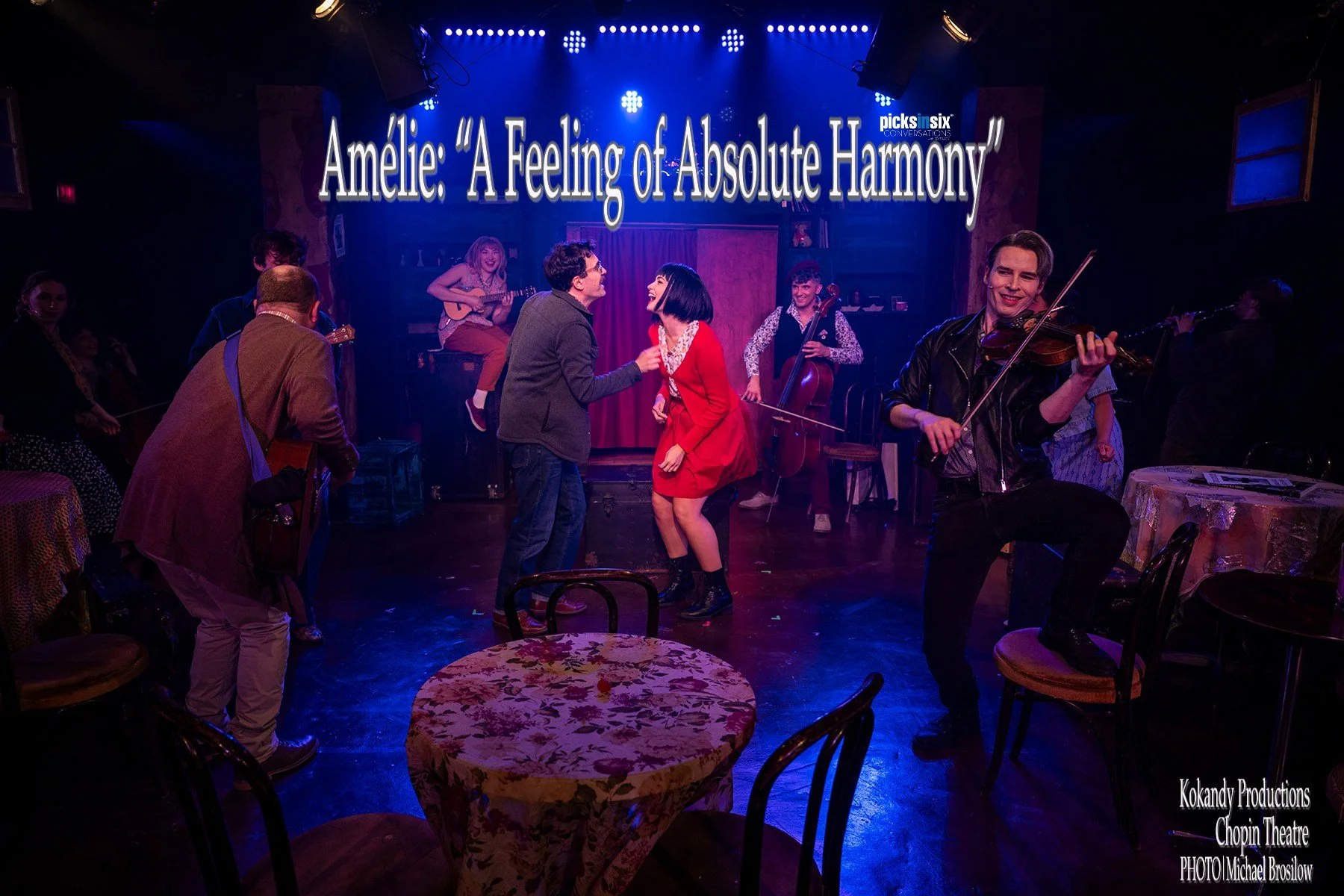
The Chicago premiere of “Amélie: The Musical,” now playing in an exquisite Kokandy production at Chopin Theatre that opened Saturday in the intimate Downstairs Studio, is based on the 2001 award-winning French film written by Jean-Pierre Jenet and Guillaume Laurent. It was adapted for the stage—book by Craig Lucas, music by Dan Meese and lyrics by Meese and Nathan Tysen— and debuted in 2015 at the Berkeley Repertory Theater followed by a brief Broadway run in 2017, a UK tour in 2019 moving to the West End for a summer 2021 run.

The Kokandy production is directed and choreographed by Artistic Director Derek Van Barham with music direction by T. J. Anderson and Anna Wegener. The already lush and whimsical score has been enhanced with additional instrumentation that, in the talented and capable hands of twelve superb actors/singers/musicians, create a glorious experience of sight, sound and song. “Amélie” fits perfectly in the Chopin space and has all the makings of a colossal hit for Kokandy.

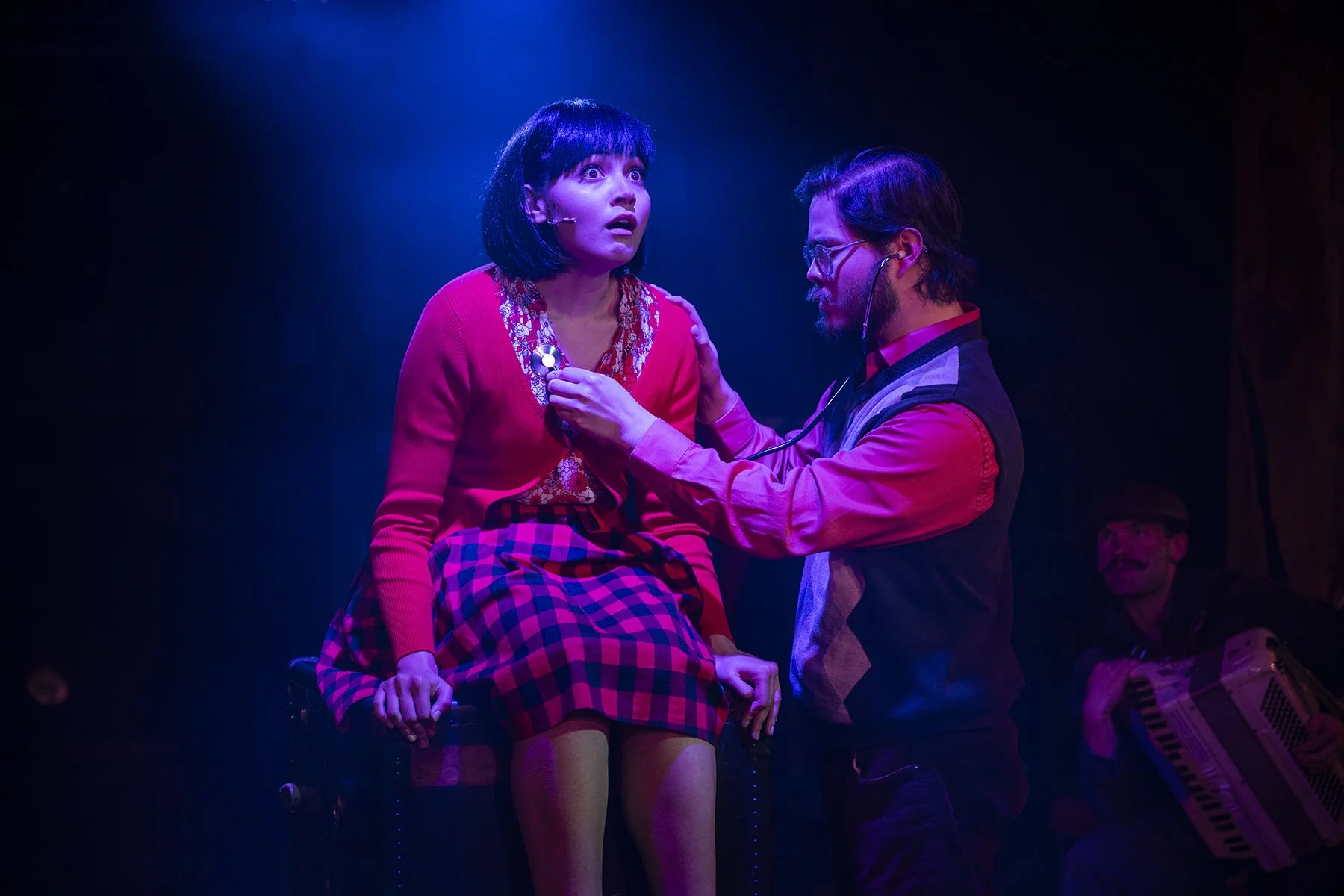
Amélie Poulain is a dreamer who overcomes early childhood isolation, and unimaginable loss, using all she has learned for good, to approach the world with wonder and spreading playful joy to everyone around her. Along the way, she builds confidence and develops a circle of friends and mentors who help her gain her own independence, ultimately, revealing the elusive love and affection she has yearned for all her life.

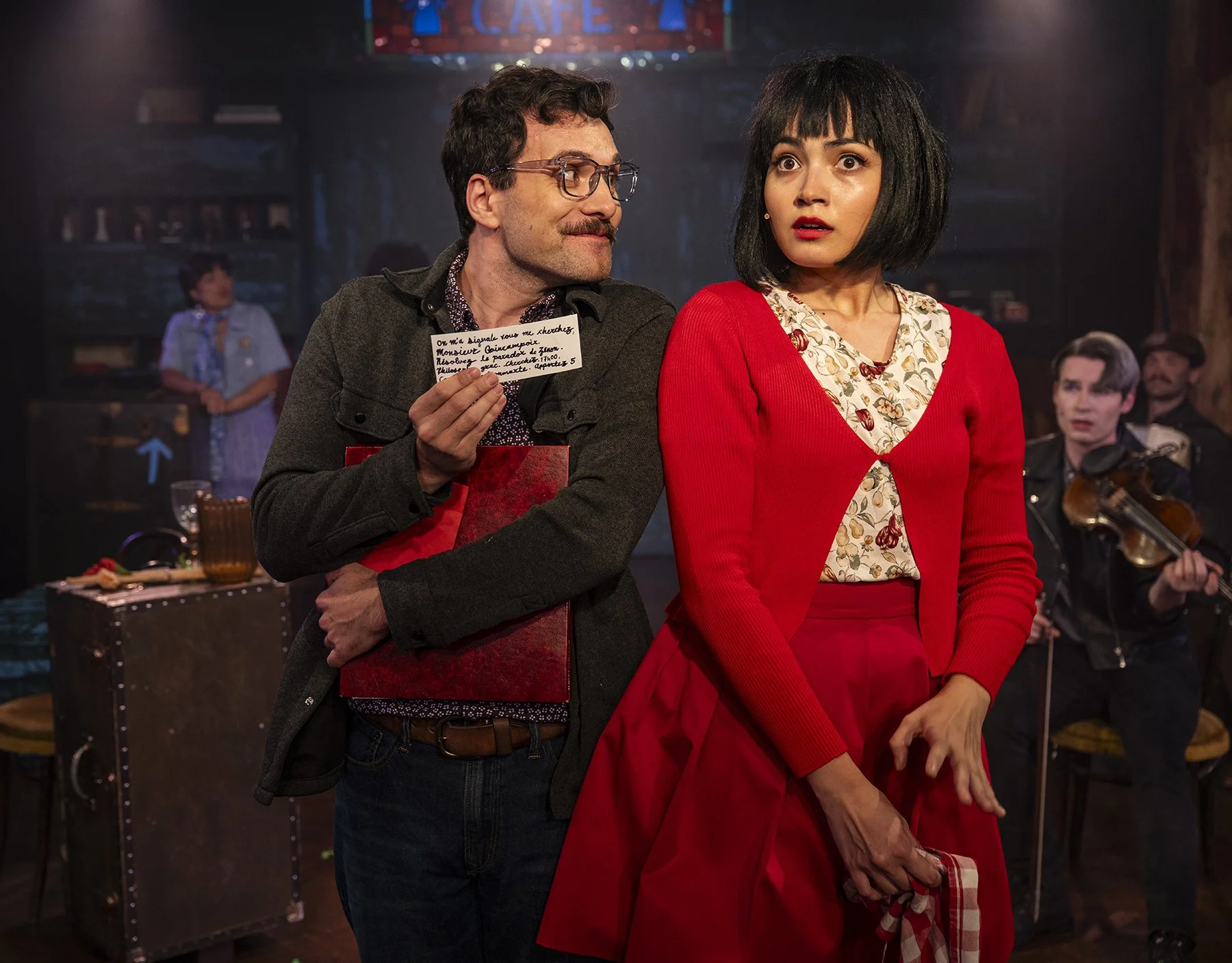
Aurora Penepacker is simply mesmerizing as Amélie, displaying a captivating stage presence that is only surpassed by her stunning vocal abilities. Penepacker, whose star shone brightly last season in Writers “Great Comet,” delivers a multi-layered performance, bursting with enthusiasm and beguiling charm, that is delightful to watch. True to the original story, Penepacker’s Amélie leads us through the mystery of a 40 year-old tin treasure box; the forging of romantic relationships at the café where she works; healing the broken heart of a co-worker; and, bringing peace and solitude to her grieving father.

All the while, the evolving relationship with Nino Quincampoix (Joe Giovannetti, in top form), the object Amélie’s desire, becomes her passionate focus. It is not just how Amélie attracts Nino, the shy and earnest collector of discarded subway photo booth images, but the interconnecting paths of all of the unique characters who serve as narrators to move the story along. Even though this feels very much like a collaborative ensemble experience throughout, Amélie’s parents Amandine (Rachel Carreras) and Raphael (Kelan M. Smith, who also covers Bretodeau), Sonia Goldberg’s Gina (“Window Seat”) and Jon Patrick Penick (Collignon/Julien Dufayel) and the company’s Act I closer “Goodbye, Amélie” leave memorable impressions.

The fine work of dialect coach Carrie Hardin is evident. The vast instrumentation—I lost count at twelve—and the quality of the musical performances is a credit to every member of the company—backed up by Kara Olander and Anna Wegener—who contribute to the exquisite harmonies. “Amélie: The Musical” has it all from an outstanding, energetic cast to an accomplished technical team—sound design by Matt Reich, mixed and engineered by Lynsy Folckomer and Mackenzie Hahn, set and lights by G “Max” Maxin IV and costumes by Rachel Sypniewski—all combining for a rich and robust vocal and instrumentation mix that is in a word: Magnifique!  

PHOTO|Michael Brosilow

Kokandy Productions
presents
Amélie
Chopin Theatre
Downstairs Studio
1543 W. Division Street
through September 28, 2025


WEBSITE

PROGRAM

For more reviews, visit: Theatre In Chicago

ARCHIVE

PicksInSix® is a registered trademark of Roxbury Road Creative, LLC
PicksInSix Review: Golden Leaf Ragtime Blues - American Blues Theater


Generations Collide in Nostalgic ‘Ragtime Blues’
PicksInSix® Review | Guest Contributor | Ronald Keaton

The fine playwright Charles Smith has written a thoughtful play, “Golden Leaf Ragtime Blues,” now playing through June 29 at American Blues Theater's intimate space on Lincoln Avenue. He has offered up lots of food for considerable thought in what is a deceptively simple premise in this Chicago premiere expertly directed by Chuck Smith. Two characters—one, an elderly vaudevillian who does not want to give up the chase for the next laugh; and the other, a young Black teenager with a great deal of history to deal with, as well as personal anger—are thrown together in a shabby apartment to deal with each of their issues. And there are many.

It all takes place sometime in the 1990s. The fictional comedy team of Pompey and Ollie, who played a minor vaudeville circuit as well as any, are rehearsing an old routine. Pompey (such an elegant performance by ABT Ensemble Member Dennis Cockrum) has forgotten a punchline to a joke that he and Ollie (the wonderfully understated James Sherman) have done thousands of times. This is apparently a pattern of forgetfulness by Pompey, so much so that Ollie decides to break up the act. It all rattles Pompey greatly and he holds anger toward an old friend that is not necessarily justified. What it comes down to is the death of Pompey's style of humor.

Segue to Pompey’s apartment, a rundown and not-well-kept living quarters full of old cans and newspapers and laundry that needs to be done. Three weeks ago, Ollie died unexpectedly, and Pompey is so distraught that he pulls out a gun and threatens to shoot himself. He is saved by a knock on the door from his daughter Marsha (Dawn Bach in a strong offering), who has come by on a rare visit. The predictable argument between the generations is interrupted by another knock on the door. A young Black kid, whose nickname is Jet, has come to tell Marsha that her car is about to be ticketed. Soon it comes out that Marsha and Jet (Justin Banks is pretty riveting throughout) have actually talked about adoption, which upsets Pompey to no end.

Marsha finds a way to finally get out the door to take care of the car by going to the grocery store to get her father some food—all he has are endless cans of SpaghettiOs. So now the meat of the play begins. Pompey and Jet play a unique game of cat-and-mouse in letting little bits of personal story out, while each says that he really doesn't care. Jet's history is quite checkered and difficult. Fourteen different foster families. Endless stays in group homes.  His mother died of cancer; his father is in jail for an extended stay because of possession of two joints. Remember this is the early 90s, when laws about marijuana were much stricter, and minorities were overly charged and convicted in such matters.

The strengths in the Smith script are dominant here. The constant tensions that ping-pong back and forth between Pompey and Jet are admirably handled. This could sink into a battle of stereotypes, and it avoids that trap through fun ideas from the playwright's rich, creative arsenal. Pompey and Jet actually toy with the idea that they might partner up and create their own act. But Pompey's jokes are hopelessly outdated, so Jet suggests adapting some blue material from the recordings of Redd Foxx, which are hilarious on their own. We then get the privilege of seeing Pompey react to Jet's sharing in comedic horror. Then there are the highly personal moments. Jet talks painfully of seeing his mother being driven away in an ambulance, while the authorities take him into juvenile custody and, eventually, his first group home.  Pompey fights a strong feeling of irrelevance by constantly delving into his bag of show business jokes and details. It's a unique exchange that seems headed toward a kind of happy moment.  Until...

And the last ten minutes or so, I will leave for future audiences to discover. Mr. Cockrum is simply grand in his element here as the sad clown who can't find his way to happiness in life. Mr. Sherman appears in moving, ghostly form a couple of times after Ollie's death in Pompey's thoughts to help him find his way. Ms. Bach injects some informed depth into her Marsha, a woman of her time in holding down a job while feeling the attraction, however drawn she is, to a kind of motherhood. Mr. Banks is the real dramatic coin in the ensemble, making sure that Jet's generation is regarded by Pompey as more than a stereotype. In the hands of Mr. Banks, Jet is indeed a real flesh-and-blood young man playing the cards he's been dealt as well as he knows how. And it's all directed with the usual expert eloquence by the wonderful director Chuck Smith. The experience here is noble, nostalgic, achingly personal and deserves all praise.

GUEST CONTRIBUTOR | RONALD KEATON received an Equity Jeff Award for the performance of his one-man show CHURCHILL. www.solochicagotheatre.com  Coming soon, his new solo play “Teddy’s Last Ride.”

PHOTO|Michael Brosilow

American Blues Theater
presents
Chicago Premiere
Golden Leaf Ragtime Blues
5627 N Lincoln
through June 29, 2025


WEBSITE

TICKETS

PROGRAM

BACKSTAGE GUIDE

For more reviews, visit: Theatre In Chicago

ARCHIVE

PicksInSix® is a registered trademark of Roxbury Road Creative, LLC
ALL RIGHTS RESERVED

Copyright 2014-2026

Roxbury Road Creative, LLC

Powered by Squarespace